
On This Page
Description
The pope is dead and the corridors of the Vatican hum with intrigue as cardinals gather to elect his successor. The result is a surprise: the new pope is the youngest of them all, a bearded Ukrainian. The Shoes of the Fisherman is the moving story of Kiril I, recently released from 17 years in Siberian labor camps and haunted by his past. Not only is he the leader of a fractured Catholic Church, but he also finds he must confront his inquisitor and tormentor in order to avert another world war.Tags
Recommendations








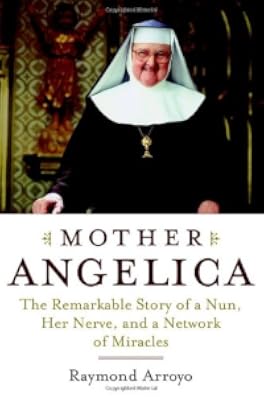
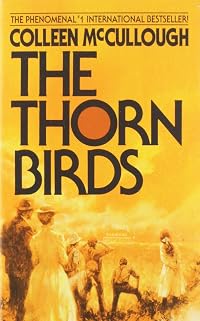


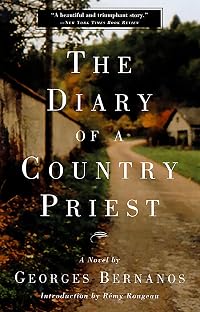
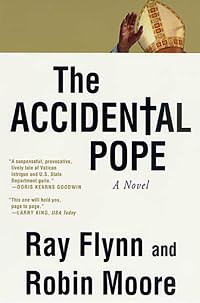
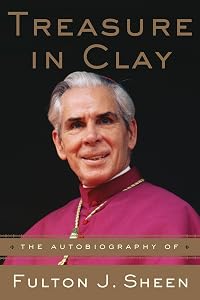


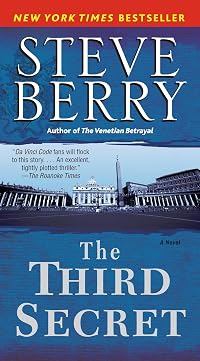

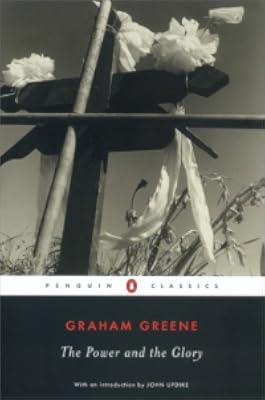


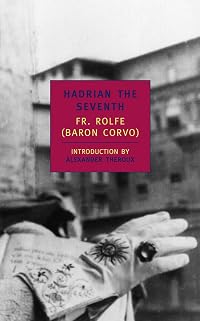









Member Recommendations

by otori
Member Reviews
The pope has died, and the corridors of the Vatican hum with intrigue as cardinals from all over the world gather to choose his successor. Suddenly, the election is concluded - with a surprise result. The new pope is the youngest cardinal of all - and a Russian. Shoes of the Fisherman slowly unravels the heartwarming and profound story of Kiril Lakota, a cardinal who reluctantly steps out from behind the Iron Curtain to lead the Catholic Church and to grapple with the many issues facing the contemporary world.
Was Morris West prophetic or did life imitate art? When this book was published in 1963, it seemed unthinkable for the College of Cardinals to elect a very young pope from the Eastern Bloc. The “Italian Captivity of the Pope” (in the words of Father, now Archbishop, Antonio Ledesma) had lasted for hundreds of years and seemed like a permanent phenomenon. And yet, a little over a decade later, John Paul II.
Strange coincidences aside, I found this book slow going. There is a plethora of viewpoint characters, all of whom are very introspective. Every time the viewpoint changes, we are subjected to pages of the new character’s musings. It made the book seem interminable. Worse, I felt the Pope’s reflections were not always show more particularly credible (what qualifications does the author have for musing on behalf of a Pope?), and moreover referring to him repeatedly as “Kiril the Pontiff” was just a bit strange. In both instances the “wait, what?” in itself slowed the pace of reading. Too much talk, not enough plot got us only a few months into what could have been a very eventful and interesting papacy. Much of the narrative plot was wasted on the Pope becoming mired in issues affecting the lives of a few individuals. The actual history of JP2’s (NOT “Karol the Pontiff”) life and times was significantly more gripping than this book in a life stranger than art kind of way. Miraculous survival of a point-blank assassination attempt? the fall of the Iron Curtain? – it would have been too far-fetched even for fiction. show less
Strange coincidences aside, I found this book slow going. There is a plethora of viewpoint characters, all of whom are very introspective. Every time the viewpoint changes, we are subjected to pages of the new character’s musings. It made the book seem interminable. Worse, I felt the Pope’s reflections were not always show more particularly credible (what qualifications does the author have for musing on behalf of a Pope?), and moreover referring to him repeatedly as “Kiril the Pontiff” was just a bit strange. In both instances the “wait, what?” in itself slowed the pace of reading. Too much talk, not enough plot got us only a few months into what could have been a very eventful and interesting papacy. Much of the narrative plot was wasted on the Pope becoming mired in issues affecting the lives of a few individuals. The actual history of JP2’s (NOT “Karol the Pontiff”) life and times was significantly more gripping than this book in a life stranger than art kind of way. Miraculous survival of a point-blank assassination attempt? the fall of the Iron Curtain? – it would have been too far-fetched even for fiction. show less
A superb book. Centred on the papacy and world politics, it examines many of the great spiritual and religious themes. In passing it reminds us how real the fear of nuclear war was in the 1960s, when it was written and set. In the thinking of the Jesuit palaeontologist Jean Telemond there are echoes of Pierre Teilhard de Chardin (even in the title of his seminal work, "The Progress of Man" v "The Phenomenon of Man"). The main character, Pope Kiril, certainly doesn't echo John XXIII, but nevertheless many of the issues with which he struggles are those which were addressed in John XXIII's Second Vatican Council. This very readable story grapples sympathetically with many of the difficulties and even contradictions which face the show more Church.
The ending is... difficult. On the one hand it is a very good ending, a critical decision made but leaving things hanging. On the other hand it leaves the reader wishing for more... which is perhaps a good way to end a book? show less
The ending is... difficult. On the one hand it is a very good ending, a critical decision made but leaving things hanging. On the other hand it leaves the reader wishing for more... which is perhaps a good way to end a book? show less
A fascinating, and often philosophical, novel about a newly elected Pope Kiril I who comes from a background of torture and imprisonment. The plot itself is not as important as the development of the characters, although the setting of impending conflict between the US and the Soviet Union provides a tense backdrop. The characters are well-developed: Ruth Lewin (a converso who befriends George Faber, a man who divorces and marries his dream girl only to seek papal dispensation for divorcing her too), Cardinal Rinaldi (a confidante), Cardinal Leone (an oppositional force who Kiril ultimately realizes his value), Father Telemond (a Jesuit priest whose life work is ultimately disapproved of by the curia). All grapple with life issues show more through the lens of faith or lack thereof. The plot is interspersed with diary entries of Kiril, whose own spiritual and political journey is detailed in a way that makes it easy for the reader to sympathize. show less
While I enjoyed learning more about the inner workings of the Vatican, "The Shoes of the Fisherman" was torturously slow with very little plot line. It was a huge effort to finish the novel but I did like Kiril Lakota, the young Ukrainian pope as he struggled with his new position, internal politics and his deep loneliness. However, I had little interest in all the other characters and I certainly won't be continuing with the series.
La gran novela del Vaticano, que anticipó en más de una década la asunción de un papa eslavo. El Papa ha muerto. El mundo vive una época turbulenta: la amenazada de una guerra total se cierne sobre la humanidad. Para sorpresa de todos -cincuenta años atrás no se concebía que un pontífice no fuera italiano- un cardenal de origen eslavo es elegido para sucederle, un hombre que ha sufrido en su propia piel la crueldad del régimen que gobierna su país.
El nuevo Papa es un hombre enérgico, cálido y cercano y anhela renovar la Iglesia. Mientras tanto, al convulso clima político se le añade la posibilidad de una hambruna mundial.
El Papa tendría un papel crucial a la hora de evitar un enfrentamiento armado de consecuencias show more imprevisibles. show less
El nuevo Papa es un hombre enérgico, cálido y cercano y anhela renovar la Iglesia. Mientras tanto, al convulso clima político se le añade la posibilidad de una hambruna mundial.
El Papa tendría un papel crucial a la hora de evitar un enfrentamiento armado de consecuencias show more imprevisibles. show less
3 1/2 stars. Last chapter was definitely worth 4 stars.
This book kept showing up and falling off my Recommendations lists, so I hunted up a copy at the library. It was written in the early 1960s, and I probably would have loved it all the way through if I had read it in that decade.
It was interesting to see so much foreshadowing - Vatican II, Pope John Paul II, Pope Francis. But too many of the characters seemed to exist mostly to illustrate the various issues faced by the Roman Catholic church at the time. And in hindsight, to see how little effect the church was able to make on the issues in spite of all its efforts in those lines.
This book kept showing up and falling off my Recommendations lists, so I hunted up a copy at the library. It was written in the early 1960s, and I probably would have loved it all the way through if I had read it in that decade.
It was interesting to see so much foreshadowing - Vatican II, Pope John Paul II, Pope Francis. But too many of the characters seemed to exist mostly to illustrate the various issues faced by the Roman Catholic church at the time. And in hindsight, to see how little effect the church was able to make on the issues in spite of all its efforts in those lines.
Members
- Recently Added By
Lists

Publisher's Weekly Bestsellers - Part II - 1940 - 1979
355 works; 5 members

Stories involving the Vatican
8 works; 1 member

Books Set in Rome
98 works; 2 members
Author Information

62+ Works 7,742 Members
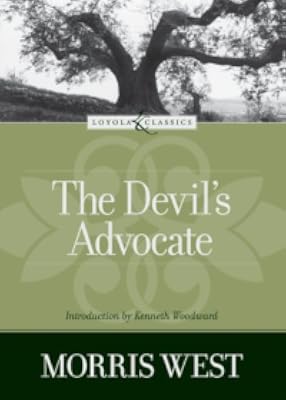
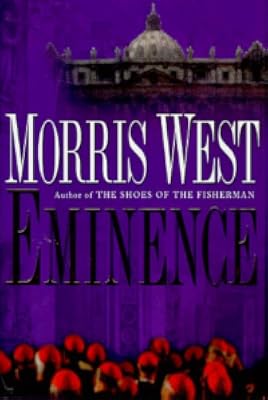
Morris West was born in 1916 in St Kilda, Melbourne. At the age of thirteen, he left home to study with the Christian Brothers Order in Sydney, but left in 1939 after 12 years, before taking his final vows. He was fluent in Italian and French, and taught modern languages and mathematics in New South Wales and Tasmania in his twenties. He spent show more four years code-breaking as a cipher officer in the AIF, and then for a decade he concentrated on producing and writing radio plays. West's first novel was published in 1945 and he began writing full time in the 1950s. He went to Italy were he went undercover with Father Mario Borelli, who was working with street urchins, and wrote The Children of the Sun, published in 1957. In 1959, following six months as Vatican correspondent for The Daily Mail, he published The Devil's Advocate, which won the William Heinemann Award of the Royal Society, the National Brotherhood Award of the National Council of Christians and Jews as well as the James Tait Black Memorial Award. Shoes of a Fisherman, the first of The Papal Series, which included The Clowns of God, Lazarus and Eminence, won the Best-Sellers Paperback of the Year Award in 1965. West helped to found the Australian Society of Authors, was chairman of the National Book Council, chairman of the National Library of Australia and a fellow of the World Academy of Art and Science. He was made member of the order of Australia (MBE) in 1985 and officer of the order of Australia (AO) in 1997. Apart from writing novels, West also wrote screenplays, radio dramas, plays and was also an artist. Translated into twenty-seven languages, his works have sold more that sixty million copies. He also wrote an account on his spiritual journey, A View From the Ridge, published at the end of 1996. Morris West died while working at his desk on 9th October 1999. (Bowker Author Biography) show less
Some Editions
Awards and Honors
Distinctions
Series

Belongs to Publisher Series
Lanterne (L 291)
Work Relationships
Is contained in
Has the adaptation
Common Knowledge
- Canonical title
- The Shoes of the Fisherman
- Original title
- The Shoes of the Fisherman
- Original publication date
- 1963
- Important places
- Vatican City
- Related movies
- The Shoes of the Fisherman (1968/I | IMDb)
- Dedication
- For Christopher, Paul and Melanie
- First words
- The Pope was dead.
- Last words
- (Click to show. Warning: May contain spoilers.)Amen.
Classifications
Statistics
- Members
- 1,154
- Popularity
- 21,782
- Reviews
- 20
- Rating
- (3.75)
- Languages
- 9 — Dutch, English, French, German, Italian, Norwegian (Bokmål), Norwegian, Portuguese, Spanish
- Media
- Paper, Audiobook, Ebook
- ISBNs
- 66
- UPCs
- 1
- ASINs
- 59