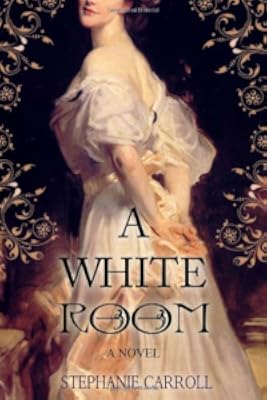
A White Room
by Stephanie Carroll 
On This Page
Description
At the turn of the 20th century, a young bride escapes the maddening prison of domestic life by serving the poor as an unlicensed nurse, but she risks the wrath of her lawyer husband, whose employer ruthlessly pursues and prosecutes unlicensed medical practitioners.Tags
Recommendations


















Member Reviews
This is a story that touches on several controversial topics of that early era and frankly they frustrated me more than entertained me and some just made me down-right angry. I had to keep saying "it's just a story...it's just a story"...but then went right back to thinking, "this is what women used to have to endure and smile while doing it!" I believe that the author did a fantastic job in the beginning of building the story...but there were a few things that I thought...hoped were not actually the way things were for women of any station in that day.... the medical info parts...and how the man is always right and never the blame for anything. The town our leading lady character found herself in was probably typical of the show more day...everybody knows everyone's business this caused a few more unbelievable issues...and that was acceptable, but then the story rapidly progressed to an unlikely stage of events and then unfortunately just morphed into an unsatisfactory conclusion....at least for me. However, I gave it 3-stars because there were some excellent parts of the story...some real positives. The writing about the rooms was done beautifully. I can't say that I didn't like the book, and I'm sure that others will find the story much more captivating that I did. show less
This creepy, atmospheric novel kept me on the edge of my seat (or up all night in bed) for days.
Opening in 1900, the novel follows Emeline, a young woman returned from nursing school without a husband. When her father dies suddenly, her family is plunged into unexpected poverty. With three young sisters and her mother to support, Emeline makes the rash decision to ask her father's friend if she can marry his son.
To her shock, the family agrees, and in a matter of weeks, Emeline is married and brought from St. Louis to the isolated town of Labellum, Missouri, where her husband will practice law. There, she learns how disastrous her impetuous decision was. Her husband bought a ghastly, monstrous house, full of furniture and decor that show more is outrageously grotesque and frightening. From her first step inside, the house frightens Emeline. Worse, perhaps, is her husband's continuing indifference to her, and Emeline swings between relief at ignoring him and deep hurt at his treatment of her.
This book, like the furniture, like Emeline's sanity perhaps, is snaky, hard to pin down. At first, I thought it was simply going to be a send up on Gilman's 'The Yellow Wallpaper', but it's more than just a look at Victorian attitudes toward women and their mental health. There's an oppressive kind of mystery, right out of a Shirley Jackson story or a Stephen King novel, with a close knit small town fighting to keep their secrets. I was tense the whole time, even though this book isn't a thriller, but I couldn't stand not knowing what was happening, and if Emeline was sane or mad. Emeline's salvation, her freedom from the house, comes almost by accident, and shifts this novel from an homage to 'The Yellow Wallpaper' to a kind of historical mystery or thriller.
Carroll's writing style is the star of this book. Emeline is an appealing, sympathetic heroine who manages to be wry and clever without dissolving into modern snark.
Her descriptions of this house -- and Emeline's mental health -- ratcheted up the creepy tension. Like every other room in the house, Emeline's creepy sitting room is stuffed overflowing with bric-a-brac and outrageous color schemes.
And later:
I also have to compliment the book's layout and design. Each chapter opens with gorgeous Art Nouveau flourishes, and the e-book formatting is readable and clean.
I'm very nearly in love with this book, now that I've finished my review! It hits all the right notes for me in hinting at so many genres I love without being a flat pastiche. Unique, surprising, and wildly fun. show less
Opening in 1900, the novel follows Emeline, a young woman returned from nursing school without a husband. When her father dies suddenly, her family is plunged into unexpected poverty. With three young sisters and her mother to support, Emeline makes the rash decision to ask her father's friend if she can marry his son.
To her shock, the family agrees, and in a matter of weeks, Emeline is married and brought from St. Louis to the isolated town of Labellum, Missouri, where her husband will practice law. There, she learns how disastrous her impetuous decision was. Her husband bought a ghastly, monstrous house, full of furniture and decor that show more is outrageously grotesque and frightening. From her first step inside, the house frightens Emeline. Worse, perhaps, is her husband's continuing indifference to her, and Emeline swings between relief at ignoring him and deep hurt at his treatment of her.
This book, like the furniture, like Emeline's sanity perhaps, is snaky, hard to pin down. At first, I thought it was simply going to be a send up on Gilman's 'The Yellow Wallpaper', but it's more than just a look at Victorian attitudes toward women and their mental health. There's an oppressive kind of mystery, right out of a Shirley Jackson story or a Stephen King novel, with a close knit small town fighting to keep their secrets. I was tense the whole time, even though this book isn't a thriller, but I couldn't stand not knowing what was happening, and if Emeline was sane or mad. Emeline's salvation, her freedom from the house, comes almost by accident, and shifts this novel from an homage to 'The Yellow Wallpaper' to a kind of historical mystery or thriller.
Carroll's writing style is the star of this book. Emeline is an appealing, sympathetic heroine who manages to be wry and clever without dissolving into modern snark.
I developed a talent for locating and consuming writing deemed unsuitable for a young lady, such as Dickens, Wuthering Heights, sensations like The Woman in White, by Wilkie Collins, and various science and medical texts., p50
Her descriptions of this house -- and Emeline's mental health -- ratcheted up the creepy tension. Like every other room in the house, Emeline's creepy sitting room is stuffed overflowing with bric-a-brac and outrageous color schemes.
Thousands of white and pink doilies drowned every table and chair and the little pink sofa, too. It reminded me of an ocean of pink goo. I was certain if were to sit in it, I would suffocate in a warm flesh-colored swamp. (p34)
And later:
The room pulsated with pink, as if it were a stomach preparing to digest. (p83)
I also have to compliment the book's layout and design. Each chapter opens with gorgeous Art Nouveau flourishes, and the e-book formatting is readable and clean.
I'm very nearly in love with this book, now that I've finished my review! It hits all the right notes for me in hinting at so many genres I love without being a flat pastiche. Unique, surprising, and wildly fun. show less
Where I got the book: review copy supplied by the author.
AHA!
I knew the day would come when I could say this.
There's self-published historical fiction out there that's more interesting than the traditionally published offerings, and just as well presented.
So what's A White Room about? Emeline Evans' greatest desire is to help people. She returns from college (in 1900 college is pretty advanced for a female) wishing to become a nurse, but she knows her father's going to be difficult to convince. Before she can make the ask he dies, leaving Emeline's family destitute, so she takes the obvious course; she marries into a nearby family who have the means to support her mother and siblings.
Her new married life takes her to Labellum, Missouri, show more where Emeline is expected to take care of the house while her lawyer husband works on some case she doesn't understand because nobody bothers to inform her. Between the domestic drudgery of a wife with almost no servants, the horrors of socializing with the small town's leading ladies (who are neither charitable nor kind), getting the cold shoulder from a husband who seems to care nothing for her, and guilt, is it surprising that Emeline begins to see her house as populated by weirdly alive furniture and strange people inside the shut-up rooms? Feminine hysteria is the obvious cause for those around her, but Emeline finds her own way out of the burden that past and present have placed on her mind.
"Predictable" is not the word for this novel. I never knew quite where it was going to take me, and I loved that. Even when Emeline does something highly controversial that some readers are going to have trouble with, but which hits right at the heart of the subject of the bondage in which nineteenth-century women found themselves. Behind the long dresses and the Victorian ideals of the angel of the hearth, the sweet little mother of Dickens' imagining and the competent housewife in the Mrs. Beeton mold lay a separation of gender roles so complete that at one point we see a bereaved father completely unable to care for his children as he has never had to learn how. We see an isolation of the roles of husband and wife so total that Emeline has to act scandalously before she can even get an inkling as to what her husband does. The constraints on Emeline's life are chillingly imaged in the wonderfully creepy house, with a pink room that pulsates like a digesting stomach and a Beast in the attic. Definitely some Woman in Black moments (the movie rather than the novella) that would translate well to film.
The resolution to the story is perhaps a little slick, but I couldn't help cheering Emeline on in her quest to regain the sense of self that she loses in her self-sacrificing marriage. Altogether a very satisfying read, and a solid debut for Carroll. The book's editing and design also deserve a mention; nine and a half out of ten readers won't be able to tell it's self-published, I'd put money on that. Nicely done. show less
AHA!
I knew the day would come when I could say this.
There's self-published historical fiction out there that's more interesting than the traditionally published offerings, and just as well presented.
So what's A White Room about? Emeline Evans' greatest desire is to help people. She returns from college (in 1900 college is pretty advanced for a female) wishing to become a nurse, but she knows her father's going to be difficult to convince. Before she can make the ask he dies, leaving Emeline's family destitute, so she takes the obvious course; she marries into a nearby family who have the means to support her mother and siblings.
Her new married life takes her to Labellum, Missouri, show more where Emeline is expected to take care of the house while her lawyer husband works on some case she doesn't understand because nobody bothers to inform her. Between the domestic drudgery of a wife with almost no servants, the horrors of socializing with the small town's leading ladies (who are neither charitable nor kind), getting the cold shoulder from a husband who seems to care nothing for her, and guilt, is it surprising that Emeline begins to see her house as populated by weirdly alive furniture and strange people inside the shut-up rooms? Feminine hysteria is the obvious cause for those around her, but Emeline finds her own way out of the burden that past and present have placed on her mind.
"Predictable" is not the word for this novel. I never knew quite where it was going to take me, and I loved that. Even when Emeline does something highly controversial that some readers are going to have trouble with, but which hits right at the heart of the subject of the bondage in which nineteenth-century women found themselves. Behind the long dresses and the Victorian ideals of the angel of the hearth, the sweet little mother of Dickens' imagining and the competent housewife in the Mrs. Beeton mold lay a separation of gender roles so complete that at one point we see a bereaved father completely unable to care for his children as he has never had to learn how. We see an isolation of the roles of husband and wife so total that Emeline has to act scandalously before she can even get an inkling as to what her husband does. The constraints on Emeline's life are chillingly imaged in the wonderfully creepy house, with a pink room that pulsates like a digesting stomach and a Beast in the attic. Definitely some Woman in Black moments (the movie rather than the novella) that would translate well to film.
The resolution to the story is perhaps a little slick, but I couldn't help cheering Emeline on in her quest to regain the sense of self that she loses in her self-sacrificing marriage. Altogether a very satisfying read, and a solid debut for Carroll. The book's editing and design also deserve a mention; nine and a half out of ten readers won't be able to tell it's self-published, I'd put money on that. Nicely done. show less
A historical fiction and medical thriller that takes place in the early 1900's and deals with many difficult issues for women at this time.
Emeline Evans wants to do more with her life than be a housewife. In college, she volunteered with the nursing group and decided she would like to continue in that field along with the other strong, independent women she met there. Before she can ask her father for permission, he becomes ill and abruptly passes after a surgery. The family becomes destitute with no one working for a living. So, Emeline does the only thing she can think of to help her family's financial situation immediately- get married. After a quick marriage to aspiring lawyer John Dorr, Emeline is moved to the small town of show more Labellum, Missouri into a strange house with even weirder furnishings. Emeline feels that the house harbors all of her worst nightmares. Now, stuck in an in-affectionate marriage, Emeline feels as if she is slowly being driven crazy in her own home and with nothing productive to do with herself.
This book touches upon many important topics for women in the 1900's and is done in a wonderful and believable way. From Emeline's lack of options to further herself in life, to the belief that hysteria was the actual migrating of a women's uterus to her brain and the still present debate over abortion, author Stephanie Carroll outlines many struggles a women would have faced and how these issues could escalate very quickly. I felt very attached to Emeline's story throughout; from her slip into insanity and digging herself out in the best way possible. I liked that the story was not only focused on Emeline's fall into hysteria and why no one would believe her, but Emeline's own determination to fight the battles raging in her head and in her house to come out on top. I also appreciated the house, rooms and furnishings as characters themselves; the slow reveal of what Emeline is battling within her and the rooms is very interesting. I wish Emeline and John Dorr's relationship was explored a little more in the end, I did feel that it wrapped up a little too quickly.
This book was received for free in return for an honest review. show less
Emeline Evans wants to do more with her life than be a housewife. In college, she volunteered with the nursing group and decided she would like to continue in that field along with the other strong, independent women she met there. Before she can ask her father for permission, he becomes ill and abruptly passes after a surgery. The family becomes destitute with no one working for a living. So, Emeline does the only thing she can think of to help her family's financial situation immediately- get married. After a quick marriage to aspiring lawyer John Dorr, Emeline is moved to the small town of show more Labellum, Missouri into a strange house with even weirder furnishings. Emeline feels that the house harbors all of her worst nightmares. Now, stuck in an in-affectionate marriage, Emeline feels as if she is slowly being driven crazy in her own home and with nothing productive to do with herself.
This book touches upon many important topics for women in the 1900's and is done in a wonderful and believable way. From Emeline's lack of options to further herself in life, to the belief that hysteria was the actual migrating of a women's uterus to her brain and the still present debate over abortion, author Stephanie Carroll outlines many struggles a women would have faced and how these issues could escalate very quickly. I felt very attached to Emeline's story throughout; from her slip into insanity and digging herself out in the best way possible. I liked that the story was not only focused on Emeline's fall into hysteria and why no one would believe her, but Emeline's own determination to fight the battles raging in her head and in her house to come out on top. I also appreciated the house, rooms and furnishings as characters themselves; the slow reveal of what Emeline is battling within her and the rooms is very interesting. I wish Emeline and John Dorr's relationship was explored a little more in the end, I did feel that it wrapped up a little too quickly.
This book was received for free in return for an honest review. show less
.
From Netgalley in exchange for a review
It's 1900 America, and Emeline's father is dying of stomach cancer. Emeline has hopes to return to college to train in nursing, but these hopes are dashed when her father dies, and the family are forced into bankruptcy. Emeline takes the unusual step of approaching the Dorr family and asking if she could marry the son John, an up and coming lawyer.
Within months they are married and on the way to Labellum, a small town setting, where John has been sent to prove himself. The house they move into has been left fully furnished, and despite Emeline's disquiet and dislike of the furnishings, John refuses to let her redecorate.
Emeline finds that married life is not what she expected - she finds her show more husband remote and unreachable, the house disturbing and frightening, and the day to day housework unrelenting and unappreciated. Lottie, her one housemaid, can only work 3 days a week and "lives out" as they can have someone living in. Not only that but she is heavily pregnant.
Emeline's behaviour is soon marked as "hysterical" - she imagines people inhabiting empty rooms, the furniture moves of its own volition and there is a monster that lives in the woods. She is also confronted with the women of the town, few of whom are welcoming, and some are domineering and expect to be followed.
Rescue comes in the form of Emeline finding a purpose outside of the home - helping the poor with non medical issues (usually teaching people about germs). However, it's not long before it becomes dangerous - she ends up performing an abortion on Lottie, which doesnt go well and everything comes to a head.
The source of Emeline's "hysteria" isnt fully explained, and you are not entirely convinced she isnt making at least some of it up - however, there is a hint when her brother James comes to visit that she has done similar things before and essentially overreacting to new experiences where she's out of her comfort zone. The relationship with her husband John isnt all her own fault, as he's performing how he believes a new husband with a new job should act. It's only after returning from a trip to St Louis where his behaviour changes for the better, but it only makes Emeline's suspicions worse.
Had the book continued in the gothic style of her hysteria, I suspect I wouldnt have finished the book - it would have suited a much shorter book. However, once Emeline got out of the house and found something useful for her to do, it became much more interesting. There are some flashbacks to when Emeline was slightly younger that shows her desire to help people, no matter if you have to do something legally wrong in order to do something morally right. show less
From Netgalley in exchange for a review
It's 1900 America, and Emeline's father is dying of stomach cancer. Emeline has hopes to return to college to train in nursing, but these hopes are dashed when her father dies, and the family are forced into bankruptcy. Emeline takes the unusual step of approaching the Dorr family and asking if she could marry the son John, an up and coming lawyer.
Within months they are married and on the way to Labellum, a small town setting, where John has been sent to prove himself. The house they move into has been left fully furnished, and despite Emeline's disquiet and dislike of the furnishings, John refuses to let her redecorate.
Emeline finds that married life is not what she expected - she finds her show more husband remote and unreachable, the house disturbing and frightening, and the day to day housework unrelenting and unappreciated. Lottie, her one housemaid, can only work 3 days a week and "lives out" as they can have someone living in. Not only that but she is heavily pregnant.
Emeline's behaviour is soon marked as "hysterical" - she imagines people inhabiting empty rooms, the furniture moves of its own volition and there is a monster that lives in the woods. She is also confronted with the women of the town, few of whom are welcoming, and some are domineering and expect to be followed.
Rescue comes in the form of Emeline finding a purpose outside of the home - helping the poor with non medical issues (usually teaching people about germs). However, it's not long before it becomes dangerous - she ends up performing an abortion on Lottie, which doesnt go well and everything comes to a head.
The source of Emeline's "hysteria" isnt fully explained, and you are not entirely convinced she isnt making at least some of it up - however, there is a hint when her brother James comes to visit that she has done similar things before and essentially overreacting to new experiences where she's out of her comfort zone. The relationship with her husband John isnt all her own fault, as he's performing how he believes a new husband with a new job should act. It's only after returning from a trip to St Louis where his behaviour changes for the better, but it only makes Emeline's suspicions worse.
Had the book continued in the gothic style of her hysteria, I suspect I wouldnt have finished the book - it would have suited a much shorter book. However, once Emeline got out of the house and found something useful for her to do, it became much more interesting. There are some flashbacks to when Emeline was slightly younger that shows her desire to help people, no matter if you have to do something legally wrong in order to do something morally right. show less
Overall this was s very good book. Any book that draws me back to it throughout the day is a success in my mind. Emeline is a very easy character to identify with. In her own environment she was in her element and then her life gets turned upside down and she is no longer quite so confident. That is until she finds something to occupy her time and get her back in her element. I loved the historical aspect of this book and the different tidbits of trivia from that time. Nice job Stef!
Overall this was s very good book. Any book that draws me back to it throughout the day is a success in my mind. Emeline is a very easy character to identify with. In her own environment she was in her element and then her life gets turned upside down and she is no longer quite so confident. That is until she finds something to occupy her time and get her back in her element. I loved the historical aspect of this book and the different tidbits of trivia from that time. Nice job Stef!
Members
- Recently Added By
Lists

Historical Fiction Lovers
88 works; 4 members

Authors from the United States
245 works; 3 members
Author Information

5+ Works 49 Members
Stephanie Carroll is a LibraryThing Author, an author who lists their personal library on LibraryThing.
Common Knowledge
- Canonical title
- A White Room
- Original publication date
- 2013-06-30
- People/Characters
- Emeline Evans Dorr; John Dorr; Margaret; Ida; Olivia Urswick; Ethel (show all 9); James Evans; Carmine Evans; Florence Evans
- Important places
- Labellum, Missouri, USA; Missouri, USA; St. Louis, Missouri, USA
- Dedication
- Never without Jonathan...
- First words
- Prologue: October 1901
Labellum, Missouri
My father died with the taste of blood on his lips.
Chapter I: March 1900
St. Louis, Missouri
Florence squealed and dropped the pot onto the iron range with a loud clang. - Last words
- (Click to show. Warning: May contain spoilers.)It is, after all, her room.
Classifications
Statistics
- Members
- 45
- Popularity
- 661,850
- Reviews
- 10
- Rating
- (4.05)
- Languages
- English
- Media
- Paper, Ebook
- ISBNs
- 1