On This Page
Description
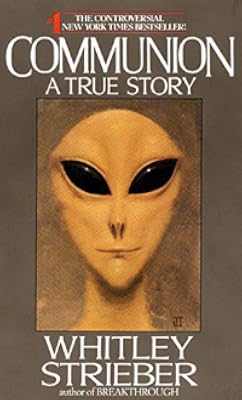
Strieber candidly describes the series of elaborate personal encounters he and his family have had with intelligent non-human beings in his isolated cabin in upstate New York.Tags
Recommendations








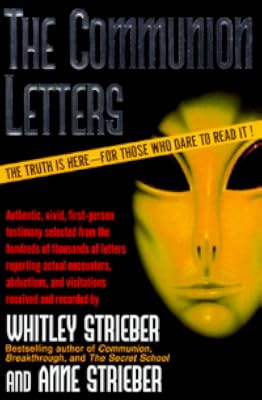
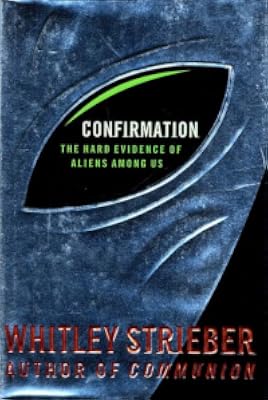
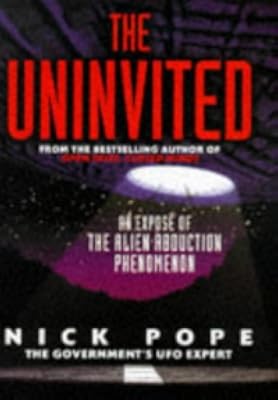

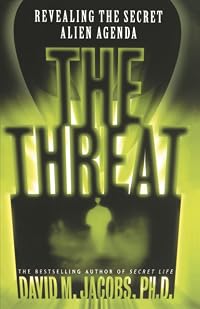















Member Recommendations


Member Reviews
Communion is Strieber's autobiographical accounts of his abductions and interactions with aliens. The book describes what he is convinced are real events spread over many years.
This was a disappointing addition to Strieber's body of work. He's an excellent horror author. I tried to imagine this as just another horror story by him with a false framing story for verisimilitude, despite knowing going in that he truly believes in the abductions and alien interactions described therein. I even have some old pictures of my father reading this and tried to think of it as a way of connecting back to his experiences as a reader. I couldn't do it. I couldn't take it seriously. What I'm sure was supposed to feel menacing felt silly, what was show more supposed to feel hopeful felt ludicrous. The recovered memory tropes don't work as we know in the field of psychology that they're virtually always fictitious. The conspiracy theories and paranoia come across as mentally ill.
I guess, if you consider yourself a survivor of these sorts of abductions you'll probably enjoy this. It just makes me feel sad for Strieber though. show less
This was a disappointing addition to Strieber's body of work. He's an excellent horror author. I tried to imagine this as just another horror story by him with a false framing story for verisimilitude, despite knowing going in that he truly believes in the abductions and alien interactions described therein. I even have some old pictures of my father reading this and tried to think of it as a way of connecting back to his experiences as a reader. I couldn't do it. I couldn't take it seriously. What I'm sure was supposed to feel menacing felt silly, what was show more supposed to feel hopeful felt ludicrous. The recovered memory tropes don't work as we know in the field of psychology that they're virtually always fictitious. The conspiracy theories and paranoia come across as mentally ill.
I guess, if you consider yourself a survivor of these sorts of abductions you'll probably enjoy this. It just makes me feel sad for Strieber though. show less
For me, it wasn't whether or not Streiber's account actually happened the way he described, but whether he knowingly lied about it. I don't believe he lied, but I also don't believe his fantastical recollections are even mostly true. So if you can suspend your incredulity, Communion will envelope you in one the strangest, most frightening, most dreamlike experience you'll ever read.
Hell yeah what's not to like! I think this book gets to the heart of paranormal mystery: either you believe in the supernatural or you're forced to admit the psychosomatic masochism of the human brain. It's pretty terrifying either way.
Whitley Strieber was a firm sceptic regarding the existence of such things as flying saucers and such beings as extraterrestrials, but then he began to have terrifying, unexplainable experiences.
Whitley and his wife owned a log cabin in “a secluded corner of upstate New York”. It was here that at the end of 1985 the frightening experiences began.
In the middle of the night, he experienced a “whooshing, swirling noise” as though a number of people were moving rapidly around in the living room downstairs. One of the double doors leading into the couple’s bedroom was moving closed. Then he saw a “compact figure” moving around the door. This figure was about three and a half feet tall. Later he saw the face: “two dark holes show more for eyes and a black down-turning line of a mouth that later became an O”. It seemed to be wearing some sort of breastplate or armoured vest.
The figure came rushing into the room. His next recollection is of being in motion, naked, arms and legs extended, moving out of the room.
He was in a state of paralysis and panic. Then he was in a depression in the woods together with several small beings. He could only move his eyes.
One being, whom he felt was a woman, made a particularly strong impression on him. He felt that she was very old, and in fact later, she admitted that she was old and he got the impression she could be Ishtar. He was taken over by extreme dread where he felt his personality “completely evaporate”. This was a profoundly physical experience. He “ceased to exist”.
He was in a small “messy” chamber with tiny people moving around at great speed.
The beings inserted a needle into his brain and he began to scream.
He had seen four different type of beings: 1) the small robot-like being he had seen initially 2) short stocky beings in dark blue coveralls 3) a being with black slanted eyes and a verstigial mouth and nose 4) a smaller being with round, black eyes like large buttons.
The beings inserted a mechanical device into his rectum and took samples, perhaps of faecal matter. It felt like he was being raped.
The author tells us in depth about his various experiences and what friends who were present at the time, and his wife Anne, experienced. He let himself be hypnotized and during the hypnosis sessions he recounted similar experiences he had had throughout his life, starting from an early age. He contacted an expert called Budd Hopkins who was also present during the hypnosis sessions.
At one point when he says to the female being “You have no right!” she replies; “We do have a right:” However, this is not expanded on.
Though the beings who visited him were clearly not human, and they certainly seemed to be extraterrrestrials, the author termed them “visitors”, since he was very much in doubt as to who or what they really were.
One explanation was that he was losing his mind, but the psychiatrist he consulted assured him he was completely compos mentis with no indication of any psychoses. He does not think that the visitors were necessarily from another planet, but perhaps were similar to fairies. Perhaps they are “our own dead”: we are a larval form and they are the adults of our species. (I regard this as an extremely fanciful and unrealistic explanation.) He also suggests that these beings, whom thousands of people have encountered, could be created by one’s own unconscious mind, be from another dimension, parallel universe or another time. He does not mention the possibility that they come from within the Earth, a theory that I have encountered elsewhere.
The title of this book is “Communion”, which the Oxford English dictionary defines as “the sharing of intimate thoughts and feelings” (Though I don’t really trust this dictionary completely after reading its definition of “extraterrestrial” – “fictional being from outer space”.) The author says the eyes of the visitors “that seem to stare into the deepest core of being” are asking for more than simple information, and the goal seems to be “communion”. So I understand him to mean that the visitors seek a (deep) sharing of thoughts and feelings, or the like.
The book is well-written and Whitley discusses his experiences and ideas in depth. He also tackles the history of such experiences going back in time to AD 300. Sometimes I felt the book was somewhat too comprehensive, spreading over too many subjects.
But I highly recommend that you read the book if you have any interest at all in the subject, in fact even if you are absolutely sceptical about the veracity of Whitley’s experiences. Remember that Whitley is himself a deeply sceptical man. Also take a look at Whitley’s newest book about the after-life. show less
Whitley and his wife owned a log cabin in “a secluded corner of upstate New York”. It was here that at the end of 1985 the frightening experiences began.
In the middle of the night, he experienced a “whooshing, swirling noise” as though a number of people were moving rapidly around in the living room downstairs. One of the double doors leading into the couple’s bedroom was moving closed. Then he saw a “compact figure” moving around the door. This figure was about three and a half feet tall. Later he saw the face: “two dark holes show more for eyes and a black down-turning line of a mouth that later became an O”. It seemed to be wearing some sort of breastplate or armoured vest.
The figure came rushing into the room. His next recollection is of being in motion, naked, arms and legs extended, moving out of the room.
He was in a state of paralysis and panic. Then he was in a depression in the woods together with several small beings. He could only move his eyes.
One being, whom he felt was a woman, made a particularly strong impression on him. He felt that she was very old, and in fact later, she admitted that she was old and he got the impression she could be Ishtar. He was taken over by extreme dread where he felt his personality “completely evaporate”. This was a profoundly physical experience. He “ceased to exist”.
He was in a small “messy” chamber with tiny people moving around at great speed.
The beings inserted a needle into his brain and he began to scream.
He had seen four different type of beings: 1) the small robot-like being he had seen initially 2) short stocky beings in dark blue coveralls 3) a being with black slanted eyes and a verstigial mouth and nose 4) a smaller being with round, black eyes like large buttons.
The beings inserted a mechanical device into his rectum and took samples, perhaps of faecal matter. It felt like he was being raped.
The author tells us in depth about his various experiences and what friends who were present at the time, and his wife Anne, experienced. He let himself be hypnotized and during the hypnosis sessions he recounted similar experiences he had had throughout his life, starting from an early age. He contacted an expert called Budd Hopkins who was also present during the hypnosis sessions.
At one point when he says to the female being “You have no right!” she replies; “We do have a right:” However, this is not expanded on.
Though the beings who visited him were clearly not human, and they certainly seemed to be extraterrrestrials, the author termed them “visitors”, since he was very much in doubt as to who or what they really were.
One explanation was that he was losing his mind, but the psychiatrist he consulted assured him he was completely compos mentis with no indication of any psychoses. He does not think that the visitors were necessarily from another planet, but perhaps were similar to fairies. Perhaps they are “our own dead”: we are a larval form and they are the adults of our species. (I regard this as an extremely fanciful and unrealistic explanation.) He also suggests that these beings, whom thousands of people have encountered, could be created by one’s own unconscious mind, be from another dimension, parallel universe or another time. He does not mention the possibility that they come from within the Earth, a theory that I have encountered elsewhere.
The title of this book is “Communion”, which the Oxford English dictionary defines as “the sharing of intimate thoughts and feelings” (Though I don’t really trust this dictionary completely after reading its definition of “extraterrestrial” – “fictional being from outer space”.) The author says the eyes of the visitors “that seem to stare into the deepest core of being” are asking for more than simple information, and the goal seems to be “communion”. So I understand him to mean that the visitors seek a (deep) sharing of thoughts and feelings, or the like.
The book is well-written and Whitley discusses his experiences and ideas in depth. He also tackles the history of such experiences going back in time to AD 300. Sometimes I felt the book was somewhat too comprehensive, spreading over too many subjects.
But I highly recommend that you read the book if you have any interest at all in the subject, in fact even if you are absolutely sceptical about the veracity of Whitley’s experiences. Remember that Whitley is himself a deeply sceptical man. Also take a look at Whitley’s newest book about the after-life. show less
In Communion, Whitley Streiber makes his case regarding the existence of extra terrestrials, providing proof of his own abduction and describing similar abductions of other people. Whether you believe Streiber's assertions or not, I would still recommend reading this as it is well-written, and because he makes a compelling case.
[b: Communion|11033|The Seville Communion|Arturo Pérez-Reverte|https://images.gr-assets.com/books/1305158518s/11033.jpg|52761] is regarded by many as the book that defined the pivotal alien abduction scenario. While it is true that the archetypes are present within this book: the medical examining table, the probes and implants, the mysterious disappearing pregnancy and more; it is also evident that [a: Whitley Strieber|18454|Whitley Strieber|https://images.gr-assets.com/authors/1435172880p2/18454.jpg] was not the first to write about them. The tradition is far-reaching into the past, and even the encounters that were happening throughout the fifties seemed to have some of the hallmarks of this experience. Whitley, to his credit, was show more just a far larger name when he published this book that seems to have largely destroyed his good reputation.
[b: Communion|11033|The Seville Communion|Arturo Pérez-Reverte|https://images.gr-assets.com/books/1305158518s/11033.jpg|52761] largely describes his otherworldly experience throughout his life. He retells the stories of his major two encounters, and the hypnotic regression that allowed him to find other memories. While I expected a knee-jerk skeptical reaction to these tales instead I found myself surprised by just how scientifically rigorous he was. He appears to have done what he could to remain uninfluenced by other material, and he acknowledges problems with hypnosis, polygraph testing, etc. He also acknowledges fully that the 'visitor hypothesis' is one that could be any number of things other than extraterrestrials. Considering the age of the book and the subject matter at hand, I thoroughly enjoyed it all and consider it worth a read and some consideration.
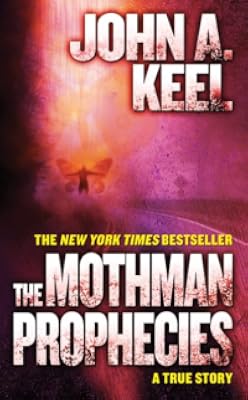
The book is terrifying, intriguing, and over all just a fascinating read. While not as wild a story as, say, [b: The Mothman Prophecies|567682|The Mothman Prophecies|John A. Keel|https://images.gr-assets.com/books/1312043841s/567682.jpg|33011] proved to be, this book is still a valuable piece of UFO lore and one that rightly deserves its place among the pantheon of best EBE books. If you're a fan of The X-Files or Twin Peaks I'd recommend picking it up based on that alone. If not, then at least consider this as a great distilled tale of a surprisingly prevalent bit of humanity's myths and confusion when faced with an intelligence similar, yet different, to its own. show less
[b: Communion|11033|The Seville Communion|Arturo Pérez-Reverte|https://images.gr-assets.com/books/1305158518s/11033.jpg|52761] largely describes his otherworldly experience throughout his life. He retells the stories of his major two encounters, and the hypnotic regression that allowed him to find other memories. While I expected a knee-jerk skeptical reaction to these tales instead I found myself surprised by just how scientifically rigorous he was. He appears to have done what he could to remain uninfluenced by other material, and he acknowledges problems with hypnosis, polygraph testing, etc. He also acknowledges fully that the 'visitor hypothesis' is one that could be any number of things other than extraterrestrials. Considering the age of the book and the subject matter at hand, I thoroughly enjoyed it all and consider it worth a read and some consideration.
The book is terrifying, intriguing, and over all just a fascinating read. While not as wild a story as, say, [b: The Mothman Prophecies|567682|The Mothman Prophecies|John A. Keel|https://images.gr-assets.com/books/1312043841s/567682.jpg|33011] proved to be, this book is still a valuable piece of UFO lore and one that rightly deserves its place among the pantheon of best EBE books. If you're a fan of The X-Files or Twin Peaks I'd recommend picking it up based on that alone. If not, then at least consider this as a great distilled tale of a surprisingly prevalent bit of humanity's myths and confusion when faced with an intelligence similar, yet different, to its own. show less
Members
- Recently Added By
Lists

The Joe Rogan Experience Library
254 works; 3 members

NPR Reader Poll: 100 Best Horror Novels and Stories
100 works; 20 members

Best Horror Mega-List
342 works; 6 members

Bibliography of "The UFO Phenomenon"
73 works; 1 member

BlackDog's Complete Paperbacks From Hell List
639 works; 3 members
Author Information

71+ Works 9,568 Members
Whitley Strieber was born on June 13, 1945 in San Antonio, Texas. He received a B.A. from the University of Texas in 1968 and a certificate from the London School of Economics and Political Science. Before becoming an author, he worked at an advertising agency from 1970 to 1977, going from account supervisor to vice president. He is the author of show more several novels including The Wolfen, The Hunger, Superstorm, The Last Vampire, Lilith's Dream, 2012: The War for Souls, The Omega Point, Critical Mass, Melody Burning, and the Alien Hunter series. In 1987, he published Communion: A True Story, which described his personal encounters with extraterrestrials. His other non-fiction works include Transformation, Breakthrough: The Next Step, The Secret School, Solving the Communion Enigma: What Is to Come, and Miraculous Journey. He founded the Communion Foundation in 1989 to assist in establishing a productive relationship with alien beings. He is the host of the paranormal and fringe science-themed internet podcast, Dreamland, available on a weekly basis from his website, Unknown Country. (Bowker Author Biography) Whitley Strieber, the co-author of the recent "New York Times" "Coming Global Superstorm", is the author of two classic pieces of American horror fiction: "The Hunger" & "The Wolfen". He is also widely known for his multi-million-copy best-selling account of his own close encounter, "Communion: A True Story". He is engaged in the most advanced research being conducted into the physical evidence of close encounters, & the supernatural in general, today. (Publisher Provided) show less
Some Editions
Awards and Honors
Distinctions
Series

Belongs to Publisher Series
Heyne Allgemeine Reihe (01/7789)
Work Relationships
Common Knowledge
- Canonical title
- Communion: A True Story; Communion
- Original title
- Communion: A True Story
- Original publication date
- 1987-01
- Related movies
- Communion (1989 | IMDb)
- Dedication
- To the ones who have slipped into the mirror,
And the ones who reflect it in their eyes.
To the ones who must hide everything,
And the ones who lose what they hide.
To the ones who cannot be silent,
And the one... (show all)s who must lie. - First words
- This is the true story of one man's attempt to deal with a shattering assault from the unknown.
- Last words
- (Click to show. Warning: May contain spoilers.)And we will all go down the labyrinth, to meet whatever awaits us there.
- Original language
- English
- Canonical DDC/MDS
- 001.9422
Classifications
- Genre
- Biography & Memoir
- DDC/MDS
- 001.9422 — Computer science, information & general works Computer science, knowledge & systems Knowledge and learning in general Aliens/UFOs Mysteries (Atlantis, Bermuda Triangle) Unidentified flying objects (UFOs) Alien abduction
- LCC
- TL789.3 .S77 — Technology Motor vehicles. Aeronautics. Astronautics Motor vehicles. Aeronautics. Astronautics Astronautics. Space travel
- BISAC
Statistics
- Members
- 1,407
- Popularity
- 16,796
- Reviews
- 23
- Rating
- (3.26)
- Languages
- 9 — Czech, Dutch, English, Finnish, French, German, Italian, Spanish, Swedish
- Media
- Paper, Audiobook, Ebook
- ISBNs
- 34
- UPCs
- 1
- ASINs
- 17