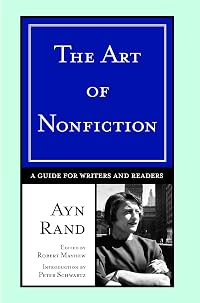
The Art of Nonfiction: A Guide for Writers and Readers
by Ayn Rand 
On This Page
Description
In 1969, the world-renowned author Ayn Rand gave a series of informal lectures on the art of nonfiction to a select group of friends and associates. These edited transcripts take the listener step by step through the writing process, providing insightful observations and invaluable techniques along the way.Rand discusses the psychological aspects of writing and the different roles played by the conscious and subconscious mind. She explains how to select a subject and theme, how to identify show more your audience, and how to write the first draft. From preparing an outline to mastering an individual writing style, this crucial resource introduces the ideas of one of our most enduring authors to a new generation.Aspiring—and established—writers of nonfiction will find this guide to creating effective nonfiction invaluable. show lessTags
Recommendations
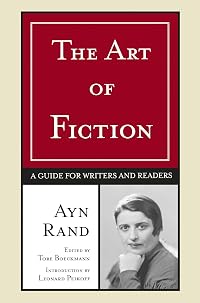

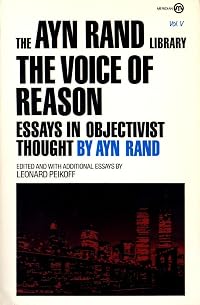
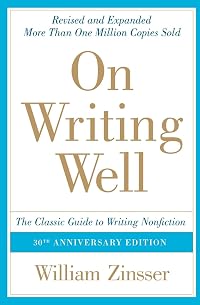
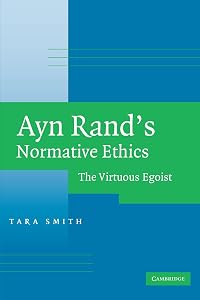
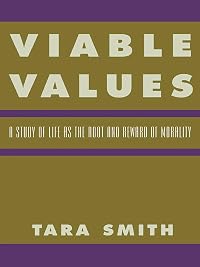









Member Recommendations
Member Reviews
Collated from prior presentations that Ayn Rand undertook, The Art Of Nonfiction is a straight forward foray into Rand’s considerations, techniques and process of writing nonfiction.
Written in a cogent and methodical fashion, some of the main points Rand addresses are (1) subject and theme, (2) creating an outline, (3) writing the draft, (4) editing, (5) style, which is addressed at length, and even (6) writing books as well. The prior list is not exhaustive, but merely a sampling of the range of ideas Rand undertook.
While some of the rules Rand expounds upon could be seen as mechanical if acted upon rigidly, they need not be. Writing is as much an art as it is a science; using the rules she suggests as guidelines will certainly help show more one’s writing in a sound manner, as long as one doesn’t fuse themselves to a mechanistic process.
Be that as it may, two of the main points which Rand stressed considerably were that of clarity, and the importance of an outline. These are two parts of writing which all writers struggle with sooner or later, but they are also components that will net some of the greatest benefits if one executes them properly.
On the point of clarity, Rand elucidates:
“If you cannot write something down clearly and objectively, then you do not really know it. Any vagueness or indecision on any fundamental aspect of your article will be disastrous. That which you cannot name you know only approximately.”[2]
Translation: Know what you know, know what you don’t know, and be crystal clear and precise about it.
Along the same avenue, on the point of outlines, Rand states:
“The Outline’s level of detail depends on how clear the subject is in your mind, and how complex the article is. I suggest the following test. If in making an outline you feel vaguely that some point is difficult to formulate though you “kind of” know what you mean, then you need more detail. On the other hand, if you begin to feel bored – if all you need are a few lines on some point but you are writing a volume – then you are being too detailed. As in all mental activity, you are the only judge.”[2]
For a book whose information wasn’t meant to be part of a book at the outset, it flows seamlessly. Given that The Art Of Nonfiction was collated from a set of oral lectures, the editing done by Robert Mayhew is extremely precise, and Rand’s thoughts are easy to follow.
For good measure, the book even includes selected outlines used by Ayn Rand in some of her articles. This helps the reader view an outline through Rand’s eyes. Though this section isn’t lengthy, the precision in execution is flawless and aids in the reader setting their crosshairs on what a correctly created outline format will look like.
In light of the breadth and scope of information provided in such a small package, The Art Of Nonfiction would be a mainstay in any nonfiction writer’s arsenal. Incisive individuals who wish to apprise themselves of sound writing tips that will be guideposts for their writing endeavors would be wise learn the tenets in these books, for they are as important as they are timeless.
___________________________________________________________
Footnotes:
[1] Ayn Rand, The Art of Nonfiction, p. 17.
[2] Ibid., pp. 44-45. show less
Written in a cogent and methodical fashion, some of the main points Rand addresses are (1) subject and theme, (2) creating an outline, (3) writing the draft, (4) editing, (5) style, which is addressed at length, and even (6) writing books as well. The prior list is not exhaustive, but merely a sampling of the range of ideas Rand undertook.
While some of the rules Rand expounds upon could be seen as mechanical if acted upon rigidly, they need not be. Writing is as much an art as it is a science; using the rules she suggests as guidelines will certainly help show more one’s writing in a sound manner, as long as one doesn’t fuse themselves to a mechanistic process.
Be that as it may, two of the main points which Rand stressed considerably were that of clarity, and the importance of an outline. These are two parts of writing which all writers struggle with sooner or later, but they are also components that will net some of the greatest benefits if one executes them properly.
On the point of clarity, Rand elucidates:
“If you cannot write something down clearly and objectively, then you do not really know it. Any vagueness or indecision on any fundamental aspect of your article will be disastrous. That which you cannot name you know only approximately.”[2]
Translation: Know what you know, know what you don’t know, and be crystal clear and precise about it.
Along the same avenue, on the point of outlines, Rand states:
“The Outline’s level of detail depends on how clear the subject is in your mind, and how complex the article is. I suggest the following test. If in making an outline you feel vaguely that some point is difficult to formulate though you “kind of” know what you mean, then you need more detail. On the other hand, if you begin to feel bored – if all you need are a few lines on some point but you are writing a volume – then you are being too detailed. As in all mental activity, you are the only judge.”[2]
For a book whose information wasn’t meant to be part of a book at the outset, it flows seamlessly. Given that The Art Of Nonfiction was collated from a set of oral lectures, the editing done by Robert Mayhew is extremely precise, and Rand’s thoughts are easy to follow.
For good measure, the book even includes selected outlines used by Ayn Rand in some of her articles. This helps the reader view an outline through Rand’s eyes. Though this section isn’t lengthy, the precision in execution is flawless and aids in the reader setting their crosshairs on what a correctly created outline format will look like.
In light of the breadth and scope of information provided in such a small package, The Art Of Nonfiction would be a mainstay in any nonfiction writer’s arsenal. Incisive individuals who wish to apprise themselves of sound writing tips that will be guideposts for their writing endeavors would be wise learn the tenets in these books, for they are as important as they are timeless.
___________________________________________________________
Footnotes:
[1] Ayn Rand, The Art of Nonfiction, p. 17.
[2] Ibid., pp. 44-45. show less
It demonstrates how she lived her philosophy and seems to provide a very realistic, effective approach to writing.
Ratings
Members
- Recently Added By
Author Information

179+ Works 76,436 Members
Ayn Rand, 1905 - 1982 Novelist and philosopher Ayn Rand was born Alice Rosenbaum on February 2, 1905 in St. Petersburg, Russia. She graduated with highest honors in history from the University of Petrograd in 1924, and she came to the United States in 1926 with dreams of becoming a screenwriter. In 1929, she married actor Charles "Frank" O'Connor. show more After arriving in Hollywood, Rand was spotted by Cecil B. DeMille standing at the gate of his studio and gave her a job as an extra in King of Kings. She also worked as a script reader and a wardrobe girl and, in 1932, she sold Red Pawn to Universal Studios. In the 1950's, she returned to New York City where she hosted a Saturday night group she called "the collective." It was also during this time that Rand received a fan letter from a young man, Nathaniel Branden. She was impressed with his letter, and she wrote him back. Her correspondence with him eventually led to an affair that lasted over a decade. He became her chief spokesperson and codified the principles of her novels into a strict philosophical system (objectivism) and founded an institute bearing his name. Their affair ended in 1968 when Branden got involved with another one of Rand's disciples. According to Rand, people are inherently selfish and act only out of personal interest making a selfish act, a rational one. It is from this belief that her characters play out their lives. Rand's first novel was "We the Living" (1936) and was followed by "Anthem" (1938), "The Fountainhead" (1943), and "Atlas Shrugged" (1957). All four of her novels made the top ten of the controversial list of the 100 Best Novels of the 20th Century. On March 6, 1982, Ayn Rand died in her New York City apartment. (Bowker Author Biography) show less
Ayn Rand has a Legacy Library. Legacy libraries are the personal libraries of famous readers, entered by LibraryThing members from the Legacy Libraries group.
Common Knowledge
- Original publication date
- 2001
- People/Characters
- Objectivist Magazine Writers and Editors
- Important events
- 1969 Ayn Rand gives a lecture to her Objectivist Friends
- First words
- The first precondition of this course, and of any type of writing, is: do not get a sense of unearned guilt.
- Quotations
- Again there is nothing wrong in making mistakes. What is wrong is not correcting them. (page 33)
Writing articles, however, is not learning but communicating knowledge. 48 - Last words
- (Click to show. Warning: May contain spoilers.)Follow my method, not the conformist writer's-and best premises to you in your future careers as writers.
Classifications
- Genres
- Literature Studies and Criticism, Nonfiction, Philosophy
- DDC/MDS
- 808.02 — Literature & rhetoric Literature, rhetoric & criticism Composition Rhetoric and anthologies Authorship techniques, plagiarism, editorial techniques
- LCC
- PN147 .R35 — Language and Literature Literature (General) Literature (General) Authorship
- BISAC
Statistics
- Members
- 328
- Popularity
- 96,703
- Reviews
- 5
- Rating
- (4.05)
- Languages
- English, Korean, Russian
- Media
- Paper, Audiobook, Ebook
- ISBNs
- 15
- ASINs
- 3