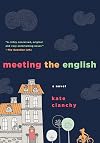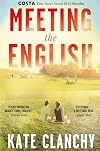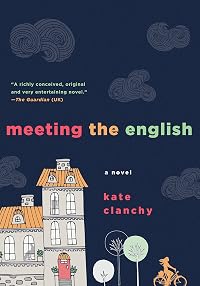
Meeting the English
by Kate Clanchy
On This Page
Description
"In response to a job advertisement, Struan Robertson, orphan, genius, and just seventeen, leaves his dour native town in Scotland, and arrives in London in the freakishly hot summer of 1989. His job, he finds, is to care for playwright and one-time literary star Phillip Prys, dumbfounded and paralyzed by a massive stroke, because, though two teenage children, two wives, and a literary agent all rattle 'round Phillip's large house, they are each too busy with their peculiar obsessions to do show more it themselves. As the city bakes, Struan finds himself tangled in a midsummer's dream of mistaken identity, giddying property prices, wild swimming, and overwhelming passions. For everyone, it is to be a life-changing summer. Meeting the English is a bright book about dark subjects--a tale about kindness and its limits, told with love. Spiked with witty dialogue and jostling with gleeful, zesty characters, it is a glorious debut novel from an acclaimed writer of poetry, non-fiction, and short stories"-- show lessTags
Recommendations










Member Reviews
Meeting the English is a modern-day (set in 1989) comedy of manners: country bumpkin meets city slickers, but the bumpkin is more than he first appears and the slickers aren’t all that slick. In this case, “Bumpkin” means hailing from a mining town in central Scotland that no longer has a mine; “Slicker” means residing in London, convinced that one’s own sensitivity/intellect is superior to others’.
Struan Robertson (pronounced, STREW-in, not Strew-ANNE; it’s not an iamb) an exceptionally gifted student, planning to pursue a career in dentistry, takes a summer job working as an assistant to a fading playwright who has recently suffered a stroke. The playwright, Phillip Prys, is surrounded by a largely dysfunctional show more grouping of family and friends. His ex-wife (and mother of his two children) is a former actress, now losing money flipping houses (as we would put it today) in London’s falling real estate market. His current wife, a formerly wealthy refugee from Iran, paints post-modern Persian miniatures. His son is a self-absorbed want-to-be playwright who’s just been rusticated (in other words, kicked out for a year) from Oxford. His daughter is angry and lonely, sure she’ll never find love or happiness. His daughter’s best friend is a recovering anorexic. His agent is a semi-closeted gay man who finds Phillip demanding more and more time, while bringing in less and less revenue.
Hilarity (mostly) ensues. Some find love; some get their comeuppence; all are changed.
This is a great book to pick up when you want to laugh (not too unkindly) at others’ foibles. The style is breezy. The plot holds some surprises. If you’re starting to dream of vacation reading as you wait for winter to end, this book would be a fun title to put on your list. show less
Struan Robertson (pronounced, STREW-in, not Strew-ANNE; it’s not an iamb) an exceptionally gifted student, planning to pursue a career in dentistry, takes a summer job working as an assistant to a fading playwright who has recently suffered a stroke. The playwright, Phillip Prys, is surrounded by a largely dysfunctional show more grouping of family and friends. His ex-wife (and mother of his two children) is a former actress, now losing money flipping houses (as we would put it today) in London’s falling real estate market. His current wife, a formerly wealthy refugee from Iran, paints post-modern Persian miniatures. His son is a self-absorbed want-to-be playwright who’s just been rusticated (in other words, kicked out for a year) from Oxford. His daughter is angry and lonely, sure she’ll never find love or happiness. His daughter’s best friend is a recovering anorexic. His agent is a semi-closeted gay man who finds Phillip demanding more and more time, while bringing in less and less revenue.
Hilarity (mostly) ensues. Some find love; some get their comeuppence; all are changed.
This is a great book to pick up when you want to laugh (not too unkindly) at others’ foibles. The style is breezy. The plot holds some surprises. If you’re starting to dream of vacation reading as you wait for winter to end, this book would be a fun title to put on your list. show less
Satire of the first order - skewering the British literati, among others. Struan Robertson is a star pupil, upstanding young man, and salt of the earth person in the small town of Cuik, Scotland (in the Central Belt, as he has to keep explaining). For one year, he has a British English Lit. teacher who sees potential in him (and sees himself as a Dead Poet's Society influencer), so when he sees an ad in a literary journal for a caretaker needed for Phillip Prys, a mid-century British drama phenom, (and SOB), he recommends Struan broaden his world view and take it on. Struan, who grew up with his Gran after he nursed his father with MS until he died, has nothing else going until he applies to dental school, so he shows up at the London show more address and is engulfed in the domestic controversy that Philip's life has become. Phillip has been completely incapacitated by a stroke, and is at the mercy of his first wife, Myfanwy, who wants the house and security for the 2 children they had together - 16 year old Juliet, and 20-something, Jake, an Oxford eject. However, the house is occupied by Shirin, Phillip's 3rd, beautiful, young, foreign, artist wife. She has no intention of losing anything or repeating any part of her pushed-out-of-her-home refugee-from-Tehran history. Good-hearted Struan is sometimes a pawn, sometimes a patsy in this mess, but always concerned for Phillip's welfare and guided by his moral compass to do the right thing. In the milieu of selfish, spoiled, vengeful, Brits this is sorely tested, but ultimately good guys win on their own terms. A bit of a coming-of-age tale for our hero as he makes his way in a bigger world beyond Cuik, he also comes to terms with the responsibility of being morally good: "Struan wondered if this is what happened when you saved people, that you had to carry a bit of them on your belt forever, like a shrunken head." (247) With great power comes great responsibility - a lessons for individuals and civilizations both. show less
I picked this up in a charity shop for dubious reasons: I disliked the author’s 2019 memoir, and more especially, that when criticised, she repeatedly lied to drum up attacks on a GR reviewer and sympathy for herself. You can read about that in my review of Some Kids I Taught and What They Taught Me, HERE.
I was curious if a 2013 novel would show another side of her. I was determined to try to read this without prejudice, as if it were a novel by Anon. I failed, because so many of the characters, themes, and attitudes were familiar, but I really tried. I usually add images to my reviews. I can’t be bothered with this.
The story
Struan has a year to fill before starting a dentistry degree. He excelled at English and studied Philip show more Prys’ seminal play, “The Pit and Its Men”. (Fictional Philip was on the periphery of the real Angry Young Men.) Struan had nursed his father through MS to death and had a part-time job in a care home, so at the suggestion of his English teacher, he responds to an advert to be a live-in carer for Philip, who’s had a stroke.
A complex, dysfunctional, bohemian family in Hampstead, over a sweltering summer, is a world away from living in a Scottish mining town, long after the mine has closed.
It’s told straightforwardly, chronologically, and sometimes melodramatically. It felt like a soap opera, with Mills & Boon (Harlequin Romance) subplots: a list of reasons why a teen doesn’t fancy someone sets the expectation that will change.
Perhaps it was intended as satire or humour? There was a little slapstick, most bizarrely when a woman falls down the stairs, Struan tries to catch her, but somehow cups both her breasts!
There’s conflict and contrast, but I couldn’t make myself care: parents and children, couples (current, possible, and ex), rich and poor, Scottish and English Londoners and ex-Welsh (Philip and his second wife, Myfanwy), fat and slim, able bodied and disabled. There are drugs, theft, a young teacher in a dodgy relationship, attempted suicide, cold-water swimming, an ugly duckling transforming towards a swan, and a very odd 18th birthday “party”.
Eventually, many are partially redeemed. They reappraise their preconceptions and are changed by knowing Struan, “that exotic thing, an orphan”. He is one of the noble poor: clever, hard-working, deferential, kind - and skinny.
The most interesting aspect is Philip’s internal monologue. For most of the book he’s totally paralysed and unable to communicate. His thoughts and memories are muddled, and sometimes he thinks he’s watching a film of something he’s written. I’d have liked more of that (and a little less blinking, twitching, and looking at Scrabble tiles).
The attitudes
For a considerable time, all the characters are horrid, often implausibly, two-dimensionally so: they’re selfish, greedy, manipulative, and care little for those who are suffering. They all find fat people repugnant, observing revolting rolls of fat and thinking of Billy Bunter and Humpty Dumpty.
Philip thinks he can’t be racist because “he’d married one”, who he exoticises as a “clever little orchid in the greenhouse of Tehran”. There’s a gay couple, one of whom is a Jewish refugee, plus Shirin, also a refugee, so the book can’t be prejudiced, can it?!
Struan has many of the same thoughts, but is less judgemental. He’d never seen black people before, and his first impression of Shirin is “Tarty… She looked foreign, the most foreign person ever.” She’s Iranian and only nine years older than him! He thinks of “the fat lady” with her “fat hands” contrasting with “the beautiful lady”, rather than asking their names, and fixates on the exotic aspects of the beautiful lady’s eyes and appearance.
Most of these views are from the point of view of a character. If I knew nothing of the author, I’d find the relentlessness unpleasant and unnecessary (not much of it is needed for the plot), but I wouldn't necessarily equate characters with their creator. However, these views closely mirror Clanchy’s own, oft-repeated, thoughts in Some Kids, as do the exceptions: Shirin, “one of the perky clever dark girls”, is like the Very Quiet Foreign Girls Clanchy sought out and cultivated.
Oops
“In 1989, there were just crazy amounts of news.”
Maybe. But this was published in 2013, two years before Trump descended the golden escalator and three years before Cameron called the Brexit referendum. There’s been way more news since then! But I don’t blame Clanchy for failing to anticipate any of that.
Quotes
• “Her eyes were long and amber-brown, and it wasn’t just gold painted round the edge of then, the back of them were gold too, textured, like the foil from a packet of cigarettes.”
• “You can’t… be a lesbian… You’re too fat… People will just think that’s why you are one. Because you can’t get a man, you see. Lesbians don’t want lesbians like that.”
• “Thin looked better than fat, thought Juliet. It just did, and being jaundiced or dead or infertile or any of the other things they said about Celia really didn’t matter a button by comparison.”
• “Shirin’s golden hand, so elegant and clever.” show less
I was curious if a 2013 novel would show another side of her. I was determined to try to read this without prejudice, as if it were a novel by Anon. I failed, because so many of the characters, themes, and attitudes were familiar, but I really tried. I usually add images to my reviews. I can’t be bothered with this.
The story
Struan has a year to fill before starting a dentistry degree. He excelled at English and studied Philip show more Prys’ seminal play, “The Pit and Its Men”. (Fictional Philip was on the periphery of the real Angry Young Men.) Struan had nursed his father through MS to death and had a part-time job in a care home, so at the suggestion of his English teacher, he responds to an advert to be a live-in carer for Philip, who’s had a stroke.
A complex, dysfunctional, bohemian family in Hampstead, over a sweltering summer, is a world away from living in a Scottish mining town, long after the mine has closed.
It’s told straightforwardly, chronologically, and sometimes melodramatically. It felt like a soap opera, with Mills & Boon (Harlequin Romance) subplots: a list of reasons why a teen doesn’t fancy someone sets the expectation that will change.
Perhaps it was intended as satire or humour? There was a little slapstick, most bizarrely when a woman falls down the stairs, Struan tries to catch her, but somehow cups both her breasts!
There’s conflict and contrast, but I couldn’t make myself care: parents and children, couples (current, possible, and ex), rich and poor, Scottish and English Londoners and ex-Welsh (Philip and his second wife, Myfanwy), fat and slim, able bodied and disabled. There are drugs, theft, a young teacher in a dodgy relationship, attempted suicide, cold-water swimming, an ugly duckling transforming towards a swan, and a very odd 18th birthday “party”.
Eventually, many are partially redeemed. They reappraise their preconceptions and are changed by knowing Struan, “that exotic thing, an orphan”. He is one of the noble poor: clever, hard-working, deferential, kind - and skinny.
The most interesting aspect is Philip’s internal monologue. For most of the book he’s totally paralysed and unable to communicate. His thoughts and memories are muddled, and sometimes he thinks he’s watching a film of something he’s written. I’d have liked more of that (and a little less blinking, twitching, and looking at Scrabble tiles).
The attitudes
For a considerable time, all the characters are horrid, often implausibly, two-dimensionally so: they’re selfish, greedy, manipulative, and care little for those who are suffering. They all find fat people repugnant, observing revolting rolls of fat and thinking of Billy Bunter and Humpty Dumpty.
Philip thinks he can’t be racist because “he’d married one”, who he exoticises as a “clever little orchid in the greenhouse of Tehran”. There’s a gay couple, one of whom is a Jewish refugee, plus Shirin, also a refugee, so the book can’t be prejudiced, can it?!
Struan has many of the same thoughts, but is less judgemental. He’d never seen black people before, and his first impression of Shirin is “Tarty… She looked foreign, the most foreign person ever.” She’s Iranian and only nine years older than him! He thinks of “the fat lady” with her “fat hands” contrasting with “the beautiful lady”, rather than asking their names, and fixates on the exotic aspects of the beautiful lady’s eyes and appearance.
Most of these views are from the point of view of a character. If I knew nothing of the author, I’d find the relentlessness unpleasant and unnecessary (not much of it is needed for the plot), but I wouldn't necessarily equate characters with their creator. However, these views closely mirror Clanchy’s own, oft-repeated, thoughts in Some Kids, as do the exceptions: Shirin, “one of the perky clever dark girls”, is like the Very Quiet Foreign Girls Clanchy sought out and cultivated.
Oops
“In 1989, there were just crazy amounts of news.”
Maybe. But this was published in 2013, two years before Trump descended the golden escalator and three years before Cameron called the Brexit referendum. There’s been way more news since then! But I don’t blame Clanchy for failing to anticipate any of that.
Quotes
• “Her eyes were long and amber-brown, and it wasn’t just gold painted round the edge of then, the back of them were gold too, textured, like the foil from a packet of cigarettes.”
• “You can’t… be a lesbian… You’re too fat… People will just think that’s why you are one. Because you can’t get a man, you see. Lesbians don’t want lesbians like that.”
• “Thin looked better than fat, thought Juliet. It just did, and being jaundiced or dead or infertile or any of the other things they said about Celia really didn’t matter a button by comparison.”
• “Shirin’s golden hand, so elegant and clever.” show less
Such sad characters; didn’t like them much. Also a sort of pathetic look at life. English or not.
Borrowed from Becky. Overall, meh.
Borrowed from Becky. Overall, meh.
Ratings
Members
- Recently Added By
Lists

Best Books Set in London
157 works; 42 members

london novels (adult)
21 works; 3 members
Author Information

18+ Works 356 Members
Awards and Honors
Awards
Classifications
Statistics
- Members
- 101
- Popularity
- 320,596
- Reviews
- 4
- Rating
- (3.43)
- Languages
- English
- Media
- Paper, Audiobook, Ebook
- ISBNs
- 11
- ASINs
- 1