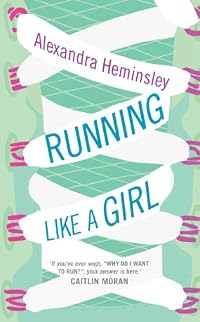
Running Like a Girl
by Alexandra Heminsley
On This Page
Description
"In her twenties, Alexandra Heminsley spent more time drinking white wine than she did in pursuit of athletic excellence. When she decided to take up running in her thirties, she had high hopes for a blissful runner's high and immediate physical transformation. After eating three slices of toast with honey and spending ninety minutes on iTunes creating the perfect playlist, she hit the streets--and failed miserably. The stories of her first runs turn the common notion that we are all "born show more to run" on its head--and exposes the truth about starting to run: it can be brutal. Running Like a Girl tells the story of getting beyond the brutal part, how Alexandra makes running a part of her life, and reaps the rewards: not just the obvious things, like weight loss, health, and glowing skin, but self-confidence and immeasurable daily pleasure, along with a new closeness to her father--a marathon runner--and her brother, with whom she ultimately runs her first marathon"-- show lessTags
Recommendations
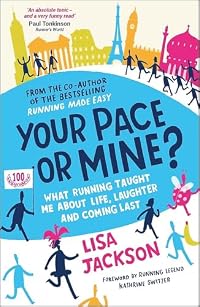
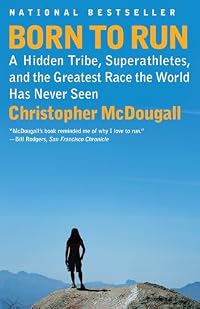
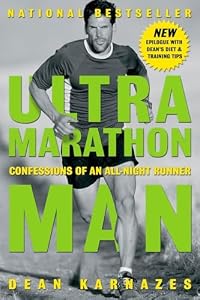
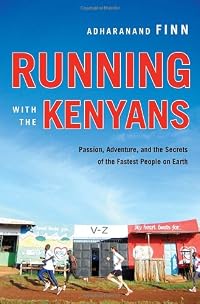
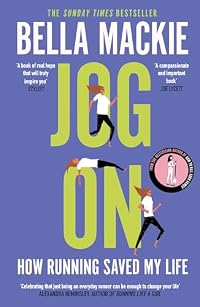
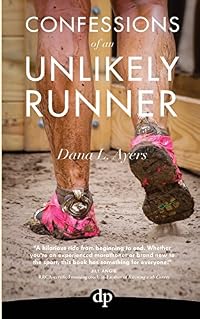
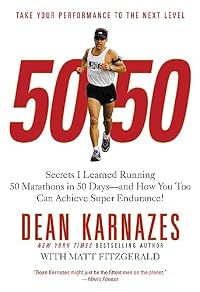
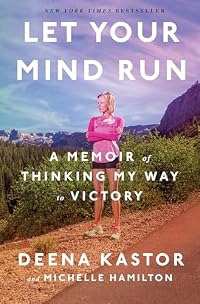





Member Recommendations
Member Reviews
If you're *not* a runner and could use a memoir to help the idea marinate in your mind, this is a great book. Heminsley goes through the highs and the lows, making it the idea seem possible. I really wanted to get out and move: I got some clothes, new sneakers, made the pump-me-up playlist, I felt ready! Then I got a flu that left me barely able to stand, then the snow fell and my sneakers wouldn't help me. Due to the book realistically discussing the process, I still want to go out. How often can you say that things happen and you still want to proceed?
While there were some great tips on running, the organization is terrible and the tips are not all encompassing. If you want to whet your appetite, this is a great memoir of an average show more female runner. If you need and instruction manual and reference, this is is not it; I went running to the bookstore to get a running guide. That said, I am still happy that I bought this book; jury is just out on whether it is a read-and-pass-on versus a keeper.
EDIT: I ended up keeping it, if you are interested. show less
While there were some great tips on running, the organization is terrible and the tips are not all encompassing. If you want to whet your appetite, this is a great memoir of an average show more female runner. If you need and instruction manual and reference, this is is not it; I went running to the bookstore to get a running guide. That said, I am still happy that I bought this book; jury is just out on whether it is a read-and-pass-on versus a keeper.
EDIT: I ended up keeping it, if you are interested. show less
Best for:
Women interested in distance running.
In a nutshell:
Author Heminsley shares her journey to becoming a long distance runner, and what she’s learned along the way.
Worth quoting:
“After a while though I began to realise that no one was really watching.”
Why I chose it:
I’ve been running half marathons for about 14 years now, but this year I decided to get a running coach to see if I can improve my time. Then I saw this book and decided why not pile on.
What it left me feeling:
Inspired but also a bit annoyed.
Review:
There’s so much in this book that I like and relate to, but also a fair bit that I found frustrating.
Let’s start with what I liked about this. The first chapter is all about Heminsley running the Royal Parks Half show more marathon in London. I’ve run that one three times and am currently training for it now. So right away I was captured. She then jumps back in time and talks about how she got into running - by choosing to run the London marathon (a thing I will never do - marathons are too much training for me). She talks about the challenges she’s had getting motivated, but also the great moments she’s had in training and races.
There are a lot of great tips in this book for new runners - tips about shoes, and training, and sports bras (I actually bought a bra she recommended - I’m testing it out next week). She talks about the elitism in some aspects of the community, but the welcoming nature of other aspects. She shares her experiences of hitting the wall, of being bored, of not wanting to get out for that next training run.
She also talks about the emotion of finishing a race. I’m a solidly middle runner - usually finishing half marathons with the rush of people doing 1 h 50 - 2 h 10 minute times. But I don’t run to compete against anyone - I run for myself. And in every race there’s usually a moment where I think ‘this is absurd, why am I doing this, I want to go home.’ And then I hit the end of mile 13 and there’s only about a tenth of a mile to go and the emotions just hit. It’s an amazing feeling, whether I’ve gotten my best time ever or whether it’s my worst. Just finishing is fucking cool. As is the work I put in to get there.
She’s also right that there’s a really running community, and it can be wonderful. Last weekend I ran my first park run - free events every Saturday morning in parks all over the UK. They are clearly runs, not races. They do a welcome to first timers, ask if there are any tourists in. There are marshalls volunteering to keep us on the route. At the end, we do find out our place and we get a banana, and some people go off to get coffees together. It’s just so lovely - what for so many of us is indeed a solo activity becomes communal.
But there are aspects I really don’t like about this book. Heminsley seems to have some opinions about gender that I found frustrating - like this line “As my body changed and my sense of what it was capable of started to shift I developed a more masculine side to my personality and, dare I say it, a competitive streak.” Huh? Is this meant to suggest that being competitive or capable is a ‘masculine’ trait all of a sudden? Like, what does that even mean? She also talks about ‘embracing her masculine side’ helping her become better woman. How is running or racing masculine? Literally, I don’t get it. Things like this come up a couple of times, and what knock this book from four stars to three for me.
Also a minor CN for weight loss / body shaming. I understand that weight loss and appearance are obviously a motivator for some people, I wish there’d been a little more thought put into throwing out those ideas (she also has a kind of bizarre offhand observation about a man’s body that gave me pause and bummed me out). I’d love for books like this to not talk about weight or appearance, but I know that asking a lot.
Recommend to a Friend / Keep / Donate it / Toss it:
Keep for the tips. show less
Women interested in distance running.
In a nutshell:
Author Heminsley shares her journey to becoming a long distance runner, and what she’s learned along the way.
Worth quoting:
“After a while though I began to realise that no one was really watching.”
Why I chose it:
I’ve been running half marathons for about 14 years now, but this year I decided to get a running coach to see if I can improve my time. Then I saw this book and decided why not pile on.
What it left me feeling:
Inspired but also a bit annoyed.
Review:
There’s so much in this book that I like and relate to, but also a fair bit that I found frustrating.
Let’s start with what I liked about this. The first chapter is all about Heminsley running the Royal Parks Half show more marathon in London. I’ve run that one three times and am currently training for it now. So right away I was captured. She then jumps back in time and talks about how she got into running - by choosing to run the London marathon (a thing I will never do - marathons are too much training for me). She talks about the challenges she’s had getting motivated, but also the great moments she’s had in training and races.
There are a lot of great tips in this book for new runners - tips about shoes, and training, and sports bras (I actually bought a bra she recommended - I’m testing it out next week). She talks about the elitism in some aspects of the community, but the welcoming nature of other aspects. She shares her experiences of hitting the wall, of being bored, of not wanting to get out for that next training run.
She also talks about the emotion of finishing a race. I’m a solidly middle runner - usually finishing half marathons with the rush of people doing 1 h 50 - 2 h 10 minute times. But I don’t run to compete against anyone - I run for myself. And in every race there’s usually a moment where I think ‘this is absurd, why am I doing this, I want to go home.’ And then I hit the end of mile 13 and there’s only about a tenth of a mile to go and the emotions just hit. It’s an amazing feeling, whether I’ve gotten my best time ever or whether it’s my worst. Just finishing is fucking cool. As is the work I put in to get there.
She’s also right that there’s a really running community, and it can be wonderful. Last weekend I ran my first park run - free events every Saturday morning in parks all over the UK. They are clearly runs, not races. They do a welcome to first timers, ask if there are any tourists in. There are marshalls volunteering to keep us on the route. At the end, we do find out our place and we get a banana, and some people go off to get coffees together. It’s just so lovely - what for so many of us is indeed a solo activity becomes communal.
But there are aspects I really don’t like about this book. Heminsley seems to have some opinions about gender that I found frustrating - like this line “As my body changed and my sense of what it was capable of started to shift I developed a more masculine side to my personality and, dare I say it, a competitive streak.” Huh? Is this meant to suggest that being competitive or capable is a ‘masculine’ trait all of a sudden? Like, what does that even mean? She also talks about ‘embracing her masculine side’ helping her become better woman. How is running or racing masculine? Literally, I don’t get it. Things like this come up a couple of times, and what knock this book from four stars to three for me.
Also a minor CN for weight loss / body shaming. I understand that weight loss and appearance are obviously a motivator for some people, I wish there’d been a little more thought put into throwing out those ideas (she also has a kind of bizarre offhand observation about a man’s body that gave me pause and bummed me out). I’d love for books like this to not talk about weight or appearance, but I know that asking a lot.
Recommend to a Friend / Keep / Donate it / Toss it:
Keep for the tips. show less
In the first part of this funny, moving and frank memoir, Alexandra Heminsley discusses how and why she started running, and – more importantly – how and why she continued to run, despite occasional setbacks and bouts of self-doubt. She talks about how it brought her closer to family members, and made her feel better about herself, and along the way describes some of the races she has participated in.
The second part of the book is given over to hints and advice to other runners, or people who are thinking of taking up running, whether as a casual hobby, or a serious enthusiast. The book also talks about the history of women’s running (and boy, did that chapter open my eyes; after reading about the journey that Joan Benoit show more Samuelson took to become the first female Olympic marathon winner, I watched some of the footage on YouTube, and was filled with admiration and tears).
While Heminsley’s own story is very entertaining and inspiring, the second section of the book is very useful to new runners, offering tips on buying running trainers and equipment, and what you will need if you take part in a big race. It also highlights injuries that can be caused or aggravated by running, and the best ways to deal with them, and debunks many myths surrounding running.
As a fellow runner, I thoroughly enjoyed reading this book, and identified with many of the feelings that the author described. Heminsley is very engaging and relatable, and also very funny. I don’t think you would have to be a runner to appreciate this book, but I am pretty sure that after reading it you would want to pull on your trainers and go for a trot around the block.
I would recommend this book for everyone, but particularly people with even just a passing interest in running. show less
The second part of the book is given over to hints and advice to other runners, or people who are thinking of taking up running, whether as a casual hobby, or a serious enthusiast. The book also talks about the history of women’s running (and boy, did that chapter open my eyes; after reading about the journey that Joan Benoit show more Samuelson took to become the first female Olympic marathon winner, I watched some of the footage on YouTube, and was filled with admiration and tears).
While Heminsley’s own story is very entertaining and inspiring, the second section of the book is very useful to new runners, offering tips on buying running trainers and equipment, and what you will need if you take part in a big race. It also highlights injuries that can be caused or aggravated by running, and the best ways to deal with them, and debunks many myths surrounding running.
As a fellow runner, I thoroughly enjoyed reading this book, and identified with many of the feelings that the author described. Heminsley is very engaging and relatable, and also very funny. I don’t think you would have to be a runner to appreciate this book, but I am pretty sure that after reading it you would want to pull on your trainers and go for a trot around the block.
I would recommend this book for everyone, but particularly people with even just a passing interest in running. show less
I'm not a self-help book person, I don't like being told what to do. I also don't really like watching other people be better than me at stuff/ do things I can't. Yet I love the way this author writes (and reads, in the audiobook) about herself. It's funny, wry and inspiring, like an autobiography but with tips about running. It's the mix that makes it readable for me. I can't run, but I walk, and this was something to listen to while walking, to inspire me to walk more.
I enjoyed this immensely. Funny, honest, and super relatable.
EXCEPT who in their right mind just up and runs a 5k right off the bat?! I'm doing a couch-to-5k program right now and I'm proud of myself for running 5 MINUTES at a time!
...Anyway. I may never be a marathon runner, but this book did actually make me feel like I could do it if I wanted to.
EXCEPT who in their right mind just up and runs a 5k right off the bat?! I'm doing a couch-to-5k program right now and I'm proud of myself for running 5 MINUTES at a time!
...Anyway. I may never be a marathon runner, but this book did actually make me feel like I could do it if I wanted to.
If you're *not* a runner and could use a memoir to help the idea marinate in your mind, this is a great book. Heminsley goes through the highs and the lows, making it the idea seem possible. I really wanted to get out and move: I got some clothes, new sneakers, made the pump-me-up playlist, I felt ready! Then I got a flu that left me barely able to stand, then the snow fell and my sneakers wouldn't help me. Due to the book realistically discussing the process, I still want to go out. How often can you say that things happen and you still want to proceed?
While there were some great tips on running, the organization is terrible and the tips are not all encompassing. If you want to whet your appetite, this is a great memoir of an average show more female runner. If you need and instruction manual and reference, this is is not it; I went running to the bookstore to get a running guide. That said, I am still happy that I bought this book; jury is just out on whether it is a read-and-pass-on versus a keeper.
EDIT: I ended up keeping it, if you are interested. show less
While there were some great tips on running, the organization is terrible and the tips are not all encompassing. If you want to whet your appetite, this is a great memoir of an average show more female runner. If you need and instruction manual and reference, this is is not it; I went running to the bookstore to get a running guide. That said, I am still happy that I bought this book; jury is just out on whether it is a read-and-pass-on versus a keeper.
EDIT: I ended up keeping it, if you are interested. show less
A very enjoyable read for a relative running novice like me, but I did want to sigh a little when I reached the end of Chapter One. Running 5k in 35 minutes, when this is pretty much your first ever stepping foot outside the house to run, is a pretty damn impressive time. Anything under 40 minutes is a good start. Readers: don't let Alexandra's relative youth and speed put you off!
A witty light read of her running story constitutes part one; part two is more a history of women running marathons and running tips.
A witty light read of her running story constitutes part one; part two is more a history of women running marathons and running tips.
Members
- Recently Added By
Lists

Books Read in 2018
4,360 works; 110 members
Author Information

9 Works 284 Members
Common Knowledge
- Important places
- London, England, UK; Brighton, East Sussex, England, UK
- First words
- The secret that all runners keep is that they don't do it for their bodies, but for their minds.
- Last words
- (Click to show. Warning: May contain spoilers.)You might enjoy it.
Classifications
- Genres
- Sports and Leisure, Nonfiction, General Nonfiction, Biography & Memoir
- DDC/MDS
- 796.42092 — Arts & recreation Recreation, sports, and performing arts Athletic and outdoor sports and games Olympic sports Track events, running; General track and field
- LCC
- GV1061.15 .H45 .A3 — Geography, Anthropology and Recreation Recreation. Leisure Recreation. Leisure Sports Track and field athletics
- BISAC
Statistics
- Members
- 208
- Popularity
- 156,345
- Reviews
- 16
- Rating
- (3.85)
- Languages
- Dutch, English, Estonian, Spanish
- Media
- Paper, Audiobook, Ebook
- ISBNs
- 19
- ASINs
- 6