
Mark Rowlands
Author of The Philosopher and the Wolf: Lessons from the Wild on Love, Death, and Happiness
About the Author
Mark Rowlands was born in 1962 and is a Welsh writer and philosopher. He is Professor of Philosophy at the University of Miami, and the author of several books on the philosophy of mind, the moral status of non-human animals, and cultural criticism. He is known within academic philosophy as one of show more the principal architects of the view known as the extended mind. His works include Animal Rights, The Body in Mind, The Nature of Consciousness, Animals Like Us, and a personal memoir, The Philosopher and the Wolf. show less
Image credit: www.markrowlandsauthor.com/
Works by Mark Rowlands
The Philosopher and the Wolf: Lessons from the Wild on Love, Death, and Happiness (2008) 374 copies, 18 reviews
The Philosopher at the End of the Universe: Philosophy Explained Through Science Fiction Films (2004) 168 copies, 3 reviews
The New Science of the Mind: From Extended Mind to Embodied Phenomenology (Bradford Books) (2010) 49 copies
Fame (The Art of Living) 2 copies
Abhidhamma papers 1 copy
Associated Works
Tagged
Common Knowledge
- Birthdate
- 1962
- Gender
- male
- Education
- University of Manchester (BA)
University of Oxford (PhD) - Occupations
- Professor of Philosophy, University of Miami
- Organizations
- University of Miami
- Nationality
- UK
- Places of residence
- Hertfordshire, England, UK
Miami, Florida, USA
Ireland
Members
Reviews
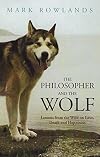
This is a two-fold book. Firstly, it’s an animal book, as the author writes about the wolf he kept for 11 years. Secondly, being a professor of philosophy, Rowlands takes this opportunity to reflect on lupine and human nature and approach to life. Although the story is narrated chronologically, and the philosophical musings mostly spring from specific situations or circumstances, there’s a natural progression to them too, as each new interlude builds on the previous ones.
As an animal show more book, it follows the life of the wolf named Brenin (after Welsh for "king") from the cub the author bought from a breeder to Brenin’s death in old age, and as Rowlands admits, Brenin is the star of this book. Since the wolf proved highly destructive if left alone in the house, the author had no choice, but to take him to work with him, which led to Brenin becoming "the, largely unwilling, beneficiary of more free university education than any wolf that ever lived.... He would lie in the corner of the room and doze – much like my students really – while I droned on about some or other philosopher or philosophy. Occasionally, when the lectures became particularly tedious, he would sit up and howl – a habit that endeared him to the students, who had probably been wishing they could do the same thing." As Rowlands moved from one country to another in the first phase of his professional life, Brenin also "became an extraordinarily well-traveled wolf, living in the US, Ireland, England and, finally, France." The two were practically inseparable companions, and, interestingly, the wolf seems to have made more of an impact on the philosopher than vice versa.
Rowlands believes that primates are the only creatures capable of scheming and deceit, whereas canines can’t lie. In support of this, he quotes naturalists’ observations of chimpanzees building multiple alliances for multiple purposes in order to achieve top status in the chimp colony, sometimes using one alliance to keep their ally from another in check. He also describes male chimps flirting with females in such a way as not be caught by the dominant male. And the author mentions a baboon who spotted a particularly tasty wine while on the move, pretended to need to groom herself and waited for the rest of the troop to pass her by before availing herself of the treat. On the other hand, when Brenin gobbled up the remainder of Rowlands’ dinner while Rowlands was on the phone, the wolf didn’t pretend that he hadn’t done anything when the author returned to the room: "Brenin, having quickly devoured my Hungry Man meal, was making his way rapidly over to his bed on the other side of the room. My return, unwelcome but not entirely unexpected, caused him to freeze in mid-stride; one leg in front of the other, his face turned towards me and gradually coalesced into a look of Wile E. Coyote apprehension. Sometimes, just before he began his plunge into the chasm, Wile E. would hold up a sign that read ‘Yikes!’ I’m pretty sure that if Brenin had had this sign available, he would have done the same thing." Rowlands contrasts this behavior to that of an ape who understands that other apes shouldn’t see her seeing the vine – "what’s known as a second-order representation" – and is even capable of third- and fourth-order representation. Consequently, the author concludes that "we became more intelligent so that we could better understand the minds of our peers, and so deceive them and use them for our own purposes – precisely what they were trying to do to us, of course. Everything else – our impressive understanding of the natural world, our intellectual and artistic creativity – came afterwards and as a consequence."
I think that Rowlands reached such conclusions partly because he had read studies of ape behavior in a group, but had based his observations of wolf behavior on his sole wolf. Don’t get me wrong – I do, in fact, admire wolves in general and think that they’re superior to us in certain key respects. For example, Jim Brandenburg writes in his book White Wolf that while in winter arctic wolves hunt large animals as a pack, in the summer they hunt small "safer" animals, mostly rodents, independently. However, he observed that those (adult) wolves who hadn’t caught anything by the end of the day solicited food from their successful pack members who regurgitated part of their meal for them. Now, I’m sure any wolf can have a poor hunting day, but I also think that, as with us, individual abilities vary, and some wolves likely find themselves in need of "donations" far more often than others. But apparently, the more successful wolves don’t get annoyed eventually and think – "Why should I continue to support this charity case? He’s not a cub, he should be able to hunt for himself! Why should I always regurgitate part of my hard-caught meal for him? Leave me alone, you bum!" However, wolves don’t act like that, even though nobody has taught them the golden rule. I think it was also Brandenburg who wrote about naturalists finding the skull of a wolf whose jaw had been broken, apparently by some large hoofed prey, but had subsequently healed, meaning that his pack mates must have regurgitated food for him for about two months, because there’s no way he could have eaten solid food with a break like that. Not only that, but I’m sure he couldn’t run as fast as the others either, and in winter, when the injury must have occurred, wolves hunt big game as a pack, and so they have to cover long distances in search and pursuit of their prey. And, of course, for all the wolves knew, the injury may have been permanent – as it would have been if the bones hadn’t healed correctly. Once again, apparently the alpha couple didn’t think: "We have to move fast to keep the pack fed and alive. We can’t risk the lives of the rest of us over this dead weight who can’t even eat meat, let alone help us get it."
But I’ve also read of instances of two wolves building an alliance to dislodge the alpha wolf from his position. Admittedly, these didn’t come close in complexity to the apes’ alliances Rowlands describes, but that may simply be because wolves aren’t smart enough to make such alliances. The point is that wolves aren’t averse to scheming any more than apes are. And as for deceit and multiple-order representations, Rowlands himself writes that when he and Brenin began playing chase, "soon he was throwing me little shimmies – feinting to go one way while actually going the other. When I caught on to this trick, the shimmies would become double shimmies. Eventually the game was played in a confused blur of feint, double feint and triple feint – feints nestled within feints." Rowlands also recalls how Brenin devised an innovation to this game in which he would drop the cushion which was their point of contention, pretending to be giving up, but always beat the author to it when he tried to take it. Granted, Brenin did this just for fun, not to gain power or anything else, but still a highly evolved ability to read another’s mind and to deceive him is there. And Rowlands admits that "it was a useful transferable skill: he once played the same game with a freshly cooked chicken that he had stolen from the kitchen during a momentary lapse of concentration on my part." I don’t mean that this says anything particularly bad about wolves, or that the need to anticipate the schemes and duplicity of others didn’t play a significant part in the development of our intellect – after all, the ape who managed to stay in top position the longest would have the most chances to pass on its talents for cunning to the next generation – but I think such behavior is not exclusive to apes, and if apes took it to a higher plane, it’s probably because they were more intelligent to begin with, not because other social species took a higher road, as Rowlands claims.
On the other hand, I find it hard to disagree with him when he says that wolves treat their own kind considerably better than do apes. He describes an episode when a male chimpanzee narrowly avoided being caught with a female by a dominant male who had begun to suspect something and moved slowly towards him, pausing to pick up a rock. However, matters hadn’t advanced too far, and the subordinate male spotted the leader early enough to be able to pretend that nothing was going on and walk away unharmed. Rowlands points out that if a wolf had been caught in such a situation, no pretence would have been necessary: he "could easily have avoided serious punishment simply by submitting." However, Rowlands sees "a primitive sense of justice" in the dominant chimpanzee who, although still suspicious, "recognizes, albeit vaguely, that an attack on Luit must have grounds... supplied by the presence of the appropriate evidence.... When one ape attacks another, and this attack... cannot be deflected by ritual gestures of conciliation on the part of the victim, then it is important that these attacks do not occur too often. If they do, then the colony will soon disintegrate.... Standing on its own, alone in all of nature, we find the ape: the only animal sufficiently unpleasant to become a moral animal." I’ve also read elsewhere that a group of chimpanzees would sometimes attack another group of chimps, killing and eating its members. Wolves, although they’re territorial animals, don’t "go to war" and kill even members of other packs over territory. (I’ve read of only one counter-example that had occurred in the wild, when several wolf packs had been crammed on a small island.) Thinking about this makes me wonder, if we should be proud of ourselves that we have a concept of war crime and that war criminals can be prosecuted in court, or if we should feel ashamed of ourselves as a species that we still have wars. Imagine how we would have looked to some alien civilization descended from a wolf-like species, among whom murder and other felonies, as well as war, are unknown. Personally, I find it mind-boggling that we’ve come so far away from our simian ancestors, and yet in some ways it seems that we’ve hardly moved at all.
From the discussion of morality and justice, Rowlands moves naturally to a discussion of the problem of evil – not the problem theologians face in explaining the existence of evil, but the problem we all have in facing the fact of its existence. Today, according to the author, people tend to think of evil as "either a medical issue – the result of some form of mental illness – or a social issue – the result of some or other social malaise. This has two consequences. First, 'evil' is something that resides only at the margins of society, in the psychologically or socially disadvantaged. Second, evil is not really anyone’s fault. When a person does what we might be tempted to call 'evil' things... either they’re mentally ill or their social circumstances gave them no chance." Personally, I think that this concept of evil may be embraced by some Hollywood filmmakers and possibly some academics, but certainly not by the humanity at large, as evidenced by the majority of online comments on crime news, always clamoring for a death sentence, and by the court decisions, usually more lenient than that of people in general, but certainly not hesitating to hold the perpetrators responsible. Rowlands further claims that most evil acts result from failure "to subject one’s beliefs to the appropriate amount of critical scrutiny" and/or from failure "to protect those who are defenseless against those who deem them inferior and therefore expendable." I agree that those two failures account for a sizable amount of evil, but I think that most evil acts are done by people who know perfectly well that what they’re doing is wrong, but don’t give a damn. It’s not that they specifically believe that it’s okay to dump toxic wastes illegally, defraud investors, give or accept bribes, and so on. They just do it anyway, despite their beliefs. And, unlike Rowlands, I don’t believe that evil is so commonplace that everybody has committed many evil actions. That’s not necessarily because most people are moral, but because most people aren’t in a position in which they’d be tempted to commit evil actions or be able to get away with them. That is, I do believe that evil is common in our society. For instance, the National Wildlife magazine reports that "about 2/3 of the harvest (of boreal forest trees) is pulped for paper, mostly for newspapers, promotional mailings and catalogs" (issue Aug/Sept 2010, pp. 16-17). I just don’t believe that most people are evildoers. I’m sure that if we were asked in a bulletin (in my state, at least, voting bulletins often contain questions, as well as names of candidates) if we think it’s acceptable to cut forests to make paper for newspapers, promotional mailings and catalogs, the vast majority of us would say no. That’s why we are never going to be asked this question. Or any other important question. Because then, of course, the power would have actually gone to the people, and nobody likes giving up power, especially for the people.
In the next chapter, Rowlands tells us how he came to examine his own beliefs, in particular his belief in the idea of a social contract as a cornerstone of human civilization. Nobody, of course, thinks that our civilization started that way, but some philosophers think the concept a useful one. "The idea is that we can work out what a fair society – a just civilization – would look like by imagining that people had chosen to live by the rules of a contract, then working out what those rules would be." Rowlands further mentions the idea of John Rawls that such rules would be fairer if the people given the task to work them out couldn’t know who they were going to be in that society. Since the question is purely theoretical, the withheld information could concern not only occupation, financial status, and social position, but even gender, race, religion, degree of intelligence, and so on. But Rowlands thinks that Rawls has overlooked one more important piece of information which should be withheld, namely one’s species. This belief has led Rowlands to embrace vegetarianism, because "animals bred and raised for meat" "live miserable lives and die horrible deaths," and if we didn’t know which species we’d be "it would be irrational to choose such a world." I think that his philosophical approach may be original, but his arguments aren’t. Saying that people should give up eating meat because animals in the meat industry "live miserable lives and die horrible deaths" is tantamount to a nineteenth century reformer to have said that people employed in industries work in horrible conditions for low pay, and so the right thing to do would be to stop buying industry products and cause it to die out. If most of agribusiness today is unhealthy and unethical, its practices should be changed, and if our government subsidized companies which embrace such changes instead of the kind of agribusiness it subsidizes now, its products would have cost the same for both the producers and the consumers. And, in fact, if it were the people instead of the lobbyists who decided what our government subsidizes, that’s exactly what would have happened. As to the social contract approach, we wouldn’t have chosen to be meat animals because we’re conscious beings who would have figured out our "destiny," and because most of us are raised with the idea that the bodies of our loved ones should be treated with respect after they die. Animals don’t have such a consciousness and they don’t bury their dead, and so a meat chicken or cow can live happily enough if provided with conditions natural to its species. It’s one thing to put oneself in the shoes of another human being, but when one tries to put oneself into the place of another species, one has to look at things from that species’ prospective. Otherwise, we’d have to outlaw spaying and neutering of pets, leashing regulations for dogs, sale of any animals, and pet food (would you have chosen to eat these pellets, whatever their content?).
But given Rowlands’ approach to the other species based on human needs and desires, it didn’t altogether surprise me that he decided not to neuter Brenin "because I didn’t have the heart. That was predictably male of me. Men’s eyes water at the very thought of neutering our dogs. But we are ready to send our bitches off for spaying at the drop of a hat – even though it’s a far more serious and invasive procedure." I must say that I was surprised by his honesty, both here and in many other sections of the book, but as a result of this decision of his, Brenin was repeatedly attacked by large male dogs, was occasionally moved to fight such dogs himself, which the author wouldn’t let him do, and tried to initiate sexual relations with female dogs in season, which the author also wouldn’t let him do because he feared that Brenin’s cubs might inherit his destructiveness and end up chained in somebody’s backyard for life. On one memorable occasion, Brenin escaped for a rendezvous with a female dog, but this only led to him "crying himself to sleep when I wouldn’t let him escape any more." I think all of this could have been easily avoided if the author asked himself, "Would it make Brenin unhappy if I had him neutered?" and "Would it make him unhappy if I didn’t have him neutered, but then forced him to live as if he had been?" instead of asking himself, "Would it have made me unhappy if somebody had had me neutered?" And while it’s true that most wolves in the wild never have sex because usually only the alpha couple breed, in the wild if any subordinate wolf doesn’t like it, he can try to challenge the alpha for his position or disperse and try to form a pack of his own.
In the last section of the book, Rowlands examines happiness and the meaning of life. In his opinion, being able to recall the past and anticipate the future doesn’t allow us to live fully in the present and embrace the moment, as animals do. He also thinks that the meaning of life lies not in accomplishments or in striving for or being happy (which he believes is mixed in with a great deal of unpleasantness anyway), but in a few rare moments when we’re at our best.
He thinks that such "moments" for him was the time when Brenin was gravely ill, and he had to treat him every two hours, which rendered Rowlands very sleep-deprived and also fearful that Brenin who couldn’t understand the necessity for the treatments, thoroughly unpleasant for them both, would decide that he wasn’t loved anymore. (That fear didn’t materialize.) To make matters even worse, Rowlands didn’t really believe that the treatments would work, because the prognosis was dire, and for some time Brenin was only getting worse. Because actions like this take such an emotional and physical toll on us, Rowlands believes that per necessity they must be rare events in our lives, but that "they are important because of what they are in themselves, not because of any supposed role they play in defining who I am.... What I learned was, in effect, the antithesis of religion. Religion always deals in hope.... (But) what is most important in your life is the you that remains when your hope runs out. Time will take everything from us in the end. Everything we have acquired through talent, industry and luck will be taken from us. Time takes our strength, our desires, our goals, our projects, our future, our happiness and even our hope.... But what time can never take from us is who we were in our best moments."
However, the "moments" Rowlands talks about refer to a period of two months rather than a few isolated incidents. Also, I think that if time can’t take away from him who he was in his best "moments," it also can’t take away the decisions he made and lived with, such as his decision to provide Brenin with a "free-range" lifestyle despite his extreme destructiveness. (Aside from causing untold damage in the house, Brenin made Rowlands’ backyard look like a WWI battlefield and, on one memorable occasion, fully destroyed the insides of his car.) Granted, this must be easier to endure that two months of administering unpleasant medical treatments every two hours, but still I doubt that many people would have put up with it. In another heart-warming decision, when Rowlands went to take a look at some puppies, hoping to find a canine companion for Brenin, at first he didn’t want them, but "when I saw the puppies, I changed my mind. They were housed in a garage and covered in filth and fleas. I decided I had to rescue one." Once again, it seems like an easier thing to do, but he really didn’t like these puppies and had "a sinking feeling" in his stomach about being saddled with one of them "for the next decade or so." (He writes that luck was with him, and the puppy turned out much better than he had expected.) In short, if time can’t take from him who he was in his best moments, it also can’t take from him who he was in his life in general, and although it’s true that most people don’t continuously find themselves in circumstances which require them to be at the height of their altruistic capacities, such moments are built on who one is the rest of the time. In this situation, if Rowlands had decided early on that Brenin was too much for him to handle, the high moments later on wouldn’t have happened. It may even be that more often than not who one is in one’s life in general is more important that who one is in exceptionally difficult times. Because Rowlands was able to go on with the treatments, Brenin got an extra, very happy, year of life. Otherwise, he’d have had ten happy years instead of eleven. It’s nice that he got one more year, but without Rowlands’ decision to accommodate him in the beginning – and sticking with this decision – Brenin wouldn’t have had any happy years at all.
In regard to finding the meaning of one’s life in one’s accomplishments, Rowlands uses as a hypothetical example somebody who’s build a magnificent temple, but whose life no longer has meaning now that his goal has been achieved. To me, this makes no more sense than to say that Rowlands’ having taken care of Brenin isn’t important anymore because Brenin is no longer alive. I don’t see how time can take from us what we have acquired through talent, industry and luck, because these things also have a ripple effect, just like who we were in our life in general and in our best moments. I don’t even bother to say that this hypothetical architect could build another great building, because even if he never built anything of such caliber again, just one individual, creative building that will inspire other people or give them pleasure is enough to have made one’s life worthwhile. Incidentally, Rowlands wrote several other books besides this one – I assume not solely for the sake of his professional status or money. And if his lectures are anywhere as thought-provoking as this book, they can’t be quite so tedious and time-wasting as he humorously describes. He writes that none of it makes him "worth it" and that he’s wary of the pride he feels in his accomplishments because "this is the pride of an ape... which thinks that what is most important in life is to guide oneself to the top of the pile." And I actually agree that status in society is something that time will definitely take away from us – unless, of course, one’s goal in life is to have an expensive monument over one’s grave. However, if one focuses on one’s work itself rather than the societal status it confers on one, I think one can legitimately feel not pride, perhaps, for luck and talent neither of which is one’s desert play a big part in anyone’s success, but satisfaction, because for those who enjoy the fruit of one’s labor, one’s life is worthwhile. I think that warm, altruistic people generally affect other people’s quality of life much more deeply (once you close the book, real life still awaits), while talented people generally have a chance to affect far more people. The former are worth knowing personally, the latter professionally (through their work). For a happy life, most people need both. Rowlands also writes that most of us do mundane and boring work and compares our lives to Sisyphus’. However, even work that may seem mundane and boring to outsiders – and even sometimes to the people who do it – is often useful and makes a difference in people’s lives.
Speaking of happiness, the author has an unusual view of that, too. He thinks that we’re wrong to associate happiness with feelings of some sort and that, just like the important "moments" in his life which were also deeply unpleasant, "happiness is not just pleasant; it is also deeply unpleasant.... I am claiming that happiness is itself partly unpleasant.... Happiness couldn’t be any other way. In happiness, pleasant and unpleasant aspects form an indissoluble whole. They cannot be separated without everything falling apart."
In support of this claim, Rowlands says that Brenin greatly enjoyed hunting, even though it was fraught with tension, and looked very happy in the end, regardless of whether he succeeded or not (which was most of the time). In fact, Brenin sometimes chose to stalk rabbits that he clearly wasn’t going to catch. Personally, I’m sure the explanation for Brenin’s attitude lies in the fact that he was well fed. I’ve read it in countless books that wolves in the wild never hunt when they aren’t hungry, but that wolves kept by humans do so all the time. Therefore, I think that for "domestic" wolves hunting is wholly a game, like playing video games is for us, and just like gamers often get up from the desk in a good mood and a feeling of having had a good time, despite the tension involved in playing the game and despite the fact that their virtual selves have just been blown up to bits, so a zoo or pet wolf may well enjoy stalking and chasing prey and not at all mind the tension involved or the failure, because his livelihood doesn’t depend on it. I’ve seen plenty of documentary footage and photographs of wild wolf packs hunting, and I never detected any feeling of enjoyment, let alone happiness, emanating from these wolves. Nor have I ever seen wolves returning to their den empty-mouthed looking happy, with their "eyes blazing," and "jumping all over... in excitement," as Rowlands describes Brenin’s behavior after an unsuccessful hunt. Hunting, like playing minesweeper, can only be fun when one’s survival isn’t on the line. In Brenin’s case, however, I think it was all fun, with no unpleasantness mixed in.
Rowlands also cites his work and his amateur boxing in his student days as examples of happiness that contained lots of unpleasantness as well. He describes regularly making himself think thoughts that were too difficult for him to think as "a deeply unpleasant thing to do. It hurts." Of course, there’s a "release" in case of eventual success, "but that was never what it was all about. Soon you move on to the next thought and the unpleasantness begins all over again." In case of boxing, he says he experienced exaltation and "a wonderful feeling of calm" during the matches, despite the fact that "the fear never went away." As with happiness in general, he claims that "it is not possible to separate exaltation from terror." Personally, I think that both these examples illustrate his own nature and circumstances, which don’t seem to me typical of people in general. Yes, some people enjoy the thrill of doing something that seems scary, like bungee jumping, but which really isn’t dangerous. And, yes, some people enjoy living on the edge and actually playing with danger, but from what I’ve read it appears that they do it because they feel lethargic living ordinary lives and need a boost of adrenaline to feel alive; and most people aren’t like that. Most people avoid putting themselves in terrifying situations and don’t enjoy it when circumstances force them into such situations. Nor do most people choose to do for a living something they find "deeply unpleasant" most of the time. In fact, I think that Rowlands probably came to distrust and discount happiness which comes from feelings, precisely because the feelings that came with his happy times were so mixed. He describes people who embrace things that make them feel happy as "happiness junkies" who are never really satisfied and are doomed to move from one kind of "fix" to the next, because they don’t realize that "happiness is not a feeling; it is a way of being" – being at one’s best, which, in Rowlands’ view also involves a great deal of unpleasantness, but at least it’s meaningful. Of course, different people find happiness in different things, but in general I see no reason why such things can’t also be meaningful, or why being happy can’t have value of and by itself. From Rowlands’ point of view, people tend to overanalyze their feelings which leads to dissatisfaction because nothing in life is really perfect, but I think people usually don’t tend to question why they are happy. It’s when we are unhappy that we begin to wonder why that is so. Nor do people necessarily expect perfection from anything. Again, when people are happy about something they tend to enjoy it and justify any inconveniences, just like Rowlands found that "the trench-warfare landscaping actually possessed a certain charm that grew on me after a while." Clearly, he felt no desire to jump from one pet to another in search of a perfect animal companion or to analyze in which ways Brenin fulfilled or didn’t fulfill this role, even though he clearly spent plenty of time thinking about their relationship and even wrote a book as a result.
Interestingly, although animals, of course, can’t reflect on the meaning of life or their best moments, Rowlands believes that they tend to be happier than humans would be in similar circumstances because they don’t crave variety like we do. By way of illustration, he describes a year he spent in the south of France with his canine companions, when they did the same things every day, including always eating the same kind of bread for lunch, and the animals couldn’t be happier about it the way people wouldn’t be: "Of course, we love our routines and rituals, some of us. But we also crave what is different. You should have seen the looks on the faces of my three canines when I started dividing up the pains au chocolat each morning. The quivering anticipation, the rivers of saliva, the concentration so intense it almost bordered on the painful. As far as they were concerned, it could be pains au chocolat from here to eternity. For them, the moment their jaws closed on the pains au chocolat was complete in itself, unadulterated by what had gone before and what was yet to come. For us, no moment is ever complete in itself. Every moment is adultarated, tainted by what we remember has been and what we anticipate will be." His dog, on the other hand, "understood that all joy wants eternity; that if you said yes to one moment you have said yes to them all."
Personally, I think that the degree to which people like every day to be the same as the previous one differs a lot from person to person – some people just love it. As for food, I think wanting some variety is probably a matter of conditioning more than species. I recently saw a documentary about the Arctic which showed an Inuit family eating frozen raw fish, which, according to the filmmakers, they eat almost all the time, caribou being so valuable that they only eat it as a last resort. However, everybody at that table was eating with obvious pleasure, and none of the kids whined, "What – fish again?!" True, none of them ate with quite the same enthusiasm as Rowlands witnessed in his canines, but then I’ve never seen any people eat anything with the kind of gusto that dogs usually have for food. On the other hand, we had a cat whom we fed whatever we had for dinner, and when we tried to make her switch to (high quality, moist) cat food, she’d had enough of it after three weeks. For the first two weeks she loved it; for another week she tolerated it; after that, she wouldn’t touch it anymore. I’ve heard since that many cat owners buy cat food in different flavors for variety’s sake, while some cats seem content to eat the same thing every day. I guess that, as with people, it’s a matter of individuality and habit, although I’ve also heard that dogs tend to be less particular about food than cats or people.
Rowlands also claims that, due to their ability to live in the moment, canines don’t grieve the way people do, and so Brenin’s dog companion "gave his body only a perfunctory sniff." But there are many well-documented cases of animals, including dogs and even wolves, grieving for their animal and human companions as much as we do.
Actually, I do agree with Rowlands that animals tend to be happier than people when placed in the same circumstances, but I think it’s not so much a matter of us craving variety, as us carving more things in general, including fulfillment. He describes how his canines were often content to nap while he worked for many hours, writing articles and books. Most people wouldn’t want (or be physically able) to spend most of their lives asleep. I don’t mean to imply by this that dogs or cats are inferior to people – much of what we do when awake is not really that important. It’s just that to each his own.
In conclusion, I’d like to apologize for the length of this review – it’s difficult to review a philosophical book briefly. I’ve found this book interesting, charming and easy to read, and I’ve spent a number of happy hours thinking about it, even though I disagree with its author on many points. show less
As an animal show more book, it follows the life of the wolf named Brenin (after Welsh for "king") from the cub the author bought from a breeder to Brenin’s death in old age, and as Rowlands admits, Brenin is the star of this book. Since the wolf proved highly destructive if left alone in the house, the author had no choice, but to take him to work with him, which led to Brenin becoming "the, largely unwilling, beneficiary of more free university education than any wolf that ever lived.... He would lie in the corner of the room and doze – much like my students really – while I droned on about some or other philosopher or philosophy. Occasionally, when the lectures became particularly tedious, he would sit up and howl – a habit that endeared him to the students, who had probably been wishing they could do the same thing." As Rowlands moved from one country to another in the first phase of his professional life, Brenin also "became an extraordinarily well-traveled wolf, living in the US, Ireland, England and, finally, France." The two were practically inseparable companions, and, interestingly, the wolf seems to have made more of an impact on the philosopher than vice versa.
Rowlands believes that primates are the only creatures capable of scheming and deceit, whereas canines can’t lie. In support of this, he quotes naturalists’ observations of chimpanzees building multiple alliances for multiple purposes in order to achieve top status in the chimp colony, sometimes using one alliance to keep their ally from another in check. He also describes male chimps flirting with females in such a way as not be caught by the dominant male. And the author mentions a baboon who spotted a particularly tasty wine while on the move, pretended to need to groom herself and waited for the rest of the troop to pass her by before availing herself of the treat. On the other hand, when Brenin gobbled up the remainder of Rowlands’ dinner while Rowlands was on the phone, the wolf didn’t pretend that he hadn’t done anything when the author returned to the room: "Brenin, having quickly devoured my Hungry Man meal, was making his way rapidly over to his bed on the other side of the room. My return, unwelcome but not entirely unexpected, caused him to freeze in mid-stride; one leg in front of the other, his face turned towards me and gradually coalesced into a look of Wile E. Coyote apprehension. Sometimes, just before he began his plunge into the chasm, Wile E. would hold up a sign that read ‘Yikes!’ I’m pretty sure that if Brenin had had this sign available, he would have done the same thing." Rowlands contrasts this behavior to that of an ape who understands that other apes shouldn’t see her seeing the vine – "what’s known as a second-order representation" – and is even capable of third- and fourth-order representation. Consequently, the author concludes that "we became more intelligent so that we could better understand the minds of our peers, and so deceive them and use them for our own purposes – precisely what they were trying to do to us, of course. Everything else – our impressive understanding of the natural world, our intellectual and artistic creativity – came afterwards and as a consequence."
I think that Rowlands reached such conclusions partly because he had read studies of ape behavior in a group, but had based his observations of wolf behavior on his sole wolf. Don’t get me wrong – I do, in fact, admire wolves in general and think that they’re superior to us in certain key respects. For example, Jim Brandenburg writes in his book White Wolf that while in winter arctic wolves hunt large animals as a pack, in the summer they hunt small "safer" animals, mostly rodents, independently. However, he observed that those (adult) wolves who hadn’t caught anything by the end of the day solicited food from their successful pack members who regurgitated part of their meal for them. Now, I’m sure any wolf can have a poor hunting day, but I also think that, as with us, individual abilities vary, and some wolves likely find themselves in need of "donations" far more often than others. But apparently, the more successful wolves don’t get annoyed eventually and think – "Why should I continue to support this charity case? He’s not a cub, he should be able to hunt for himself! Why should I always regurgitate part of my hard-caught meal for him? Leave me alone, you bum!" However, wolves don’t act like that, even though nobody has taught them the golden rule. I think it was also Brandenburg who wrote about naturalists finding the skull of a wolf whose jaw had been broken, apparently by some large hoofed prey, but had subsequently healed, meaning that his pack mates must have regurgitated food for him for about two months, because there’s no way he could have eaten solid food with a break like that. Not only that, but I’m sure he couldn’t run as fast as the others either, and in winter, when the injury must have occurred, wolves hunt big game as a pack, and so they have to cover long distances in search and pursuit of their prey. And, of course, for all the wolves knew, the injury may have been permanent – as it would have been if the bones hadn’t healed correctly. Once again, apparently the alpha couple didn’t think: "We have to move fast to keep the pack fed and alive. We can’t risk the lives of the rest of us over this dead weight who can’t even eat meat, let alone help us get it."
But I’ve also read of instances of two wolves building an alliance to dislodge the alpha wolf from his position. Admittedly, these didn’t come close in complexity to the apes’ alliances Rowlands describes, but that may simply be because wolves aren’t smart enough to make such alliances. The point is that wolves aren’t averse to scheming any more than apes are. And as for deceit and multiple-order representations, Rowlands himself writes that when he and Brenin began playing chase, "soon he was throwing me little shimmies – feinting to go one way while actually going the other. When I caught on to this trick, the shimmies would become double shimmies. Eventually the game was played in a confused blur of feint, double feint and triple feint – feints nestled within feints." Rowlands also recalls how Brenin devised an innovation to this game in which he would drop the cushion which was their point of contention, pretending to be giving up, but always beat the author to it when he tried to take it. Granted, Brenin did this just for fun, not to gain power or anything else, but still a highly evolved ability to read another’s mind and to deceive him is there. And Rowlands admits that "it was a useful transferable skill: he once played the same game with a freshly cooked chicken that he had stolen from the kitchen during a momentary lapse of concentration on my part." I don’t mean that this says anything particularly bad about wolves, or that the need to anticipate the schemes and duplicity of others didn’t play a significant part in the development of our intellect – after all, the ape who managed to stay in top position the longest would have the most chances to pass on its talents for cunning to the next generation – but I think such behavior is not exclusive to apes, and if apes took it to a higher plane, it’s probably because they were more intelligent to begin with, not because other social species took a higher road, as Rowlands claims.
On the other hand, I find it hard to disagree with him when he says that wolves treat their own kind considerably better than do apes. He describes an episode when a male chimpanzee narrowly avoided being caught with a female by a dominant male who had begun to suspect something and moved slowly towards him, pausing to pick up a rock. However, matters hadn’t advanced too far, and the subordinate male spotted the leader early enough to be able to pretend that nothing was going on and walk away unharmed. Rowlands points out that if a wolf had been caught in such a situation, no pretence would have been necessary: he "could easily have avoided serious punishment simply by submitting." However, Rowlands sees "a primitive sense of justice" in the dominant chimpanzee who, although still suspicious, "recognizes, albeit vaguely, that an attack on Luit must have grounds... supplied by the presence of the appropriate evidence.... When one ape attacks another, and this attack... cannot be deflected by ritual gestures of conciliation on the part of the victim, then it is important that these attacks do not occur too often. If they do, then the colony will soon disintegrate.... Standing on its own, alone in all of nature, we find the ape: the only animal sufficiently unpleasant to become a moral animal." I’ve also read elsewhere that a group of chimpanzees would sometimes attack another group of chimps, killing and eating its members. Wolves, although they’re territorial animals, don’t "go to war" and kill even members of other packs over territory. (I’ve read of only one counter-example that had occurred in the wild, when several wolf packs had been crammed on a small island.) Thinking about this makes me wonder, if we should be proud of ourselves that we have a concept of war crime and that war criminals can be prosecuted in court, or if we should feel ashamed of ourselves as a species that we still have wars. Imagine how we would have looked to some alien civilization descended from a wolf-like species, among whom murder and other felonies, as well as war, are unknown. Personally, I find it mind-boggling that we’ve come so far away from our simian ancestors, and yet in some ways it seems that we’ve hardly moved at all.
From the discussion of morality and justice, Rowlands moves naturally to a discussion of the problem of evil – not the problem theologians face in explaining the existence of evil, but the problem we all have in facing the fact of its existence. Today, according to the author, people tend to think of evil as "either a medical issue – the result of some form of mental illness – or a social issue – the result of some or other social malaise. This has two consequences. First, 'evil' is something that resides only at the margins of society, in the psychologically or socially disadvantaged. Second, evil is not really anyone’s fault. When a person does what we might be tempted to call 'evil' things... either they’re mentally ill or their social circumstances gave them no chance." Personally, I think that this concept of evil may be embraced by some Hollywood filmmakers and possibly some academics, but certainly not by the humanity at large, as evidenced by the majority of online comments on crime news, always clamoring for a death sentence, and by the court decisions, usually more lenient than that of people in general, but certainly not hesitating to hold the perpetrators responsible. Rowlands further claims that most evil acts result from failure "to subject one’s beliefs to the appropriate amount of critical scrutiny" and/or from failure "to protect those who are defenseless against those who deem them inferior and therefore expendable." I agree that those two failures account for a sizable amount of evil, but I think that most evil acts are done by people who know perfectly well that what they’re doing is wrong, but don’t give a damn. It’s not that they specifically believe that it’s okay to dump toxic wastes illegally, defraud investors, give or accept bribes, and so on. They just do it anyway, despite their beliefs. And, unlike Rowlands, I don’t believe that evil is so commonplace that everybody has committed many evil actions. That’s not necessarily because most people are moral, but because most people aren’t in a position in which they’d be tempted to commit evil actions or be able to get away with them. That is, I do believe that evil is common in our society. For instance, the National Wildlife magazine reports that "about 2/3 of the harvest (of boreal forest trees) is pulped for paper, mostly for newspapers, promotional mailings and catalogs" (issue Aug/Sept 2010, pp. 16-17). I just don’t believe that most people are evildoers. I’m sure that if we were asked in a bulletin (in my state, at least, voting bulletins often contain questions, as well as names of candidates) if we think it’s acceptable to cut forests to make paper for newspapers, promotional mailings and catalogs, the vast majority of us would say no. That’s why we are never going to be asked this question. Or any other important question. Because then, of course, the power would have actually gone to the people, and nobody likes giving up power, especially for the people.
In the next chapter, Rowlands tells us how he came to examine his own beliefs, in particular his belief in the idea of a social contract as a cornerstone of human civilization. Nobody, of course, thinks that our civilization started that way, but some philosophers think the concept a useful one. "The idea is that we can work out what a fair society – a just civilization – would look like by imagining that people had chosen to live by the rules of a contract, then working out what those rules would be." Rowlands further mentions the idea of John Rawls that such rules would be fairer if the people given the task to work them out couldn’t know who they were going to be in that society. Since the question is purely theoretical, the withheld information could concern not only occupation, financial status, and social position, but even gender, race, religion, degree of intelligence, and so on. But Rowlands thinks that Rawls has overlooked one more important piece of information which should be withheld, namely one’s species. This belief has led Rowlands to embrace vegetarianism, because "animals bred and raised for meat" "live miserable lives and die horrible deaths," and if we didn’t know which species we’d be "it would be irrational to choose such a world." I think that his philosophical approach may be original, but his arguments aren’t. Saying that people should give up eating meat because animals in the meat industry "live miserable lives and die horrible deaths" is tantamount to a nineteenth century reformer to have said that people employed in industries work in horrible conditions for low pay, and so the right thing to do would be to stop buying industry products and cause it to die out. If most of agribusiness today is unhealthy and unethical, its practices should be changed, and if our government subsidized companies which embrace such changes instead of the kind of agribusiness it subsidizes now, its products would have cost the same for both the producers and the consumers. And, in fact, if it were the people instead of the lobbyists who decided what our government subsidizes, that’s exactly what would have happened. As to the social contract approach, we wouldn’t have chosen to be meat animals because we’re conscious beings who would have figured out our "destiny," and because most of us are raised with the idea that the bodies of our loved ones should be treated with respect after they die. Animals don’t have such a consciousness and they don’t bury their dead, and so a meat chicken or cow can live happily enough if provided with conditions natural to its species. It’s one thing to put oneself in the shoes of another human being, but when one tries to put oneself into the place of another species, one has to look at things from that species’ prospective. Otherwise, we’d have to outlaw spaying and neutering of pets, leashing regulations for dogs, sale of any animals, and pet food (would you have chosen to eat these pellets, whatever their content?).
But given Rowlands’ approach to the other species based on human needs and desires, it didn’t altogether surprise me that he decided not to neuter Brenin "because I didn’t have the heart. That was predictably male of me. Men’s eyes water at the very thought of neutering our dogs. But we are ready to send our bitches off for spaying at the drop of a hat – even though it’s a far more serious and invasive procedure." I must say that I was surprised by his honesty, both here and in many other sections of the book, but as a result of this decision of his, Brenin was repeatedly attacked by large male dogs, was occasionally moved to fight such dogs himself, which the author wouldn’t let him do, and tried to initiate sexual relations with female dogs in season, which the author also wouldn’t let him do because he feared that Brenin’s cubs might inherit his destructiveness and end up chained in somebody’s backyard for life. On one memorable occasion, Brenin escaped for a rendezvous with a female dog, but this only led to him "crying himself to sleep when I wouldn’t let him escape any more." I think all of this could have been easily avoided if the author asked himself, "Would it make Brenin unhappy if I had him neutered?" and "Would it make him unhappy if I didn’t have him neutered, but then forced him to live as if he had been?" instead of asking himself, "Would it have made me unhappy if somebody had had me neutered?" And while it’s true that most wolves in the wild never have sex because usually only the alpha couple breed, in the wild if any subordinate wolf doesn’t like it, he can try to challenge the alpha for his position or disperse and try to form a pack of his own.
In the last section of the book, Rowlands examines happiness and the meaning of life. In his opinion, being able to recall the past and anticipate the future doesn’t allow us to live fully in the present and embrace the moment, as animals do. He also thinks that the meaning of life lies not in accomplishments or in striving for or being happy (which he believes is mixed in with a great deal of unpleasantness anyway), but in a few rare moments when we’re at our best.
He thinks that such "moments" for him was the time when Brenin was gravely ill, and he had to treat him every two hours, which rendered Rowlands very sleep-deprived and also fearful that Brenin who couldn’t understand the necessity for the treatments, thoroughly unpleasant for them both, would decide that he wasn’t loved anymore. (That fear didn’t materialize.) To make matters even worse, Rowlands didn’t really believe that the treatments would work, because the prognosis was dire, and for some time Brenin was only getting worse. Because actions like this take such an emotional and physical toll on us, Rowlands believes that per necessity they must be rare events in our lives, but that "they are important because of what they are in themselves, not because of any supposed role they play in defining who I am.... What I learned was, in effect, the antithesis of religion. Religion always deals in hope.... (But) what is most important in your life is the you that remains when your hope runs out. Time will take everything from us in the end. Everything we have acquired through talent, industry and luck will be taken from us. Time takes our strength, our desires, our goals, our projects, our future, our happiness and even our hope.... But what time can never take from us is who we were in our best moments."
However, the "moments" Rowlands talks about refer to a period of two months rather than a few isolated incidents. Also, I think that if time can’t take away from him who he was in his best "moments," it also can’t take away the decisions he made and lived with, such as his decision to provide Brenin with a "free-range" lifestyle despite his extreme destructiveness. (Aside from causing untold damage in the house, Brenin made Rowlands’ backyard look like a WWI battlefield and, on one memorable occasion, fully destroyed the insides of his car.) Granted, this must be easier to endure that two months of administering unpleasant medical treatments every two hours, but still I doubt that many people would have put up with it. In another heart-warming decision, when Rowlands went to take a look at some puppies, hoping to find a canine companion for Brenin, at first he didn’t want them, but "when I saw the puppies, I changed my mind. They were housed in a garage and covered in filth and fleas. I decided I had to rescue one." Once again, it seems like an easier thing to do, but he really didn’t like these puppies and had "a sinking feeling" in his stomach about being saddled with one of them "for the next decade or so." (He writes that luck was with him, and the puppy turned out much better than he had expected.) In short, if time can’t take from him who he was in his best moments, it also can’t take from him who he was in his life in general, and although it’s true that most people don’t continuously find themselves in circumstances which require them to be at the height of their altruistic capacities, such moments are built on who one is the rest of the time. In this situation, if Rowlands had decided early on that Brenin was too much for him to handle, the high moments later on wouldn’t have happened. It may even be that more often than not who one is in one’s life in general is more important that who one is in exceptionally difficult times. Because Rowlands was able to go on with the treatments, Brenin got an extra, very happy, year of life. Otherwise, he’d have had ten happy years instead of eleven. It’s nice that he got one more year, but without Rowlands’ decision to accommodate him in the beginning – and sticking with this decision – Brenin wouldn’t have had any happy years at all.
In regard to finding the meaning of one’s life in one’s accomplishments, Rowlands uses as a hypothetical example somebody who’s build a magnificent temple, but whose life no longer has meaning now that his goal has been achieved. To me, this makes no more sense than to say that Rowlands’ having taken care of Brenin isn’t important anymore because Brenin is no longer alive. I don’t see how time can take from us what we have acquired through talent, industry and luck, because these things also have a ripple effect, just like who we were in our life in general and in our best moments. I don’t even bother to say that this hypothetical architect could build another great building, because even if he never built anything of such caliber again, just one individual, creative building that will inspire other people or give them pleasure is enough to have made one’s life worthwhile. Incidentally, Rowlands wrote several other books besides this one – I assume not solely for the sake of his professional status or money. And if his lectures are anywhere as thought-provoking as this book, they can’t be quite so tedious and time-wasting as he humorously describes. He writes that none of it makes him "worth it" and that he’s wary of the pride he feels in his accomplishments because "this is the pride of an ape... which thinks that what is most important in life is to guide oneself to the top of the pile." And I actually agree that status in society is something that time will definitely take away from us – unless, of course, one’s goal in life is to have an expensive monument over one’s grave. However, if one focuses on one’s work itself rather than the societal status it confers on one, I think one can legitimately feel not pride, perhaps, for luck and talent neither of which is one’s desert play a big part in anyone’s success, but satisfaction, because for those who enjoy the fruit of one’s labor, one’s life is worthwhile. I think that warm, altruistic people generally affect other people’s quality of life much more deeply (once you close the book, real life still awaits), while talented people generally have a chance to affect far more people. The former are worth knowing personally, the latter professionally (through their work). For a happy life, most people need both. Rowlands also writes that most of us do mundane and boring work and compares our lives to Sisyphus’. However, even work that may seem mundane and boring to outsiders – and even sometimes to the people who do it – is often useful and makes a difference in people’s lives.
Speaking of happiness, the author has an unusual view of that, too. He thinks that we’re wrong to associate happiness with feelings of some sort and that, just like the important "moments" in his life which were also deeply unpleasant, "happiness is not just pleasant; it is also deeply unpleasant.... I am claiming that happiness is itself partly unpleasant.... Happiness couldn’t be any other way. In happiness, pleasant and unpleasant aspects form an indissoluble whole. They cannot be separated without everything falling apart."
In support of this claim, Rowlands says that Brenin greatly enjoyed hunting, even though it was fraught with tension, and looked very happy in the end, regardless of whether he succeeded or not (which was most of the time). In fact, Brenin sometimes chose to stalk rabbits that he clearly wasn’t going to catch. Personally, I’m sure the explanation for Brenin’s attitude lies in the fact that he was well fed. I’ve read it in countless books that wolves in the wild never hunt when they aren’t hungry, but that wolves kept by humans do so all the time. Therefore, I think that for "domestic" wolves hunting is wholly a game, like playing video games is for us, and just like gamers often get up from the desk in a good mood and a feeling of having had a good time, despite the tension involved in playing the game and despite the fact that their virtual selves have just been blown up to bits, so a zoo or pet wolf may well enjoy stalking and chasing prey and not at all mind the tension involved or the failure, because his livelihood doesn’t depend on it. I’ve seen plenty of documentary footage and photographs of wild wolf packs hunting, and I never detected any feeling of enjoyment, let alone happiness, emanating from these wolves. Nor have I ever seen wolves returning to their den empty-mouthed looking happy, with their "eyes blazing," and "jumping all over... in excitement," as Rowlands describes Brenin’s behavior after an unsuccessful hunt. Hunting, like playing minesweeper, can only be fun when one’s survival isn’t on the line. In Brenin’s case, however, I think it was all fun, with no unpleasantness mixed in.
Rowlands also cites his work and his amateur boxing in his student days as examples of happiness that contained lots of unpleasantness as well. He describes regularly making himself think thoughts that were too difficult for him to think as "a deeply unpleasant thing to do. It hurts." Of course, there’s a "release" in case of eventual success, "but that was never what it was all about. Soon you move on to the next thought and the unpleasantness begins all over again." In case of boxing, he says he experienced exaltation and "a wonderful feeling of calm" during the matches, despite the fact that "the fear never went away." As with happiness in general, he claims that "it is not possible to separate exaltation from terror." Personally, I think that both these examples illustrate his own nature and circumstances, which don’t seem to me typical of people in general. Yes, some people enjoy the thrill of doing something that seems scary, like bungee jumping, but which really isn’t dangerous. And, yes, some people enjoy living on the edge and actually playing with danger, but from what I’ve read it appears that they do it because they feel lethargic living ordinary lives and need a boost of adrenaline to feel alive; and most people aren’t like that. Most people avoid putting themselves in terrifying situations and don’t enjoy it when circumstances force them into such situations. Nor do most people choose to do for a living something they find "deeply unpleasant" most of the time. In fact, I think that Rowlands probably came to distrust and discount happiness which comes from feelings, precisely because the feelings that came with his happy times were so mixed. He describes people who embrace things that make them feel happy as "happiness junkies" who are never really satisfied and are doomed to move from one kind of "fix" to the next, because they don’t realize that "happiness is not a feeling; it is a way of being" – being at one’s best, which, in Rowlands’ view also involves a great deal of unpleasantness, but at least it’s meaningful. Of course, different people find happiness in different things, but in general I see no reason why such things can’t also be meaningful, or why being happy can’t have value of and by itself. From Rowlands’ point of view, people tend to overanalyze their feelings which leads to dissatisfaction because nothing in life is really perfect, but I think people usually don’t tend to question why they are happy. It’s when we are unhappy that we begin to wonder why that is so. Nor do people necessarily expect perfection from anything. Again, when people are happy about something they tend to enjoy it and justify any inconveniences, just like Rowlands found that "the trench-warfare landscaping actually possessed a certain charm that grew on me after a while." Clearly, he felt no desire to jump from one pet to another in search of a perfect animal companion or to analyze in which ways Brenin fulfilled or didn’t fulfill this role, even though he clearly spent plenty of time thinking about their relationship and even wrote a book as a result.
Interestingly, although animals, of course, can’t reflect on the meaning of life or their best moments, Rowlands believes that they tend to be happier than humans would be in similar circumstances because they don’t crave variety like we do. By way of illustration, he describes a year he spent in the south of France with his canine companions, when they did the same things every day, including always eating the same kind of bread for lunch, and the animals couldn’t be happier about it the way people wouldn’t be: "Of course, we love our routines and rituals, some of us. But we also crave what is different. You should have seen the looks on the faces of my three canines when I started dividing up the pains au chocolat each morning. The quivering anticipation, the rivers of saliva, the concentration so intense it almost bordered on the painful. As far as they were concerned, it could be pains au chocolat from here to eternity. For them, the moment their jaws closed on the pains au chocolat was complete in itself, unadulterated by what had gone before and what was yet to come. For us, no moment is ever complete in itself. Every moment is adultarated, tainted by what we remember has been and what we anticipate will be." His dog, on the other hand, "understood that all joy wants eternity; that if you said yes to one moment you have said yes to them all."
Personally, I think that the degree to which people like every day to be the same as the previous one differs a lot from person to person – some people just love it. As for food, I think wanting some variety is probably a matter of conditioning more than species. I recently saw a documentary about the Arctic which showed an Inuit family eating frozen raw fish, which, according to the filmmakers, they eat almost all the time, caribou being so valuable that they only eat it as a last resort. However, everybody at that table was eating with obvious pleasure, and none of the kids whined, "What – fish again?!" True, none of them ate with quite the same enthusiasm as Rowlands witnessed in his canines, but then I’ve never seen any people eat anything with the kind of gusto that dogs usually have for food. On the other hand, we had a cat whom we fed whatever we had for dinner, and when we tried to make her switch to (high quality, moist) cat food, she’d had enough of it after three weeks. For the first two weeks she loved it; for another week she tolerated it; after that, she wouldn’t touch it anymore. I’ve heard since that many cat owners buy cat food in different flavors for variety’s sake, while some cats seem content to eat the same thing every day. I guess that, as with people, it’s a matter of individuality and habit, although I’ve also heard that dogs tend to be less particular about food than cats or people.
Rowlands also claims that, due to their ability to live in the moment, canines don’t grieve the way people do, and so Brenin’s dog companion "gave his body only a perfunctory sniff." But there are many well-documented cases of animals, including dogs and even wolves, grieving for their animal and human companions as much as we do.
Actually, I do agree with Rowlands that animals tend to be happier than people when placed in the same circumstances, but I think it’s not so much a matter of us craving variety, as us carving more things in general, including fulfillment. He describes how his canines were often content to nap while he worked for many hours, writing articles and books. Most people wouldn’t want (or be physically able) to spend most of their lives asleep. I don’t mean to imply by this that dogs or cats are inferior to people – much of what we do when awake is not really that important. It’s just that to each his own.
In conclusion, I’d like to apologize for the length of this review – it’s difficult to review a philosophical book briefly. I’ve found this book interesting, charming and easy to read, and I’ve spent a number of happy hours thinking about it, even though I disagree with its author on many points. show less
In his book The Philosopher and the Wolf, Mark Rowlands presents a mixture of popular philosophy and personal memoir from a time when he shared his life with a wolf. This leads him to speculate on the different ways that simians and lupines experience time. He concludes that while humans and, he asserts, other apes think in a linear way and experience time as something passing, so that they live as much in the past and in the future as they do in the present, his wolf, and he suggests other show more dogs, look at rather than through the moment.
He concludes that we have much to learn from the wolf in this respect, that our superiority in being able to think about the past and plan for the future is bought at the cost of our inferiority in not being able to fully inhabit significant moments of the present. The moment of the present, as he points out in one of his philosophical asides, is an abstract concept that can never be captured as it is always passing. We may follow Husserl and see the present as an experience composed of the immediate past and the anticipated future (if I raise a glass of wine to my lips, I remember what was poured into the glass and anticipate the taste before beginning to drink). Even a wolf must experience the present in this way, but the wolf is better equipped than humans to take such moments for what they are rather than looking past them and so never seeing them clearly.
It struck me that what Rowlands defines as a quality that makes wolves superior to humans is pretty much what religious thinkers and poets such as R.S. Thomas and Waldo Williams have defined as the supreme transcendent experience of humans, though he does not mention these writers. R.S Thomas’ “we have no business here but to disprove certainties the clock knows” is a major theme in his work:
….. Life is not hurrying
on to a receding future, not hankering after
an imagined past. It is the turning
aside like Moses to the miracle
of the lit bush, to the brightness
that seemed as transistory as your youth
once, but is the eternity that awaits you.
This theme recurs again and again in his poems as well as his occasional prose. But of course he has to worry about it (or at it) as the wolf never would. And Rowland’s point is that, for the wolf, ‘eternity’ is now. It is also Thomas’s point in some expressions of the idea, but framing it in the context of the Christian expectation of eternal life rather takes it into the realm of what Rowlands calls the human tendency to live on hope rather than immediate experience.
What might come nearer to Rowlands’ living in, and looking at, the moment is Waldo Williams’ poem in Welsh ‘Yr Eiliad’:
Gwyddom gan ddyfod yr Eiliad
Ein geni i’r Awr
We know when the moment comes
We are born to the hour
If the book is a vehicle for such musings on the meaning of life for different species, its main attraction has undoubtedly been the account of a relationship between a man and a wolf. This is interesting in itself and at times quite moving, though I didn’t always share the total identification with Rowlands’ narrative that it has elicited from some reviewers. Clearly, developing a relationship with a wolf takes some commitment (he used to take it into the lecture room with him when on the staff of the Philosophy departments of Alabama and Cork universities) and he claims that it was the intensity of his relationship with his ‘brother’ that led him to various philosophical conclusions about animals and humans (he also wrote Animal Rights : A Philosophical Defence). Could he have come to the same conclusions by owning an ordinary dog or even a cat? Probably. But he wouldn’t have sold so many books. show less
He concludes that we have much to learn from the wolf in this respect, that our superiority in being able to think about the past and plan for the future is bought at the cost of our inferiority in not being able to fully inhabit significant moments of the present. The moment of the present, as he points out in one of his philosophical asides, is an abstract concept that can never be captured as it is always passing. We may follow Husserl and see the present as an experience composed of the immediate past and the anticipated future (if I raise a glass of wine to my lips, I remember what was poured into the glass and anticipate the taste before beginning to drink). Even a wolf must experience the present in this way, but the wolf is better equipped than humans to take such moments for what they are rather than looking past them and so never seeing them clearly.
It struck me that what Rowlands defines as a quality that makes wolves superior to humans is pretty much what religious thinkers and poets such as R.S. Thomas and Waldo Williams have defined as the supreme transcendent experience of humans, though he does not mention these writers. R.S Thomas’ “we have no business here but to disprove certainties the clock knows” is a major theme in his work:
….. Life is not hurrying
on to a receding future, not hankering after
an imagined past. It is the turning
aside like Moses to the miracle
of the lit bush, to the brightness
that seemed as transistory as your youth
once, but is the eternity that awaits you.
This theme recurs again and again in his poems as well as his occasional prose. But of course he has to worry about it (or at it) as the wolf never would. And Rowland’s point is that, for the wolf, ‘eternity’ is now. It is also Thomas’s point in some expressions of the idea, but framing it in the context of the Christian expectation of eternal life rather takes it into the realm of what Rowlands calls the human tendency to live on hope rather than immediate experience.
What might come nearer to Rowlands’ living in, and looking at, the moment is Waldo Williams’ poem in Welsh ‘Yr Eiliad’:
Gwyddom gan ddyfod yr Eiliad
Ein geni i’r Awr
We know when the moment comes
We are born to the hour
If the book is a vehicle for such musings on the meaning of life for different species, its main attraction has undoubtedly been the account of a relationship between a man and a wolf. This is interesting in itself and at times quite moving, though I didn’t always share the total identification with Rowlands’ narrative that it has elicited from some reviewers. Clearly, developing a relationship with a wolf takes some commitment (he used to take it into the lecture room with him when on the staff of the Philosophy departments of Alabama and Cork universities) and he claims that it was the intensity of his relationship with his ‘brother’ that led him to various philosophical conclusions about animals and humans (he also wrote Animal Rights : A Philosophical Defence). Could he have come to the same conclusions by owning an ordinary dog or even a cat? Probably. But he wouldn’t have sold so many books. show less
Rowlands is a lecturer in philosophy, and author of several books of popular philosophy.
In this gem of a book, he discusses his life with a wolf, while in his twenties. Rowlands admits to being fonder of the wolf than of other humans. Indeed he explores, quite provocatively, the meaning of being human; deciding that he doesn’t like his own simian nature very much at all.
Being high on the evolutionary scale, humans have had to compromise in big ways to rise to the top. Rowlands portrays show more the human as having ape soul, with his main premise that, as apes, human beings are deceptive and always trying to think of ways to outwit each other. In his struggle to overcome his inherent disgust with his simian self, he searches to find a lupine self within and to develop it more. This results in his withdrawal from the human side of intimacy and increasing reliance on the pack mentality of the wolf and dog.
Rowlands explains it thus:
“The augmentation of intelligence that we find in apes and monkeys, but apparently not in other social creatures, is the result of twin imperatives: to scheme more than you are being schemed against and to lie more than you are being lied to. The nature of simian intelligence is irredeemable shaped by these imperatives”.
Hmm. Perhaps out of context this sounds like harsh condemnation of the ‘ape’, but Rowlands had me convinced.
I also admired Rowlands for his application of philosophical argument to his everyday life and his profound commitment to animal rights. Despite enjoying eating meat, he explains his conversion to vegetarianism with the theory of ‘original position’. This is a theory of a 'fair society' put forward by Rawls of Harvard University and discusses the moral position of humans in the world order.
“How do you ensure that the society you live in is a far one? Just as we ensure a fair slicing of the pizza by making sure that the person slicing it does not know which piece he is getting, so we could ensure a fair society by allowing a person to choose how it is to be organized, but by making sure that this person did not know who they were going to be in this society.”
Therefore, if you don’t know if you are going to be a cow or a duck or a disabled person or a King, you could only consider being a vegetarian. The only fair endpoint.
He has some cogent philosophical points, such as: “I always judge a person by how they treat those who are weaker than them.” Or “Humans are the animals that engineer the possibilities of their own evil,” or “What is most important is the person you are when your lucks runs out.”
His writing is accessible and his anecdotal illustration of various philosophical points often amusing and instructional. With humour and sensitivity he touches on life lessons learnt by his life with his lupine friend.
While I do have a cautious skepticism about living and bonding with wild animals, anthropomorphizing their behaviours and attributing meanings and mystical reverence to such creatures, this book just worked for me. Indeed, to some, it may seem like to very epitome of exploitive simian behaviour. It might grate on the sensibilities of some purists, but not mine. I really enjoyed his musings – and now will strive to be more lupine and less simian in my relationships and dealing. show less
In this gem of a book, he discusses his life with a wolf, while in his twenties. Rowlands admits to being fonder of the wolf than of other humans. Indeed he explores, quite provocatively, the meaning of being human; deciding that he doesn’t like his own simian nature very much at all.
Being high on the evolutionary scale, humans have had to compromise in big ways to rise to the top. Rowlands portrays show more the human as having ape soul, with his main premise that, as apes, human beings are deceptive and always trying to think of ways to outwit each other. In his struggle to overcome his inherent disgust with his simian self, he searches to find a lupine self within and to develop it more. This results in his withdrawal from the human side of intimacy and increasing reliance on the pack mentality of the wolf and dog.
Rowlands explains it thus:
“The augmentation of intelligence that we find in apes and monkeys, but apparently not in other social creatures, is the result of twin imperatives: to scheme more than you are being schemed against and to lie more than you are being lied to. The nature of simian intelligence is irredeemable shaped by these imperatives”.
Hmm. Perhaps out of context this sounds like harsh condemnation of the ‘ape’, but Rowlands had me convinced.
I also admired Rowlands for his application of philosophical argument to his everyday life and his profound commitment to animal rights. Despite enjoying eating meat, he explains his conversion to vegetarianism with the theory of ‘original position’. This is a theory of a 'fair society' put forward by Rawls of Harvard University and discusses the moral position of humans in the world order.
“How do you ensure that the society you live in is a far one? Just as we ensure a fair slicing of the pizza by making sure that the person slicing it does not know which piece he is getting, so we could ensure a fair society by allowing a person to choose how it is to be organized, but by making sure that this person did not know who they were going to be in this society.”
Therefore, if you don’t know if you are going to be a cow or a duck or a disabled person or a King, you could only consider being a vegetarian. The only fair endpoint.
He has some cogent philosophical points, such as: “I always judge a person by how they treat those who are weaker than them.” Or “Humans are the animals that engineer the possibilities of their own evil,” or “What is most important is the person you are when your lucks runs out.”
His writing is accessible and his anecdotal illustration of various philosophical points often amusing and instructional. With humour and sensitivity he touches on life lessons learnt by his life with his lupine friend.
While I do have a cautious skepticism about living and bonding with wild animals, anthropomorphizing their behaviours and attributing meanings and mystical reverence to such creatures, this book just worked for me. Indeed, to some, it may seem like to very epitome of exploitive simian behaviour. It might grate on the sensibilities of some purists, but not mine. I really enjoyed his musings – and now will strive to be more lupine and less simian in my relationships and dealing. show less

I have been vegan for 7 years as of this review, and am always trying to expand my knowledge of animal ethics. Mark Rowlands does a decent job at this, as he is good at presenting his arguments and their philosophical background in an accessible way. At no point did I feel lost or even mildly confused while reading this book.
The first few chapters on animal minds and animal suffering are very good, but the book quickly becomes repetitive. This is especially true if you are already familiar show more with the violence humans regularly inflict on animals. The final chapter on Heidegger is, in my opinion, the best one, though I wish its insights were woven more thoroughly throughout the book, which is otherwise rather bare when it comes to references to other literature.
However, it is clear from Rowlands' writing that his intended audience is people, especially from non-academic audiences, who are not yet convinced. I would recommend this book to a someone interested in reader-friendly introductory books on animal ethics (as a complement to books like Animal Liberation by Peter Singer), or to a John Rawls fan interested in evaluating how Rowlands applies his contractualist ideas to animal rights. show less
The first few chapters on animal minds and animal suffering are very good, but the book quickly becomes repetitive. This is especially true if you are already familiar show more with the violence humans regularly inflict on animals. The final chapter on Heidegger is, in my opinion, the best one, though I wish its insights were woven more thoroughly throughout the book, which is otherwise rather bare when it comes to references to other literature.
However, it is clear from Rowlands' writing that his intended audience is people, especially from non-academic audiences, who are not yet convinced. I would recommend this book to a someone interested in reader-friendly introductory books on animal ethics (as a complement to books like Animal Liberation by Peter Singer), or to a John Rawls fan interested in evaluating how Rowlands applies his contractualist ideas to animal rights. show less
You May Also Like


Associated Authors
Statistics
- Works
- 28
- Also by
- 1
- Members
- 1,096
- Popularity
- #23,435
- Rating
- 3.8
- Reviews
- 32
- ISBNs
- 146
- Languages
- 10
- Favorited
- 1