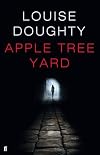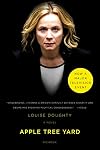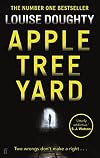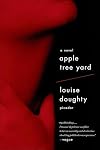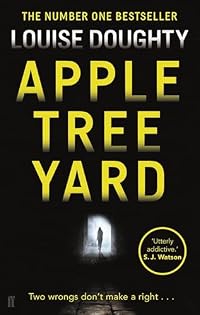
Apple Tree Yard
by Louise Doughty
On This Page
Description
"An intelligent, erotically charged thriller with deep moral implications. Yvonne Carmichael, renowned geneticist, public authority, happily married mother of two, sits in the accused box. The charge is murder. Across the courtroom, not meeting her eye, sits her alleged accomplice. He wears the beautiful pin-striped suit he wore on their first meeting in the Houses of Parliament, when he put his hand on her elbow, guided her to a deserted and ancient chapel, and began to undress her. As the show more barrister's voice grows low and sinuous, Yvonne realizes she's lost herself and the life she'd built so carefully to a man who never existed at all. After their first liaison, Yvonne's lover tells her very little about himself, but she comes to suspect his secrecy has an explanation connected with the British government. So thrilled and absorbed is she in her newfound sexual power that she fails to notice the real danger about to blindside her from a seemingly innocuous angle. Then, reeling from an act of violence, Yvonne discovers that her desire for justice and revenge has already been compromised. Everything hinges on one night in a dark little alley called Apple Tree Yard. Suspenseful, erotically charged, and masterfully paced, Louise Doughty's Apple Tree Yard is an intelligent psychological thriller about desire and its consequences by a writer of phenomenal gifts"-- "Gripping literary thriller about a woman who makes one rash choice and ends up on trial for murder"-- show lessTags
Recommendations


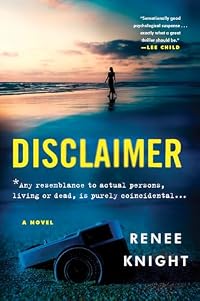

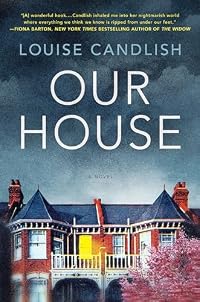
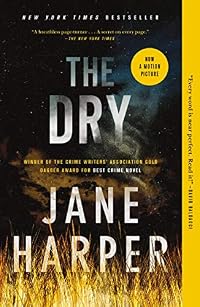
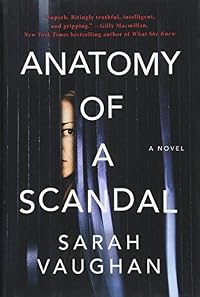









Member Recommendations

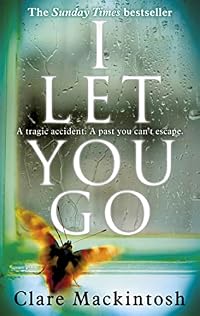
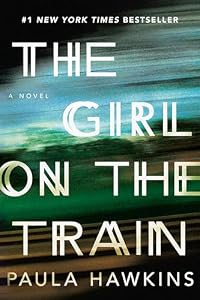
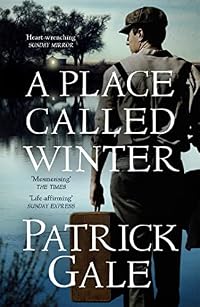
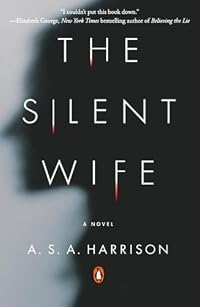
jayne_charles Entirely different stories of course, but both examine the danger/violence that exists in ordinary society, I was constantly reminded of one while reading the other
Member Reviews
Louise Doughty writes a taut thriller. The story is narrated by Yvonne Carmichael, a scientist with successful career, 50 something, married with grown up kids, nice house etc etc. who starts an affair with a man she meets while at the House of Commons - a series of events follow leading to both ending up on trial for murder at the Old Bailey. Doughty has plenty to say about female desire in older women & how women's sexual behaviour is judged- although as a 50 something woman I can't imagine how a quicky in a broom cupboard or in an alleyway is in any way sexually satisfying - these acts felt more like a plot device for the horrific events that follow and for commenting on the punishment that is meted out to Yvonne for impulsive sexual show more behaviour and infidelity. Nonetheless a gripping story. show less
Seldom has it happened that a television production I watch ends up leading me back to the novel adapted for that video presentation. Although this is happening more than ever right now because of the semi-isolated lifestyles so many of us have been forced to adopt in recent months, it still comes as a pleasant surprise to me when it does. I recently came across Louise Doughty’s 2013 Apple Tree Yard as a four-part television series that was originally broadcast by the BBC in early 2017, and I didn’t notice the book-credit until I began the second episode. The series stars Emily Watson, Ben Chaplin, and Mark Bonnar, among other familiar faces. I noticed, too, that Doughty was not the screenplay writer, and that made me more curious show more about how the book and the television adaptation would compare.
I enjoyed the BBC production, but I’ve found that despite their overall plot similarity, Doughty’s novel is much the better of the two. In the BBC version, most everything unfolds in its natural, chronological order. One thing happens, and that leads, to the next, etc., and the viewer is right there to see it all happen. In the novel itself, things only happen as they cross the mind of the book’s narrator and central character, Yvonne Carmichael, as she holds an internal conversation with the book’s other central character. As Yvonne ponders something that has happened, or she wonders what would have happened if she had done “this” instead of “that,” everything is slowly revealed in the manner of jigsaw puzzle pieces falling into place. The novel, in fact, begins near the end of the story, so as Yvonne thinks back about her life and reveals more to the reader, we already know that all of this is not going to end particularly well.
“And after the imagined drama that made our daily lives bearable, we got a real drama, more of a drama than we could handle, and then we wanted our daily lives back, but they didn’t exist anymore. We discovered that safety and security are commodities you can sell in return for excitement, but you can never get them back.”
Note: Anything that follows is also revealed by the novel’s book jacket - no spoilers.
As Apple Tree Yard begins, Yvonne Carmichael and a man she hardly knows have been charged with murder and their trial is reaching its climax. The wonder of the story is how someone of Yvonne’s stature could have ended up where we find her in the novel’s prologue. She, after all, is a middle-aged woman who has been married for decades to the man who fathered their two adult children. She is a well-respected geneticist who at one point was involved in some groundbreaking work regarding the mapping of DNA. She is so good at what she does that she is often called in as an expert to advise special Parliament committees on ethics matters and potential legislative fixes.
But now, her reputation, her future, and her very life hinge on one disastrous moment of sexual attraction and reckless behavior that led her to do something so out of character in a London alley called Apple Tree Yard that she can’t explain what happened even to herself. Or can she? She certainly tries hard enough to rationalize everything that happened before and after that encounter, but can we trust her to tell us the truth?
Bottom Line: Apple Tree Yard, the novel, is brilliant. Its pacing is so perfect that, even after already having watched the BBC series, I could hardly wait to get to the next chapter. There are differences in the endings of the BBC show and the novel, mainly, I suspect, because the television series needed more dramatic visuals than the novel provided at the point in the storyline, but the novel is still the hands-down winner of the two. In Yvonne Carmichael, Louise Doughty has created one of those fictional characters I don’t think I will ever forget. I highly recommend this one. show less
I enjoyed the BBC production, but I’ve found that despite their overall plot similarity, Doughty’s novel is much the better of the two. In the BBC version, most everything unfolds in its natural, chronological order. One thing happens, and that leads, to the next, etc., and the viewer is right there to see it all happen. In the novel itself, things only happen as they cross the mind of the book’s narrator and central character, Yvonne Carmichael, as she holds an internal conversation with the book’s other central character. As Yvonne ponders something that has happened, or she wonders what would have happened if she had done “this” instead of “that,” everything is slowly revealed in the manner of jigsaw puzzle pieces falling into place. The novel, in fact, begins near the end of the story, so as Yvonne thinks back about her life and reveals more to the reader, we already know that all of this is not going to end particularly well.
“And after the imagined drama that made our daily lives bearable, we got a real drama, more of a drama than we could handle, and then we wanted our daily lives back, but they didn’t exist anymore. We discovered that safety and security are commodities you can sell in return for excitement, but you can never get them back.”
Note: Anything that follows is also revealed by the novel’s book jacket - no spoilers.
As Apple Tree Yard begins, Yvonne Carmichael and a man she hardly knows have been charged with murder and their trial is reaching its climax. The wonder of the story is how someone of Yvonne’s stature could have ended up where we find her in the novel’s prologue. She, after all, is a middle-aged woman who has been married for decades to the man who fathered their two adult children. She is a well-respected geneticist who at one point was involved in some groundbreaking work regarding the mapping of DNA. She is so good at what she does that she is often called in as an expert to advise special Parliament committees on ethics matters and potential legislative fixes.
But now, her reputation, her future, and her very life hinge on one disastrous moment of sexual attraction and reckless behavior that led her to do something so out of character in a London alley called Apple Tree Yard that she can’t explain what happened even to herself. Or can she? She certainly tries hard enough to rationalize everything that happened before and after that encounter, but can we trust her to tell us the truth?
Bottom Line: Apple Tree Yard, the novel, is brilliant. Its pacing is so perfect that, even after already having watched the BBC series, I could hardly wait to get to the next chapter. There are differences in the endings of the BBC show and the novel, mainly, I suspect, because the television series needed more dramatic visuals than the novel provided at the point in the storyline, but the novel is still the hands-down winner of the two. In Yvonne Carmichael, Louise Doughty has created one of those fictional characters I don’t think I will ever forget. I highly recommend this one. show less
Dr. Yvonne Carmichael, a middle-aged geneticist, someone with “status and gravitas,” finds herself accused of murder; her co-accused is a man with whom she had a torrid affair. She narrates much of the story in flashbacks detailing the events that bring her to a dock in Old Bailey.
Information is parceled out slowly. The identity of the murder victim isn’t known until midway through the novel. Even the lover’s name is not revealed until two-thirds of the way through the book; Yvonne addresses her lover throughout, but only as “you” or “X.” This technique of withholding information certainly adds to the suspense. And although there is a prologue that hints at the verdict, suspense during the trial is maintained.
This show more book would probably be classified as a psychological thriller/courtroom drama, but it has more serious elements. It is really a novel about “the stories we tell in order to make sense of ourselves.” In the end, Yvonne’s lover is described as “a fantasist, a person who could only manage his normal life as long as it was propped up by a series of self-flattering tales” but throughout the reader notices that his identity is shaped by what she wants to believe about him rather than what she actually knows about him. Yvonne claims to be self-aware (“Self-awareness: it is one of the chief bonuses of advancing age.”), but the reader cannot help but wonder whether she really knows herself. Is she perhaps deceiving herself about herself as well as about others?
The problem is complicated when someone else is involved: “Relationships are about stories, not truth. . . . the minute you enter an intimate relationship with another person there is an automatic dissonance between your story about yourself, and their story about you.” During the court case, Yvonne also comes to understand that a series of facts can be arranged in a variety of ways: she sees lawyers manipulating the jury through “the misplacement of evidence from context” so they will interpret events in a certain way. She also realizes that “as a scientist, I have told more stories than I ever realized, or admitted to”: “I know how the whole point of presenting a new theory is to anticipate the counter-citations from those who will disagree with you and to have, up your sleeve, a list of counter-counter-citations.”
The novel also examines the treatment of women who are victims of sexual assault. Any woman charging someone with sexual assault must be prepared to have all secrets revealed by the defense attorneys: “’Internet searches, questioning friends and family and work colleagues, starts with that. If there’s nothing in your present life, they will get to work on your past, starting with tracking down your sexual history . . . They can do anything. If they are challenged, all they have to do is give a reason to the judge why it’s relevant to the defence.’”
I would definitely recommend this book. It is a compelling read with a great deal of suspense, and a chilling read because it emphasizes the consequences of choices and reminds us of the human tendency to deceive ourselves about ourselves and others. Yvonne may not be a totally reliable narrator, but how many of us are really reliable narrators of our own “personal mythologies.” show less
Information is parceled out slowly. The identity of the murder victim isn’t known until midway through the novel. Even the lover’s name is not revealed until two-thirds of the way through the book; Yvonne addresses her lover throughout, but only as “you” or “X.” This technique of withholding information certainly adds to the suspense. And although there is a prologue that hints at the verdict, suspense during the trial is maintained.
This show more book would probably be classified as a psychological thriller/courtroom drama, but it has more serious elements. It is really a novel about “the stories we tell in order to make sense of ourselves.” In the end, Yvonne’s lover is described as “a fantasist, a person who could only manage his normal life as long as it was propped up by a series of self-flattering tales” but throughout the reader notices that his identity is shaped by what she wants to believe about him rather than what she actually knows about him. Yvonne claims to be self-aware (“Self-awareness: it is one of the chief bonuses of advancing age.”), but the reader cannot help but wonder whether she really knows herself. Is she perhaps deceiving herself about herself as well as about others?
The problem is complicated when someone else is involved: “Relationships are about stories, not truth. . . . the minute you enter an intimate relationship with another person there is an automatic dissonance between your story about yourself, and their story about you.” During the court case, Yvonne also comes to understand that a series of facts can be arranged in a variety of ways: she sees lawyers manipulating the jury through “the misplacement of evidence from context” so they will interpret events in a certain way. She also realizes that “as a scientist, I have told more stories than I ever realized, or admitted to”: “I know how the whole point of presenting a new theory is to anticipate the counter-citations from those who will disagree with you and to have, up your sleeve, a list of counter-counter-citations.”
The novel also examines the treatment of women who are victims of sexual assault. Any woman charging someone with sexual assault must be prepared to have all secrets revealed by the defense attorneys: “’Internet searches, questioning friends and family and work colleagues, starts with that. If there’s nothing in your present life, they will get to work on your past, starting with tracking down your sexual history . . . They can do anything. If they are challenged, all they have to do is give a reason to the judge why it’s relevant to the defence.’”
I would definitely recommend this book. It is a compelling read with a great deal of suspense, and a chilling read because it emphasizes the consequences of choices and reminds us of the human tendency to deceive ourselves about ourselves and others. Yvonne may not be a totally reliable narrator, but how many of us are really reliable narrators of our own “personal mythologies.” show less
Yvonne Carmichael is sensible. She's married with two grown up children and has a career in science. However one day she meets a man and then from that moment she's no longer sensible and the fatal attraction begins.
This book is so good I that I cannot praise it enough. The story is Yvonnes and how things tumble out of control from that moment she meets X. I would say its a womens book so it will be interesting to see what the male members of the book group think.
With the usual cliché, the book is a page turner and I wanted to see how it was going to end . From the very beginning the story holds the readers attention and keeps it till the end.
What I enjoyed was the court case and because of this it reminded me of some of Jodi Picoult show more books. Had I have been on the jury I don't know what I would've thought myself, which way I could have gone. Just like JP books it did ask the question of what would you do in the same situation.
A roller coaster of a read, with a sexy, thriller element of a fatal kind that keeps the reader on tenterhooks till the end. show less
This book is so good I that I cannot praise it enough. The story is Yvonnes and how things tumble out of control from that moment she meets X. I would say its a womens book so it will be interesting to see what the male members of the book group think.
With the usual cliché, the book is a page turner and I wanted to see how it was going to end . From the very beginning the story holds the readers attention and keeps it till the end.
What I enjoyed was the court case and because of this it reminded me of some of Jodi Picoult show more books. Had I have been on the jury I don't know what I would've thought myself, which way I could have gone. Just like JP books it did ask the question of what would you do in the same situation.
A roller coaster of a read, with a sexy, thriller element of a fatal kind that keeps the reader on tenterhooks till the end. show less
I really liked this book and how it was written. A middle aged scientist has an affair with a man she met on the street. They saw each he book starts with her on trial, but it is much later in the book that the crime is revealed. Her husband is also a scientist. In talking about her husband she says "This was the thing he never understood: yes, he would give me time to work when I demanded it, but my time was considered to belong to our family unit unless I signaled that I wanted out. HIs time was considered to belong to himself and his work unless I demanded that he opt in." She also wrote "It annoys me how easy it is for a man to look good to those who observe him from outside a relationship. HE doesn't hit you, he's not an alcoholic, show more he's good with kids - all these things are told to women, even by other women, by way of emphasizing just how lucky they are. He scores points just for not beating me up. I wonder if anyone said to him "Let's face it, she doesn't hit you, she's not an alcoholic and she is really good with those kids. You should be grateful. show less
What a marvellous novel.
I do need to declare a slight interest: I knew Louise Doughty at Leeds University some thirty years ago - we were both in the same intake into the English Department, and also lived in the same hall of residence. However, I am pretty confident that while that slight connection may have prompted me to buy the book as soon as possible after its publication, it hasn't impacted at all upon my judgement of the book.
The novel is narrated in retrospect by Yvonne Carmichael, a very successful academic scientist who has become a leading geneticist. As the novel opens she is recalling how she had been giving evidence at Portcullis House to a House of Commons Select Committee. Having completed her evidence she meets and show more falls in conversation with a strange man, who offers to show her a crypt below the House of Parliament.
From this unlikely opening she starts an affair with the man, who impresses her with his passion for secrecy. They meet again in a selection of different venues, including the Apple Tree Yard of the title. Much of the narrative takes the form of Yvonne writing letters on her computer knowing that she will never send them (she doesn't know her lover's name, let alone his email or house address!). Early on in their affair he gives her an unregistered mobile phone and insists that she should only contact him by that. Because of all of this secrecy Yvonne begins to wonder whether her lover is a spy.
Shortly after their liaison in Apple Tree Yard something dreadful happens. Doughty captures this marvellously - her descriptions of the aftermath struck me as utterly plausible. The nature of the narrative changes at this point, and we learn far more about Yvonne's past life, her husband and her family whom, hitherto, have only been the subject of passing references.
Beautifully written and immaculately plotted - quite definitely one of the finest novels I have read this year.
Well done Louise! show less
I do need to declare a slight interest: I knew Louise Doughty at Leeds University some thirty years ago - we were both in the same intake into the English Department, and also lived in the same hall of residence. However, I am pretty confident that while that slight connection may have prompted me to buy the book as soon as possible after its publication, it hasn't impacted at all upon my judgement of the book.
The novel is narrated in retrospect by Yvonne Carmichael, a very successful academic scientist who has become a leading geneticist. As the novel opens she is recalling how she had been giving evidence at Portcullis House to a House of Commons Select Committee. Having completed her evidence she meets and show more falls in conversation with a strange man, who offers to show her a crypt below the House of Parliament.
From this unlikely opening she starts an affair with the man, who impresses her with his passion for secrecy. They meet again in a selection of different venues, including the Apple Tree Yard of the title. Much of the narrative takes the form of Yvonne writing letters on her computer knowing that she will never send them (she doesn't know her lover's name, let alone his email or house address!). Early on in their affair he gives her an unregistered mobile phone and insists that she should only contact him by that. Because of all of this secrecy Yvonne begins to wonder whether her lover is a spy.
Shortly after their liaison in Apple Tree Yard something dreadful happens. Doughty captures this marvellously - her descriptions of the aftermath struck me as utterly plausible. The nature of the narrative changes at this point, and we learn far more about Yvonne's past life, her husband and her family whom, hitherto, have only been the subject of passing references.
Beautifully written and immaculately plotted - quite definitely one of the finest novels I have read this year.
Well done Louise! show less
Apple Tree Yard is one of those thrillers that grabs you from the beginning and never lets up. It is suspenseful, the kind of book that tempts you to peek at the back page to see if everyone makes it out alive, so to speak. But of course, you don’t do that. Instead you stay up all night reading.
Yvonne Carmichael is a renowned scientist, one involved in mapping the human genome. She is married to man who loves her and whom she loves, empty nesters who are both at the top of their careers. Almost on a whim, she is seduced by a mysterious stranger. They pursue a passionate affair that is heightened by his air of mystery and control. It is reckless and risky, and perhaps a man like that could be dangerous.
But the danger comes from show more elsewhere, shocking, devastating, and awful. Yvonne’s response is exactly how most women would respond, how they do respond according to all the statistics. Of course, it does not end there and Yvonne seeks support from her man of mystery–with even more consequential results.
I don’t think Louise Doughty was trying to write “the” feminist novel, but she certainly has written one that will, I hope, give people insight into the challenges women face. Louise makes choices, choices with long-term serious and even violent consequences, but those choices are rational recognitions of the position of women, even powerful, successful women, in society.
There is a scene in the courtroom when a female officer gives testimony. Her testimony is undercut because of her association, however, unwilling, with the accused. It was a microcosm of how women are shamed and diminished even when they are the victims. Yvonne understands that, not just as a woman, but as someone who is analytical, who understands the evolutionary power of biological determinism when it is hand in hand with social mores. It makes for fascinating reading, her detached analysis of her own trial.
I loved Apple Tree Yard. It’s a fast-paced, character driven story narrated by a woman who is on trial for murder. There are a lot of twists between her giving testimony in her trial in that first chapter and the shocking revelation at the end, but they are all fair and all very credible.
https://tonstantweaderreviews.wordpress.com/2016/09/19/apple-tree-yard/ show less
Yvonne Carmichael is a renowned scientist, one involved in mapping the human genome. She is married to man who loves her and whom she loves, empty nesters who are both at the top of their careers. Almost on a whim, she is seduced by a mysterious stranger. They pursue a passionate affair that is heightened by his air of mystery and control. It is reckless and risky, and perhaps a man like that could be dangerous.
But the danger comes from show more elsewhere, shocking, devastating, and awful. Yvonne’s response is exactly how most women would respond, how they do respond according to all the statistics. Of course, it does not end there and Yvonne seeks support from her man of mystery–with even more consequential results.
I don’t think Louise Doughty was trying to write “the” feminist novel, but she certainly has written one that will, I hope, give people insight into the challenges women face. Louise makes choices, choices with long-term serious and even violent consequences, but those choices are rational recognitions of the position of women, even powerful, successful women, in society.
There is a scene in the courtroom when a female officer gives testimony. Her testimony is undercut because of her association, however, unwilling, with the accused. It was a microcosm of how women are shamed and diminished even when they are the victims. Yvonne understands that, not just as a woman, but as someone who is analytical, who understands the evolutionary power of biological determinism when it is hand in hand with social mores. It makes for fascinating reading, her detached analysis of her own trial.
I loved Apple Tree Yard. It’s a fast-paced, character driven story narrated by a woman who is on trial for murder. There are a lot of twists between her giving testimony in her trial in that first chapter and the shocking revelation at the end, but they are all fair and all very credible.
https://tonstantweaderreviews.wordpress.com/2016/09/19/apple-tree-yard/ show less
Members
- Recently Added By
Lists

Top Five Books of 2013
1,564 works; 722 members

Top Five Books of 2015
811 works; 240 members

To Read
617 works; 7 members

Recommend the 20 best books you've read in the last five years
2,168 works; 602 members

BBC Radio 4 Bookclub
340 works; 13 members

Books Read in 2015
3,298 works; 126 members

Books Read in 2018
4,360 works; 110 members
Author Information

12+ Works 2,069 Members
Some Editions
Awards and Honors
Common Knowledge
- Canonical title
- Apple Tree Yard
- Original publication date
- 2013
- People/Characters
- Yvonne Carmichael
- Important places
- London, England, UK
- First words
- The moment builds; it swells and builds - the moment when I realise we have lost.
- Last words
- (Click to show. Warning: May contain spoilers.)We are innocent.
- Publisher's editor
- Savitt, Sarah
- Blurbers
- Mantel, Hilary; Watson, S. J.; Sanai, Leyla; Rankin, Ian
- Canonical DDC/MDS
- 823.914
- Canonical LCC
- PR6054.O795
Classifications
Statistics
- Members
- 761
- Popularity
- 36,666
- Reviews
- 51
- Rating
- (3.53)
- Languages
- 13 — Chinese, Dutch, English, Estonian, Finnish, French, German, Italian, Latvian, Polish, Portuguese, Spanish, Swedish
- Media
- Paper, Audiobook, Ebook
- ISBNs
- 40
- ASINs
- 7