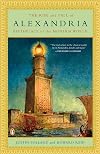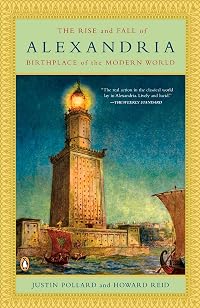
The Rise and Fall of Alexandria: Birthplace of the Modern World
by Justin Pollard, Howard Reid
On This Page
Description
Founded by Alexander the Great and built by self-styled Greek pharaohs, the city of Alexandria at its height dwarfed both Athens and Rome. It was the marvel of its age, legendary for its vast palaces, safe harbors, and magnificent lighthouse. But it was most famous for the astonishing intellectual efflorescence it fostered and the library it produced. If the European Renaissance was the "rebirth" of Western culture, then Alexandria, Egypt, was its birthplace.It was here mankind first show more discovered that the earth was not flat, originated atomic theory, invented geometry, systematized grammar, translated the Old Testament into Greek, built the steam engine, and passed their discoveries on to future generations via the written word. Julius Caesar, Mark Antony, Cleopatra, Jewish scholars, Greek philosophers, and devout early Christians all play a part in the rise and fall of the city that stood "at the conjunction of the whole world." Compulsively readable and sparkling with fresh insights into science, philosophy, culture, and invention, this is an irresistible, eye-opening delight. show lessTags
Recommendations









Member Recommendations

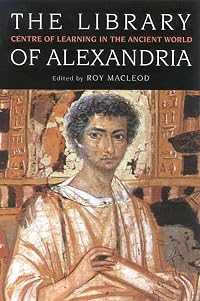
davesmind I enjoyed both of these, but my nod goes to Circumference. This is a more personal story and uses Eratosthenes as means to introduce you to Alexandria. The narrative flows smoothly and transports you back 2300 years to a time when Alexandria was arguably the center of civilization.
Member Reviews
An extraordinarily enjoyable and illuminative history of Alexandria, albeit with some occasional jumping in the timeline that doesn't detract from the authors' enthusiasm at sharing the story of Alexandria. Who knew (well, probably most of you) how incredibly important Alexandria was as a center of philosophy, education, and culture during its heyday? It was not just the well-known library of Alexandria, but it was a crossroads and center of learning for much of its history. The destruction of the library didn't end the city's importance-- instead the long final demise took, with a ghostly echo of modern times, the narcissistic power-hungry machinations of St Cyril whose actions so weakened the city under the guise of spreading show more christianity that the remaining scholars and learned were forced to flee, taking the few remaining books with them. That weakened city, no longer a cultural or scholarly center, further decayed over the following decades and eventually fell to islamic expansion. show less
The Rise and Fall of Alexandria is a collection of stories about Alexandria over its approximate 1000 year history, from the founding by Alexander the Great. Pollard describes it as the intellectual capital of the ancient world, at least until about the 5th century. He discusses the famous library, political stories such as Anthony and Cleopatra. It's a cross-grain book, meaning it's a full history but not a lot of depth, however the grain he cuts through is very interesting and useful to understanding not only the ancient world but the modern. Many great discoveries were made at Alexandria, it was remarkable. A map of the known world, the size of the earth, large mechanical machines and robots, an early computer, sophisticated surgery. show more For 100s of years it was a place of exciting wonder and possibility, the leading light like its famous lighthouse so symbolic. Pollard is able to weave a compelling story that rarely falters, his experience with television no doubt helping with the narrative. I felt by the end like it was a grand epic. A few times I had stop and think hard, was Christianity a negative force? It replaced reason with faith and new discoveries came to an end. Gibbon came down against Christianity in The Rise and the Fall and its easy to see why, the old ways were discarded and ignored for about a thousand years. From the perspective of Alexandria, Christianity was a disaster, but then there is more to it than knowledge and learning, the weak and downtrodden would now have a chance at inheriting the earth. show less
For some reason I just couldn’t get caught up in the narrative like I usually do, even though this was an interesting read.
I had heard snippets about the Ptolemaic era before but didn’t have much context to put it in. Now I do, and among other things I learned that the Ptolemaic family dynasty was one of the more ruthlessly dysfunctional ones around, despite its interest in fostering philosophy and the advancement of knowledge. It was also amazing to read about how the ancient Alexandrians had correctly deduced the shape of the earth and extensively mapped almost all of the known world at the time. While their original maps have been lost, their books left such detailed descriptions and instructions for creating them that show more Renaissance scholars were able to reconstruct them. They also invented the water clock, an analog computer (the Antikythera mechanism is worth Googling), and the forerunner of the steam engine. The scholar Aristarchus had even discovered heliocentrism, and Copernicus’s handwritten manuscripts contain references to Aristarchus’s work, although for unknown reasons he later removed these from the printed version of his text.
I also really enjoyed learning more about the Library of Alexandria. At its peak the library held 750,000 scrolls. I am going to use “books” and “scrolls” interchangeably here, not least because this book does the same. To my mind, a library by definition has books and I’m not sure what I’d call a collection of scrolls.
I actually have a substantially lower opinion of the legendary library than when I started, because it turns out that many of its books were actually stolen from other libraries in the ancient world, and a book-stealing library – especially in the days before the printing press – is no library for me. For example, books that a library in Athens had sent to be copied were never returned and neither were any of the copies, meaning that when the library was destroyed all of material the Athens library had sent was lost forever. It gave me some insight into the reasoning behind creating the famous “chained libraries” of the Middle Ages, some of which still exist. Not only that, but all the books coming in to Alexandria were confiscated for copying; the originals went into the library while the copies were given to the original owners. I am glad that today’s libraries have substantially different acquisitions policies. In fact, the Library of Congress has been known to repatriate valuable antique books upon learning that the sellers had fraudulently acquired them.
No one knows for sure how the Library of Alexandria, both its main collection and a smaller “daughter” collection most likely kept at the Serapeum temple, were lost. But it is likely that most or even all of the main collection was destroyed during the Alexandrine War, when Julius Caesar burned the Egyptian fleet in the Great Harbor and the wind swept the flames toward the city. After this event, there were no more explicit references to the main library, suggesting that it may have been destroyed altogether. But even if it wasn’t, the loss would have been a disaster; Livy stated that as many as four hundred thousand scrolls were lost in the fire. However, the smaller collection is known to have survived the Alexandrine War. The Serapeum temple is known to have survived into the fourth century and would have been the logical home of the books, since it was designed to appeal to Egyptians and the ancient Egyptian practice had been to combine temples with libraries and colleges. However, there is no definitive evidence that the books were still actually there. Bishop Epiphanius of Salamis, who died in 402, claimed in his Weights and Measures that the daughter library was still there, but his work is the only source that claims this, and all other descriptions of the destruction of the temple make no reference to the books. Even the virulently anti-Christian Eunapius of Antioch, who might be expected to blame Christians for any possible atrocity, does not mention the destruction of the library. And so, “the fate of one of Alexandria’s great libraries again slips through our fingers.” (Page 264).
Finally, some food for thought from the introduction: “Other libraries have held more books; indeed, today the Library of Congress in Washington and the British Library in London hold between them nearly every book printed in the last two hundred years and many more besides. But they are not complete, not least because most of the knowledge of the first thousand years of Western civilization is missing. These were the books that formed the library of Alexandria, and only a handful have been seen since that library’s tragic destruction. All that remains is perhaps 1 percent of the works that were once lodged there, the chance survivors of that shipwreck of human achievement.” But this also made me start wondering in what sense any library is “complete,” because in some ways there are two different kinds of books – those already written and those waiting to be written. And we need them all. show less
I had heard snippets about the Ptolemaic era before but didn’t have much context to put it in. Now I do, and among other things I learned that the Ptolemaic family dynasty was one of the more ruthlessly dysfunctional ones around, despite its interest in fostering philosophy and the advancement of knowledge. It was also amazing to read about how the ancient Alexandrians had correctly deduced the shape of the earth and extensively mapped almost all of the known world at the time. While their original maps have been lost, their books left such detailed descriptions and instructions for creating them that show more Renaissance scholars were able to reconstruct them. They also invented the water clock, an analog computer (the Antikythera mechanism is worth Googling), and the forerunner of the steam engine. The scholar Aristarchus had even discovered heliocentrism, and Copernicus’s handwritten manuscripts contain references to Aristarchus’s work, although for unknown reasons he later removed these from the printed version of his text.
I also really enjoyed learning more about the Library of Alexandria. At its peak the library held 750,000 scrolls. I am going to use “books” and “scrolls” interchangeably here, not least because this book does the same. To my mind, a library by definition has books and I’m not sure what I’d call a collection of scrolls.
I actually have a substantially lower opinion of the legendary library than when I started, because it turns out that many of its books were actually stolen from other libraries in the ancient world, and a book-stealing library – especially in the days before the printing press – is no library for me. For example, books that a library in Athens had sent to be copied were never returned and neither were any of the copies, meaning that when the library was destroyed all of material the Athens library had sent was lost forever. It gave me some insight into the reasoning behind creating the famous “chained libraries” of the Middle Ages, some of which still exist. Not only that, but all the books coming in to Alexandria were confiscated for copying; the originals went into the library while the copies were given to the original owners. I am glad that today’s libraries have substantially different acquisitions policies. In fact, the Library of Congress has been known to repatriate valuable antique books upon learning that the sellers had fraudulently acquired them.
No one knows for sure how the Library of Alexandria, both its main collection and a smaller “daughter” collection most likely kept at the Serapeum temple, were lost. But it is likely that most or even all of the main collection was destroyed during the Alexandrine War, when Julius Caesar burned the Egyptian fleet in the Great Harbor and the wind swept the flames toward the city. After this event, there were no more explicit references to the main library, suggesting that it may have been destroyed altogether. But even if it wasn’t, the loss would have been a disaster; Livy stated that as many as four hundred thousand scrolls were lost in the fire. However, the smaller collection is known to have survived the Alexandrine War. The Serapeum temple is known to have survived into the fourth century and would have been the logical home of the books, since it was designed to appeal to Egyptians and the ancient Egyptian practice had been to combine temples with libraries and colleges. However, there is no definitive evidence that the books were still actually there. Bishop Epiphanius of Salamis, who died in 402, claimed in his Weights and Measures that the daughter library was still there, but his work is the only source that claims this, and all other descriptions of the destruction of the temple make no reference to the books. Even the virulently anti-Christian Eunapius of Antioch, who might be expected to blame Christians for any possible atrocity, does not mention the destruction of the library. And so, “the fate of one of Alexandria’s great libraries again slips through our fingers.” (Page 264).
Finally, some food for thought from the introduction: “Other libraries have held more books; indeed, today the Library of Congress in Washington and the British Library in London hold between them nearly every book printed in the last two hundred years and many more besides. But they are not complete, not least because most of the knowledge of the first thousand years of Western civilization is missing. These were the books that formed the library of Alexandria, and only a handful have been seen since that library’s tragic destruction. All that remains is perhaps 1 percent of the works that were once lodged there, the chance survivors of that shipwreck of human achievement.” But this also made me start wondering in what sense any library is “complete,” because in some ways there are two different kinds of books – those already written and those waiting to be written. And we need them all. show less
This is a well-researched book with many facts told in a chronological order. Unfortunately, it is also somewhat dry and boring at times. I overall enjoyed learning about the history of Alexandria and the people involved with this city over time. The story helps one appreciate the value of the city and inspires a visit to it. Well done but not fascinating or amazing.
For some reason I just couldn’t get caught up in the narrative like I usually do, even though this was an interesting read.
I had heard snippets about the Ptolemaic era before but didn’t have much context to put it in. Now I do, and among other things I learned that the Ptolemaic family dynasty was one of the more ruthlessly dysfunctional ones around, despite its interest in fostering philosophy and the advancement of knowledge. It was also amazing to read about how the ancient Alexandrians had correctly deduced the shape of the earth and extensively mapped almost all of the known world at the time. While their original maps have been lost, their books left such detailed descriptions and instructions for creating them that show more Renaissance scholars were able to reconstruct them. They also invented the water clock, an analog computer (the Antikythera mechanism is worth Googling), and the forerunner of the steam engine. The scholar Aristarchus had even discovered heliocentrism, and Copernicus’s handwritten manuscripts contain references to Aristarchus’s work, although for unknown reasons he later removed these from the printed version of his text.
I also really enjoyed learning more about the Library of Alexandria. At its peak the library held 750,000 scrolls. I am going to use “books” and “scrolls” interchangeably here, not least because this book does the same. To my mind, a library by definition has books and I’m not sure what I’d call a collection of scrolls.
I actually have a substantially lower opinion of the legendary library than when I started, because it turns out that many of its books were actually stolen from other libraries in the ancient world, and a book-stealing library – especially in the days before the printing press – is no library for me. For example, books that a library in Athens had sent to be copied were never returned and neither were any of the copies, meaning that when the library was destroyed all of material the Athens library had sent was lost forever. It gave me some insight into the reasoning behind creating the famous “chained libraries” of the Middle Ages, some of which still exist. Not only that, but all the books coming in to Alexandria were confiscated for copying; the originals went into the library while the copies were given to the original owners. I am glad that today’s libraries have substantially different acquisitions policies. In fact, the Library of Congress has been known to repatriate valuable antique books upon learning that the sellers had fraudulently acquired them.
No one knows for sure how the Library of Alexandria, both its main collection and a smaller “daughter” collection most likely kept at the Serapeum temple, were lost. But it is likely that most or even all of the main collection was destroyed during the Alexandrine War, when Julius Caesar burned the Egyptian fleet in the Great Harbor and the wind swept the flames toward the city. After this event, there were no more explicit references to the main library, suggesting that it may have been destroyed altogether. But even if it wasn’t, the loss would have been a disaster; Livy stated that as many as four hundred thousand scrolls were lost in the fire. However, the smaller collection is known to have survived the Alexandrine War. The Serapeum temple is known to have survived into the fourth century and would have been the logical home of the books, since it was designed to appeal to Egyptians and the ancient Egyptian practice had been to combine temples with libraries and colleges. However, there is no definitive evidence that the books were still actually there. Bishop Epiphanius of Salamis, who died in 402, claimed in his Weights and Measures that the daughter library was still there, but his work is the only source that claims this, and all other descriptions of the destruction of the temple make no reference to the books. Even the virulently anti-Christian Eunapius of Antioch, who might be expected to blame Christians for any possible atrocity, does not mention the destruction of the library. And so, “the fate of one of Alexandria’s great libraries again slips through our fingers.” (Page 264).
Finally, some food for thought from the introduction: “Other libraries have held more books; indeed, today the Library of Congress in Washington and the British Library in London hold between them nearly every book printed in the last two hundred years and many more besides. But they are not complete, not least because most of the knowledge of the first thousand years of Western civilization is missing. These were the books that formed the library of Alexandria, and only a handful have been seen since that library’s tragic destruction. All that remains is perhaps 1 percent of the works that were once lodged there, the chance survivors of that shipwreck of human achievement.” But this also made me start wondering in what sense any library is “complete,” because in some ways there are two different kinds of books – those already written and those waiting to be written. And we need them all. show less
I had heard snippets about the Ptolemaic era before but didn’t have much context to put it in. Now I do, and among other things I learned that the Ptolemaic family dynasty was one of the more ruthlessly dysfunctional ones around, despite its interest in fostering philosophy and the advancement of knowledge. It was also amazing to read about how the ancient Alexandrians had correctly deduced the shape of the earth and extensively mapped almost all of the known world at the time. While their original maps have been lost, their books left such detailed descriptions and instructions for creating them that show more Renaissance scholars were able to reconstruct them. They also invented the water clock, an analog computer (the Antikythera mechanism is worth Googling), and the forerunner of the steam engine. The scholar Aristarchus had even discovered heliocentrism, and Copernicus’s handwritten manuscripts contain references to Aristarchus’s work, although for unknown reasons he later removed these from the printed version of his text.
I also really enjoyed learning more about the Library of Alexandria. At its peak the library held 750,000 scrolls. I am going to use “books” and “scrolls” interchangeably here, not least because this book does the same. To my mind, a library by definition has books and I’m not sure what I’d call a collection of scrolls.
I actually have a substantially lower opinion of the legendary library than when I started, because it turns out that many of its books were actually stolen from other libraries in the ancient world, and a book-stealing library – especially in the days before the printing press – is no library for me. For example, books that a library in Athens had sent to be copied were never returned and neither were any of the copies, meaning that when the library was destroyed all of material the Athens library had sent was lost forever. It gave me some insight into the reasoning behind creating the famous “chained libraries” of the Middle Ages, some of which still exist. Not only that, but all the books coming in to Alexandria were confiscated for copying; the originals went into the library while the copies were given to the original owners. I am glad that today’s libraries have substantially different acquisitions policies. In fact, the Library of Congress has been known to repatriate valuable antique books upon learning that the sellers had fraudulently acquired them.
No one knows for sure how the Library of Alexandria, both its main collection and a smaller “daughter” collection most likely kept at the Serapeum temple, were lost. But it is likely that most or even all of the main collection was destroyed during the Alexandrine War, when Julius Caesar burned the Egyptian fleet in the Great Harbor and the wind swept the flames toward the city. After this event, there were no more explicit references to the main library, suggesting that it may have been destroyed altogether. But even if it wasn’t, the loss would have been a disaster; Livy stated that as many as four hundred thousand scrolls were lost in the fire. However, the smaller collection is known to have survived the Alexandrine War. The Serapeum temple is known to have survived into the fourth century and would have been the logical home of the books, since it was designed to appeal to Egyptians and the ancient Egyptian practice had been to combine temples with libraries and colleges. However, there is no definitive evidence that the books were still actually there. Bishop Epiphanius of Salamis, who died in 402, claimed in his Weights and Measures that the daughter library was still there, but his work is the only source that claims this, and all other descriptions of the destruction of the temple make no reference to the books. Even the virulently anti-Christian Eunapius of Antioch, who might be expected to blame Christians for any possible atrocity, does not mention the destruction of the library. And so, “the fate of one of Alexandria’s great libraries again slips through our fingers.” (Page 264).
Finally, some food for thought from the introduction: “Other libraries have held more books; indeed, today the Library of Congress in Washington and the British Library in London hold between them nearly every book printed in the last two hundred years and many more besides. But they are not complete, not least because most of the knowledge of the first thousand years of Western civilization is missing. These were the books that formed the library of Alexandria, and only a handful have been seen since that library’s tragic destruction. All that remains is perhaps 1 percent of the works that were once lodged there, the chance survivors of that shipwreck of human achievement.” But this also made me start wondering in what sense any library is “complete,” because in some ways there are two different kinds of books – those already written and those waiting to be written. And we need them all. show less
Plenty of amazing stories of intellectual superheros - including Hero. They produced a giant lighthouse, geography, steam devices, braille, siege engines, maps of the world, a philosophical framework for world religions, and so much more before Christians beat down the pagan philosophers in the streets. No, the library was not wiped out by fires from Caesar's ships. The destruction of these records of science, mathematics, medicine, technology, and philosophy occurred much later. This is one of my favorite non fiction works.
This is a well written and informative account of the history of Alexandria. It is no small task to cover such a broad expanse of time and events, yet the author does so by finding an excellent balance between too much and too little information. Few ancient cities have been more innovative and significant, making this book a recommended read for a very wide audience.
Members
- Recently Added By
Lists

Books Read in 2013
1,630 works; 51 members

Top Five Books of 2024
795 works; 264 members
Author Information

12+ Works 1,362 Members
9 Works 907 Members
Some Editions
Common Knowledge
- People/Characters
- Alexander the Great; Ptolemy I Soter; Aristotle, 384-322; Plato; Socrates; Eratosthenes (show all 9); Archimedes of Syracuse; Julius Caesar; Cleopatra VII
- Important places
- Alexandria, Egypt; Egypt; Library of Alexandria, Alexandria, Egypt
Classifications
Statistics
- Members
- 542
- Popularity
- 54,761
- Reviews
- 15
- Rating
- (3.97)
- Languages
- Dutch, English
- Media
- Paper, Audiobook, Ebook
- ISBNs
- 9
- ASINs
- 4