Sleeping Beauty
by Jacob Grimm, Wilhelm Grimm
On This Page
Description
Enraged at not being invited to the princess' christening, the wicked fairy casts a spell that dooms the princess to sleep for one hundred years.Tags
Recommendations
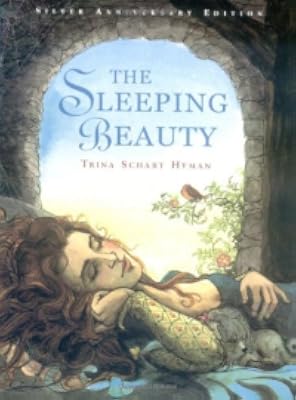




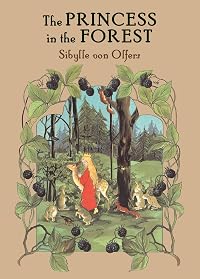
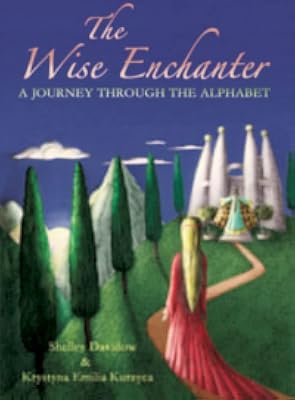


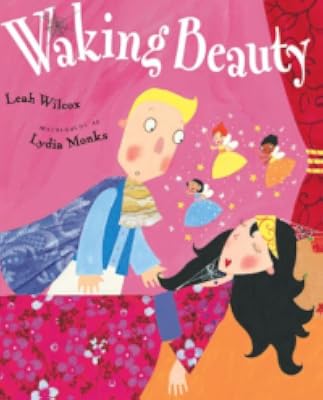










Member Recommendations

aulsmith An excellent feminist retelling of sleeping beauty
Member Reviews
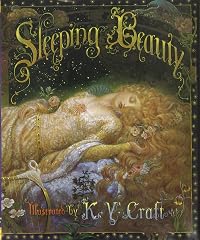
Sleeping Beauty is a classic fairy tale about a young girl, fifteen to be exact, who pricks her finger on a spindle and falls fast asleep, fulfilling a curse put on her by an evil fairy. The whole kingdom falls asleep too. For years and years princes try to come in and save the kingdom but they cannot. One day a prince does finally come in and awakes the princess with a kiss. They marry and live happily ever after. I liked this book for a couple reasons. One reason is the way it was written and the other reason is for the illustrations. In this version of Sleeping Beauty, the story is told exactly the way the Brothers Grimm wrote it, unlike the Disney version this book tells of the whole story without leaving out some details. For show more example in other version only Sleeping Beauty falls asleep but in this version the whole kingdom fell asleep. I liked this because I fell it added suspense to the story and you realized it wasn’t just all centered around Sleeping Beauty. I also liked that it was written the way the Brothers Grimm wrote it because it helped the reader to understand the story as a whole better. The final thing I liked about the book was the illustrations, in this version the illustrations are beautifully hand drawn, that have very vivid color these colors help to convey the mood. For example when telling about how the evil fairy comes the whole page except for the people is black, showing the reader just who scary this fairy is. I liked this because I feel it helped the reader to understand the story more and heighten the emotion in the story. Overall I feel this was a well written and illustrated version that portrayed the overall purpose of the book, which is that true love, overcomes anything. show less
I had mixed feelings about this book after reading it. I liked the book because of the plot that was embedded in the story. When the thirteenth fairy put the curse on the princess in which she would prick her finger and die at the age of 15, I wondered how that was going to happen being as though the king ordered that all the spindles in the kingdom be burned. So the suspense of the story was building up until she came across the spindle. Then I was kept in suspense wondering if and how she would be awakened from the 100 year sleep. What I didn’t like about this story is that the author chose to make things easy for the character of the prince. Having the prince awaken the princess without some type struggle seemed unrealistic. I felt show more that their should have been some kind of raising action in the story that involved the thirteenth fairy to make her pay for putting the curse on the princess. All the battle was taken away right down to the thorns being changed to flowers. The big idea of this story is good will conquer evil. show less
This a sweet, gentle retelling of the classic tale of Sleeping Beauty. There is nothing scary in this book; no scary witch or fairy, nor any great and terrible battle at the end. Instead the prince just enters the castle because essentially the clock has run out and the thorns have transitioned to fragrant flowers. Adults might find this out of step with the Disney version that we are all familiar with, but very young children are going to appreciate this gentler version as they are really all about the 'happy ending' and not so much about the struggle.
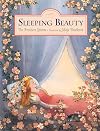
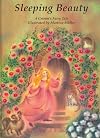
The artwork is very nice. Maja Dusikova's soft watercolors fit a story that is geared for little ones. The maids and princes are all rosy cheeked and refined. And there are fun details of show more activities within the castle-- children sitting beneath tables, fleeing cooks who they have frustrated. There's not quite the brilliance and detail that you find with Paul O. Zelinsky's pages, but Dusikova's work is ever so much better than the Disney renditions which I don't think translate that well to books.
A book for younger princess lovers. Toddler on up.
Pam T~
blogger and mom of a princess show less
The artwork is very nice. Maja Dusikova's soft watercolors fit a story that is geared for little ones. The maids and princes are all rosy cheeked and refined. And there are fun details of show more activities within the castle-- children sitting beneath tables, fleeing cooks who they have frustrated. There's not quite the brilliance and detail that you find with Paul O. Zelinsky's pages, but Dusikova's work is ever so much better than the Disney renditions which I don't think translate that well to books.
A book for younger princess lovers. Toddler on up.
Pam T~
blogger and mom of a princess show less
This sleeping beauty book is very similar to the Disney movie where I watched most of my fairytales growing up. There are some differences for instance instead of just sleeping beauty sleeping for 100 years the whole kingdom falls asleep too. Also, because this is a Grimm Brothers story it has a darker vibe and the illustrations also have a darker look. We see that many princes try to save the princess but many of them died this doesn't happen in the Disney version. In the end though the prince and the princess live happily ever after. The illustrations in this book had a darker look to it and it also seemed more renaissance style.
This version of the Sleeping Beauty recounts the classic fairytale. It differs majorly from the Disney version, which is what I'm used to. In this version, Sleeping Beauty lives in the castle all her life until she falls asleep for 100 hundred years after she turns fifteen. In both stories, the moment she touches the spindle is when she falls asleep. However, not only does Sleeping Beauty fall asleep, but everyone in the castle's kingdom falls asleep as well. Thorns grow around the castle preventing anyone from entering until after 100 years have passed. The prince happens to enter the castle at this time and finds flowers and bushes instead of thorns. Everyone is still asleep until he kisses Sleeping Beauty and they live happily ever show more after. There are no fairies or Maleficent in this version. I personally like the Disney version better because I think there is more content and more of a storyline. The theme of the story is true love conquers all. When Sleeping Beauty is kissed by the prince who loves her, she awakes and they get married. This book uses symbols to help tell the story. The thorns symbolize the sleeping castle, while the flowers blooming symbolize a rebirth of the castle. show less
This version of Sleeping Beauty is nothing like the Disney movie. In the story, Sleeping Beauty is put to sleep for one hundred years on her fifteenth birthday. However, she is not the only one who sleeps. Every person and animal in the castle is put to sleep for one hundred years and thick vines and brush are grow around the castle so no one can get in. For one hundred years princes come to try and break the spell, but it isn't until the one hundred years is up that the brush begins to fall away and everyone in the castle slowly wakes up. When Sleeping Beauty wakes, a prince is waiting for her. A simple and cute story for any young child.
There are wonderful pictures in this book. As the story is told , the picture are to the point. The pictures give a motion and aliveness to the book. You can feel what is happening. There are many things to keeping the students intrigued, by asking what do you think is now happening here, without reading the story. Then going through it again, reading only the words.
Members
- Recently Added By
Lists

The Complete Rory Gilmore Reading List
506 works; 5 members
Author Information

1,892+ Works 49,745 Members
Jacob W. Grimm (1785-1863) and his brother Wilhelm K. Grimm (1786-1859) pioneered the study of German philosophy, law, mythology and folklore, but they are best known for their collection of fairy tales. These include such popular stories as Red Riding Hood, Sleeping Beauty and The Frog Prince. Commonly referred to now as Grimm's Fairy Tales, show more their collection was published as Kinder-und-Hausmarchen (Children's and Household Tales, 1812-15). The brothers were born thirteen months apart in the German province of Hesse, and were inseparable from childhood. Throughout their lives they showed a marked lack of sibling rivalry. Most of their works were written together, a practice begun in childhood when they shared a desk and sustained throughout their adult lives. Since their lives and work were so collaborative, it is difficult now to differentiate between them, but of course there were differences.- Jacob, who studied for a time in Paris, was fascinated with variant spellings of older words. He articulated "Grimm's Law," the rules of which are still used today to determine correspondences between the consonants of German and languages in the Indo-European family. Jacob was bolder and more experimental than Wilhelm, and was rumored to be a lively dancer. Throughout his life, Jacob kept rigidly to schedule and could be extremely focused on work that demanded close attention to detail. He never married, but was a loving uncle to Wilhelm's children. Jacob and Wilhelm Grimm are buried side by side in Berlin. (Bowker Author Biography) show less

393+ Works 42,282 Members
Awards and Honors
Work Relationships
Is contained in
Is retold in
Has the adaptation
Inspired
Common Knowledge
- Canonical title
- Sleeping Beauty
- Original title
- Dornröschen
- Alternate titles
- Little Briar Rose; Sleeping Beauty; Brier Rose
- Original publication date
- 1812
- People/Characters
- Sleeping Beauty
Classifications
Statistics
- Members
- 170
- Popularity
- 192,873
- Reviews
- 15
- Rating
- (3.92)
- Languages
- 7 — Chinese, English, German, Japanese, Slovenian, Spanish, Swedish
- Media
- Paper, Audiobook, Ebook
- ISBNs
- 72
- UPCs
- 2
- ASINs
- 5