
Wilhelm Grimm (1786–1859)
Author of The Complete Fairy Tales of the Brothers Grimm
About the Author
Image credit: Wilhelm Grimm c.1858 from; Die Gartenlaube - Illustrirtes Familienblatt (a successful mass-circulation German newspaper and "modern" magazine)
Series
Works by Wilhelm Grimm
The Original Folk and Fairy Tales of the Brothers Grimm: The Complete First Edition (2014) 1,151 copies, 13 reviews
The Complete Fairy Tales of the Brothers Grimm: Tales 101-242 (1988) — Editor — 188 copies, 1 review
The Complete Folk & Fairy Tales of the Brothers Grimm (Wisehouse Classics - The Complete and Authoritative Edition) (2016) 78 copies
The Complete Fairy Tales of the Brothers Grimm: Tales 1-100 (1988) — Editor; Author — 71 copies, 1 review
Cinderella and Other Tales by the Brothers Grimm Book and Charm (Charming Classics) (2005) 33 copies, 1 review
Vintage Fear: " The Complete Fairy Tales " , " The Bloody Chamber " (Vintage Classic Twins) (2007) 29 copies, 1 review
The Illustrated Grimms' Fairy Tales: Eight sinister tales from the Brothers Grimm (Literary Pop Up) (2013) 24 copies
Grimms Märchen, Vollständig überarbeitete und illustrierte Ausgabe speziell für digitale Lesegeräte (German Edition) (2011) 14 copies
The Red Little Golden Book of Fairy Tales: Rumpelstiltskin, Princess and the Pea (1958) 12 copies, 1 review
Die Kinder- und Hausmärchen der Brüder Grimm : Band IV. Mit farbigen Illustrationen von Karl Fischer (1815) 4 copies
Brothers Grimm Household Stories. ILLUSTRATED. Incl. Hansel and Gretel, Rapunzel, Little Red-Cap Clever Else & more (mobi) (2008) 4 copies
Das grosse Märchenbuch. Hänsel und Gretel, Dornröschen, Cinderelle, Rotkäppchen, Schneewittchen, Ali Baba und die vierzig Räuber (1992) 4 copies
The Story of the Youth Who Went Forth to Learn What Fear Was (2012) — Collector; Author — 3 copies, 2 reviews
Verdens beste eventyr : Asbjørnsen & Moe, H.C. Andersen, Brødrene Grimm, Tusen og én natt med flere (2013) 3 copies
Baśnie braci Grimm : baśnie domowe i dziecięce zebrane przez braci Grimm. T. 2 — Author — 3 copies
Es spukt nicht nur um Mitternacht 2 copies
The Singing Bone 2 copies
Grimms' Complete Fairy Tales 2 copies
Cuentos clasicos de Grimm / Grimm Classic Tales (Cuentos Clasicos / Classic Tales) (Spanish Edition) (2011) 2 copies
Grimms Fairy Tales (Annotated) 2 copies
Fairy Tales: Brothers Grimm 2 copies
The Nose 1 copy
Little Red Riding Hood 1 copy
Cuéntame un cuento de los hermanos Grimm — Author — 1 copy
Hamburger Lesehefte : Die zertanzten Schuhe — Text — 1 copy
Hamburger Lesehefte : Kleine Märchentruhe der Brüder Grimm — Text — 1 copy
Hamburger Lesehefte : Brüder Grimm : Das blaue Licht — Text — 1 copy
Os 77 Melhores Contos 1 copy
Unknown 1 copy
গ্রীম ভাইদের সেরা রূপকথা 1 copy
The Water Nixie 1 copy
The Three Spinners 1 copy
Household stories from the collection of the Bros. Grimm / translated from the German by Lucy Crane ; and done into pictures by Walter Crane 1 copy, 1 review
The True Bride 1 copy
Irische Elfenmärchen 1 copy
Altdänische Heldenlieder 1 copy
The Smith and the Devil 1 copy
Contes 1 copy
Lasten- ja kotisatuja I–II 1 copy
Deutsche Sagen. 2 Baende. — Author — 1 copy
Czerwony Kapturek 1 copy
Hermanos Grimm, Cuentos 1 copy
Grimms Eventyr 1 copy
Grimms Eventyr Vol. 1 1 copy
Fairy Tales complete (original story, Biography Brothers Grimm & bonus 50 illustration) (1812) 1 copy
Dornröschen. Mini-Märchen 1 copy
Persinette 1 copy
Brd̲erna Grimms sagor 1 copy
Household Tales 1 copy
هانسل و گرتل 1 copy
Favourite Tales 1 copy
Сказки Братьев Гримм 1 copy
De sprookjes kast 1 copy
Household stories 1 copy
Rozprávky bratov Grimmovcov O pere vtáka Grifa. O kráľovnej so striebornými rukami. O kráľovi Drozdia brada (1991) 1 copy
Cendrillon 1 copy
Grimm's Fairy Tales Volume I 1 copy
Śnieżka 1 copy
Cuentos de siempre II 1 copy
Bröderna Grimms sagor. 2 1 copy
Bröderna Grimms sagor. 1 1 copy
Frau Holle 1 copy
Baśnie braci Grimm tom 1 1 copy
Thumbling 1 copy
Associated Works
Fairy Tales from the Brothers Grimm: A New English Version (2012) — Original — 1,646 copies, 40 reviews
Little Red Riding Hood (retold and illustrated by Trina Schart Hyman) (1983) 1,610 copies, 176 reviews
Literature: An Introduction to Fiction, Poetry, and Drama (1995) — Contributor, some editions — 1,012 copies, 7 reviews
Spells of Enchantment: The Wondrous Fairy Tales of Western Culture (1991) — Contributor — 604 copies, 5 reviews
The Great Fairy Tale Tradition: From Straparola and Basile to the Brothers Grimm [Norton Critical Edition] (2001) — Contributor — 391 copies, 1 review
Fairy Tale Comics: Classic Tales Told by Extraordinary Cartoonists (2013) — Contributor — 345 copies, 31 reviews
The Graphic Canon, Vol. 2: From "Kubla Khan" to the Brontë Sisters to The Picture of Dorian Gray (2012) — Contributor — 213 copies, 2 reviews
The Blue Book of Fairy Tales: Rapunzel, Beauty and the Beast, Toads and Diamonds (1959) — Contributor — 188 copies, 4 reviews
Snow White and Other Grimms' Fairy Tales (MinaLima Edition): Illustrated with Interactive Elements (1812) — Author, some editions — 150 copies
Once Upon a Time: The Fairy Tale World of Arthur Rackham (1972) — Contributor — 137 copies, 5 reviews
Beauty and the Beast: Classic Tales About Animal Brides and Grooms from Around the World (2017) — Contributor — 129 copies, 2 reviews
The Sophisticated Cat: A Gathering of Stories, Poems, and Miscellaneous Writings About Cats (1992) — Contributor — 112 copies, 1 review
Fairy Legends and Traditions of Southern Ireland (1971) — Translator, some editions — 104 copies, 2 reviews
The Graphic Canon of Children's Literature: The World's Greatest Kids' Lit as Comics and Visuals (2014) — Contributor — 101 copies, 1 review
Tales of the German Imagination from the Brothers Grimm to Ingeborg Bachmann (Penguin Classics) (2012) — Contributor — 79 copies, 2 reviews
The Goose Girl: A Story from the Brothers Grimm (1995) — Author, some editions — 67 copies, 7 reviews
The Greatest Christmas Stories of All Time: Timeless Classics That Celebrate the Season (2006) — Contributor — 50 copies
A Very German Christmas: The Greatest Austrian, Swiss and German Holiday Stories of All Time (2020) — Contributor — 37 copies, 1 review
Fairies, Pookas, and Changelings: A Complete Guide to the Wild and Wicked Enchanted Realm (2017) — Contributor — 33 copies
Kingfisher Christmas Book: A Collection of Stories, Poems and Carols for the Twelve Days of Christmas (1985) — Contributor — 29 copies
Little Red Riding Hood: A Fairy Tale by Grimm (The Little Pebbles) (1997) — Author — 27 copies, 1 review
Swords and Sorcerers: Stories from the Worlds of Fantasy and Adventure (2002) — Contributor — 18 copies
The Illustrated Fairy Tale Princess Collection (Illustrated Novel) (Illustrated Classics) (2017) — Contributor — 14 copies
Grimms Storytime Library Boxed Set (The Frog Prince,Rumpelstiltskin,The Brave Little Tailor,Snow White,Rapunzel) (1994) — Original stories — 9 copies
The Tale of the Frog Prince [1982 Faerie Tale Theatre TV episode] (1982) — Original story — 6 copies
The Boy Who Left Home to Find Out About the Shivers [1984 Faerie Tale Theatre TV episode] (1984) — Original story — 6 copies
Snow White and the Seven Dwarfs [1984 Faerie Tale Theatre TV episode] (1984) — Original story — 5 copies
Bruin's Midnight Reader: Strange and Engaging Stories for the Curious (2022) — Contributor — 3 copies
Briefwechsel zwischen Jacob und Wilhelm Grimm. Teil 2, Zusätzliche Texte, Sagenkonkordanz (2006) — Contributor — 3 copies
Dichtung der Romantik Bd. 12. Die Welt der Romantiker : Berichte u. Selbstdarstellungen. Briefe u. Urkunden — Contributor — 3 copies
Dichtung der Romantik (10. Band) Volkstum I Lied, Märchen, Sage, Legende. Übersetztes aus fremdem Volkstum — Contributor — 3 copies
Charakteristiken : die Romantiker in Selbstzeugnissen und Äusserungen ihrer Zeitgenossen — Contributor — 3 copies
Call of the Wild • Grimms' Fairy Tales • Hans Brinker • Robinson Crusoe • Swiss Family Robinson (1963) — Contributor — 2 copies
Rumpelstiltskin — Author — 2 copies
The True Bride [1989 The StoryTeller TV episode] — Original story — 2 copies
Fearnot [1987 The StoryTeller TV episode] — Original story — 2 copies
For Want of a Horse: Twenty-Three Tales of Supernatural Stallions, Magical Mares, and Paranormal Ponies (2015) — Contributor — 2 copies, 2 reviews
Dichtung der Romantik Bd. 11. Volkstum 2 : Volksbücher. Betrachtungen zur Dichtkunst, Musik, Bildenden Kunst, Philosophie u. Wissenschaft. Fragmente, Ideen, Aphorismen — Contributor — 2 copies
Classic Children’s Stories 1 copy
Hans-mon-hérisson 1 copy
The Town Musicians of Bremen [2024 The Grimm Variations TV episode] (2024) — Original story — 1 copy
Les six serviteurs — Author — 1 copy
Tagged
Common Knowledge
- Canonical name
- Grimm, Wilhelm
- Legal name
- Grimm, Wilhelm Carl
- Other names
- GRIMM, Wilhelm Carl
GRIMM, Wilhelm - Birthdate
- 1786-02-24
- Date of death
- 1859-12-16
- Gender
- male
- Education
- University of Marburg
- Occupations
- folklorist
philologist
librarian
secretary (elector's library ∙ Kassel)
professor - Organizations
- University of Göttingen
- Relationships
- Grimm, Jacob (brother)
- Short biography
- Wilhelm Carl Grimm war ein deutscher Sprach- und Literaturwissenschaftler sowie Märchen- und Sagensammler.
- Cause of death
- infection
- Nationality
- Germany
Hesse - Birthplace
- Hanau, Hesse, Holy Roman Empire
- Places of residence
- Hanau, Germany (birth)
Gottingen, Germany
Berlin, Germany (death) - Place of death
- Berlin, Kingdom of Prussia, German Confederation
- Associated Place (for map)
- Germany
Members
Discussions
DLE Grimm's Fairy Tales Artist Signed Edition in Easton Press Collectors (February 2024)
Reviews
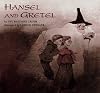
I had a set of these Lisbeth Zwerger books when I was a kid, and remember being both delighted and frightened by the exquisite illustrations. Of course, I was a small child who didn't think to remember the illustrator, so it took me a long time and lots of googling to track them down again, and have managed to re-acquire all the ones I had and a few others over the last few years.
Hansel and Gretel is certainly one of my favorite fairy tales, thanks in large part to the influence this book show more had on my imagination as a kid. The text and translation is amusing and quirky, but the real star here is Lisbeth Zwerger's soft, expressive, and at times quite creepy artwork.
I remember having nightmares about Zwerger's witch of the candy cottage. I doubt I'll have nightmares now, but even as an adult there's something unsettling about her glowing red eyes, broad and bony face, and amorphous body. The pluckiness of the children in this tale always appealed to me, and this remains true here.
My favorite thing about Zwerger's style is the way she paints clothes and faces, and especially in this one I loved Gretel's clothes - the patterns on her scarf and skirt, and the movement of the skirt – I can almost feel the fabric and hear the swish and flutter of them.
The only thing that really jumped out at me as an adult that never occurred to me as child wassome – in my opinion – rather swift and undeserved forgiveness at the end, which only added to the amusement and quirkiness for me, and made for a genuinely sweet illustration.
I can't pretend that this is a terribly objective review, but I truly believe this to be real treasure of children's literature and illustration. It's worth it alone just to look at the pictures. I think that the way it captivated my wee sprouting imagination as a child is part of the magic, rather than something to disregarded with adult retrospection.
If you ever find this, or any of the Zwerger's other books, when poking around a charity shop or 2nd hand bookstore, do yourself a favor and snap it up; I'd be shocked if you regret it. show less
Hansel and Gretel is certainly one of my favorite fairy tales, thanks in large part to the influence this book show more had on my imagination as a kid. The text and translation is amusing and quirky, but the real star here is Lisbeth Zwerger's soft, expressive, and at times quite creepy artwork.
I remember having nightmares about Zwerger's witch of the candy cottage. I doubt I'll have nightmares now, but even as an adult there's something unsettling about her glowing red eyes, broad and bony face, and amorphous body. The pluckiness of the children in this tale always appealed to me, and this remains true here.
My favorite thing about Zwerger's style is the way she paints clothes and faces, and especially in this one I loved Gretel's clothes - the patterns on her scarf and skirt, and the movement of the skirt – I can almost feel the fabric and hear the swish and flutter of them.
The only thing that really jumped out at me as an adult that never occurred to me as child was
I can't pretend that this is a terribly objective review, but I truly believe this to be real treasure of children's literature and illustration. It's worth it alone just to look at the pictures. I think that the way it captivated my wee sprouting imagination as a child is part of the magic, rather than something to disregarded with adult retrospection.
If you ever find this, or any of the Zwerger's other books, when poking around a charity shop or 2nd hand bookstore, do yourself a favor and snap it up; I'd be shocked if you regret it. show less
Honestly I found this book disappointing. It isn't my first time reading Maria Tatar or the Annotated Books series and expected more based on my past experience with each. I read Tatar's The Hard Facts of the Grimms' Fairy Tales and The Annotated Alice several years ago and found both terribly interesting and informative, The Annotated Brothers Grimm doesn't compare to either. The pictures are pretty good, but the footnotes are on the slim side for the series. They aren't particularly show more insightful and often repeat themselves.
To make matters worse Tatar's translation was underwhelming. To be fair this is hardly the first time I've been frustrated by an artless Grimm translation, but it's always disappointing. One of the things I love best in a good Grimm translation is the poetic repetition. There is a lot of variety in how the verse in Grimm stories in translated, but the versions here lack the grace and focus of more artful translations.
Compare the exchange between the princess and the horse head from Grimm's Fairy Tales: Twenty Stories with Tatar's rendering of the exchange.
'Alas! dear Falada, there thou hangest.'
And the Head answered--
'Alas! Queen's daughter, there thou gangest.
If thy mother only knew thy fate,
Her heart would break with grief so great.'
Tatar's:
'Alas, poor Falada, hanging up there.'
And the horse's head would reply:
'Princess, princess, down and out,
If your mother found this out,
There's no doubt--her heart would break.'
I might not know what 'gangest' means but it's a hell of a lot better than a verse that hinges on rhyming 'out' with 'out'.
And then there's the dire warning in the Robber Bridegroom:
'Turn back, turn back, thou bonnie bride,
Nor in this house of death abide.'
Tatar's:
'Turn back, turn back, my pretty young bride,
In a house of murders you've arrived.'
Yes she's managed areal rhyme half rhyme here, but the rhythm lacks the musicality of better versions. It isn't exactly hard to versify dire warnings either. The story Mr. Fox (not printed in this collection) does just fine with its variant.
Mr. Fox's warning:
'Be bold, be bold, but not too bold,
Lest that your heart's blood should run cold.'
Tatar's translations may owe their flatness to accuracy at the expense of art, but clearly I favor flash and rhythm over strict accuracy.
As if this wasn't enough all of the stories except the ones 'for adults' were taken from the Grimm's last edition after the stories had been heavily edited to be more suitable for Christian children. This means that all hints of sexuality were purged (Rapunzel's pregnancy), gratuitous mentions of prayer and piety were inserted (though the stories were of pagan origins) and blame was shifted off of fathers to mothers (Furrypelts) and off of mothers to stepmothers (an awful lot of them) to maintain the sanctity of parenthood. The only reason the 'stories for adults' escaped unedited was because after the first edition they were deemed inappropriate for printing and were purged from the collection. Actually that's not completely true. One of the stories, "Jew in the Brambles" was only deemed inappropriate by later editors. Jacob and Wilhelm printed the anti-Semitic tale in several of their books.
I guess Grimm's Fairy Tales: Twenty Stories is still my favorite. show less
To make matters worse Tatar's translation was underwhelming. To be fair this is hardly the first time I've been frustrated by an artless Grimm translation, but it's always disappointing. One of the things I love best in a good Grimm translation is the poetic repetition. There is a lot of variety in how the verse in Grimm stories in translated, but the versions here lack the grace and focus of more artful translations.
Compare the exchange between the princess and the horse head from Grimm's Fairy Tales: Twenty Stories with Tatar's rendering of the exchange.
'Alas! dear Falada, there thou hangest.'
And the Head answered--
'Alas! Queen's daughter, there thou gangest.
If thy mother only knew thy fate,
Her heart would break with grief so great.'
Tatar's:
'Alas, poor Falada, hanging up there.'
And the horse's head would reply:
'Princess, princess, down and out,
If your mother found this out,
There's no doubt--her heart would break.'
I might not know what 'gangest' means but it's a hell of a lot better than a verse that hinges on rhyming 'out' with 'out'.
And then there's the dire warning in the Robber Bridegroom:
'Turn back, turn back, thou bonnie bride,
Nor in this house of death abide.'
Tatar's:
'Turn back, turn back, my pretty young bride,
In a house of murders you've arrived.'
Yes she's managed a
Mr. Fox's warning:
'Be bold, be bold, but not too bold,
Lest that your heart's blood should run cold.'
Tatar's translations may owe their flatness to accuracy at the expense of art, but clearly I favor flash and rhythm over strict accuracy.
As if this wasn't enough all of the stories except the ones 'for adults' were taken from the Grimm's last edition after the stories had been heavily edited to be more suitable for Christian children. This means that all hints of sexuality were purged (Rapunzel's pregnancy), gratuitous mentions of prayer and piety were inserted (though the stories were of pagan origins) and blame was shifted off of fathers to mothers (Furrypelts) and off of mothers to stepmothers (an awful lot of them) to maintain the sanctity of parenthood. The only reason the 'stories for adults' escaped unedited was because after the first edition they were deemed inappropriate for printing and were purged from the collection. Actually that's not completely true. One of the stories, "Jew in the Brambles" was only deemed inappropriate by later editors. Jacob and Wilhelm printed the anti-Semitic tale in several of their books.
I guess Grimm's Fairy Tales: Twenty Stories is still my favorite. show less
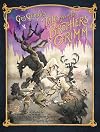
I’ve read about a million versions of Grimm’s fairytales by now, so you’ll forgive me for skipping the prose in this edition and going straight for Gris Grimly’s illustrations. They are, after all, what we came for when we set our eye on purchasing this gift edition. Grimly is one of my favourite illustrators currently working, and his macabre stylings paired with off-kilter stories have always spoken to the inner weird child in me, so it was with abject delight that I discovered show more that he had turned his talents towards bringing to life the tales of the Brothers Grimm. We have all seen the sweetened Disney versions of these stories before, but the folkloric origins of the tales reside well within the depths of the Black Forest and contain chilling undertones that are far more suited to the strange and slightly sinister airs that Grimly brings to life on the page. As I opened the tome - of decent size and heft, to my delight - I puzzled over the table of contents in brief, spotting many familiar tales and not a few from the deeper catalogue cuttings, before diving straight into the collection. Imagine my surprise when I found myself puzzling further as I encountered each of Grimly’s sparse illustrations. As I turned page after page, rarely did I spy a familiar face and I was hard pressed to match many with their narration without dipping quickly back into the surrounding stories to find their scenic settings. Well done, Grimly, for choosing to illustrate the unexpected (though, as readers we should not be surprised by this choice), and for forcing us to dig into the loam once again to learn our lessons from the Volkskunde. Of course, we were delighted by every illustration we encountered - disappointingly sparse though they were, as if Grimly had been given a maximum quota meant to emphasize the Grimm’s words, and keep his illustrations from consuming the tales whole. Considering that even in their darkest moments, the brothers rarely give details that are too gristly in their tales (the mere hint and subtext is enough to send a chill down our spines), and Grimly can easily veer off into the very depths of fright (and does, on occasion), it is possibly a good thing that the editor of the collection enforced a sense of balance - after all, I doubt that this book was marketed towards the horror crowd, and was instead destined for the bedside tables of the slightly odd (but not sociopathic) child. Overall, a bit of an odd collection; not quite meeting my expectations for the delicious macabre Grimly that I continue to crave, and yet not entirely disappointing either. show less

There is something about the forest which speaks to the human spirit. Whether threatening and full of unseen danger, as in Little Red Riding Hood, or the stronghold of liberty, and safe-haven to which rebellious heroes such as Robin Hood and his band of outlaws withdraw, it looms large in our collective imagination. So too does war - that unwelcome specter which has dogged humanity for so much of its existence...
It seems almost inevitable then, that any story which addresses itself to the show more human fascination with, and fear of, both war and the forest, should speak to us most powerfully. Such is certainly the case with Dear Mili, a short tale from Wilhelm Grimm, of the Brothers Grimm. Originally part of a letter written by the author to a young girl in 1816, it lay forgotten for more than 150 years, until finally coming to light in the early 1980s. This beautiful picture book, with illustrations by the brilliant Maurice Sendak, marks its debut in print.
When an unseen, unnamed war draws near, a mother wonders how to protect her beloved daughter from those "wicked men," and eventually decides to take her to the forest, hoping that there she will be safe. Slipping a piece of Sunday cake into her pocket, assuring her that God will direct her steps, she kisses her daughter, and lets her go... And so begins, from the daughter's perspective, a three-day odyssey, in which she finds shelter in the woods with kindly St. Joseph. But has it only been three days...?
Deceptively simple, Dear Mili touches upon many important themes, from the traumatic familial separation so often caused by war, to the role of faith in difficult times. It speaks to the reality that it is often children, society's most vulnerable members, who are the first victims of violence. As some other reviewers have noted, Sendak's art seems to reference the Holocaust, something that seems eminently appropriate, given the timeless quality of Grimm's tale. Because the time and place are never specified, because the conflict is never named, it could be any time and place, any conflict...
I had been aware of this book's existence for some time, but never seemed to get around to reading it. How glad I am that my friend Chandra prompted me to finally pick it up. I was deeply moved. show less
It seems almost inevitable then, that any story which addresses itself to the show more human fascination with, and fear of, both war and the forest, should speak to us most powerfully. Such is certainly the case with Dear Mili, a short tale from Wilhelm Grimm, of the Brothers Grimm. Originally part of a letter written by the author to a young girl in 1816, it lay forgotten for more than 150 years, until finally coming to light in the early 1980s. This beautiful picture book, with illustrations by the brilliant Maurice Sendak, marks its debut in print.
When an unseen, unnamed war draws near, a mother wonders how to protect her beloved daughter from those "wicked men," and eventually decides to take her to the forest, hoping that there she will be safe. Slipping a piece of Sunday cake into her pocket, assuring her that God will direct her steps, she kisses her daughter, and lets her go... And so begins, from the daughter's perspective, a three-day odyssey, in which she finds shelter in the woods with kindly St. Joseph. But has it only been three days...?
Deceptively simple, Dear Mili touches upon many important themes, from the traumatic familial separation so often caused by war, to the role of faith in difficult times. It speaks to the reality that it is often children, society's most vulnerable members, who are the first victims of violence. As some other reviewers have noted, Sendak's art seems to reference the Holocaust, something that seems eminently appropriate, given the timeless quality of Grimm's tale. Because the time and place are never specified, because the conflict is never named, it could be any time and place, any conflict...
I had been aware of this book's existence for some time, but never seemed to get around to reading it. How glad I am that my friend Chandra prompted me to finally pick it up. I was deeply moved. show less
Lists
Folio Society (3)
A Reading List (1)
Five star books (1)
Read in 2020 (1)
Shaking a Leg (1)
Awards


You May Also Like


Associated Authors
Statistics
- Works
- 391
- Also by
- 153
- Members
- 42,045
- Popularity
- #410
- Rating
- 4.1
- Reviews
- 593
- ISBNs
- 1,894
- Languages
- 27
- Favorited
- 8
