On This Page
Description
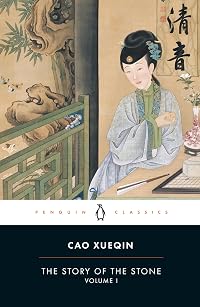
For generations, the Jia family is held in high esteem but when they lose favor with the emperor, their luxury lifestyle comes to an end. The Story of the Stone focuses on internal and external conflicts that arise as they adjust to their unexpected plight. Jia Baoyu is heir to a prestigious family, that's held multiple imperial titles throughout the years. Despite their history and social standing, they are targeted by the emperor, who strips them of their land and personal fortune. As the show more family's wealth wanes, the young Jia struggles with his affection for his cousin Lin Daiyu, as he's already engaged to Xue Baochai. It's a compelling romance drama set against the family's economic decline. Revered for centuries, The Story of the Stone is one of the Four Classic Novels in Chinese literature. It's a depiction of pre-modern times that is both bleak and illuminating. Cao Xueqin delivers a piercing commentary on the duplicity of the social and political structure. show lessTags
Recommendations





Member Reviews
Dream of the Red Chamber, also known as The Story of the Stone, opens by addressing the reader’s inferred question about the purpose of the book, and moves on to a creation myth with a magical stone that takes on human form. Later, the central character, Bao-yu, is born with a piece of jade in his mouth, carved with a verse:
“Mislay me not, forget me not,
And hale old age will be your lot.”
On the back, it promises to dispel witchcraft, cure melancholy, and tell fortunes.
Volume I is set in a mansion in the mid 1700s, when Bao-yu is aged around 12. He is grandmother Jia’s favourite, and loves beauty: poetry, but also lavish clothes, jewellery, make-up, perfume, and all things feminine, though concern is about him becoming a show more libertine, rather than not being masculine enough.
Image: Bao-yu’s maid, Skybright, aka Qing-wen, painted by Xu Baozhuan (Source)
It’s a rich and curious mix of fable, fairytale, fate, religion, social commentary, family drama, duty, dreams, etiquette, aromas (and Aroma), lust and love, poetry, and garden design. There’s a long section featuring fairies, which turns out to be a dream. Some parts are like a Shakespeare comedy (not that I’m suggesting one inspired the other). Poems, couplets, and riddles pepper the text, along with more distracting lists of genealogies, gifts, and nearly 30 mourners. It spans grand events and domestic details.
There are fascinating and beautiful sections (the garden, and a long dream, in particular) but there are many domestic comings and goings, some of which are rather dull, though occasionally, Cao explicitly omits them:
“Nothing particularly worth recording took place.”
It can be hard to keep track of the vast cast of characters, and their ages and genders, because of their similar names and complex connections (Emperor, concubines, eunuchs, civil servants, aristocrats, merchants, kidnappers, slaves, staff), relationships (by blood, love, friendship, adoption, and marriage), and the things they get up to (drinking and sex).
At first, I massively underestimated both the scale of the Rong Mansion (over 300 inhabitants) and the garden (a replica in Beijing is 13 hectares, with more than 40 scenic spots).
Image: Painting of Grand Prospect garden, aka Daguanyuan, featuring lake, bridge, and boat, by Sun Wen (Source)
All-scents Garden
The beautifully-named garden could just as easily be the All-sense Garden. When Yuan-chun, who is Bao-yu’s sister and now one of the Emperor’s concubines, is allowed to visit for the first time in many years, the family have to build a “Separate Residence for the Visitation”, which takes 10 months and has to be approved for suitability and security by a team from the Palace, who also instruct the family on protocol.
It’s built next to the All-scents Garden and contains many residences amid hills, a large lake, rocks, animals, plants, and ornaments, all carefully positioned to gradually reveal new vistas as one walks through.
“The fallen blossoms seemed to be even more numerous and the waters on whose surface they floated even more limpid than they had been on the [other] side… The weeping willows which lined both banks were here and there diversified with peach and apricot trees whose interlacing branches made little worlds of stillness and serenity beneath them.”
Every element needs an auspicious name and poetic inscriptions, prompting much debate.
For the day of the visitation, the family purchase two dozen “little nuns”, as well as dancers, food, fireworks, lanterns, and incense.
“Together they combined to make a fairyland of jewelled light.”
Yuan-chun renames it the Prospect Garden, and changes some of the other names and inscriptions, before tasking the girls and Bao-yu with composing verses.
Afterwards, she suggests the girls and Bao-yu (all cousins) live in the garden, with their maids and pages. It’s like a cross between Eden and a college dorm! Bao-yu loves it at first, but grows discontented because the girls:
“were mostly still in that age of innocence when freedom from inhibition is the fruit of ignorance.”
His page, Tealeaf, supplies him with raunchy novels, which help.
Image: Painting of a wistful woman in Grand Prospect garden, aka Daguanyuan, by Sun Wen (Source)
A world away
I’ve travelled in China a few times, and read some Chinese fiction, but such a geographically and historically huge culture still holds surprises:
• Like Don Quixote, this has postmodern aspects of metafiction and stories within stories, as well as frequently addressing the reader directly: most chapters end on a cliff-hanger, telling the reader why they should read the next one.
• The attitudes to sex are remarkably relaxed: the cook’s wife is known as “the Mattress” because almost all the men (family and staff) have slept with her and she has “pneumatic charms and omnivorous promiscuity”. Youngsters have sex, or close to it, often after wine, with each other, across class boundaries. But the Emperor’s concubine can talk to her father only through a paper screen.
• I found it odd that many of the fairies, maids, and nuns had Latinate names (Disenchantment, Citronella, Sapientia). The translator’s choice, but names of rooms and places were more poetic and less Latin (blossom and flowers).
Authorship
This is epic in scope but doesn’t hang together as a single story, or even series of stories. It’s like a composite in different genres, by different authors, some with more of a narrative than others. This makes sense. The author died in 1763 and this was first published nearly 30 years later. It was incomplete, there is no definitive version, and the wordplay, hidden jokes, and 16th century symbolism (old-fashioned at the time Cao wrote it), make it tricky to translate.
Nevertheless, it’s a classic of Chinese literature. Cao is sometimes called “the Chinese Proust” (my Proust review HERE), though for me, Miguel Cervantes seems closer (my Don Quixote review HERE), given the humour and dreams.
Penguin published it in three volumes, each over 500 pages, plus introductions, appendices, character lists, and family trees. This is a review of the first.
Image: Painting of one of the grand receptions by Sun Wen (Source)
Quotes
• “Truth becomes fiction when the fiction’s true;
Real becomes not-real when the unreal’s real.”
• “Cheeks as white and firm as a fresh lychee and a nose as white and shiny as soap made from goose-fat.”
• “Initiate him in the pleasures of the flesh… to shock the silliness out of him.”
• “The leaves are picked in the Paradise of the Full-blown Flower on the Mountain of Spring Awakening… It is infused in water collected from the dew that lies on fairy flowers and leaves. The name is ‘Maiden’s Tears’.”
• “Two women came in bearing… bowls and dishes containing all kinds of meat and fish, only one or two of which appeared to have been touched.” [the uninvited guest is from a lower branch of the clan]
• “The plays… seemed to involve much rushing in and out of supernatural beings, and the sound of drums and cymbals and blood-curdling battle-cries, as they whirled into combat.”
See also
• An equally lyrical, but easier, novel involving the philosophy of garden design and object placement (Japanese design, but much in common with Chinese), is Tan Twan Eng’s The Garden of Evening Mists, which I reviewed HERE.
• A very different sort of red chamber is a traumatic feature of Jane Eyre’s childhood. See my review HERE. show less
“Mislay me not, forget me not,
And hale old age will be your lot.”
On the back, it promises to dispel witchcraft, cure melancholy, and tell fortunes.
Volume I is set in a mansion in the mid 1700s, when Bao-yu is aged around 12. He is grandmother Jia’s favourite, and loves beauty: poetry, but also lavish clothes, jewellery, make-up, perfume, and all things feminine, though concern is about him becoming a show more libertine, rather than not being masculine enough.
Image: Bao-yu’s maid, Skybright, aka Qing-wen, painted by Xu Baozhuan (Source)
It’s a rich and curious mix of fable, fairytale, fate, religion, social commentary, family drama, duty, dreams, etiquette, aromas (and Aroma), lust and love, poetry, and garden design. There’s a long section featuring fairies, which turns out to be a dream. Some parts are like a Shakespeare comedy (not that I’m suggesting one inspired the other). Poems, couplets, and riddles pepper the text, along with more distracting lists of genealogies, gifts, and nearly 30 mourners. It spans grand events and domestic details.
There are fascinating and beautiful sections (the garden, and a long dream, in particular) but there are many domestic comings and goings, some of which are rather dull, though occasionally, Cao explicitly omits them:
“Nothing particularly worth recording took place.”
It can be hard to keep track of the vast cast of characters, and their ages and genders, because of their similar names and complex connections (Emperor, concubines, eunuchs, civil servants, aristocrats, merchants, kidnappers, slaves, staff), relationships (by blood, love, friendship, adoption, and marriage), and the things they get up to (drinking and sex).
At first, I massively underestimated both the scale of the Rong Mansion (over 300 inhabitants) and the garden (a replica in Beijing is 13 hectares, with more than 40 scenic spots).
Image: Painting of Grand Prospect garden, aka Daguanyuan, featuring lake, bridge, and boat, by Sun Wen (Source)
All-scents Garden
The beautifully-named garden could just as easily be the All-sense Garden. When Yuan-chun, who is Bao-yu’s sister and now one of the Emperor’s concubines, is allowed to visit for the first time in many years, the family have to build a “Separate Residence for the Visitation”, which takes 10 months and has to be approved for suitability and security by a team from the Palace, who also instruct the family on protocol.
It’s built next to the All-scents Garden and contains many residences amid hills, a large lake, rocks, animals, plants, and ornaments, all carefully positioned to gradually reveal new vistas as one walks through.
“The fallen blossoms seemed to be even more numerous and the waters on whose surface they floated even more limpid than they had been on the [other] side… The weeping willows which lined both banks were here and there diversified with peach and apricot trees whose interlacing branches made little worlds of stillness and serenity beneath them.”
Every element needs an auspicious name and poetic inscriptions, prompting much debate.
For the day of the visitation, the family purchase two dozen “little nuns”, as well as dancers, food, fireworks, lanterns, and incense.
“Together they combined to make a fairyland of jewelled light.”
Yuan-chun renames it the Prospect Garden, and changes some of the other names and inscriptions, before tasking the girls and Bao-yu with composing verses.
Afterwards, she suggests the girls and Bao-yu (all cousins) live in the garden, with their maids and pages. It’s like a cross between Eden and a college dorm! Bao-yu loves it at first, but grows discontented because the girls:
“were mostly still in that age of innocence when freedom from inhibition is the fruit of ignorance.”
His page, Tealeaf, supplies him with raunchy novels, which help.
Image: Painting of a wistful woman in Grand Prospect garden, aka Daguanyuan, by Sun Wen (Source)
A world away
I’ve travelled in China a few times, and read some Chinese fiction, but such a geographically and historically huge culture still holds surprises:
• Like Don Quixote, this has postmodern aspects of metafiction and stories within stories, as well as frequently addressing the reader directly: most chapters end on a cliff-hanger, telling the reader why they should read the next one.
• The attitudes to sex are remarkably relaxed: the cook’s wife is known as “the Mattress” because almost all the men (family and staff) have slept with her and she has “pneumatic charms and omnivorous promiscuity”. Youngsters have sex, or close to it, often after wine, with each other, across class boundaries. But the Emperor’s concubine can talk to her father only through a paper screen.
• I found it odd that many of the fairies, maids, and nuns had Latinate names (Disenchantment, Citronella, Sapientia). The translator’s choice, but names of rooms and places were more poetic and less Latin (blossom and flowers).
Authorship
This is epic in scope but doesn’t hang together as a single story, or even series of stories. It’s like a composite in different genres, by different authors, some with more of a narrative than others. This makes sense. The author died in 1763 and this was first published nearly 30 years later. It was incomplete, there is no definitive version, and the wordplay, hidden jokes, and 16th century symbolism (old-fashioned at the time Cao wrote it), make it tricky to translate.
Nevertheless, it’s a classic of Chinese literature. Cao is sometimes called “the Chinese Proust” (my Proust review HERE), though for me, Miguel Cervantes seems closer (my Don Quixote review HERE), given the humour and dreams.
Penguin published it in three volumes, each over 500 pages, plus introductions, appendices, character lists, and family trees. This is a review of the first.
Image: Painting of one of the grand receptions by Sun Wen (Source)
Quotes
• “Truth becomes fiction when the fiction’s true;
Real becomes not-real when the unreal’s real.”
• “Cheeks as white and firm as a fresh lychee and a nose as white and shiny as soap made from goose-fat.”
• “Initiate him in the pleasures of the flesh… to shock the silliness out of him.”
• “The leaves are picked in the Paradise of the Full-blown Flower on the Mountain of Spring Awakening… It is infused in water collected from the dew that lies on fairy flowers and leaves. The name is ‘Maiden’s Tears’.”
• “Two women came in bearing… bowls and dishes containing all kinds of meat and fish, only one or two of which appeared to have been touched.” [the uninvited guest is from a lower branch of the clan]
• “The plays… seemed to involve much rushing in and out of supernatural beings, and the sound of drums and cymbals and blood-curdling battle-cries, as they whirled into combat.”
See also
• An equally lyrical, but easier, novel involving the philosophy of garden design and object placement (Japanese design, but much in common with Chinese), is Tan Twan Eng’s The Garden of Evening Mists, which I reviewed HERE.
• A very different sort of red chamber is a traumatic feature of Jane Eyre’s childhood. See my review HERE. show less
I was not expecting this to play in so many modes. I guess what I was expecting was a melodramatic or diaphonous romance with large dollops of allegorical myth and mysticism. But most of the story is very grounded, even earthy, at times erotic, comic-erotic, or scatological. I seem to be in the minority here, but I still can't take seriously the frame story of the stone or its appearance in the hero's mouth at birth. It seems more like joking authorial artifice to me (and all the better for that).
The spicy Xi-feng is the stand-out character from this volume. But I was very impressed by how the Bao-yu, Bao-chai, Dai-yu threesome are developed and by how we're encouraged to laugh at their foibles and follies while still sort of show more sympathising with these unimaginably rich kids.
What's clear is that Cao is one of those congenial authors who doesn't descend to abusing their characters or their readers. He's playful with his use of poetry (the excellence of Hawkes' translation helps here), with his little teaser-couplets at the end of each chapter, with how he jumps from one story strand to another. Somehow he reminds me of Sterne in how he's at pains to make reader and characters welcome in his text, and not to take life too seriously. show less
The spicy Xi-feng is the stand-out character from this volume. But I was very impressed by how the Bao-yu, Bao-chai, Dai-yu threesome are developed and by how we're encouraged to laugh at their foibles and follies while still sort of show more sympathising with these unimaginably rich kids.
What's clear is that Cao is one of those congenial authors who doesn't descend to abusing their characters or their readers. He's playful with his use of poetry (the excellence of Hawkes' translation helps here), with his little teaser-couplets at the end of each chapter, with how he jumps from one story strand to another. Somehow he reminds me of Sterne in how he's at pains to make reader and characters welcome in his text, and not to take life too seriously. show less
'The Golden Days' is an excellent escapist novel (well, volume of a novel) for lockdown times. The combination of 18th century Chinese historical detail and interpersonal melodrama is beguiling. I was particularly fascinated by all the lavish descriptions of clothing, jewellery, and furnishings. The narrative orbits around Bao-yu, a privileged teenage boy, while encompassing the sprawling household he lives in, and beyond. At one point, Cao Xuequin interjects an editorial comment to the effect that in a community of three hundred people there's bound to always be drama happening somewhere. The story flows along as a series of domestic incidents large and small, from minor arguments to grand funerals and a visit from Bao-yu's sister show more Yuan-Chun, who is the emperor's concubine. Her visit, after years away from her family, occasions an extraordinary amount of preparation, including the construction of an entire new complex of buildings and gardens. Everyone is involved in the preparations, as everything must be perfect. After anticipation has reached a fever pitch, Yuan-Chun has ceremoniously arrived, and formal bows and speeches have taken place, she finally sees her brother: "What a lot you have grown-!" she began. But the rest was drowned in a flood of tears.' The emotion of her reunion with family is all the more touching for the lengthy build up involved.
Indeed, there is a great deal of intense emotion throughout the novel. Bao-yu, his relatives, friends, maids, and acquaintances are all evoked vividly. The reader is given glimpses of more minor characters' feelings, but pays the greatest attention to Bao-yu and his female cousins, especially Dai-yu. They all live in close proximity, together with Bao-yu's grandmother, and are constantly dropping in on each other to chat and bicker. Women run the household, predominantly the intimidatingly well-organised Xi-feng. The family dynamics are exceedingly complex and carefully built up via many small interactions. In addition, I found 'The Golden Days' much racier than I expected. Bao-yu experiences his sexual awakening via a dream about fairies; another character is gruesomely yet appositely punished for lecherous behaviour. Male bisexuality appears unremarkable, although liaisons between boys at the household school provoke jealousy and fights.
I found the translation lyrical and readable, although David Hawkes admits that it cannot capture all the imagery of the original. He attempted to translate all the puns, though. Poetry is scattered throughout, often composed by young characters as part of their education. The dialogue is witty and informal, as it largely takes place within the household. The Penguin edition also includes a Hawkes' introduction from 1973, elucidating the authorship, history, and structure of 'The Story of the Stone' as a whole. Given that nearly 50 years have passed, I assume that more may be known (or at least hypothesised) about Cao Xuequin. It's a very interesting introduction nonetheless, and for once I recommend reading it before the novel itself. I'm glad I did so, as it provides useful historical context for uninformed readers like me rather than discussion of plot or characters. I found the time spent amid 18th century Chinese domesticity delightful and will definitely look for a copy of volume 2, [b:The Crab-Flower Club|981885|The Crab-Flower Club (The Story of the Stone, #2)|Cao Xueqin|https://i.gr-assets.com/images/S/compressed.photo.goodreads.com/books/1553404177l/981885._SY75_.jpg|49684985]. show less
Indeed, there is a great deal of intense emotion throughout the novel. Bao-yu, his relatives, friends, maids, and acquaintances are all evoked vividly. The reader is given glimpses of more minor characters' feelings, but pays the greatest attention to Bao-yu and his female cousins, especially Dai-yu. They all live in close proximity, together with Bao-yu's grandmother, and are constantly dropping in on each other to chat and bicker. Women run the household, predominantly the intimidatingly well-organised Xi-feng. The family dynamics are exceedingly complex and carefully built up via many small interactions. In addition, I found 'The Golden Days' much racier than I expected. Bao-yu experiences his sexual awakening via a dream about fairies; another character is gruesomely yet appositely punished for lecherous behaviour. Male bisexuality appears unremarkable, although liaisons between boys at the household school provoke jealousy and fights.
I found the translation lyrical and readable, although David Hawkes admits that it cannot capture all the imagery of the original. He attempted to translate all the puns, though. Poetry is scattered throughout, often composed by young characters as part of their education. The dialogue is witty and informal, as it largely takes place within the household. The Penguin edition also includes a Hawkes' introduction from 1973, elucidating the authorship, history, and structure of 'The Story of the Stone' as a whole. Given that nearly 50 years have passed, I assume that more may be known (or at least hypothesised) about Cao Xuequin. It's a very interesting introduction nonetheless, and for once I recommend reading it before the novel itself. I'm glad I did so, as it provides useful historical context for uninformed readers like me rather than discussion of plot or characters. I found the time spent amid 18th century Chinese domesticity delightful and will definitely look for a copy of volume 2, [b:The Crab-Flower Club|981885|The Crab-Flower Club (The Story of the Stone, #2)|Cao Xueqin|https://i.gr-assets.com/images/S/compressed.photo.goodreads.com/books/1553404177l/981885._SY75_.jpg|49684985]. show less
Xi-feng is my favorite and no one can convince me otherwise. Is she a bit messy? Yes, but I still love her. I think I would absolutely hate her in real life, but in the same way of I'm against my brother but my brother and I are against everyone else (Xi-feng being the proverbial brother in this situation). I also loved Qin-shi but not quite as much, for reasons that I can't possibly share with those who haven't read it. I hope Xi-feng keeps being her bad self in the next volume, which I will soon be embarking on. That being said, I must share a grievance of mine that has more to do with me than the book itself. I found myself in dire need of a family tree pretty much immediately. Why, you ask? Because pretty much every character is show more related and they're introduced in large batches and they live together so they all blended together. This isn't always a problem for me. Even in One Hundred Years of Solitude, which is arguably worse because it actually has characters with identical names, even sometimes over ten characters with the same name running around at the same time, I had no problems because I had a family tree going into it. I did not have a similar aide for this one, however. I spent several hundred pages ruminating on my inability to keep characters straight. Who were Qin-shi's in-laws? And she was married to Jia Rong, I think? Where did Jia Zheng/Zhen/Qiang/Lian/Lan (seriously, I could keep going on) come into this? I was at the point where I was even considering making a family tree of my own. Then, when I was about 500 pages in (yes, 500 out of the 520ish that are actual text and not appendices) I put my book down upside down to help a patron at work and I spotted something on the back cover, which I had neglected to read.
Friends, there was a family tree in the back of the book the whole time, and it said that very clearly under the blurb on the back cover. It always comes back to smarter not harder, I suppose.
A masterpiece overall. Much saucier than one would expect, yet at the same time philosophical. I especially enjoyed the tags at the end of the chapters which encouraged the reader to read on. As someone who tries to read a minimum amount each day and often doesn't read extra, this was the support I needed. show less
Friends, there was a family tree in the back of the book the whole time, and it said that very clearly under the blurb on the back cover. It always comes back to smarter not harder, I suppose.
A masterpiece overall. Much saucier than one would expect, yet at the same time philosophical. I especially enjoyed the tags at the end of the chapters which encouraged the reader to read on. As someone who tries to read a minimum amount each day and often doesn't read extra, this was the support I needed. show less
All these different lines and verses combined into a single overpowering impression, riving her soul with a pang of such keen anguish that the tears started from her eyes.
The first volume of Cao Xuequin's The Story of the Stone is appropriately titled The Golden Days, one thinks of robust innocence. While on one level the novel is the story of an affluent family in the Manchu China of the 18th Century, on another it is a philosophical examination into both the personal/existential as well as those issues of cultural heritage. Questions of social justice hover about. There are many allusions cast in the first novel that the family in question is on the verge of ruin. This doesn't diminish their present spending. That said, the show more supernatural asserts its primacy despite the two main characters. Bao-yu and Dai-yu may have been the Edward and Bella of their particular time, an editorial note alludes to the heated arguments and violence which arose debating the merits of the characters in courtly circles.
The subconscious reigns here in this world or tradition and lavish expenditure. Hexes and lustful fairies follow the protagonists back into the waking world. All the while the focus remains with the pair of teens adjusting to the breaking dawn of adult expectations (sorry for that). show less
The first volume of Cao Xuequin's The Story of the Stone is appropriately titled The Golden Days, one thinks of robust innocence. While on one level the novel is the story of an affluent family in the Manchu China of the 18th Century, on another it is a philosophical examination into both the personal/existential as well as those issues of cultural heritage. Questions of social justice hover about. There are many allusions cast in the first novel that the family in question is on the verge of ruin. This doesn't diminish their present spending. That said, the show more supernatural asserts its primacy despite the two main characters. Bao-yu and Dai-yu may have been the Edward and Bella of their particular time, an editorial note alludes to the heated arguments and violence which arose debating the merits of the characters in courtly circles.
The subconscious reigns here in this world or tradition and lavish expenditure. Hexes and lustful fairies follow the protagonists back into the waking world. All the while the focus remains with the pair of teens adjusting to the breaking dawn of adult expectations (sorry for that). show less
Having finished this first volume of The Story of the Stone, I'm doubtful that I'll continue on through the rest of this Dream of Red Mansions. It's a great book for getting a feeling of what aristocratic life consisted of in China during the Qing dynasty, and it certainly has many features that distinguish it from similar western fare likewise concerning the aristocracy, but unfortunately these intriguing facets of the book serve no larger narrative purpose, nor do they aid in an exploration of the characters. Perhaps reading all five volumes would reveal an overarching story, but the fact that these first 500 pages didn't make me invest in any of the characters, lacked any dramatic tension, and featured sluggish momentum means that show more I'm disinclined to slog through another 2,000 pages.
The first few pages of The Golden Days depict a magical stone being given the chance to live a human life by a Buddhist and a Taoist monk. The narrative never returns to that framing story in this volume, though the two monks have a brief cameo near the end of the volume. The rest of the book concerns two aristocratic families, and the text largely consists of whatever happens to occur to either of those two families. Illnesses, loaning money, deaths, construction projects, birthdays, and whatever else is going on in their lives makes up the majority of the activity in this book. As previously mentioned, these events are almost completely void of any dramatic tension, as the characters are the wealthy who have few problems to begin with, and the writing style makes the narrative feel detached from the characters. Even when something apparently important happens, like when a prank indirectly leads to a man dying in "a large, wet, icy patch of recently ejaculated semen" the narrative doesn't ascribe much significance to it. The woman who played a key role in the prank goes on to do some event planning three pages later and the deceased is never mentioned again. Don't go into this book expecting any psychological exploration of the characters. One event flows into the next, and by the end of the volume nothing much seems to have happened and no one seems to have changed.
This style of book can work, but as demonstrated by Proust's In Search of Lost Time, but while that work and this one both have the same meandering style of narrative, The Story of the Stone lacks the distinctive voice Proust gives to his narrator, and it likewise lacks the sublime writing that made Proust the finest prose stylist to ever put pen to paper. Without either of those qualities, The Golden Age left me bored far more often than engaged, something that certainly could not be said of Proust.
Instead of the characters or events depicted, the things that I will likely remember from this book are the features you are unlikely to find in western novels. The Story of the Stone frequently inserts snippets of poetry into the narrative to describe a person or scene, and there are numerous poetry contests throughout the text. Furthermore the book spends a significant amount of time discussing matters that would be glossed over in a western story, like characters talking about medical treatments and medicinal recipes, gifts exchanged, courtesies performed, and a very lengthy segment spent discussing the construction of an imperial pavilion. The Story of the Stone also is replete with Buddhist and Taoist teachings, with trips to and objects from the Land of Illusion making appearances throughout the story. I have heard that a large portion of the text can be interpreted as relating to Buddhist and Taoist philosophy, but not being an expert on those things I'm sure I missed everything except the blatant references.
These distinguishing features made the book intellectually interesting for me, but these aspects alone couldn't make the experience of reading the book particularly enjoyable where the narrative, characters, and writing all failed to engage. I'm judging only a single portion of a much larger work, to be fair, but I think I gave The Story of the Stone a fair shake and I've decided that it isn't worth my time to continue with it. Perhaps you'll enjoy it more than I did, but in my opinion you're far better off reading Proust. show less
The first few pages of The Golden Days depict a magical stone being given the chance to live a human life by a Buddhist and a Taoist monk. The narrative never returns to that framing story in this volume, though the two monks have a brief cameo near the end of the volume. The rest of the book concerns two aristocratic families, and the text largely consists of whatever happens to occur to either of those two families. Illnesses, loaning money, deaths, construction projects, birthdays, and whatever else is going on in their lives makes up the majority of the activity in this book. As previously mentioned, these events are almost completely void of any dramatic tension, as the characters are the wealthy who have few problems to begin with, and the writing style makes the narrative feel detached from the characters. Even when something apparently important happens, like when a prank indirectly leads to a man dying in "a large, wet, icy patch of recently ejaculated semen" the narrative doesn't ascribe much significance to it. The woman who played a key role in the prank goes on to do some event planning three pages later and the deceased is never mentioned again. Don't go into this book expecting any psychological exploration of the characters. One event flows into the next, and by the end of the volume nothing much seems to have happened and no one seems to have changed.
This style of book can work, but as demonstrated by Proust's In Search of Lost Time, but while that work and this one both have the same meandering style of narrative, The Story of the Stone lacks the distinctive voice Proust gives to his narrator, and it likewise lacks the sublime writing that made Proust the finest prose stylist to ever put pen to paper. Without either of those qualities, The Golden Age left me bored far more often than engaged, something that certainly could not be said of Proust.
Instead of the characters or events depicted, the things that I will likely remember from this book are the features you are unlikely to find in western novels. The Story of the Stone frequently inserts snippets of poetry into the narrative to describe a person or scene, and there are numerous poetry contests throughout the text. Furthermore the book spends a significant amount of time discussing matters that would be glossed over in a western story, like characters talking about medical treatments and medicinal recipes, gifts exchanged, courtesies performed, and a very lengthy segment spent discussing the construction of an imperial pavilion. The Story of the Stone also is replete with Buddhist and Taoist teachings, with trips to and objects from the Land of Illusion making appearances throughout the story. I have heard that a large portion of the text can be interpreted as relating to Buddhist and Taoist philosophy, but not being an expert on those things I'm sure I missed everything except the blatant references.
These distinguishing features made the book intellectually interesting for me, but these aspects alone couldn't make the experience of reading the book particularly enjoyable where the narrative, characters, and writing all failed to engage. I'm judging only a single portion of a much larger work, to be fair, but I think I gave The Story of the Stone a fair shake and I've decided that it isn't worth my time to continue with it. Perhaps you'll enjoy it more than I did, but in my opinion you're far better off reading Proust. show less
The Dream of the Red Chamber (The Story of the Stone) starts off as an immensely long inscription on a miraculous stone which was copied out by a visiting man and taken down into the world for publication. Volume 1 gives the account of the magic stone's origin, renders the discourse redolent of a supernatural, mystical overtone. Once upon a time a piece of stone that was unworthy to be used for repairing the sky possessed magic power and ended up in the mortal world. The unhappy stone incarnated and lived out the life of a man before finally attaining nirvana and returning to what Buddhist refers as the "other shore."
Jai Baoyu is the incarnation of the stone. The name "bao-yu" means "treasured jewel" and was named after the wonderful show more incident that the only surviving son of the Jia household was born with a piece of spotless jade in his mouth. Lin Daiyu, Baoyu's teary cousin with a superior intelligence, is the incarnation of the Crimson Pearl Flower, which the unhappy stone once conceived a fancy that he took to watering everyday so the flower was able to shed the form of a plant and became a girl. The consciousness that she owed the stone ensued her to repay him with the tears shed during the whole of a mortal lifetime if they were ever to be reborn as humans in the world beneath. It was no wonder when Daiyu first saw her cousin, who had tyrannized the household, hated studies, and spent most of his time in women's quarters, it was as though she had seen him somewhere before, like a déjà vu.
Aside from the ethereal origin, the first volume of The Dream of the Red Chamber depicts a fairly eventual record of a great Manchu household (Qing Dynasty) under the tutelage of the Imperial family in early 18th century China. It's the picture of daily routines in the life that emerge most vividly from its discourse. The Jia household is genuinely disguised as some highborn aristocrats whose ancestors were ennobled for their military powers. This first installment of five parts, titled Golden Days, captures the Jias at the hi-time in which members of the Rong-guo mansion and the Ning-guo mansion dressed in silk, ate delicately, pampered by a domestic hierarchy of servants and maids, when they were still nested in the protecting shadow of the ancestors and the readily accessible wealth. The family's decline and fall constitute the general background of the novel.
With over 500 characters, thousands of one-hit appearances and a skein of household members and their distant relations of the clan, reading of The Dream of the Red Chamber will be more pleasurable and rewarding with the family genealogy handy. The book has a general flow of daily happenings and inter-family drama, with an emphasis on the relationship between Jia Baoyu and Lin Daiyu. Household activities, domestic anecdotes, subbing rivalries, seditious schemes, love affairs, contention between concubines, political intrigues, black magic, witchcraft, and even murder constitute to the pages of this Chinese epic that evokes Remembrance of Things Past and One Hundred Years of Solitude. The heart of the novel is the pre-destined relationship between a semi-ethereal entity and magic stone under the context of the Buddhist understanding that earthly existence is an illusion. This meeting, though is meant to be, is in vain, one that is full of tears.
When the fairy led Baoyu into the land of illusion and showed him his fate, he could scarcely make out of what he saw. Nature might have endowed him an eccentric obtuseness of a simpleton. How does one expect a 13-year-old (scholars deem him to be 13 throughout most of the book) to recognize and seize his destiny? The fairy showed him not only his life cycle but also the romantic passions, love debts, heartbreaks of dust-stained human world. Baoyu was destined to mingle with girls around him. The ancestors thought Baoyu had inherited a perverse, intractable nature that rendered him eccentric and emotionally unstable. Exposure to the worldly illusions of decay might hopefully succeed in enlightening, awakening, and transforming him.
Daiyu seems to know Baoyu more thoroughly than anyone does. She is able to nail his problem despite her occasional tiff with him over trivial matters. Baoyu always complained about people's getting angry with whatever he did, but he never realized how much he had provoked them at the first place. Couplets, poems, and verses in the novel hint at his friendlessness in the mortal world and the incessant debate over the depth of his relation with Daiyu. The roaming back and forth, sink and soar between sorrow and elation between the two incarnated cousins constitute to the understanding that earthly existence is indeed a transience but karma determines the shape of one's life and the life after. This idea of life being a dream from which one eventually awakes is a Buddhist tenet, but the incorporation of it into the novel becomes a poetic gesture to demonstrate that the main character (Baoyu) is indicative to the author.
The Dream of the Red Chamber in Chinese has the connotation of being rich and grand. The title can refer to a dream of the vanished splendor and opulence. The frequent use of dream imagery implies the possibility that the luxurious world of the author's youth, which he attempted to reconstruct, had vanished so utterly at the time of writing. The story of the Jias closely accorded with fortunes of Cao's own family, which attained its height under the reign of Kangxi. But the exact relationship existing between characters of the novel and members of Cao family is uncertain and discreet. Baoyu is assured to be author's self-portrait, whose struggle towards emotional maturity was delineated with an affluence of nuance. Other characters could be compsite of several family members over different generations for the purpose of disguising facts. show less
Jai Baoyu is the incarnation of the stone. The name "bao-yu" means "treasured jewel" and was named after the wonderful show more incident that the only surviving son of the Jia household was born with a piece of spotless jade in his mouth. Lin Daiyu, Baoyu's teary cousin with a superior intelligence, is the incarnation of the Crimson Pearl Flower, which the unhappy stone once conceived a fancy that he took to watering everyday so the flower was able to shed the form of a plant and became a girl. The consciousness that she owed the stone ensued her to repay him with the tears shed during the whole of a mortal lifetime if they were ever to be reborn as humans in the world beneath. It was no wonder when Daiyu first saw her cousin, who had tyrannized the household, hated studies, and spent most of his time in women's quarters, it was as though she had seen him somewhere before, like a déjà vu.
Aside from the ethereal origin, the first volume of The Dream of the Red Chamber depicts a fairly eventual record of a great Manchu household (Qing Dynasty) under the tutelage of the Imperial family in early 18th century China. It's the picture of daily routines in the life that emerge most vividly from its discourse. The Jia household is genuinely disguised as some highborn aristocrats whose ancestors were ennobled for their military powers. This first installment of five parts, titled Golden Days, captures the Jias at the hi-time in which members of the Rong-guo mansion and the Ning-guo mansion dressed in silk, ate delicately, pampered by a domestic hierarchy of servants and maids, when they were still nested in the protecting shadow of the ancestors and the readily accessible wealth. The family's decline and fall constitute the general background of the novel.
With over 500 characters, thousands of one-hit appearances and a skein of household members and their distant relations of the clan, reading of The Dream of the Red Chamber will be more pleasurable and rewarding with the family genealogy handy. The book has a general flow of daily happenings and inter-family drama, with an emphasis on the relationship between Jia Baoyu and Lin Daiyu. Household activities, domestic anecdotes, subbing rivalries, seditious schemes, love affairs, contention between concubines, political intrigues, black magic, witchcraft, and even murder constitute to the pages of this Chinese epic that evokes Remembrance of Things Past and One Hundred Years of Solitude. The heart of the novel is the pre-destined relationship between a semi-ethereal entity and magic stone under the context of the Buddhist understanding that earthly existence is an illusion. This meeting, though is meant to be, is in vain, one that is full of tears.
When the fairy led Baoyu into the land of illusion and showed him his fate, he could scarcely make out of what he saw. Nature might have endowed him an eccentric obtuseness of a simpleton. How does one expect a 13-year-old (scholars deem him to be 13 throughout most of the book) to recognize and seize his destiny? The fairy showed him not only his life cycle but also the romantic passions, love debts, heartbreaks of dust-stained human world. Baoyu was destined to mingle with girls around him. The ancestors thought Baoyu had inherited a perverse, intractable nature that rendered him eccentric and emotionally unstable. Exposure to the worldly illusions of decay might hopefully succeed in enlightening, awakening, and transforming him.
Daiyu seems to know Baoyu more thoroughly than anyone does. She is able to nail his problem despite her occasional tiff with him over trivial matters. Baoyu always complained about people's getting angry with whatever he did, but he never realized how much he had provoked them at the first place. Couplets, poems, and verses in the novel hint at his friendlessness in the mortal world and the incessant debate over the depth of his relation with Daiyu. The roaming back and forth, sink and soar between sorrow and elation between the two incarnated cousins constitute to the understanding that earthly existence is indeed a transience but karma determines the shape of one's life and the life after. This idea of life being a dream from which one eventually awakes is a Buddhist tenet, but the incorporation of it into the novel becomes a poetic gesture to demonstrate that the main character (Baoyu) is indicative to the author.
The Dream of the Red Chamber in Chinese has the connotation of being rich and grand. The title can refer to a dream of the vanished splendor and opulence. The frequent use of dream imagery implies the possibility that the luxurious world of the author's youth, which he attempted to reconstruct, had vanished so utterly at the time of writing. The story of the Jias closely accorded with fortunes of Cao's own family, which attained its height under the reign of Kangxi. But the exact relationship existing between characters of the novel and members of Cao family is uncertain and discreet. Baoyu is assured to be author's self-portrait, whose struggle towards emotional maturity was delineated with an affluence of nuance. Other characters could be compsite of several family members over different generations for the purpose of disguising facts. show less
Members
- Recently Added By
Lists

Books Read in 2024
4,712 works; 128 members

The China Project Book List
100 works; 2 members
Author Information

106+ Works 5,411 Members
Some Editions
Awards and Honors
Series

Belongs to Publisher Series
Work Relationships
Is contained in
Common Knowledge
- Canonical title
- The Golden Days
- Alternate titles
- The Dream of the Red Chamber
- Original publication date
- 1791
- People/Characters
- Jia Baoyu
- Important places
- China
- Dedication
- TO DOROTHY AND JUNG-EN
(Penguin Classics, translated by David Hawkes) - First words
- GENTLE READER,
What, may you ask, was the origin of this book?
(Penguin Classics, translated by David Hawkes) - Last words
- (Click to show. Warning: May contain spoilers.)But in order to find out who it was, you will have to wait for the next volume.
EXPLICIT PRIMA PARS LAPIDIS HISTORIAE
(Penguin Classics, translated by David Hawkes) - Original language
- Chinese
Classifications
- Genres
- General Fiction, Fiction and Literature
- DDC/MDS
- 895.134 — Literature & rhetoric Literatures of other languages Literatures of East and Southeast Asia Chinese Chinese fiction Song, Yuan, Ming, Qing dynasties 960–1912
- LCC
- PZ3 .T783 — Language and Literature Fiction and juvenile belles lettres Fiction and juvenile belles lettres Fiction in English
- BISAC
Statistics
- Members
- 1,176
- Popularity
- 21,309
- Reviews
- 15
- Rating
- (4.14)
- Languages
- English, Swedish
- Media
- Paper, Ebook
- ISBNs
- 8
- UPCs
- 1
- ASINs
- 6