
Shen Fu (1) (1763–1826)
Author of Six Records of a Floating Life
For other authors named Shen Fu, see the disambiguation page.
About the Author
As Lin Yutang has characterized it, Six Chapters of a Floating Life is "one of the tenderest accounts of wedded love . . . ever come across in literature." And it is also one of the most delightful examples of the genre of hsiao p'in ("little pieces") that flourished in the last years of the Ming show more and throughout the Ch'ing dynasties---a partly autobiographical little essay that mixes in observations and comments on the art of living, random sketches of scenic places visited, and impressionistic criticism of poems and paintings. Of the author Shen Fu we know little except what he tells us in the course of the story of his marriage to his cousin Yun---that he was born in November of 1763 near the Ts'ang-lang Pavilion in Soochow into a scholar's family. And we know from other sources that Shen at one time was secretary to a close friend of the brother-in-law of Kao E, the author or editor of the final chapters of Story of the Stone, or Dream of the Red Chamber (the earlier chapters were written by Ts'ao Chan). Although there were originally six chapters in Shen's account, we now have only four. These were discovered in 1877 in a secondhand bookshop and published by Yang Yinch'uan, whose brother-in-law remembered having seen the book in his childhood in Soochow. Three of the four extant chapters deal with Shen's betrothal and wedding, the couple's early married life of enjoyment together, their sorrows after Shen's mother became critical of her daughter-in-law, and of Yun's untimely death. The fourth chapter is about various scenic spots that Shen had visited. Apparently the two lost chapters dealt with a trip Shen made to the island of Formosa (Taiwan) and some general reflections on life. Ultimately, Shen's biography apart from what is revealed in the Six Chapters is unimportant, because we get such an intimate feel for his character from his incidental sketches of daily life. Much less studied and self-conscious than a structured autobiography, the hsiao p'in genre gives us more a feeling of having glimpsed into an open window of a neighboring house on various occasions, or having overheard someone absent-mindedly talking to himself or to a close friend. (Bowker Author Biography) show less
Works by Shen Fu
Tagged
Common Knowledge
- Canonical name
- Shen Fu
- Legal name
- 沈復
- Other names
- Sanbai
三白 - Birthdate
- 1763-12-26
- Date of death
- 1826
- Gender
- male
- Nationality
- China
- Birthplace
- Suzhou, Jiangsu, China
- Associated Place (for map)
- Jiangsu, China
Members
Reviews

Of the four of Shen Fu's records which have passed down to us, the first three recount his life with his adorable wife Yün, whose sweet nature was subject to anxiety and depression, sensitive to the harsh judgements of her in-laws, and prone to ill health, which we know from early on will sunder the loving couple. Shen's grief at her death is palpable and moving.
The couple live an aesthetic life, troubled by precarious employment, poverty and family dissensions, through which their joy in show more nature, art and literature is sustaining.
Several of the blurbs I read make much of Yün's search for a concubine for Shen, but this takes up only a small part of the account and is, I assume, a prurient sales-pitch as, again, it's done rather sweetly and was culturally appropriate, and not mentioned was Yün's own interest in having a same-sex relationship within the domestic home. Also not mentioned in blurbs are Shen's visits to sex workers, which somehow seems a double-standard. His description of these experiences is honest and humanises the women he spends time with without romanticising the reality of their lives.
The last record is a travel memoir and, while interesting on its own account, lacks much of the intimate nature of the preceding sections, not least because Yün is largely absent and Shen attention is more on the external than internal experience.
Overall, 4½⭐ show less
The couple live an aesthetic life, troubled by precarious employment, poverty and family dissensions, through which their joy in show more nature, art and literature is sustaining.
Several of the blurbs I read make much of Yün's search for a concubine for Shen, but this takes up only a small part of the account and is, I assume, a prurient sales-pitch as, again, it's done rather sweetly and was culturally appropriate, and not mentioned was Yün's own interest in having a same-sex relationship within the domestic home. Also not mentioned in blurbs are Shen's visits to sex workers, which somehow seems a double-standard. His description of these experiences is honest and humanises the women he spends time with without romanticising the reality of their lives.
The last record is a travel memoir and, while interesting on its own account, lacks much of the intimate nature of the preceding sections, not least because Yün is largely absent and Shen attention is more on the external than internal experience.
Overall, 4½⭐ show less
...Our souls became smoke and mist ... it was as if my body ceased to exist...
I would advise all the husbands and wives in the world not to hate each other, certainly,but also not to love too deeply.
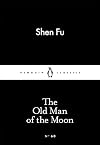
The narrator of Shen Fu’s "The Old Man of the Moon" is a widower who wistfully recounts the joys and trials of his marriage to his cousin Yun. Written in 1809 and rediscovered in the 1870s, this tale of a man who “loved his wife too deeply” is not far removed from the novels of lost or show more thwarted love which were a staple of the European Romantic movement. The prose is generally formal, simple and matter-of-fact and, frankly, rather at odds with the passion seething underneath. Although I suspect that this might be something of a culture-specific issue, the style might also be meant to reflect the character of the narrator whose “purpose is merely to record true feelings and actual events”. Newly published in the “Penguin Little Black Classics” series, this is a novella worth exploring. show less
I would advise all the husbands and wives in the world not to hate each other, certainly,but also not to love too deeply.
The narrator of Shen Fu’s "The Old Man of the Moon" is a widower who wistfully recounts the joys and trials of his marriage to his cousin Yun. Written in 1809 and rediscovered in the 1870s, this tale of a man who “loved his wife too deeply” is not far removed from the novels of lost or show more thwarted love which were a staple of the European Romantic movement. The prose is generally formal, simple and matter-of-fact and, frankly, rather at odds with the passion seething underneath. Although I suspect that this might be something of a culture-specific issue, the style might also be meant to reflect the character of the narrator whose “purpose is merely to record true feelings and actual events”. Newly published in the “Penguin Little Black Classics” series, this is a novella worth exploring. show less
“Every time the wind would rustle the bamboo trees in the yard, or the moon would shine through the leaves of the banana tree outside my window, I would look out and miss her so terribly that dreams of her took possession of my soul.”
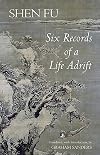
Shěn Fù lays out the events that shaped his life in poetic prose quite unexpected from a writer of his era or his circumstances.
His mesmerisingly articulated reflections -upon the alluring architecture, the natural world, and upon moments of the sublime show more spent in the company of his beloved- leave one with a sense of lightheartedness at knowing that the life of a man who lived in such a distant time and place, wasn't all that different from one's own. The countenance of the sky, harrowing dawns, and the beauty of the mountains on a hazy winter dusk have always brought delight to the human heart; we've always experienced the feeling of pure awe in the face of things larger than ourselves.
Another thing by which reading this book can be regarded as pleasant is Fù and his wife's stoicism, and their resilience through the hardships life threw their way. It gave one a feeling of solace and peacefulness that lingers for some time after one has completed the reading.
However it was, one cannot escape the sensation that a lot of what one is reading was going straight over one's head because of the very limited knowledge on the writers environment and the literary background of the Chinese. It should also be noted that the book ends quite abruptly, since two of the six records were lost to time, and one never gets to know the conditions under which the marvellous life of the writer came to an end. show less
Shěn Fù lays out the events that shaped his life in poetic prose quite unexpected from a writer of his era or his circumstances.
His mesmerisingly articulated reflections -upon the alluring architecture, the natural world, and upon moments of the sublime show more spent in the company of his beloved- leave one with a sense of lightheartedness at knowing that the life of a man who lived in such a distant time and place, wasn't all that different from one's own. The countenance of the sky, harrowing dawns, and the beauty of the mountains on a hazy winter dusk have always brought delight to the human heart; we've always experienced the feeling of pure awe in the face of things larger than ourselves.
Another thing by which reading this book can be regarded as pleasant is Fù and his wife's stoicism, and their resilience through the hardships life threw their way. It gave one a feeling of solace and peacefulness that lingers for some time after one has completed the reading.
However it was, one cannot escape the sensation that a lot of what one is reading was going straight over one's head because of the very limited knowledge on the writers environment and the literary background of the Chinese. It should also be noted that the book ends quite abruptly, since two of the six records were lost to time, and one never gets to know the conditions under which the marvellous life of the writer came to an end. show less
This was written in the late 1700s and early 1800s by a Chinese man who drifted between various clerical and artistic jobs.
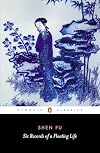
Only four of the original six chapters exist, and it makes a very different style of storytelling: each chapter is thematic, and chronological within, but the book overall is not chronological, so some episodes are described in different chapters, in different ways (layers of floating records). It works very well, though the various notes, maps and appendices in this show more edition are very helpful too.
The four chapters concern his courtship and marriage; their hobbies and pastimes (mainly horticultural); the problems that beset them (ill health, un(der)employment, financial woes), and the author's travels. The last one is particularly good if you're familiar with Suzhou/Shanghai area, but perhaps less engaging if you're not.
It gives a fascinating insight into real lives of the period, because it is an authentic voice of that time. Very different from reading a modern historical novel, however well researched. Shen Fu isn't entirely likeable (though you have to admire his honesty), but his wife is delightful: bright, cheeky, slightly rebellious yet happy to help him find a concubine.
I read it in a day and whilst I wasn't rushing (it's pretty short), there is a beauty to it that really justifies a more leisurely approach.
After this, read The Red Thread by Nicholas Jose, in which a contemporary art dealer tracks down the missing chapters and notices echoes between the book and his life. See https://www.goodreads.com/review/show/35951482. show less
Only four of the original six chapters exist, and it makes a very different style of storytelling: each chapter is thematic, and chronological within, but the book overall is not chronological, so some episodes are described in different chapters, in different ways (layers of floating records). It works very well, though the various notes, maps and appendices in this show more edition are very helpful too.
The four chapters concern his courtship and marriage; their hobbies and pastimes (mainly horticultural); the problems that beset them (ill health, un(der)employment, financial woes), and the author's travels. The last one is particularly good if you're familiar with Suzhou/Shanghai area, but perhaps less engaging if you're not.
It gives a fascinating insight into real lives of the period, because it is an authentic voice of that time. Very different from reading a modern historical novel, however well researched. Shen Fu isn't entirely likeable (though you have to admire his honesty), but his wife is delightful: bright, cheeky, slightly rebellious yet happy to help him find a concubine.
I read it in a day and whilst I wasn't rushing (it's pretty short), there is a beauty to it that really justifies a more leisurely approach.
After this, read The Red Thread by Nicholas Jose, in which a contemporary art dealer tracks down the missing chapters and notices echoes between the book and his life. See https://www.goodreads.com/review/show/35951482. show less
Lists
Awards

You May Also Like


Associated Authors
Statistics
- Works
- 3
- Members
- 841
- Popularity
- #30,399
- Rating
- 3.7
- Reviews
- 18
- ISBNs
- 37
- Languages
- 8
- Favorited
- 2