
Songling Pu (1640–1715)
Author of Strange Tales from a Chinese Studio
About the Author
According to the man who wrote P'u's epitaph, on their first meeting, he was expecting someone as brilliant and charming as his stories, only to find an old man who was very precise in his habits and low in his speech, and who found it rather difficult to say what was on his mind. The writer goes show more on to say, however, that, after knowing P'u a while, he came to appreciate the breadth and depth of his knowledge and the boldness and daring of his ideas. In his own preface to his Strange Tales from Make-do Studio, a work that is now considered one of the great achievements of Chinese fantastic narrative, P'u writes in moving terms what that narrative represents to him, the only vent for his feelings in a world where he feels totally alone and surrounded by poverty and contempt, where he is "a bird terrified by the winter frosts and nestling against the tree which can afford him no warmth." And yet, in his miserable little room with its smoky lamp and table "cold as a sheet of ice," he spins marvelous tales and through them vents his indignation against the arrogance of the rich, the subjugation of women, and the plight of the poor peasants, from whom he was distinguished by education but not by condition. Though P'u writes in a classical and highly artificial style, studded with literary allusions, there is something disconcertingly modern about his view of the world, with all its cruelties and carefully chosen and subtly realistic detail, and yet illuminated by an unspoken set of very untraditional principles that shines through the supernatural story lines. In P'u's imaginary world, the ideal woman is not a captive, but a bold and independent actor who, unfettered by convention, is free to love a man as her equal. And, although corruption spreads beyond earthly bounds all the way to the underworld, the God of War himself punishes an evil office seeker after his death, so that justice eventually does prevail. P'u had a hard life and wrote out of his own experience. As the youngest son, he was left with little when family frictions necessitated the division of property, and, having been unsuccessful in the examinations, he was forced to eke out a living as a tutor to various prominent gentry families who treated him as contemptuously as they did their servants. It was only in later years, after his book of tales was completed, that he finally found a comfortable position in a wealthy family who treated him with respect and friendly intimacy. But by that time he was already well into middle age. It is a great testament to the human imagination that a man in such a setting could weave such unusual tales. Unlike many Chinese writers of fiction P'u did not borrow heavily from tradition, but instead made fairy tales out of real life, where, as Jaroslav Prusek, the great Czech Sinologist has written, "the frontiers between the world of man and the world of other creatures of nature disappeared, . . . and he hinted at something mysterious behind every apparently natural and simple phenomenon, and . . . he flooded the whole of life with an air of inexplicable but unlimited possibilities." (Bowker Author Biography) show less
Series
Works by Songling Pu
Selections From Strange Tales From the Liao Zhai Studio (I-IV) (Library of Chinese Classics) (2008) 5 copies
The Emperor of China in a House of Ill Repute: Songs of the Imperial Visit to Datong (2023) 3 copies
Umgang mit Chrysanthemen : 81 Erzählungen der ersten vier Bücher aus der Sammlung Liao-dschai-dschi-yi (1987) 2 copies
Der Pantoffel der kleinen Yen-Dschi: Zwei chinesische Novellen aus alter Zeit (Wiener Bücherei) 2 copies
聊斋志异 1 copy
Candle Game:™ Strange Tales from a Chinese Studio: Weird Stories of the Ghosts and Spirits of Classical China (Volume 5) (2018) 1 copy
Deceiving Shadows 1 copy
La hija de la zorra 1 copy
聊齋誌異(修訂新版) 1 copy
新白話聊齋志異 下冊 (第2版) 1 copy
新白話聊齋志異 中冊 (第2版) 1 copy
新白話聊齋志異 上冊 (第2版) 1 copy
A Queer Cricket 1 copy
Das Wandbild 1 copy
Invitado tigre, El 1 copy
Zkazky o šesteru cest osudu 1 copy
Fiabe cinesi 1 copy
Besuch bei den Seligen (Geister- und Liebesgeschichten aus der Sammlung Liao-dschai, Band 3) (1991) 1 copy
Liêu trai chí dị 1 copy
Associated Works
LibriVox Short Ghost and Horror Collection 028 — Contributor — 2 copies
Der Zauberspiegel. Phantastische Erzählungen der Weltliteratur — Contributor — 2 copies
Tagged
Common Knowledge
- Canonical name
- Pu, Songling
- Legal name
- 蒲松龄
- Other names
- P'ou, Song-ling
P'u Sung-ling
Pú Sōnglíng - Birthdate
- 1640-06-05
- Date of death
- 1715-02-25
- Gender
- male
- Nationality
- China
- Birthplace
- Zichuan, Zibo, Shandong, China
- Places of residence
- Zichuan, Zibo, Shandong Province, China
- Associated Place (for map)
- China
Members
Discussions
Read-along: Strange Tales from a Chinese Studio in Ancient China (October 2015)
Reviews

Classical Chinese literature obviously does not consist solely of the Six Great Novels, and I wanted my reading project to also include some shorter (but not necessarily minor) books. Strange Tales from a Chinese Studio was my first attempt at a canonized work which is not a several thousand pages long, and overall I enjoyed it, if not quite as much as the novels, which I strongly suspect is due to more getting lost in translation.
Pu Songling’s work is written in “classical” Chinese as show more opposed to the “vernacular” of the novels. Not knowing any Chinese at all, I have not the faintest clue what the implies, but according to the translator of the edition I have read, John Minford, the former is highly elliptical and allusive, while the latter is much more straightforward. The tales in this volume often rely heavily on references to other works, and are often oblique in their allusions – a Chinese gentleman reader of the 17th century would probably have caught them easily, but a modern day Western reader is quite lost and has to rely on annotations. John Minford thankfully supplies a generous amount of those (as well as a highly informative introduction), but it still is not quite the same – the whole situation is rather reminiscent of Plum in a Golden Vase – and in fact, Strange Tales shares another trait with that novel, namely that it is very frank about sexuality; the sex is not as explicit, but it occurs rather more often.
When I was starting with this, I was expecting a Chinese version of Sei Shonagon’s Pillow Book, but what I got instead was a Chinese version of Hebel’s Kalendergeschichten with added supernatural elements (and more sex). Which, as I hasten to add, is not a bad thing at all. The stories in this volume (104 in all, a selection from the original) are all short to very short (I don’t think there is a single one above twenty pages) and vary in nature, from didactic morality tales over ghost stories to reports of strange occurrences like you’d find them in the Miscellaneous section of your newspaper (if it was published in 17th century China, that is). And there is, of course, cannibalism – I guess no piece of Classical Chinese literature would be complete without it. Some tales I found delightful, some left me scratching my head, some were amazing, some plain bizarre, some I got, some left me baffled – in short, this collection is very much like the notorious box of chocolates, you never know what you will get.
Strange Tales from a Chinese Studio is best read one or two tales at a time, so that each piece has space and time to unfold its own peculiar charm. Another trait this collection shares with chocolates is that too many ingested at once will spoil your stomach, and that while they are delicious, they are not particularly nourishing. Only maybe half a dozen stories felt like they’d make any lasting impact, the rest, while a pleasant diversion, also seemed somewhat shallow. Which may be because of the shortness of the tales, but I’m more inclined to blame it on them being translations. John Minford’s translation does appear to be a good one (as far as i can tell not knowing the original), but translations can only do so much; and if a work which depends as much on nuances and wordplay (not to mention the occasional double entendre) as Strange Tales from a Chinese Studio appears to do, then it will unfailingly be bound in its original language and any translation, no matter how good, will only give a blurry, washed-out reproduction of the original’s splendour. Even so, just for the glimpse it grants us, it is well worth reading translations. And who knows, readers might find themselves motivated to actually learn the language of the original… show less
Pu Songling’s work is written in “classical” Chinese as show more opposed to the “vernacular” of the novels. Not knowing any Chinese at all, I have not the faintest clue what the implies, but according to the translator of the edition I have read, John Minford, the former is highly elliptical and allusive, while the latter is much more straightforward. The tales in this volume often rely heavily on references to other works, and are often oblique in their allusions – a Chinese gentleman reader of the 17th century would probably have caught them easily, but a modern day Western reader is quite lost and has to rely on annotations. John Minford thankfully supplies a generous amount of those (as well as a highly informative introduction), but it still is not quite the same – the whole situation is rather reminiscent of Plum in a Golden Vase – and in fact, Strange Tales shares another trait with that novel, namely that it is very frank about sexuality; the sex is not as explicit, but it occurs rather more often.
When I was starting with this, I was expecting a Chinese version of Sei Shonagon’s Pillow Book, but what I got instead was a Chinese version of Hebel’s Kalendergeschichten with added supernatural elements (and more sex). Which, as I hasten to add, is not a bad thing at all. The stories in this volume (104 in all, a selection from the original) are all short to very short (I don’t think there is a single one above twenty pages) and vary in nature, from didactic morality tales over ghost stories to reports of strange occurrences like you’d find them in the Miscellaneous section of your newspaper (if it was published in 17th century China, that is). And there is, of course, cannibalism – I guess no piece of Classical Chinese literature would be complete without it. Some tales I found delightful, some left me scratching my head, some were amazing, some plain bizarre, some I got, some left me baffled – in short, this collection is very much like the notorious box of chocolates, you never know what you will get.
Strange Tales from a Chinese Studio is best read one or two tales at a time, so that each piece has space and time to unfold its own peculiar charm. Another trait this collection shares with chocolates is that too many ingested at once will spoil your stomach, and that while they are delicious, they are not particularly nourishing. Only maybe half a dozen stories felt like they’d make any lasting impact, the rest, while a pleasant diversion, also seemed somewhat shallow. Which may be because of the shortness of the tales, but I’m more inclined to blame it on them being translations. John Minford’s translation does appear to be a good one (as far as i can tell not knowing the original), but translations can only do so much; and if a work which depends as much on nuances and wordplay (not to mention the occasional double entendre) as Strange Tales from a Chinese Studio appears to do, then it will unfailingly be bound in its original language and any translation, no matter how good, will only give a blurry, washed-out reproduction of the original’s splendour. Even so, just for the glimpse it grants us, it is well worth reading translations. And who knows, readers might find themselves motivated to actually learn the language of the original… show less
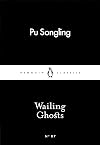
This slim volume contains a number of delightfully weird stories taken from "Strange Tales from a Chinese Studio" by Pu Songling (1640 - 1715). Apart from the fact that they are populated by supernatural beings (ghosts, poltergeists, shapeshifters and fantastic beasts), what makes these tales "weird" is that they defy Western conventions of the ghost or gothic story. Those expecting elaborate scene-painting or profound psychological probing will be disappointed. Instead, atmosphere and show more character are evoked in a few broad brushstrokes and the reader is immediately thrust into the narrative. The most otherworldly of happenings are described in matter-of-fact prose of fable-like simplicity - as if the boundary with the supernatural were but a veil which can be easily brushed away. The brevity of the tales needs some getting used to (some of the stories are only a couple of pages long) but the style grows on you and becomes unexpectedly addictive. Fans of the gothic who wish to read something different should look no further. show less
This slim volume contains a number of delightfully weird stories taken from "Strange Tales from a Chinese Studio" by Pu Songling (1640 - 1715). Apart from the fact that they are populated by supernatural beings (ghosts, poltergeists, shapeshifters and fantastic beasts), what makes these tales "weird" is that they defy Western conventions of the ghost or gothic story. Those expecting elaborate scene-painting or profound psychological probing will be disappointed. Instead, atmosphere and show more character are evoked in a few broad brushstrokes and the reader is immediately thrust into the narrative. The most otherworldly of happenings are described in matter-of-fact prose of fable-like simplicity - as if the boundary with the supernatural were but a veil which can be easily brushed away. The brevity of the tales needs some getting used to (some of the stories are only a couple of pages long) but the style grows on you and becomes unexpectedly addictive. Fans of the gothic who wish to read something different should look no further. show less
The form and style of these short stories fascinated me somewhat; having said that, if one bars what merely is exoticism to me, the stories are really moralistic at their core: one shan't lull outside one's allotted life or misery will follow, one should not dream for something higher in life or death will follow, et cetera. I feel that these stories are written with a lot of passive aggression burning in the back, as though the author wanted to fire the results of his unrealised dreams show more towards the protagonists of these stories with moral fire. Anyway, all in all, the style and simple tales are admirable in a way; I dig the curtness, the inherent sense of honour that follows everything, and the symbolic meanings strewn throughout. show less
Lists
scav (1)
Awards


You May Also Like


Associated Authors
Statistics
- Works
- 103
- Also by
- 18
- Members
- 1,424
- Popularity
- #18,066
- Rating
- 4.0
- Reviews
- 32
- ISBNs
- 149
- Languages
- 11
- Favorited
- 3
