
Lao Tzu
Author of Tao Te Ching
About the Author
Lao Tzu, a Chinese philosopher, is considered to be the founder of Taoism. His birth and death dates are uncertain. According to legend, Lao Tzu was keeper of the archives at the imperial court. When he was eighty years old he set out for the western border of China, saddened and disillusioned that show more men were unwilling to follow the path to natural goodness. At the border, he was asked by a border guard to record his teachings before he left. These teachings were compiled into the Tao Te Ching (The Way and Its Power). (Bowker Author Biography) show less
Disambiguation Notice:
Laozi; Lǎozǐ; Lao tzu; Lao Tse, Laotze, Lao Zi, and other variations. Chinese: 老子
Works by Lao Tzu
Lao Tzu : Tao Te Ching : A Book About the Way and the Power of the Way (1997) — Author — 1,314 copies, 26 reviews
Tao Te Ching, 25th-Anniversary Edition (English and Mandarin Chinese Edition) (1974) 1,123 copies, 12 reviews
Lao Tzu's Tao Te Ching: A Translation of the Startling New Documents Found at Guodian (1989) 400 copies, 3 reviews
Treatise on Response & Retribution (Open Court Paperbacks) (English and Chinese Edition) (1973) 35 copies
Wisdom of China, The: The Sayings of Confucius, Mencius, LaoTzu, Chuang Tzu, and Lieh Tzu (1965) 33 copies
The Tao Te Ching on the Art of Harmony: The New Illustrated Edition of the Chinese Philosophical Masterpiece (2009) 27 copies
A Chinese reading of the Daodejing : Wang Bi's commentary on the Laozi with critical text and translation (2003) 25 copies
The Whole Heart of Tao: The Complete Teachings from the Oral Tradition of Lao Tzu (The Whole Heart series) (2006) 13 copies
Dao de Jing. Escritura do Caminho e Escritura da Virtude com os Comentários do Senhor às Margens do Rio (Em Portuguese do Brasil) (2016) 7 copies
Les Deux arbres de la Voie: Le Livre de Lao-Tseu / Les Entretiens de Confucius (2018) 5 copies, 1 review
Sky is the Limit: The Art of of Upgrading Your Life (50 Classic Self-Help Books Including: Think and Grow Rich, The Way to Wealth, As A Man Thinketh, The ... The Art of War, Acres… (2018) 4 copies, 1 review
Of Nourishment and Grace Stillness and Compassion. An Iterpretation of Tao Teh Ching. A manual for the 21st century (1996) 4 copies
Las 40 plantas medicinales más populares : una guía práctica y completa de sus virtudes terapéuticas y recetario (1994) 3 copies
Taoism: The ULTIMATE Collected Works of 23 Essential Books and Texts (With Active Table of Contents) (2011) 3 copies
Het boekje met de Tau-te tjing 3 copies
Tai Shang’s Treatise on Action and Response: Commentary by Xīng Dé: The Eastern Ancient Law of Attraction (2020) 3 copies
Commentary on the Lao Tzu (Monograph of the Society for Asian and Comparative Philosophy ; no. 6) 3 copies
Tao Te Ching (the Way) by Lao-Tzu: Special Collector's Edition with an Introduction by the Dalai Lama (2011) 3 copies
The Way of the Spirit: Deluxe silkbound editions in boxed set (Arcturus Collector's Classics, 13) (2021) 3 copies
Tao Wisdom: Great Quotes from the Ancient Chinese Way of Virtue (Chinese Bound Mini) (2026) 3 copies
La regola celeste - Il libro del Tao 2 copies
Lão Tử Đạo Đức Kinh 2 copies
EL LIBRO DEL TAO LIBERADO 2 copies
Cartea despre Dao si putere 2 copies
Wu Wei 2 copies
Wilhelm Laotse Tao te king, Wege der Weisheit, 232 Seiten, bebildert, Weltbildverlag (1900) 2 copies
Tao Te King - O Caminho da Virtude 2 copies
Tao Te Ching by Laozi (Illustrated) 2 copies
Tae Te King 1 copy
Ταο Τε Τζιγκ 1 copy
Le Tao Te king du bel-âge: Sagesse ancienne pour la seconde partie de la vie (2019) 1 copy, 1 review
O livro do Caminho Perfeito 1 copy
Simple Way of Lao Tsze 1 copy
Il libro di Tao (1-2-2) 1 copy
Tao Te Ching 1998 Calendar 1 copy
Tao Teh Ching 1 copy
Tao Te Ching 1997 Calendar 1 copy
Tau Teh Tsing 1 copy
道德经 1 copy
Le Tao te King 1 copy
Lao Tseu ou La Sagesse Taoïste - 125 Citations: ( version enrichie d'une biographie de Lao Tseu ) (2015) 1 copy, 1 review
Die Bahn und der Rechte Weg 1 copy
Tao Te Ching: En Espanol: Cubierta azul, El libro clásico de la forma y la integridad (Spanish Edition) (2016) 1 copy
Tao Te Ching, E1 1 copy
Tao Te Ching – The Book of the Way and Virtue – Lao Tzu: Taoism | Translated by James Legge | Illustrated edition | 84 pages (2020) 1 copy
Konkordanz zum Lao-Tzu 1 copy
Daodejing : eine Wiedergabe seines Deutungsspektrums. Bd 1: Text und Übersetzung nebst Zeichenlexikon und Zeichenkonkordanz (1999) 1 copy
Die magische Kraft der Vernunft : 81 Sprüche des Daodejing von Laozi : alte chinesische Weisheiten für Menschen unserer Zeit (2002) 1 copy
La Voie et sa vertu 1 copy
Đạo Đức kinh dễ hiểu 1 copy
Arcturus Publishing Ltd Tao Te Ching Deluxe Slipcase Edition (Arcturus Silkbound Classics). (2025) 1 copy
The Way of the Ways - Tao 1 copy
Tao and Wu wei 1 copy
ΤΑΟ ΤΕ ΚΙΝΓΚ 1 copy
TAO TE CHING CH'IEN CHU 1 copy
The speculations on metaphysics, polity, and morality, of the old philosopher, Lau-tsze (1868) 1 copy
Tao Te Ching,The Tao and its Characteristics-The Classic Edition(A translation of the Taoist Classic by James Legge) (2013) 1 copy
Die Bahn und der Rechte Zeite des Lao-Tse: Der chinesischen Urschrift nachgedacht von Alexander Ular 1 copy
ස්වභාවයේ ස්වභාවයක් 1 copy
The Lao Tzu: The way of Life 1 copy
Laotzu's Tao and wu-wei 1 copy
Tao-te-chingLaotzu 1 copy
$1!6!=u!Q 1 copy
Tao Te Ching by Lao-Tzu, Addiss, Stephen, Lombardo, Stanley, Watson, Burton copyright 1993 Edition [Paperback(1993)] (1993) 1 copy
The Tao Te King 1 copy
Il Tao-Te-King 1 copy
Τάο Τε Κίνγκ 1 copy
Ταο Τε Κινγκ 1 copy
La regola celeste 1 copy
Dao-De-Džing : (Tao-Te-King) 1 copy
Kniha o cestě a síle 1 copy
Дао дэ цзин Поэт. перелож 1 copy
Associated Works
The Essential Tao : An Initiation into the Heart of Taoism Through the Authentic Tao Te Ching and the Inner Teachings of Chuang-Tzu (1991) — Author — 574 copies, 3 reviews
World Poetry: An Anthology of Verse from Antiquity to Our Time (1998) — Contributor — 499 copies, 2 reviews
The Way and Its Power: Lao Tzu's Tao Te Ching and Its Place in Chinese Thought (1958) — Author — 347 copies, 2 reviews
The Graphic Canon, Vol. 1: From the Epic of Gilgamesh to Shakespeare to Dangerous Liaisons (2012) — Contributor — 304 copies, 7 reviews
God Makes the Rivers To Flow: Sacred Literature of the World (1982) — Contributor — 231 copies, 2 reviews
Leading from Within: Poetry That Sustains the Courage to Lead (2007) — Contributor — 115 copies, 3 reviews
Oogst Der Tijden. keur uit de werken van schrijvers en dichters aller volken en eeuwen (1940) — Contributor — 12 copies
Tagged
Common Knowledge
- Canonical name
- Lao Tzu
- Other names
- Lǐ Ěr
Bóyáng
Lǐ Dān
Tàishàng Lǎojūn
Laozi - Birthdate
- 6th century BCE or possibly 4th century BCE
- Date of death
- 6th century BCE or possibly 4th century BCE
- Gender
- male
- Occupations
- teacher
philosopher
Keeper of the Archives - Awards and honors
- Táishāng Xuānyuán Huángdì
- Nationality
- China
- Places of residence
- China
- Disambiguation notice
- Laozi; Lǎozǐ; Lao tzu; Lao Tse, Laotze, Lao Zi, and other variations. Chinese: 老子
- Associated Place (for map)
- China
Members
Discussions
Best translation of the Tao Te Ching in Taoism (March 24)
Three Chinese classics in Philosophy and Theory (January 18)
Reviews
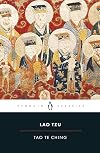
The Tao that can be spoken of is not the true Tao.
Which makes a book about the Tao rather tricky. I'm not a scholar of Eastern religions, but a friend gave this to me as the best translation, and I can say that it is rather gorgeous, a series of elegant and self-contradictory parables into the nature of mastery, into an acceptance of the universe as it should be. I found some parts rather stunning in their clarity. Voids are more useful than existence. The walls and roof of a house, but we show more live inside the void. The nature of "doing" vs "done" is more challenging, as I face creative projects I am procrastinating on, as well as the more prosaic dishes that will not put themselves away.
Still, a great book. show less
Which makes a book about the Tao rather tricky. I'm not a scholar of Eastern religions, but a friend gave this to me as the best translation, and I can say that it is rather gorgeous, a series of elegant and self-contradictory parables into the nature of mastery, into an acceptance of the universe as it should be. I found some parts rather stunning in their clarity. Voids are more useful than existence. The walls and roof of a house, but we show more live inside the void. The nature of "doing" vs "done" is more challenging, as I face creative projects I am procrastinating on, as well as the more prosaic dishes that will not put themselves away.
Still, a great book. show less
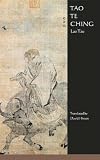
Lao Tzu’s Tao Te Ching is not only the single most important text in Chinese spirituality, it is probably the most influential spiritual text in human history. In the past, virtually all translations of this text have been produced either by sinologists having little poetic facility in English, or writers having no ability to read the original Chinese. David Hinton’s fluency in ancient Chinese and his award-winning poetic ability provide both of these essential qualifications. Together, show more they allow a breathtaking new translation that reveals how remarkably current and even innovative this text is after 2500 years.
Having masterfully translated a wide range of ancient Chinese poets and philosophers, HInton is uniquely qualified to offer the definitive contemporary version of the Tao Te Ching in English, rendering it with both philosophical rigor and poetic elegance. And like all of his translations, HInton’s translation of the Tao Te Ching is mind-opening. It adds startling new dimensions to this text, revealing it as the originary text of deep environmental and feminist thought.
This volume is the last in a series of translations presenting the four central masterworks of ancient Chinese thought: Tao Te Ching, Chuang Tzu, The Analects, and Mencius. This is the first time in well over a century that these four masterworks have been translated as a unified series by a single translator. Hinton makes these books sing in English as never before. But these new versions are not only inviting and immensely readable, they also apply much-needed consistency to key terms in these texts, lending structural links and philosophical rigor heretofore unavailable in English. Breathing new life into these originary classics, Hinton’s new translations will stand as the definitive texts for our era. show less
Having masterfully translated a wide range of ancient Chinese poets and philosophers, HInton is uniquely qualified to offer the definitive contemporary version of the Tao Te Ching in English, rendering it with both philosophical rigor and poetic elegance. And like all of his translations, HInton’s translation of the Tao Te Ching is mind-opening. It adds startling new dimensions to this text, revealing it as the originary text of deep environmental and feminist thought.
This volume is the last in a series of translations presenting the four central masterworks of ancient Chinese thought: Tao Te Ching, Chuang Tzu, The Analects, and Mencius. This is the first time in well over a century that these four masterworks have been translated as a unified series by a single translator. Hinton makes these books sing in English as never before. But these new versions are not only inviting and immensely readable, they also apply much-needed consistency to key terms in these texts, lending structural links and philosophical rigor heretofore unavailable in English. Breathing new life into these originary classics, Hinton’s new translations will stand as the definitive texts for our era. show less

Like it should, the Tao Te Ching arrived exactly when I needed it. The Tao helped me get through a really rough patch of my life: a dissolving marriage, unbelievable animosity and accusations, and stressful negotiation of parental rights through a nasty family court process. Reading it over and over helped me get through that process with my dignity and without saying or doing anything I now regret or asking for anything that was above and beyond what was reasonable and best for my kids.
"Do show more you have the patience to wait
till your mud settles and the water is clear?
Can you remain unmoving
till the right action arises by itself?"
That’s Verse 15. I went back to it again and again. I didn’t get a fair parenting plan but the Tao helped me accept that too.
The edition I read back then was the Tao Te Ching: An Illustrated Journey, translated by Stephen Mitchell. Not only did it make me a Taoist but it sent me on a mission to see who Stephen Mitchell was and what else he had to say. Meaning I’ve since read his versions of the Bhagavad Gita, Rilke’s Letters to a Young Poet and The Lay of the Love and Death of Cornet Christoph Rilke (reviewed here), the Second Book of the Tao, and The Gospel According to Jesus. I enjoyed and admire all of this books.
One of the things I especially love about Mitchell’s translation is that it refuses to gender everything male. Mitchell states his position on gender in the foreword to the trade edition of this translation (not included in the Providence Press edition) as:
"The reader will note that in the many passages where Lao Tzu describes the Master, I have used the pronoun “she” at least as often as “he.” The Chinese language doesn’t make this kind of distinction; in English we have to choose. But since we are all, potentially, the Master (since the Master is, essentially, us), I felt it would be untrue to present a male archetype, as other versions have, ironically, done. Ironically, because of all the great world religions the teaching of Lao Tzu is by far the most female. Of course, you should feel free, throughout the book, to substitute “he for “she” or vice versa."
Since my first contacts with the Tao I’ve delved deeply into the Yoga Sutra of Patañjali and see a lot of parallels with my yoga and the Tao.
"Weapons are the tools of violence:
all decent men detest them.
Weapons are the tools of fear;
a decent man will avoid them
except in the direst necessity
and, if compelled, will use them
only with the utmost restraint.
Peace is his highest value.
If the peace has been shattered,
how can he be content?
His enemies are not demons,
but human beings like himself.
He doesn’t wish them personal harm.
Nor does he rejoice in victory.
How could he rejoice in victory
and delight in the slaughter of men?
He enters a battle gravely,
with sorrow and with great compassion,
as if he were attending a funeral."
That’s verse 31 and very reminiscent of the Bhagavad Gita and possibly a realistic way to look at the world and the perceived “necessity” of force. Krishna might say this same thing to Arjuna. But it’s even a bit too much for someone who has taken the great vow of yoga and ahimsa, or non-harm.
The Tao has great lessons to teach our politicians and citizens in an increasingly nationalistic world as well:
"A great nation is like a great man:
When he makes a mistake, he realizes it.
Having realized it, he admits it.
Having admitted it, he corrects it.
He considers those who point out his faults
as his most benevolent teachers.
He thinks of his enemy
as the shadow that he himself casts.
If a nation is centered in the Tao,
if it nourishes its own people
and doesn’t meddle in the affairs of others,
it will be a light to all nations in the world."
I could go on and on with the passages I’ve highlighted in the six different editions I own. But I think I’ll leave it at that for now and talk about this edition specifically.
You can imagine how excited I was to see a private press edition of the Tao. Any edition would be on my wish list but a version of Stephen Mitchell’s text made it that much more exciting for me. I was a bit blindsided by it, to tell the truth, with Norman Clayton reaching out to me to let me know that his Providence Press had just published it. Not only that but I had somehow missed it at CODEX, which just goes to show you I need to give myself more time to walk the tables there. Norman had remembered me mentioning my admiration for Stephen Mitchell’s Tao in one of the posts here (probably the Arion Press Rilke?) and that I would love to see a private press edition. And viola, he reached out!
Providence Press is the book imprint of Norman’s Classic Letterpress, which designs and prints for individuals and organizations, including a recent book for the Book Club of California. The stated mission of Providence Press is to “produce books as beautiful as the writing is wise.” While Clayton had already been considering the Tao Te Ching as his first book under the imprint, when Norman moved to Ojai California he learned that Stephen Mitchell lived there, having moved there years previously also from the Bay Area. After contacting Mitchell, and with his generous encouragement, this edition was born. A nice little bit of bookish serendipity,
The Providence Press edition as designed and printed by Norman is simple, understated, and elegant. Like the Tao. The sole illustration, a photograph by Norman’s mother Burneta Clayton, is on the front cover. The Tao is presented here just as verse; no commentary or notes or other distractions. Each verse is beautifully placed on the page with crisp typography using the Davanti typeface. I really applaud the choice of a Coptic binding done by Molly Dedmond as this type of binding was used in early (Christian) spiritual texts, and thus has spiritual roots. It is also nice that this type of binding allows the book to lie flat when studying or meditating on the Tao.
Ursula K. Le Guin, another student of the Tao and favorite author of mine, has this to say about the Tao:
“It is the most lovable of all the great religious texts, funny, keen, kind, modest, indestructibly outrageous, and inexhaustibly refreshing. Of all the deep springs, this is the purest water. To me, it is also the deepest spring.”
AVAILABILITY: Printed in an edition of 125, copies of the edition are still available from Classic Letterpress
FORTHCOMING: Next up for Providence Press is an edition of the Heart Sutra, again in Stephen Mitchell’s translation. Check the presses website in upcoming months for information and I’ll try to keep you posted.
WISHLIST: Given the Providence Press’ mission to “produce books as beautiful as the writing is wise,” I’d love to see some texts that have never (to my knowledge) received the fine press treatment. Two that come to mind are the Yoga Sutra of Patañjali and the anonymous Cloud of Unknowing. show less
"Do show more you have the patience to wait
till your mud settles and the water is clear?
Can you remain unmoving
till the right action arises by itself?"
That’s Verse 15. I went back to it again and again. I didn’t get a fair parenting plan but the Tao helped me accept that too.
The edition I read back then was the Tao Te Ching: An Illustrated Journey, translated by Stephen Mitchell. Not only did it make me a Taoist but it sent me on a mission to see who Stephen Mitchell was and what else he had to say. Meaning I’ve since read his versions of the Bhagavad Gita, Rilke’s Letters to a Young Poet and The Lay of the Love and Death of Cornet Christoph Rilke (reviewed here), the Second Book of the Tao, and The Gospel According to Jesus. I enjoyed and admire all of this books.
One of the things I especially love about Mitchell’s translation is that it refuses to gender everything male. Mitchell states his position on gender in the foreword to the trade edition of this translation (not included in the Providence Press edition) as:
"The reader will note that in the many passages where Lao Tzu describes the Master, I have used the pronoun “she” at least as often as “he.” The Chinese language doesn’t make this kind of distinction; in English we have to choose. But since we are all, potentially, the Master (since the Master is, essentially, us), I felt it would be untrue to present a male archetype, as other versions have, ironically, done. Ironically, because of all the great world religions the teaching of Lao Tzu is by far the most female. Of course, you should feel free, throughout the book, to substitute “he for “she” or vice versa."
Since my first contacts with the Tao I’ve delved deeply into the Yoga Sutra of Patañjali and see a lot of parallels with my yoga and the Tao.
"Weapons are the tools of violence:
all decent men detest them.
Weapons are the tools of fear;
a decent man will avoid them
except in the direst necessity
and, if compelled, will use them
only with the utmost restraint.
Peace is his highest value.
If the peace has been shattered,
how can he be content?
His enemies are not demons,
but human beings like himself.
He doesn’t wish them personal harm.
Nor does he rejoice in victory.
How could he rejoice in victory
and delight in the slaughter of men?
He enters a battle gravely,
with sorrow and with great compassion,
as if he were attending a funeral."
That’s verse 31 and very reminiscent of the Bhagavad Gita and possibly a realistic way to look at the world and the perceived “necessity” of force. Krishna might say this same thing to Arjuna. But it’s even a bit too much for someone who has taken the great vow of yoga and ahimsa, or non-harm.
The Tao has great lessons to teach our politicians and citizens in an increasingly nationalistic world as well:
"A great nation is like a great man:
When he makes a mistake, he realizes it.
Having realized it, he admits it.
Having admitted it, he corrects it.
He considers those who point out his faults
as his most benevolent teachers.
He thinks of his enemy
as the shadow that he himself casts.
If a nation is centered in the Tao,
if it nourishes its own people
and doesn’t meddle in the affairs of others,
it will be a light to all nations in the world."
I could go on and on with the passages I’ve highlighted in the six different editions I own. But I think I’ll leave it at that for now and talk about this edition specifically.
You can imagine how excited I was to see a private press edition of the Tao. Any edition would be on my wish list but a version of Stephen Mitchell’s text made it that much more exciting for me. I was a bit blindsided by it, to tell the truth, with Norman Clayton reaching out to me to let me know that his Providence Press had just published it. Not only that but I had somehow missed it at CODEX, which just goes to show you I need to give myself more time to walk the tables there. Norman had remembered me mentioning my admiration for Stephen Mitchell’s Tao in one of the posts here (probably the Arion Press Rilke?) and that I would love to see a private press edition. And viola, he reached out!
Providence Press is the book imprint of Norman’s Classic Letterpress, which designs and prints for individuals and organizations, including a recent book for the Book Club of California. The stated mission of Providence Press is to “produce books as beautiful as the writing is wise.” While Clayton had already been considering the Tao Te Ching as his first book under the imprint, when Norman moved to Ojai California he learned that Stephen Mitchell lived there, having moved there years previously also from the Bay Area. After contacting Mitchell, and with his generous encouragement, this edition was born. A nice little bit of bookish serendipity,
The Providence Press edition as designed and printed by Norman is simple, understated, and elegant. Like the Tao. The sole illustration, a photograph by Norman’s mother Burneta Clayton, is on the front cover. The Tao is presented here just as verse; no commentary or notes or other distractions. Each verse is beautifully placed on the page with crisp typography using the Davanti typeface. I really applaud the choice of a Coptic binding done by Molly Dedmond as this type of binding was used in early (Christian) spiritual texts, and thus has spiritual roots. It is also nice that this type of binding allows the book to lie flat when studying or meditating on the Tao.
Ursula K. Le Guin, another student of the Tao and favorite author of mine, has this to say about the Tao:
“It is the most lovable of all the great religious texts, funny, keen, kind, modest, indestructibly outrageous, and inexhaustibly refreshing. Of all the deep springs, this is the purest water. To me, it is also the deepest spring.”
AVAILABILITY: Printed in an edition of 125, copies of the edition are still available from Classic Letterpress
FORTHCOMING: Next up for Providence Press is an edition of the Heart Sutra, again in Stephen Mitchell’s translation. Check the presses website in upcoming months for information and I’ll try to keep you posted.
WISHLIST: Given the Providence Press’ mission to “produce books as beautiful as the writing is wise,” I’d love to see some texts that have never (to my knowledge) received the fine press treatment. Two that come to mind are the Yoga Sutra of Patañjali and the anonymous Cloud of Unknowing. show less
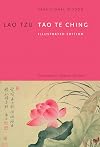
I was sceptical of reading the Tao Te Ching before I opened it. Often these short, simple ancient books of philosophy don't resonate well for a modern audience. Such has been their influence that their once-revolutionary thoughts can be taken by a modern mind almost as a given.
However, the Tao Te Ching wasn't like this. It speaks its philosophy gently and with immaculate simplicity, and the ideas are deeply profound ones about harmonising oneself with the world and learning to see the show more movement of the Tao in everything, thereby making your peace with it. There's no stating the obvious; despite their simplicity, these are difficult tenets to live by.
The writing of Lao Tzu is itself serene, putting you in the perfect state of mind for absorbing the book's ideas. It is an impressive piece, one of the rare few pieces of philosophy that remains pure no matter how many hands and minds it flows through. show less
However, the Tao Te Ching wasn't like this. It speaks its philosophy gently and with immaculate simplicity, and the ideas are deeply profound ones about harmonising oneself with the world and learning to see the show more movement of the Tao in everything, thereby making your peace with it. There's no stating the obvious; despite their simplicity, these are difficult tenets to live by.
The writing of Lao Tzu is itself serene, putting you in the perfect state of mind for absorbing the book's ideas. It is an impressive piece, one of the rare few pieces of philosophy that remains pure no matter how many hands and minds it flows through. show less
Lists
Tom's Bookstore (2)
8-21-25 (1)
My List (1)
Unread books (1)
Favourite Books (1)
Awards


You May Also Like


Associated Authors
Statistics
- Works
- 303
- Also by
- 11
- Members
- 24,453
- Popularity
- #857
- Rating
- 4.2
- Reviews
- 326
- ISBNs
- 1,094
- Languages
- 26
- Favorited
- 59


