
Zhuangzi
Author of The Book of Chuang Tzu
About the Author
Image credit: www.iep.utm.edu
Series
Works by Zhuangzi
Chuang Tsu: Inner Chapters, A Companion Volume to Tao Te Ching (audio) (1981) — Author — 742 copies, 7 reviews
Wisdom of China, The: The Sayings of Confucius, Mencius, LaoTzu, Chuang Tzu, and Lieh Tzu (1965) 33 copies
Äkthetens urkund 4 copies
A Borboleta Voando no Vazio. Um Encontro com as Raízes do Taoismo (Em Portuguese do Brasil) (2014) 3 copies
Por el camino de Chuang Tzu 3 copies
Zhuangzi | Chuang Tzu: The Foundation of Chinese Esoteric Thought: Ancient Wisdom in Modern English, Book 7 (2020) 2 copies
荘子正分 1 copy
荘子 外篇 (中公文庫) 1 copy
Nam Hoa Kinh 1 copy
Maestro Zhuang 1 copy
De innerlijke geschriften 1 copy
La Sagesse chinoise selon le Tao : Pensées choisies de Lao tseu, Lie tseu et Tchouang tseu et traduits par René Brémond (1955) 1 copy
De innerlijke geschriften 1 copy
Capítulos interiores 1 copy
Sjælen og sommerfuglen 1 copy
De weg van het water de klassieke teksten uit de tao : een nieuwe vertaling van de Chuang Tzu met commentaar (2011) 1 copy
Tao in aforisme 1 copy
Чуанг Це БЕЗГРИЖНО ТАЛКАЊЕ 1 copy
An Excursion to Peace and Happiness: Finding the Wisdom of the Tao through the Sayings of Zhuangzi (2023) 1 copy
Τσουάνγκ Τσου 1 copy
Zhuangzi | Chuang Tzu (illustrated): The foundation of chinese esoteric thought (Illuminated Ancient Wisdom in Modern English) (2020) 1 copy
莊子集解 1 copy
Calatorie libera 1 copy
Klasik dežele južne rože 1 copy
Discorsi e parabole 1 copy
Gleichnisse 1 copy
Zhuang Zi 1 copy
Ο Διδάσκαλος Τσουαγκ 1 copy
Den äkta urkunden 1 copy
南華經 1 copy
Foglie d'autunno 1 copy
Sō-shi 1 copy
Associated Works
Literature: An Introduction to Fiction, Poetry, and Drama (1995) — Contributor, some editions — 1,017 copies, 7 reviews
A Book of Luminous Things: An International Anthology of Poetry (1996) — Contributor — 945 copies, 12 reviews
The Essential Tao : An Initiation into the Heart of Taoism Through the Authentic Tao Te Ching and the Inner Teachings of Chuang-Tzu (1991) — Author — 574 copies, 3 reviews
The Butterfly as Companion: Meditations on the First Three Chapters of the Chuang Tzu (SUNY series in Religion and Philosophy) (English and Mandarin Chinese Edition) (1990) — Contributor — 37 copies
Lapham's Quarterly - Lines of Work: Volume IV, Number 2, Spring 2011 (2011) — Contributor — 32 copies, 2 reviews
Always moving : Season launch: New music Britain : Sunday 12 September 2021 [programme] (2021) — Texts — 1 copy
Joham: Drei Themen = Joham: Three Themes — Contributor — 1 copy
Tagged
Common Knowledge
Members
Discussions
Zhuangzi: preferred translation? in Ancient China (December 2022)
Reviews

It’s a classic Taoist text, so reviewing it seems a little strange. If you’re interested at all in Taoism, this should be on your reading list, right after the Tao Te Ching, even if you have read it many times before.
I’m not a scholar of Taoism by any means. And Taoism is not part of my heritage. So I know its effect on me, as a modern western reader raised in a Christian culture, may be very different from what it is to others.
Quietism. An acceptance that things just are as they are, show more and to fight against that is a losing battle, like trying to hold back a wave.
More specifically, a withdrawl from judgment. Judgments oppose reality. Judgments that something shouldn’t happen, although it does. Judgments that something should happen, although it doesn’t.
Judgments are never absolute. You can’t count on them. Something large is always smaller than something even smaller. Something useful is always useless for one purpose or another. Something is right for the moment, but not for the next moment.
By themselves, things just are, and wisdom is a matter of accepting, in your thoughts and in your actions, that things just are as they are.
It means, in simple terms, aligning your efforts with the way the world moves and works, so that your efforts aren’t really efforts at all. Swimming with the current, not against it.
It’s a difficult message to swallow. We want to fight with reality, to fight against the current.
And what if the current isn’t healthy? What if the current is built on corruption, danger, or harm? What if the current is climate destruction, hunger, or cruelty?
But those things are all judgments, aren’t they?
Are those things the “way”? They can’t be. Are they in fact counter to the current of the world — corruptions, efforts against health, against life?
Maybe the biggest reward (and fun) of reading Chuang-Tzu is his play with language. He regarded language as an untrustworthy friend, someone who will lead you to insights tangled with blind alleys and dead ends when you follow it too far. As you read, you learn to trust nothing at face value, not even that you should trust nothing at face value.
Wisdom is elusive. It defies descriptions and rules. Descriptions have counter-examples, rules have exceptions and often mislead.
The opening of the Tao Te Ching says, in some translations, that the Tao that is spoken of is not the Tao. That’s because language leads us into these blind alleys and dead ends. All that we can do, through experience, including the experience of the Taoist texts, is approach the goal, to get nearer to it without ever supposing you have captured it in your words or the terms of your understanding. If you think you have captured it, you’re up a blind alley.
The Tao isn’t rational. It isn’t something you can describe. It’s only something you can experience. That’s why it is told in parables, parables that often don’t make obvious sense or have an obvious moral.
You fall into Chuang-Tzu’s paradoxical way of thinking and speaking — it is this and it isn’t this, it means this and it doesn’t mean this. You’ll never talk or think your way to it. It’s right in front of you, and it’s elusive. It’s right up ahead, and you’ll never get there.
It all sounds so mystical, but I think the point is that it is anything but mystical. It’s so real, so ordinary, and so familiar that it’s right there in front of us, all the time.
I keep rewriting this review as if I were going to get it “right.” Gotta laugh! show less
I’m not a scholar of Taoism by any means. And Taoism is not part of my heritage. So I know its effect on me, as a modern western reader raised in a Christian culture, may be very different from what it is to others.
Quietism. An acceptance that things just are as they are, show more and to fight against that is a losing battle, like trying to hold back a wave.
More specifically, a withdrawl from judgment. Judgments oppose reality. Judgments that something shouldn’t happen, although it does. Judgments that something should happen, although it doesn’t.
Judgments are never absolute. You can’t count on them. Something large is always smaller than something even smaller. Something useful is always useless for one purpose or another. Something is right for the moment, but not for the next moment.
By themselves, things just are, and wisdom is a matter of accepting, in your thoughts and in your actions, that things just are as they are.
It means, in simple terms, aligning your efforts with the way the world moves and works, so that your efforts aren’t really efforts at all. Swimming with the current, not against it.
It’s a difficult message to swallow. We want to fight with reality, to fight against the current.
And what if the current isn’t healthy? What if the current is built on corruption, danger, or harm? What if the current is climate destruction, hunger, or cruelty?
But those things are all judgments, aren’t they?
Are those things the “way”? They can’t be. Are they in fact counter to the current of the world — corruptions, efforts against health, against life?
Maybe the biggest reward (and fun) of reading Chuang-Tzu is his play with language. He regarded language as an untrustworthy friend, someone who will lead you to insights tangled with blind alleys and dead ends when you follow it too far. As you read, you learn to trust nothing at face value, not even that you should trust nothing at face value.
Wisdom is elusive. It defies descriptions and rules. Descriptions have counter-examples, rules have exceptions and often mislead.
The opening of the Tao Te Ching says, in some translations, that the Tao that is spoken of is not the Tao. That’s because language leads us into these blind alleys and dead ends. All that we can do, through experience, including the experience of the Taoist texts, is approach the goal, to get nearer to it without ever supposing you have captured it in your words or the terms of your understanding. If you think you have captured it, you’re up a blind alley.
The Tao isn’t rational. It isn’t something you can describe. It’s only something you can experience. That’s why it is told in parables, parables that often don’t make obvious sense or have an obvious moral.
You fall into Chuang-Tzu’s paradoxical way of thinking and speaking — it is this and it isn’t this, it means this and it doesn’t mean this. You’ll never talk or think your way to it. It’s right in front of you, and it’s elusive. It’s right up ahead, and you’ll never get there.
It all sounds so mystical, but I think the point is that it is anything but mystical. It’s so real, so ordinary, and so familiar that it’s right there in front of us, all the time.
I keep rewriting this review as if I were going to get it “right.” Gotta laugh! show less
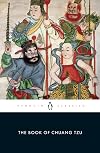
Chuang Tzu was, with Lao Tzu, one of the main thinkers of Taoism. If Lao Tzu left us the Tao Te Ching, a poetical collection of verses, beautiful but, honestly, at time quite difficult to fully get, Chuang Tzu deepen his philosophy by taking a completely different approach: gathering stories and anecdotes portraying a whole set of historical or fictional characters, so as to shape a funny, original, and subversive anthology. The Butterfly Dream, the metaphor of the frog trapped in a well... show more They are all in here!
Sure, scholars still quarrel in between themselves deciding which tales were actually written by him and which ones by his disciples. But who cares? They read as a whole, and their messages won't fail to strike a few chords.
He obviously defends the three golden treasures (humility, simplicity, compassion). He invites us to let go, guided by the Tao yet aware of everything that could threaten our internal peace and happiness. He, above all, goes even further; by rejecting those 'intellectualising' the Tao, these scholars of the Hundred Schools that he accuses of overcomplicating it all and so confusing us. Confucius, especially, gets his fare share of criticism! Chaung Tzu indeed had no patience for conventions and rituals, that he thoughts were killing off spontaneity and freedom.
Obviously, as an Ancient text it has its fair share of misguided outlook. For instance, he believed mankind to be born with the Skies and Earth, and so man to be naturally good and perfectly capable to live in full harmony with a supposed compassionate environment. Yet, it can also be strikingly insightful; as when he laughs at our arrogance in defining ourselves as the pinacle of Creation, mocking by the same token our constant and silly anthropocentrism when looking at the world. You get it: there are in here some lessons for everyone...
Radical, funny and sharp, these little stories surely are provocative. Here's a witty collection that deserves to be discovered! show less
Sure, scholars still quarrel in between themselves deciding which tales were actually written by him and which ones by his disciples. But who cares? They read as a whole, and their messages won't fail to strike a few chords.
He obviously defends the three golden treasures (humility, simplicity, compassion). He invites us to let go, guided by the Tao yet aware of everything that could threaten our internal peace and happiness. He, above all, goes even further; by rejecting those 'intellectualising' the Tao, these scholars of the Hundred Schools that he accuses of overcomplicating it all and so confusing us. Confucius, especially, gets his fare share of criticism! Chaung Tzu indeed had no patience for conventions and rituals, that he thoughts were killing off spontaneity and freedom.
Obviously, as an Ancient text it has its fair share of misguided outlook. For instance, he believed mankind to be born with the Skies and Earth, and so man to be naturally good and perfectly capable to live in full harmony with a supposed compassionate environment. Yet, it can also be strikingly insightful; as when he laughs at our arrogance in defining ourselves as the pinacle of Creation, mocking by the same token our constant and silly anthropocentrism when looking at the world. You get it: there are in here some lessons for everyone...
Radical, funny and sharp, these little stories surely are provocative. Here's a witty collection that deserves to be discovered! show less
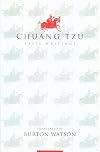
This book contains the "inner chapters," not the entire Chuang Tzu, but generally considered the essential and least corrupt chapters. It's one of my favorite books, and after reading Watson's translation I'm unable to read anyone else's - it's wonderful (and there are quite a few weak versions, and weaker paraphrases). Of the Chinese classics I've read this is not only the most subtle and profound, it's sometimes absolutely hilarious. His parodies of Confucianism are a riot, his magical show more unrealism is timeless, his man dreaming he's a butterfly - or is it the other way around? - the useless tree that's preserved itself so long by being useless, not like all those fructiferous trees .... It's a rare combination of inane silliness with serious reflections on human nature, existence, nature and metaphysics (if that's the right term). show less
Zhuangzi: The Essential Writings: With Selections from Traditional Commentaries (Hackett Classics) by Zhuangzi
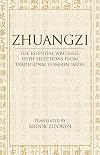
Great book you can just keep going back to, and gets better the more you do. This edition contains lots of traditional commentaries, many of which are hard to find English translations for. Book even comes with short biographies and descriptions of the commentators. I recommend reading along w some kind of other secondary scholarly introduction to Daoism, so that it is easy to sink teeth into.
As far as the content of the Zhuangzi itself, it is absolutely awesome. Metaphors are full of deep show more contradictions that seem to call into question the differences between binaries. First story is about thousand mile bird who's name means "fish egg," and shows that distance and size are relative phenomena.
The chapter called "the equalizing assessment of things" finds the interdependence of "this" and "that" leading to the unity of opposites and also the breaking down of boundaries between the supposed boundary of outer world and inner world of experience. It's an incredibly satisfying book that I will probably read on and off for years to come. It's almost like the bible where you want to reread certain sections which become richer the more you do, but never read the whole thing through more than once. show less
As far as the content of the Zhuangzi itself, it is absolutely awesome. Metaphors are full of deep show more contradictions that seem to call into question the differences between binaries. First story is about thousand mile bird who's name means "fish egg," and shows that distance and size are relative phenomena.
The chapter called "the equalizing assessment of things" finds the interdependence of "this" and "that" leading to the unity of opposites and also the breaking down of boundaries between the supposed boundary of outer world and inner world of experience. It's an incredibly satisfying book that I will probably read on and off for years to come. It's almost like the bible where you want to reread certain sections which become richer the more you do, but never read the whole thing through more than once. show less
Lists
Awards


You May Also Like


Associated Authors
Statistics
- Works
- 142
- Also by
- 12
- Members
- 3,751
- Popularity
- #6,755
- Rating
- 4.1
- Reviews
- 41
- ISBNs
- 221
- Languages
- 18
- Favorited
- 15