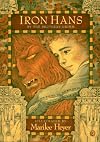
Iron Hans
by Jacob Grimm, Wilhelm Grimm
On This Page
Description
With the help of Iron Hans, the wild man of the forest, a young prince makes his own way in the world and wins the hand of a princess.Tags
Recommendations











Member Reviews
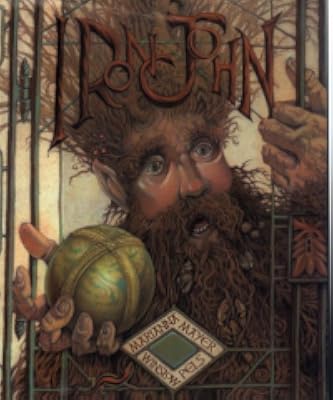
This did not seem like a German folklore, but instead a magical fairy tale. A prince tries to find himself, and was always kind, generous, and genuine. Iron Hans, a hairy beast, helps him through different obstacles. At the end, Iron Hans reveals he is king and leaves all his riches to the prince. The illustrations to this book were amazing. It was done with colored pencils, but the pictures are so detailed and realistic. They literally transport you to the place of the story. It reminded me almost of the movie, The Labyrinth. I was surprised too that the prince was so compassionate. Overall, this book teaches you to be kind to others and good things will follow.
While the illustrations are wonderfully lush and beautiful, I didn't particularly relate to the story.
Whenever animals or people of the court went into the woods, they never returned. When the king sent huntsman to discover why this was occurring, they discover a deep pond containing a wild man. Capturing the wild man and placing him in a cage was the solution, until one day the King's young song found the key to open the cage for the wild man.
The wild man took the prince back into the woods and raised him. All riches were given with the stipulation that he could not touch the body of water. Alas, increasingly as he grew older, he could not resist the temptation and found that whenever he touched the water, things became gold. His show more finger and his hair we covered with gold.
As punishment, he was banished from the woods, but was told if he needed anything he could return and his wishes would be granted.
As the years progressed he had to work hard and adjust to a life of working with his hands in the garden of a palace.
Returning to the woods he asked the wildman for a magnificent horse to go into battle to help the King. When he saw the most beautiful princess, he asked the wildman for the ability to catch the golden apples so that he could win the princess' favor.
In the end he grew to a wise man and captured the heart of the prince. show less
Whenever animals or people of the court went into the woods, they never returned. When the king sent huntsman to discover why this was occurring, they discover a deep pond containing a wild man. Capturing the wild man and placing him in a cage was the solution, until one day the King's young song found the key to open the cage for the wild man.
The wild man took the prince back into the woods and raised him. All riches were given with the stipulation that he could not touch the body of water. Alas, increasingly as he grew older, he could not resist the temptation and found that whenever he touched the water, things became gold. His show more finger and his hair we covered with gold.
As punishment, he was banished from the woods, but was told if he needed anything he could return and his wishes would be granted.
As the years progressed he had to work hard and adjust to a life of working with his hands in the garden of a palace.
Returning to the woods he asked the wildman for a magnificent horse to go into battle to help the King. When he saw the most beautiful princess, he asked the wildman for the ability to catch the golden apples so that he could win the princess' favor.
In the end he grew to a wise man and captured the heart of the prince. show less
The story is a little weird, but the illustrations for this particular version, illustrated by Marilee Heyer, are pleasant to look at.
Great book, perfect at 5 -6 for fairytales
Ratings
Members
- Recently Added By
Author Information

1,890+ Works 49,674 Members
Jacob W. Grimm (1785-1863) and his brother Wilhelm K. Grimm (1786-1859) pioneered the study of German philosophy, law, mythology and folklore, but they are best known for their collection of fairy tales. These include such popular stories as Red Riding Hood, Sleeping Beauty and The Frog Prince. Commonly referred to now as Grimm's Fairy Tales, show more their collection was published as Kinder-und-Hausmarchen (Children's and Household Tales, 1812-15). The brothers were born thirteen months apart in the German province of Hesse, and were inseparable from childhood. Throughout their lives they showed a marked lack of sibling rivalry. Most of their works were written together, a practice begun in childhood when they shared a desk and sustained throughout their adult lives. Since their lives and work were so collaborative, it is difficult now to differentiate between them, but of course there were differences.- Jacob, who studied for a time in Paris, was fascinated with variant spellings of older words. He articulated "Grimm's Law," the rules of which are still used today to determine correspondences between the consonants of German and languages in the Indo-European family. Jacob was bolder and more experimental than Wilhelm, and was rumored to be a lively dancer. Throughout his life, Jacob kept rigidly to schedule and could be extremely focused on work that demanded close attention to detail. He never married, but was a loving uncle to Wilhelm's children. Jacob and Wilhelm Grimm are buried side by side in Berlin. (Bowker Author Biography) show less

392+ Works 42,196 Members
Some Editions
Awards and Honors
Work Relationships
Is contained in
Common Knowledge
- Alternate titles
- Little Book of Iron John
Classifications
- Genres
- Children's Books, Picture Books
- DDC/MDS
- 398.21 — Society, government, & culture Customs, etiquette & folklore Folklore & Folktales Folk literature Fairy Tales
- LCC
- PZ8 .I68 — Language and Literature Fiction and juvenile belles lettres Fiction and juvenile belles lettres Juvenile belles lettres
- BISAC
Statistics
- Members
- 106
- Popularity
- 305,509
- Reviews
- 5
- Rating
- (4.23)
- Languages
- English
- Media
- Paper, Audiobook
- ISBNs
- 7