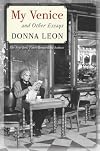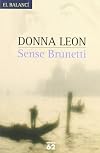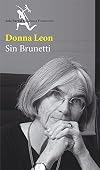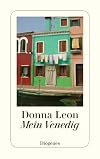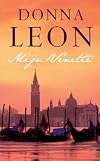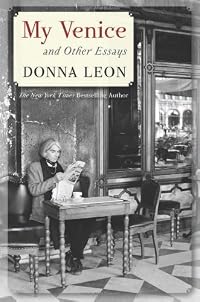
My Venice and Other Essays
by Donna Leon
On This Page
Description
The author of the Commissario Guido Brunetti series presents more than fifty humorous, passionate, and insightful essays about her life in Venice that also explore her family history, her former life in New Jersey, and the idea of the Italian man.Tags
Recommendations



Member Reviews
I read this book as an electronic advance reading copy (e-ARC) provided by NetGalley, and I have posted my review for the publisher via this web site.
Donna Leon writes dark, compelling mystery novels set in Venice, Italy. This book is not one of them. It is instead the collected grumblings of an opinionated and tedious person who fancies herself intellectual and sophisticated. The writer pontificates upon Italy in general and Venice in particular, and those essays are somewhat interesting (I knew that Venice is not the romantic dream that I perceived it as a tourist, yet I was still surprised at its corruption and unsustainability). Other topics eluding escape from her judgment include animals of various species, music (but only opera), show more and writing.
Towards the end of the book--and what a tragedy that I had to slog through the essays to reach this part!--Leon gives advice to new writers, saying, "Nothing so angers a reader as an allusion they don't understand, for it creates the image of the snobbish, superior writer and that's the kiss of death." Consider this a kissoff, then: Leon's tendency to sprinkle Italian phrases and idioms throughout the book without translation is frustrating.
The author's opinions are sweeping and final, which makes them sound all the dumber: "Most of the successful [crime] writers are British or American. The great masters of the form, almost without exception, wrote in English. Okay, there's Simenon, but there really isn't anyone else, is there?" Has she even attempted to read any mystery novels written by Scandinavian writers or--heaven forbid--writers living outside Europe or the U.S.?
The worst essays are the proudly prejudiced ones. Leon finds her elitism to be hilarious, as when she "fears" overweight Americans who might infect her with obesity if she touches them. Her comments about terrorists--only of a certain ethnicity, of course--are breathtaking in their ignorance: "Okay, terrorists do run around in plastic flip-flops and pajamas, often wearing kitchen towels on their heads, but are they not thin and wiry, often handsome?"
A library that has novels by Leon in its mystery collection will not benefit from this book. A library that has travelogues about Italy will not benefit from this book. No library will benefit from this book. show less
Donna Leon writes dark, compelling mystery novels set in Venice, Italy. This book is not one of them. It is instead the collected grumblings of an opinionated and tedious person who fancies herself intellectual and sophisticated. The writer pontificates upon Italy in general and Venice in particular, and those essays are somewhat interesting (I knew that Venice is not the romantic dream that I perceived it as a tourist, yet I was still surprised at its corruption and unsustainability). Other topics eluding escape from her judgment include animals of various species, music (but only opera), show more and writing.
Towards the end of the book--and what a tragedy that I had to slog through the essays to reach this part!--Leon gives advice to new writers, saying, "Nothing so angers a reader as an allusion they don't understand, for it creates the image of the snobbish, superior writer and that's the kiss of death." Consider this a kissoff, then: Leon's tendency to sprinkle Italian phrases and idioms throughout the book without translation is frustrating.
The author's opinions are sweeping and final, which makes them sound all the dumber: "Most of the successful [crime] writers are British or American. The great masters of the form, almost without exception, wrote in English. Okay, there's Simenon, but there really isn't anyone else, is there?" Has she even attempted to read any mystery novels written by Scandinavian writers or--heaven forbid--writers living outside Europe or the U.S.?
The worst essays are the proudly prejudiced ones. Leon finds her elitism to be hilarious, as when she "fears" overweight Americans who might infect her with obesity if she touches them. Her comments about terrorists--only of a certain ethnicity, of course--are breathtaking in their ignorance: "Okay, terrorists do run around in plastic flip-flops and pajamas, often wearing kitchen towels on their heads, but are they not thin and wiry, often handsome?"
A library that has novels by Leon in its mystery collection will not benefit from this book. A library that has travelogues about Italy will not benefit from this book. No library will benefit from this book. show less
Inspector Guido Brunetti, meet your creator, Donna Leon. Did you know that she's a fearsome old dame who adores animals and opera, has lived in Iran and Saudi Arabia, but loves Italy and Venice best of all? OK, you probably knew that last one but I for one was eager to read her musings when I came across this slim volume at one of my library rambles.
My Venice and Other Essays is just that: a collection of musings shaken and stirred, and as in a cocktail that top layer is a little light. The pieces on Venice proper are so short that they feel like blog posts; and not to bash on anyone's honesty but Signora Leon does come across as more than a tad curmudgeonly and even, dare I guess, unhappy.
Then she sets forth her opinions on men, show more Italian and otherwise, and these are a bit more involving. Other Italian characteristics- regarding food in particular- are treated with an affectionate yet critical eye. She is scathing of her own hypocricy when talking about animals, and unforgivingly blunt when telling us of her disastrous affair with a beautiful apartment. This last was such a contrast to the odes written by expats to their marvelous castles and farmhouses in Bella Italia that for that alone I appreciated it all the more.
The sharpest criticism is reserved for a certain country, and deservedly so I might add. The dullest section for me was the one about opera, and I frankly skipped most of it. And finally the last section was a delight, and no surprise that it's titled "On Books." The one piece which is a conversation with her good friend Ruth Rendell- what!- where they eat lunch in a cafe is a special treat! Knowing that the next book in my stack is by the very same Ruth, I find I'm altogether too happy at having read this essay just now.
And so I must recommend this to other gentle readers with a caveat: go in with a light foot, do not yearn for mouth watering food rhapsodies, and refrain from putting on your Politically Correct Hat. Then you will be mildly satisfied, and if you happen to be a Ruth Rendell fan, then you can read it for the piece titled "With Barbara Vine" alone, and call it a day. show less
My Venice and Other Essays is just that: a collection of musings shaken and stirred, and as in a cocktail that top layer is a little light. The pieces on Venice proper are so short that they feel like blog posts; and not to bash on anyone's honesty but Signora Leon does come across as more than a tad curmudgeonly and even, dare I guess, unhappy.
Then she sets forth her opinions on men, show more Italian and otherwise, and these are a bit more involving. Other Italian characteristics- regarding food in particular- are treated with an affectionate yet critical eye. She is scathing of her own hypocricy when talking about animals, and unforgivingly blunt when telling us of her disastrous affair with a beautiful apartment. This last was such a contrast to the odes written by expats to their marvelous castles and farmhouses in Bella Italia that for that alone I appreciated it all the more.
The sharpest criticism is reserved for a certain country, and deservedly so I might add. The dullest section for me was the one about opera, and I frankly skipped most of it. And finally the last section was a delight, and no surprise that it's titled "On Books." The one piece which is a conversation with her good friend Ruth Rendell- what!- where they eat lunch in a cafe is a special treat! Knowing that the next book in my stack is by the very same Ruth, I find I'm altogether too happy at having read this essay just now.
And so I must recommend this to other gentle readers with a caveat: go in with a light foot, do not yearn for mouth watering food rhapsodies, and refrain from putting on your Politically Correct Hat. Then you will be mildly satisfied, and if you happen to be a Ruth Rendell fan, then you can read it for the piece titled "With Barbara Vine" alone, and call it a day. show less
Charmingly quixotic! Piercingly insightful!
What a delightful, sometimes dark group of essays! Witty, sometimes hilarious, often self deprecating, always with an brilliant edge. Nothing is off the table. The conversation cuts a wide swathe through life in all it's complexities.
Donna Leon brings Venice alive. Through the eyes of both an inhabitant and an expat we taste the puzzling differences and laugh at the idiosyncrasies, and the similarities.
I really identified with her piece about buying her villa! Sweeping in, being mesmerized by the view, but blind to the detrimental structure of the building. Ah, Bellissimo! Swept up by the view and the ambience, forgetting about the plumbing, the flooding roof and and collapsing walls. For Leon, show more 'it was love at first sight, and not for the first time, was to prove [her] ruin.'
Each essay is a little gem and tells us something about Italians and Venice that as tourists we would never discover for ourselves. I must admit there are some moments when I felt positively guilty about being a tourist in Venice.
But Venice is only the beginning. Leon pulls no punches when she talks about male female relationships in Italy. Her dismay about attitudes is palpable.
We journey to the United States and New Jersey with equal vigour. Certainly the streets and the people spring to life in all places. Life viewed through Donna Leon's eyes is certainly a grand experience.
Grazie tanto! Ms. Leon.
A NetGalley ARC show less
What a delightful, sometimes dark group of essays! Witty, sometimes hilarious, often self deprecating, always with an brilliant edge. Nothing is off the table. The conversation cuts a wide swathe through life in all it's complexities.
Donna Leon brings Venice alive. Through the eyes of both an inhabitant and an expat we taste the puzzling differences and laugh at the idiosyncrasies, and the similarities.
I really identified with her piece about buying her villa! Sweeping in, being mesmerized by the view, but blind to the detrimental structure of the building. Ah, Bellissimo! Swept up by the view and the ambience, forgetting about the plumbing, the flooding roof and and collapsing walls. For Leon, show more 'it was love at first sight, and not for the first time, was to prove [her] ruin.'
Each essay is a little gem and tells us something about Italians and Venice that as tourists we would never discover for ourselves. I must admit there are some moments when I felt positively guilty about being a tourist in Venice.
But Venice is only the beginning. Leon pulls no punches when she talks about male female relationships in Italy. Her dismay about attitudes is palpable.
We journey to the United States and New Jersey with equal vigour. Certainly the streets and the people spring to life in all places. Life viewed through Donna Leon's eyes is certainly a grand experience.
Grazie tanto! Ms. Leon.
A NetGalley ARC show less
Leon reminds us what we, the masses, like about the internet and TV criticism today: it is not always politically correct. Leon makes no attempt to please everyone. She is just telling us what she thinks about, and she doesn’t mince words. The woman who writes thoughtful police procedurals that dramatize critical issues of our time is intelligent and opinionated. Her personality is out there for us to “take it or leave it.” I like people with considered opinions.
Because Leon is able to articulate her positions, we are convinced we must take her standpoint into consideration when formulating or modifying our own view of the world. And finally, she is amusing, something that is too little valued in polite society these days. One show more gets the feeling she relishes matching wits: contrary viewpoints will not necessarily be shunned by her, but welcomed by a sardonic smile, a tilt of dark brows which contrast so sharply with her white bob, and the gleaming sword of wit raised as if to kiss. Be prepared to do battle all ye who enter here.
Mostly Leon’s essays are short opinions about this and that, essays that get longer as the book moves along. Her sections are intriguing: “On Venice,” “On America,” “On Music,” “On Mankind and Animals.” In “On Men” we learn what is essential to the Italian male character. We glean details of Leon’s background as an American living abroad. The essays are an excellent counterpoint to the ever longer series featuring police chief Commissario Brunetti of Venice. Brunetti is a nice man, a good father, loving husband, and a thoughtful, effective police chief in an Italian context. That is, criminals are not always brought to justice and official corruption is a way of life. Leon’s essays put these characterizations in context.
The most interesting section of essays might be the last, which Leon entitles “On Books.” One essay in this section has Leon giving her considered (and valuable) opinion on what it takes to be a successful mystery/crime writer, which decisions must be made before beginning a novel, and what level skill is required. Then she adds an essay on “the expert eye” and how critical that is to the success of a crime writer.
Sylvia Poggioli, NPR radio commentator based in Italy, interviewed Leon in 2007. I was surprised to learn that Leon’s books are not translated into Italian, and will not be in her lifetime. She had been writing the Venetian Brunetti series for some time before her books were available in the United States. I’d always assumed her work was for European audiences rather than for American ones…so I was surprised to learn the country where she lives is not privy to her talent.
Donna Leon’s own blog features further links and discussions.
I want to go back and reread, or read further in the series, knowing what I do now after these essays. Delightfully piquant. show less
Because Leon is able to articulate her positions, we are convinced we must take her standpoint into consideration when formulating or modifying our own view of the world. And finally, she is amusing, something that is too little valued in polite society these days. One show more gets the feeling she relishes matching wits: contrary viewpoints will not necessarily be shunned by her, but welcomed by a sardonic smile, a tilt of dark brows which contrast so sharply with her white bob, and the gleaming sword of wit raised as if to kiss. Be prepared to do battle all ye who enter here.
Mostly Leon’s essays are short opinions about this and that, essays that get longer as the book moves along. Her sections are intriguing: “On Venice,” “On America,” “On Music,” “On Mankind and Animals.” In “On Men” we learn what is essential to the Italian male character. We glean details of Leon’s background as an American living abroad. The essays are an excellent counterpoint to the ever longer series featuring police chief Commissario Brunetti of Venice. Brunetti is a nice man, a good father, loving husband, and a thoughtful, effective police chief in an Italian context. That is, criminals are not always brought to justice and official corruption is a way of life. Leon’s essays put these characterizations in context.
The most interesting section of essays might be the last, which Leon entitles “On Books.” One essay in this section has Leon giving her considered (and valuable) opinion on what it takes to be a successful mystery/crime writer, which decisions must be made before beginning a novel, and what level skill is required. Then she adds an essay on “the expert eye” and how critical that is to the success of a crime writer.
Sylvia Poggioli, NPR radio commentator based in Italy, interviewed Leon in 2007. I was surprised to learn that Leon’s books are not translated into Italian, and will not be in her lifetime. She had been writing the Venetian Brunetti series for some time before her books were available in the United States. I’d always assumed her work was for European audiences rather than for American ones…so I was surprised to learn the country where she lives is not privy to her talent.
Donna Leon’s own blog features further links and discussions.
I want to go back and reread, or read further in the series, knowing what I do now after these essays. Delightfully piquant. show less
The backstory: Venice is one of my favorite cities in the world. I first visited it in the summer of 2004, on my way to Athens, Greece for the Olympics. I fell in love. Two years later, Mr. Nomadreader and I opted to spend our Christmas and New Year together in Venice rather than decide whose family to visit. Despite my love of both Venice and mysteries, I still haven't read Donna Leon's much-acclaimed series set there. It's near the top of my list, but in the meantime, I had to read her essays about Venice as soon as I got my hands on a copy.
The basics: My Venice and Other Essays is a collection of essays and vignettes divided into these sections: On Venice, On Music, On Mankind and Animals, On Men, On America, and On Books.
My show more thoughts: I've often bemoaned how difficult it is to review a collection of short stories, and here I find myself with the same problem as I attempt to cohesively talk about a collection of essays that itself is not terribly cohesive. As I finished the first essay in the collection, I said "that's it?" Truthfully, I wouldn't consider any of the essays about Venice to be essays. While classically there may not be a prescribed number of pages an essay must be, I found these pieces to also be lacking the things I most love about essays: immersion, reflection, and wisdom. The pieces themselves aren't necessarily bad, but when I expected essays about Venice, they didn't meet my expectations. If, however, you go in expecting brief, curmudgeonly anecdotes about life in Venice, you will find them.
Early in this collection, Leon comes off as quite an unhappy person. She frequently shares her annoyances and they often read more life rants than observations. Once the collection shifted away from Venice, however, moments of wisdom, clarity, and joy began to emerge. I was surprised how much I enjoyed her musings on animals, as I am far from an animal lover. Leon was at her absolute best when offering insight on American and books. Perhaps her musings on Venice would delight Venetians, but they left me cold. When she turned her critical expatriate eye to the United States, however, I was enchanted.
It is apparent at least some of these essays were written, if not also published, some time ago. There are numerous references to current events that aren't current. There are references to U.S. presidents I don't think are the current one. As a reader, I would have found it helpful to have a date written or previous publication information shared to help illuminate the setting and perspective Leon brings.
Favorite passage: "In an age where meaning has been tossed out in favor of rhetoric, in a time when films are mere concatenations of loud noises and the shedding of human blood, it is to be expected that language should no longer be considered the chief means by which we reveal ourselves, our thoughts, and our feelings. When meaning disappears so, too, must the ability to perceive it."
The verdict: As a collection, My Venice and Other Essays is frustratingly uneven. Mercifully, the collection improves as it goes on, both in quality and depth. The essays on Venice itself were each so brief I would hardly call them essays. Leon is at her best when the essays go on more than a couple of pages. It's a shame she didn't combine or develop the shorter pieces to make them fit in with the stronger, longer essays. While there's much to be enjoyed here, there are far too many piece that detract from the collection's best. Still, by the end, I wanted to claim Donna Leon as a long-lost relative, invite her to dinner parties, and listen to her delightfully unrestrained thoughts, opinions, and experiences. show less
The basics: My Venice and Other Essays is a collection of essays and vignettes divided into these sections: On Venice, On Music, On Mankind and Animals, On Men, On America, and On Books.
My show more thoughts: I've often bemoaned how difficult it is to review a collection of short stories, and here I find myself with the same problem as I attempt to cohesively talk about a collection of essays that itself is not terribly cohesive. As I finished the first essay in the collection, I said "that's it?" Truthfully, I wouldn't consider any of the essays about Venice to be essays. While classically there may not be a prescribed number of pages an essay must be, I found these pieces to also be lacking the things I most love about essays: immersion, reflection, and wisdom. The pieces themselves aren't necessarily bad, but when I expected essays about Venice, they didn't meet my expectations. If, however, you go in expecting brief, curmudgeonly anecdotes about life in Venice, you will find them.
Early in this collection, Leon comes off as quite an unhappy person. She frequently shares her annoyances and they often read more life rants than observations. Once the collection shifted away from Venice, however, moments of wisdom, clarity, and joy began to emerge. I was surprised how much I enjoyed her musings on animals, as I am far from an animal lover. Leon was at her absolute best when offering insight on American and books. Perhaps her musings on Venice would delight Venetians, but they left me cold. When she turned her critical expatriate eye to the United States, however, I was enchanted.
It is apparent at least some of these essays were written, if not also published, some time ago. There are numerous references to current events that aren't current. There are references to U.S. presidents I don't think are the current one. As a reader, I would have found it helpful to have a date written or previous publication information shared to help illuminate the setting and perspective Leon brings.
Favorite passage: "In an age where meaning has been tossed out in favor of rhetoric, in a time when films are mere concatenations of loud noises and the shedding of human blood, it is to be expected that language should no longer be considered the chief means by which we reveal ourselves, our thoughts, and our feelings. When meaning disappears so, too, must the ability to perceive it."
The verdict: As a collection, My Venice and Other Essays is frustratingly uneven. Mercifully, the collection improves as it goes on, both in quality and depth. The essays on Venice itself were each so brief I would hardly call them essays. Leon is at her best when the essays go on more than a couple of pages. It's a shame she didn't combine or develop the shorter pieces to make them fit in with the stronger, longer essays. While there's much to be enjoyed here, there are far too many piece that detract from the collection's best. Still, by the end, I wanted to claim Donna Leon as a long-lost relative, invite her to dinner parties, and listen to her delightfully unrestrained thoughts, opinions, and experiences. show less
This collection of short essays is grouped around themes of Venice, music, human-animal relations, feminism, Leon’s views on America as an expat, and books and writing. Some of these essays made their way into Leon’s later memoir, Wandering through Life. I enjoyed the memoir more. In these essays, Leon comes across as a bit of a snob and not like someone I would enjoy socializing with.
I do so wish she would write more books that aren't crime stories. She writes so very well, but I just don't enjoy her usual genre. This was delightful.
Members
- Recently Added By
Author Information

63+ Works 46,080 Members
Donna Leon was born on September 29, 1942 in Montclair, New Jersey. She taught English literature in England, Switzerland, Iran, China, Italy and Saudi Arabia. She is the author of a Commissario Guido Brunetti Mystery series. Friends in High Places, a novel from the series, won the Crime Writers Association Macallan Silver Dagger for Fiction in show more 2000. German Television has produced 16 Commissario Brunetti mysteries for broadcast. She was a crime reviewer for the Sunday Times. She has written the libretto for a comic opera and has set up her own opera company, Il Complesso Barocco. Her titles Jewels of Pardise, The Golden Egg, By Its Cover, Falling in Love and The Waters of Eternal Youth made The New York Times Bestseller List. (Bowker Author Biography) show less
Some Editions
Common Knowledge
- Original title
- On Venice, music, people and books
Classifications
Statistics
- Members
- 234
- Popularity
- 138,638
- Reviews
- 15
- Rating
- (3.60)
- Languages
- 6 — Catalan, Dutch, English, French, German, Spanish
- Media
- Paper, Ebook
- ISBNs
- 14
- ASINs
- 3