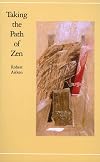
Taking the Path of Zen
by Robert Aitken
On This Page
Description
There is a fine art to presenting complex ideas with simplicity and insight, in a manner that both guides and inspires. InTaking the Path of Zen Robert Aitken presents the practice, lifestyle, rationale, and ideology of Zen Buddhism with remarkable clarity. The foundation of Zen is the practice of zazen, or mediation, and Aitken Roshi insists that everything flows from the center. He discusses correct breathing, posture, routine, teacher-student relations, and koan study, as well as common show more problems and milestones encountered in the process. Throughout the book the author returns to zazen, offering further advice and more advanced techniques. The orientation extends to various religious attitudes and includes detailed discussions of the ThreeTreasures and the Ten Precepts of Zen Buddhism. Taking the Path of Zen willserve as orientation and guide for anyone who is drawn to the ways of Zen, from the simply curious to the serious Zen student. show lessTags
Recommendations



























Member Reviews
A succinct description of how to practise zazen, what to do and not to, what to expect and so on - a sort of 'teach yourself zazen' book, except that it emphasises that you need to find a roshi (teacher) if you want to see any meaningful results, because a written manual can't replace one, it can only give as it were 'technical' advice.
There is a fine art ot presenting complex ideas with simplicity and insight, in a manner that both guides and inspires. In Taking the Path of Zen Robert Aitken presents the practice, lifestyle, rationale, and ideaology of Zen Buddhism with remarkable clarity.
The foundation of Zen is the practice of zazen, or meditation, and Aitken Roshi insists that everything flows from this center. He discusses correct breathing, posture, routine, teacher-student relations, and koan study, as well as common problems and milestones encountered in the process. Throughout the book the author returns to zazen, offering further advice and more advanced techniques. The orientation extends to various religious attitudes and includes detailed discussions of show more the Three Treasures and the Ten Precepts of Zen Buddhism.
Taking the Path of Zen will serve as orientation and guide for anyone who is drawn to the ways of Zen, from the simply curious to the serious Zen student.
'I welcome with great pleasure Robert Aitken Roshi's introduction to Zen practice, Taking the Path of Zen. I feel this will be a valuable source of information and inspiration both for those who have a passing interest in the subject and those who have determined to set out on the path of Zen themselves.
As an American who has trained in Zen practice for many years Aitken Roshi has a special understanding of the problems and questions which plague Western students of Zen. His book will thus be a godsend for people who have sought an introduction to Zen in their own language, free of the foreignisms that cultural differences can produce.
It is my sincere wish that this work will gain the wide readership it so deserves.'-Yamada Koun Roshi, Kamakura, March, 1982.
Contents
Preface
Chapter One Fundamentals
Making it personal
Concentation
Accepting the self
Breath counting
Chapter Two Method
Zazen as experiment
The posture
The legs
Cushions
Getting seated
Eyes and hands
Beginning your practice
More on breath counting
Chapter Three Appropriate means
Still more on breath counting
The Zen Center Organization
Ritual
Schedule
Sitting with others
When to sit
How long to sit
The place and its spirit
Dress
Kinbin
The kyosaku
The kyosaku as a reminder
The kosaku itself
The next step
Chapter Four Delusions aand pitfalls
Classes of delusion-The pursuit of fantasy; Random thoughts; Makyo
Condition
Pain
The sick soul
Personal problems
Self-doubt
Zazen for married people
Children
The next step
Chapter Five Attitudes in religious practice
The hunnist attitude
The eschatological attitude
The Arhat ideal
The Bodhisattva ideal
Inherent completion
Kinds of Zen Buddhism
Sanbo Kodan
The next step
Chapter Six the three treasures
The Buddha
The Dharma
The Sangha
The three refuges
The three treasures at the training center
The next step
Chapter Seven The ten grave precepts
The precepts as expressions of love
The application of the precepts
The ten grave precepts-No killing; No stealing; No misuse of sex; No lying; No dealing in drugs; No speaking of faults of others; No praising of yourself while abusing others; No sparing of dharma assets; No indulgence in anger; No slandering of the three treasures
Confidentiality
Zen and ethics
Chapter Eight Establishing the practice
The role of the roshi
Faith in the Roshi
How to connect
Shoken and Dokusan
In conclusion
Chapter Nine The koan Mu
Chao-chou Ts'ung-Shen
The dialgue
The comment
The verse
Prajna Paramita Hrdaya Sutra (The heart sutra)
Hakuin Zenji's 'Song of Zazen'
Appendix: Willy-nilly Zen
Table of Chinese-Japanese equivalents
Notes
Glossary
Bibliography of Zen Buhddhist titles in paper covers show less
The foundation of Zen is the practice of zazen, or meditation, and Aitken Roshi insists that everything flows from this center. He discusses correct breathing, posture, routine, teacher-student relations, and koan study, as well as common problems and milestones encountered in the process. Throughout the book the author returns to zazen, offering further advice and more advanced techniques. The orientation extends to various religious attitudes and includes detailed discussions of show more the Three Treasures and the Ten Precepts of Zen Buddhism.
Taking the Path of Zen will serve as orientation and guide for anyone who is drawn to the ways of Zen, from the simply curious to the serious Zen student.
'I welcome with great pleasure Robert Aitken Roshi's introduction to Zen practice, Taking the Path of Zen. I feel this will be a valuable source of information and inspiration both for those who have a passing interest in the subject and those who have determined to set out on the path of Zen themselves.
As an American who has trained in Zen practice for many years Aitken Roshi has a special understanding of the problems and questions which plague Western students of Zen. His book will thus be a godsend for people who have sought an introduction to Zen in their own language, free of the foreignisms that cultural differences can produce.
It is my sincere wish that this work will gain the wide readership it so deserves.'-Yamada Koun Roshi, Kamakura, March, 1982.
Contents
Preface
Chapter One Fundamentals
Making it personal
Concentation
Accepting the self
Breath counting
Chapter Two Method
Zazen as experiment
The posture
The legs
Cushions
Getting seated
Eyes and hands
Beginning your practice
More on breath counting
Chapter Three Appropriate means
Still more on breath counting
The Zen Center Organization
Ritual
Schedule
Sitting with others
When to sit
How long to sit
The place and its spirit
Dress
Kinbin
The kyosaku
The kyosaku as a reminder
The kosaku itself
The next step
Chapter Four Delusions aand pitfalls
Classes of delusion-The pursuit of fantasy; Random thoughts; Makyo
Condition
Pain
The sick soul
Personal problems
Self-doubt
Zazen for married people
Children
The next step
Chapter Five Attitudes in religious practice
The hunnist attitude
The eschatological attitude
The Arhat ideal
The Bodhisattva ideal
Inherent completion
Kinds of Zen Buddhism
Sanbo Kodan
The next step
Chapter Six the three treasures
The Buddha
The Dharma
The Sangha
The three refuges
The three treasures at the training center
The next step
Chapter Seven The ten grave precepts
The precepts as expressions of love
The application of the precepts
The ten grave precepts-No killing; No stealing; No misuse of sex; No lying; No dealing in drugs; No speaking of faults of others; No praising of yourself while abusing others; No sparing of dharma assets; No indulgence in anger; No slandering of the three treasures
Confidentiality
Zen and ethics
Chapter Eight Establishing the practice
The role of the roshi
Faith in the Roshi
How to connect
Shoken and Dokusan
In conclusion
Chapter Nine The koan Mu
Chao-chou Ts'ung-Shen
The dialgue
The comment
The verse
Prajna Paramita Hrdaya Sutra (The heart sutra)
Hakuin Zenji's 'Song of Zazen'
Appendix: Willy-nilly Zen
Table of Chinese-Japanese equivalents
Notes
Glossary
Bibliography of Zen Buhddhist titles in paper covers show less
A good 200-level overview of deliberate zen practice. Some good insights on familiar concepts for the adept.
There is a fine art to presenting complex ideas with simplicity and insight, in a manner that both guides and inspires. In Taking the Path of Zen Robert Aitken presents the practice, lifestyle, rationale, and ideology of Zen Buddhism with remarkable clarity.
The foundation of Zen is the practice of zazen, or mediation, and Aitken Roshi insists that everything flows from the center. He discusses correct breathing, posture, routine, teacher-student relations, and koan study, as well as common problems and milestones encountered in the process. Throughout the book the author returns to zazen, offering further advice and more advanced techniques. The orientation extends to various religious attitudes and includes detailed discussions of the show more Three Treasures and the Ten Precepts of Zen Buddhism.
Taking the Path of Zen will serve as orientation and guide for anyone who is drawn to the ways of Zen, from the simply curious to the serious Zen student. show less
The foundation of Zen is the practice of zazen, or mediation, and Aitken Roshi insists that everything flows from the center. He discusses correct breathing, posture, routine, teacher-student relations, and koan study, as well as common problems and milestones encountered in the process. Throughout the book the author returns to zazen, offering further advice and more advanced techniques. The orientation extends to various religious attitudes and includes detailed discussions of the show more Three Treasures and the Ten Precepts of Zen Buddhism.
Taking the Path of Zen will serve as orientation and guide for anyone who is drawn to the ways of Zen, from the simply curious to the serious Zen student. show less
There is a fine art to presenting complex ideas with simplicity and insight, in a manner that both guides and inspires. In Taking the Path of Zen Robert Aitken presents the practice, lifestyle, rationale, and ideology of Zen Buddhism with remarkable clarity.
In meinen Augen, ein sehr gutes Buch, wenn man mit der Zen-Meditation beginnt oder allgemeine Fragen hat. Aitken Roshi geht hier auf alle Bereiche ein.
Apr 3, 2011German
Ratings
Members
- Recently Added By
Lists

Buddhism, books there in
23 works; 4 members
Author Information

22+ Works 1,973 Members
Robert Aitken was the author of more than a dozen books about Buddhism, including A Zen Wave, Encouraging Words, and Taking the Path of Zen. A dedicated Buddhist for most of his life, he was an abbot and roshi of the Honolulu Diamond Sangha in Hawaii, which he co-founded with his late wife Anne Hopkins Aitken in 1959. He died in 2010.
Common Knowledge
- Canonical title
- Taking the Path of Zen
- Original title
- Taking the path of Zen
- Original publication date
- 1982
- Dedication
- To the memory and the presence of Yasutani Hakuun-shitsu Rodaishi
- First words
- My purpose in this book is to provide a manual that may be used, chapter by chapter, as a program of instruction over the first few weeks of Zen training.
- Last words
- (Click to show. Warning: May contain spoilers.)As I wrote eleven years ago, I feel profoundly grateful to Yamada Roshi, and my motive is simply to justify his trust.
Classifications
- Genres
- Religion & Spirituality, Nonfiction, Philosophy
- DDC/MDS
- 294.34448 — Religion Other religions Buddhism/Hinduism Buddhism Buddhism - practice Religious experience, life, practice Religious life and practice
- LCC
- BQ9286 .A35 — Philosophy, Psychology and Religion Buddhism Buddhism Modifications, schools, etc. Special modifications, sects, etc. Zen Buddhism
- BISAC
Statistics
- Members
- 512
- Popularity
- 58,640
- Reviews
- 6
- Rating
- (3.78)
- Languages
- 5 — Dutch, English, German, Spanish, Swedish
- Media
- Paper, Ebook
- ISBNs
- 8
- ASINs
- 6