
Rick Fields (1942–1999)
Author of Chop Wood, Carry Water: A Guide to Finding Spiritual Fulfillment in Everyday Life
Works by Rick Fields
How the Swans Came to the Lake: A Narrative History of Buddhism in America (1992) 317 copies, 4 reviews
Instructions to the Cook: A Zen Master's Lessons in Living a Life That Matters (1996) — Author — 308 copies, 2 reviews
The Awakened Warrior: Living with Courage, Compassion & Discipline (New Consciousness Reader) (1994) 47 copies, 2 reviews
Taking Refuge in L.A. 1 copy
Associated Works
Tagged
Common Knowledge
- Birthdate
- 1942-05-16
- Date of death
- 1999-06-06
- Gender
- male
- Occupations
- editor
journalist
Buddhist scholar - Organizations
- Tricycle The Buddhist Review
Shambhala Sun Magazine - Nationality
- USA
- Birthplace
- Queens, New York, USA
- Place of death
- Fairfax, California, USA
- Associated Place (for map)
- USA
Members
Reviews

Can the great warrior traditions of the past offer meaning in oiur lives today?
Through these traditions are as varied as the cultures they come from-the samurai of Japan, the plains indians of North America, and the knighs of medieval Europe-they share much with each other and with the problems we face daily in our lives. Through their teachings about the nature of aggression, competition,and physical and mental struggle, the warrior traditions provide a practical guide to living in a show more difficult and challenging world. Each embraces a spiritual code to serve as a path of personal development, combining bravery and gentleness, exhibiting a fierce compassion for others, and emphazing self-mastery, will, and patience as well as courage and integrity.
In The Code of the Warrior, noted author Rick Fields illustrates the enduring power and significance of the function of the warrior in society. He shows that whether a culture reveres or reviles battle, the warrior is always an essential part of society. Finally, Fields explores ways in which our world calls for a new warrior spirit and how this spirit can be forged for each of us from the ways of the past.
Rick Fields is the primary author of Chop Wood, Carry Water and How the Swans Came to the Lake: A Narrative History of Buddhism in America. He lives in Boulder, Colorado.
Contents
Illustrations
Acknowledgments
Prologue The target calls
1 The first people: Warriors before war
2 A deadly balance: the invention of the warrior
3 The warrior-kings of Sumer
4 The warrior's dilemma: The Indo-Europeans
5 The bed of arrows: The Aryans from Arjuna to Asoka
6 The Taoist solution
7 Every open hand a sword: The martial arts in China
8 In shining armor: Of knights and chivalry
9 The life-giving sword: The samurai and bushido
10 A good day to die: Crazy Horse and the Sioux warrior
11s The lone warrior: The American mission
12 The woman warrior
13 The warrior and the businessperson
14 Bringing the warrior down to earth
Notes
Selected bibliography
Index show less
Through these traditions are as varied as the cultures they come from-the samurai of Japan, the plains indians of North America, and the knighs of medieval Europe-they share much with each other and with the problems we face daily in our lives. Through their teachings about the nature of aggression, competition,and physical and mental struggle, the warrior traditions provide a practical guide to living in a show more difficult and challenging world. Each embraces a spiritual code to serve as a path of personal development, combining bravery and gentleness, exhibiting a fierce compassion for others, and emphazing self-mastery, will, and patience as well as courage and integrity.
In The Code of the Warrior, noted author Rick Fields illustrates the enduring power and significance of the function of the warrior in society. He shows that whether a culture reveres or reviles battle, the warrior is always an essential part of society. Finally, Fields explores ways in which our world calls for a new warrior spirit and how this spirit can be forged for each of us from the ways of the past.
Rick Fields is the primary author of Chop Wood, Carry Water and How the Swans Came to the Lake: A Narrative History of Buddhism in America. He lives in Boulder, Colorado.
Contents
Illustrations
Acknowledgments
Prologue The target calls
1 The first people: Warriors before war
2 A deadly balance: the invention of the warrior
3 The warrior-kings of Sumer
4 The warrior's dilemma: The Indo-Europeans
5 The bed of arrows: The Aryans from Arjuna to Asoka
6 The Taoist solution
7 Every open hand a sword: The martial arts in China
8 In shining armor: Of knights and chivalry
9 The life-giving sword: The samurai and bushido
10 A good day to die: Crazy Horse and the Sioux warrior
11s The lone warrior: The American mission
12 The woman warrior
13 The warrior and the businessperson
14 Bringing the warrior down to earth
Notes
Selected bibliography
Index show less
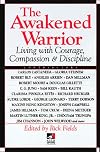
I bought this during my Iron John, Robert Bly, Joseph Campbell manly drum beating phase. I've not awakened. I've developed neither compassion, nor discipline. I'm still lacking in any consciousness, expanded or otherwise. I haven't generated the courage to be enough of a warrior to open even a moderate size can o' whoopass, even though I think deepak chopra could stand a heapin' helpin' of it. I still write in the passive voice. In short, I'm still a girly man.
Didn't work for me. Your show more mileage may vary. show less
Didn't work for me. Your show more mileage may vary. show less
This anthology does contain a breadth of applications of archetypes, but I'm afraid that the very breadth may have led to my largest complaint about the book. The pieces are numerous but very short, not enough time to really develop any of the ideas. It's a bit like the feeling you get talking to someone who's done too many drugs; you mention some "really deep" buzzword, and he says, "Yeah, man, I know what you're talking about," two sentences in. A lot of this is "shallow" depth psychology.
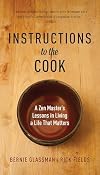
Provides a robust metaphor which explains how to live a life that matters. (Living as cooking) More specifically it says the zen cook's duty is to make the best most sumptuous meal possible out of the ingredients available. Talks about the multiple courses of a good meal: spirituality, study and learning, livelihood, social action, and community. Other useful lessons included:
- Cook with the ingredients available right now. Do not ignore ingredients or wish you had ingredients you do not
- show more Another metaphor: Zazen (meditation) is like cleaning your mind. The same way you clean a bowl after it has been used.
- Make your goal to use every ingredient. Reject nothing.
- Begin by cleaning. This lets you see what you have to work with.
- Put people in positions that are right for them.
- Don't clean just to clean
- Learn by doing. Beginner's mind.
- "How do you go straight up a mountain with 99 curves"
- Be like water, find a way around the rock, work with the constraints set before you.
- Nothing exists by itself, everything is interdependent.
The book describes these concepts and more using clear purposeful language. show less
- Cook with the ingredients available right now. Do not ignore ingredients or wish you had ingredients you do not
- show more Another metaphor: Zazen (meditation) is like cleaning your mind. The same way you clean a bowl after it has been used.
- Make your goal to use every ingredient. Reject nothing.
- Begin by cleaning. This lets you see what you have to work with.
- Put people in positions that are right for them.
- Don't clean just to clean
- Learn by doing. Beginner's mind.
- "How do you go straight up a mountain with 99 curves"
- Be like water, find a way around the rock, work with the constraints set before you.
- Nothing exists by itself, everything is interdependent.
The book describes these concepts and more using clear purposeful language. show less
Lists
You May Also Like


Associated Authors
Statistics
- Works
- 13
- Also by
- 2
- Members
- 1,331
- Popularity
- #19,337
- Rating
- 4.0
- Reviews
- 10
- ISBNs
- 35
- Languages
- 4