On This Page
Description
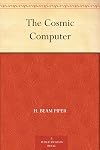
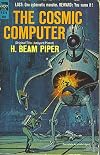
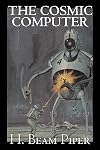
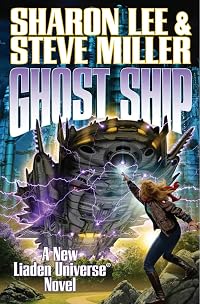
To the victor go the spoils -- and in the aftermath of a brutal and drawn-out war on the planet Poictesme, an agent is sent to hunt among the smoldering ruins for the most valuable prize of all: Merlin, the most powerful computer the universe has ever known. Will the mission be successful, or will the intrepid technology hunter come home empty-handed?.
Tags
Recommendations












Member Reviews
Me gusta. The characters are strong and individual, the story is fascinating, and the lengths they have to go to to get things working are amazing. Conn's dilemma is really nasty - he can tell the truth and basically kill the men he respects, or he can lie to everyone. The lies are actually worth it - and then they turn out not to be lies! Very rich. I also read the short story that was the seed for this - Graveyard of Dreams in Federation - and even given the larger space to tell the story, Cosmic Computer is better. Not a hope for the future - or not only - but something built right now.
Oddly enough, Jerry Pournelle in the foreword of Federation talks about how there's a gap between this and Space Viking, and no one knows what show more happened in there. The last couple chapters tell that story pretty clearly to my eye - there's never a suggestion that they could escape the collapse, just that they could make it less than terrible. Though I suppose the fact that there's no mention of Poictesme in Space Viking is a little odd - if they went down gently they should have been able to come back reasonably easily. I don't know. As usual, Piper tells a great story with broad implications, and the more you think about it the more there is to think about. Piper is wonderful.
And BTW, there are two lines of the poem in the book - there's considerably more of it in the short story. show less
Oddly enough, Jerry Pournelle in the foreword of Federation talks about how there's a gap between this and Space Viking, and no one knows what show more happened in there. The last couple chapters tell that story pretty clearly to my eye - there's never a suggestion that they could escape the collapse, just that they could make it less than terrible. Though I suppose the fact that there's no mention of Poictesme in Space Viking is a little odd - if they went down gently they should have been able to come back reasonably easily. I don't know. As usual, Piper tells a great story with broad implications, and the more you think about it the more there is to think about. Piper is wonderful.
And BTW, there are two lines of the poem in the book - there's considerably more of it in the short story. show less
The Cosmic Computer by H. Beam Piper is a solid, mostly planet-bound, space opera. A colony struggles to recover from the ancient System States war. They scavenge old military hardware and dream of finding a supercomputer called Merlin. Piper often raided human history for space opera themes. In this case, the colonists suffer from what looks like a cargo cult. Give it 3.5 old mainframes.
Substance: A reasonably good example of 1960s science fiction, with somewhat more depth in political awareness and psychological shrewdness. Still in the Heinlein-libertarian mode, with vastly over-simplified perceptions of the technical difficulties in building space vehicles. A decent "mystery" concerning the whereabouts of the "missing" computer. It is interesting to contrast the scientific and sociological extrapolations with what actually occurred in the intervening centuries (none of the classic sf writers foresaw the obliteration of public smoking, for instance, or the extent of the use of personal computers, although many predicted "computerized" societies).
Mark Twain also explored the basic conundrum of whether a compassionate show more lie trumped bald truth, but Piper extends the question: what if our current perception of the truth isn't true?
Style: Narrative style suits the subject, light humor and reasonable fidelity to physics. One notch above the basic cardboard / stereotype characters, in the tv / movie range. I enjoyed some of the wry comments of the protagonist's father. show less
Mark Twain also explored the basic conundrum of whether a compassionate show more lie trumped bald truth, but Piper extends the question: what if our current perception of the truth isn't true?
Style: Narrative style suits the subject, light humor and reasonable fidelity to physics. One notch above the basic cardboard / stereotype characters, in the tv / movie range. I enjoyed some of the wry comments of the protagonist's father. show less
A surprisingly perceptive story about the economic, social, and personal consequences of a search for a supercomputer that can predict the future. Just the belief in the computer has huge effects.
Yes, a few bits haven't aged well in the years since 1963, but even the Poictesme melon brandy might be losing its edge after fifty years. But I do wish he'd chosen something else for the "Seshan" accent that the serving robot has. That was way too close to Black English. Yuk.
I read this in the Standard Ebooks edition, which was very nicely produced.
Short and worth a read, if you are into that era of SF.
Yes, a few bits haven't aged well in the years since 1963, but even the Poictesme melon brandy might be losing its edge after fifty years. But I do wish he'd chosen something else for the "Seshan" accent that the serving robot has. That was way too close to Black English. Yuk.
I read this in the Standard Ebooks edition, which was very nicely produced.
Short and worth a read, if you are into that era of SF.
An enjoyable read. The end borrows a bit from Asimov, but I did enjoy this book. Pretty typical in style of the SF of its time. Essentially no important female characters, etc. After reading a bit about Piper I see where he very much injected his own political leanings into the novel, which I suppose is also common.
Typical H. Beam Piper. This book has a similar feel to other Piper books in that our hero is a young idealistic man on a different world.
This book did not age well as it feels a little too 1950s. As with many early SF writers Piper made some guesses about the future which appear naive in retrospect. Normally I forgive these because he was writing for his day and who among us would have guessed better. There are a couple of places where he just went stupid. Even he should have foreseen that you can't use nukes in a war to seize territory.
He does show some clever inventiveness in his universe and took advantage of people always being people. There are a few good plot twist to keep it entertaining and the reader guessing about the show more ending.
Over all it's decent SF from the 50s-60s period. It's science based space opera that works but is not special. show less
This book did not age well as it feels a little too 1950s. As with many early SF writers Piper made some guesses about the future which appear naive in retrospect. Normally I forgive these because he was writing for his day and who among us would have guessed better. There are a couple of places where he just went stupid. Even he should have foreseen that you can't use nukes in a war to seize territory.
He does show some clever inventiveness in his universe and took advantage of people always being people. There are a few good plot twist to keep it entertaining and the reader guessing about the show more ending.
Over all it's decent SF from the 50s-60s period. It's science based space opera that works but is not special. show less
Originally posted with links at Fantasy Literature. http://www.fantasyliterature.com/reviews/the-cosmic-computer/
Conn Maxwell is returning to his impoverished backwater home planet, Poictesme (a nod to James Branch Cabell), after years at the university where he studied computer science. The leaders of Poictesme sent him to school so that he could learn about MERLIN, a legendary supercomputer that is thought to be located somewhere near their planet. They believe that if they can find MERLIN, they will have the information and guidance they need to raise the economic power and status of Poictesme back to its former glory. It used to be an important military outpost but it was abandoned by the government when the war ended. Some farmers show more remain (they produce a highly prized brandy) along with all the stuff that the military left behind.
Now that Conn has returned, the search for MERLIN can begin. But there are people on Poictesme who donƒ??t believe in the legend. There are others who donÂ??t want to find MERLIN Â?? they are afraid of what a supercomputer might do to them. And there are still others who only want to find MERLIN for themselves. Conn must work with all of these people Â?? and some of them are his own family members Â?? to try to do the best thing for his planet. And that might mean telling a big lie!
The Cosmic Computer, also published as Junkyard Planet, is the third book in Piper�?s TERRAN FEDERATION series, but it can stand alone. (I have not read the previous novels, Uller Uprising and Four Day Planet.) The Cosmic Computer is a fun science fiction quest story that has a lot going on despite its short length. There�?s plenty of science and technology �? robotics, engineering, astronautics. Some of this is quite dated because the book was published in 1963, but one of Piper�?s female characters is a roboticist (the �?real� women don�?t like her, of course). There�?s also lots of business, economics, sociology, religion, politics, and psychology. Plus, space battles!
ItÂ??s a little hard to believe that the people of Poictesme couldnÂ??t figure out another way to make their planet prosper (it will be obvious to any reader). The reveal at the end is really hard to swallow, too, but this is still a nice adventure story with an interesting premise, some exciting exploration, and a couple of unexpected plot twists. The Cosmic Computer has some obvious parallels with AsimovÂ??s ROBOT and FOUNDATION stories.
The Cosmic Computer is now in the public domain. I got the Kindle version for free and then purchased the audiobook for $1.99 with AmazonÂ??s Whispersync deal. Jeffrey KaferÂ??s narration is quite nice. show less
Conn Maxwell is returning to his impoverished backwater home planet, Poictesme (a nod to James Branch Cabell), after years at the university where he studied computer science. The leaders of Poictesme sent him to school so that he could learn about MERLIN, a legendary supercomputer that is thought to be located somewhere near their planet. They believe that if they can find MERLIN, they will have the information and guidance they need to raise the economic power and status of Poictesme back to its former glory. It used to be an important military outpost but it was abandoned by the government when the war ended. Some farmers show more remain (they produce a highly prized brandy) along with all the stuff that the military left behind.
Now that Conn has returned, the search for MERLIN can begin. But there are people on Poictesme who donƒ??t believe in the legend. There are others who donÂ??t want to find MERLIN Â?? they are afraid of what a supercomputer might do to them. And there are still others who only want to find MERLIN for themselves. Conn must work with all of these people Â?? and some of them are his own family members Â?? to try to do the best thing for his planet. And that might mean telling a big lie!
The Cosmic Computer, also published as Junkyard Planet, is the third book in Piper�?s TERRAN FEDERATION series, but it can stand alone. (I have not read the previous novels, Uller Uprising and Four Day Planet.) The Cosmic Computer is a fun science fiction quest story that has a lot going on despite its short length. There�?s plenty of science and technology �? robotics, engineering, astronautics. Some of this is quite dated because the book was published in 1963, but one of Piper�?s female characters is a roboticist (the �?real� women don�?t like her, of course). There�?s also lots of business, economics, sociology, religion, politics, and psychology. Plus, space battles!
ItÂ??s a little hard to believe that the people of Poictesme couldnÂ??t figure out another way to make their planet prosper (it will be obvious to any reader). The reveal at the end is really hard to swallow, too, but this is still a nice adventure story with an interesting premise, some exciting exploration, and a couple of unexpected plot twists. The Cosmic Computer has some obvious parallels with AsimovÂ??s ROBOT and FOUNDATION stories.
The Cosmic Computer is now in the public domain. I got the Kindle version for free and then purchased the audiobook for $1.99 with AmazonÂ??s Whispersync deal. Jeffrey KaferÂ??s narration is quite nice. show less
Members
- Recently Added By
Lists

Books Read in 2013
1,630 works; 51 members

Books Read in 2020
4,379 works; 124 members

Books Read in 2024
4,727 works; 128 members
Author Information

118+ Works 9,426 Members
Some Editions
Series

Belongs to Publisher Series
Terra-Taschenbuch (335)
Work Relationships
Common Knowledge
- Canonical title
- The Cosmic Computer
- Original title
- Junkyard Planet
- Alternate titles*
- The Cosmic Computer
- Original publication date
- 1963 written as (Junkyard Planet) (Junkyard Planet)
- People/Characters
- Tom Brangwyn; Anse Dawes; Kurt Fawzi; Travis Foxx (General); Morgan Gatworth; Yves Jaquemont (show all 15); Wade Lucas; Conn Maxwell; Flora Maxwell; Rodney Maxwell; Lorenzo Menardes; Merlin [computer]; Jerry Rivas; General Shanlee; Klem Zareff (Colonel)
- Important places
- Poictesme (planet)
- First words
- Thirty minutes to Litchfield.
- Quotations*
- Großer Ghu!
- Last words
- (Click to show. Warning: May contain spoilers.)"We want Fawzi!"
- Publisher's editor*
- Schelwokat, Günter M.
- Original language*
- Englisch
- Disambiguation notice
- The original title of THE COSMIC COMPUTER was JUNKYARD PLANET.
*Some information comes from Common Knowledge in other languages. Click "Edit" for more information.
Classifications
Statistics
- Members
- 555
- Popularity
- 53,167
- Reviews
- 13
- Rating
- (3.64)
- Languages
- English, German
- Media
- Paper, Audiobook, Ebook
- ISBNs
- 49
- ASINs
- 29