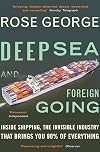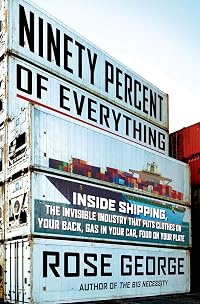
Deep Sea and Foreign Going: Inside Shipping, the Invisible Industry that Brings You 90% of Everything
by Rose George
On This Page
Description
Revealing the workings and dangers of freight shipping, the author sails from Rotterdam to Suez to Singapore to present an eye-opening glimpse into an overlooked world filled with suspect practices, dubious operators, and pirates.Tags
Recommendations































Member Recommendations
nessreader They're both about modern commercial shipping - in small boats with tiny illpaid crews in the stormy north seas (trawler) or in ginormous boats with tiny illpaid crews in the piratical pacific. Both dangerous worlds, and jobs outside of my awareness.

Member Reviews
This is the compelling and interesting story of how those big steel boxes, shipping containers, you see on trains and trucks make their way across the oceans.
George was given the unique opportunity to take passage on the Maersk Kendal on a voyage from Felixstowe, UK to Singapore. It’s a trip that took her to points of call in Europe, through the Suez Canal (dubbed by all crews passing through as the “Marlboro Canal” for the copious amounts of said cigarette passed out as bribes there), and through pirate infested waters.
The huge container ships are the product of a 1956 innovation, the standardized shipping container, which started to revolutionize shipping in the late 1960s. It reduced the percentage of an item’s price that show more represents shipping costs from 25 percent to 2.5 percent. It destroyed the influence of dockworkers. Whereas it would take days to unload cargo from even a medium size ship in pre-container days, even the largest container ship can be unloaded in less than a day. It also destroyed local jobs. It’s cheaper to ship fish caught off the coast of Scotland to China to have them filleted and ship them back rather than hire Scotsmen to do the filleting.
The crews of the container ships don’t know or care what are in the containers unless it’s toxic, flammable, or needs refrigeration.
Neither, for that matter, do port authorities. In the wake of 9/11, the US pushed an international protocol, the Secure Freight Initiative for cargo inspection. Implemented in 2007, it sought to inspect every container being received in the US. By 2013, it had managed, at best, five percent in Hong Kong. It still seems merely a security bureaucrat’s dream.
And sometimes the containers fall off the ship or have their contents pilfered in in port.
The ships themselves are crewed by small numbers of people with Filipinos being the predominant nationality. They work cheap – sometimes way cheaper than the official books maintained for the International Transport Worker’s Federation indicate. And they speak English. Attempts have been made to institute stripped down English dialects, Maritime English and Seaspeak, but they are little used.
That contributes to a sense of isolation among the multinational crews, not really alleviated by the onboard gyms, certainly not alleviated by the poor food. Crews, at least in 2013 (the situation seems to have improved lately), had no internet or phone access, their emails routed through the captain for transmission. They spend their off deck hours in their spartan furnished berths.
One of the narrative side trips George takes is to the Seafarer’s Center in Immingham, UK. It is one of many religious organizations tending to ships’ crews throughout the world. These days, in line with the general decline in church attendance, their church services are taken advantage of less than the cheap SIM cards, batteries, and warm clothing they provide. A popular item is cheap souvenirs for families back home, evidence of visits the seafarers never made. A crewmember on a container ship may spend as little as two hours in port after months at sea. A particularly poignant story is told of the crew of one ship who simply wanted, in their short time on land, to walk barefoot on grass for an hour. (For Maersk employees, there’s no drinking on ship or on shore.)
The sea is, of course, a hostile environment, and George discusses the various unpleasant things that can happen to the human body adrift in a lifeboat. The mariner code of honor – that those in peril are assisted no matter how much expense incurred in missed berthing slots or fuel or time – is fraying. Captain Glenn Wostenholme of the Maersk Kendal, a man with more than 40 years at sea, won a medal for rescuing part of the crew of a Thai cargo ship in 2007. Of the five ships in the area when a distress call was put out, one simply ignored it. Two said they would answer the call and didn’t.
There are few consequences for ignoring this code even though it is actually a legal obligation under an international convention. The legal environment international shipping exists in makes enforcing liability claims against it or labor regulations complicated. Ships fly “flags of convenience” (the Maersk Kendal has a vast cupboard of different flags) and are registered to various countries including some that have no connection to the sea at all. Mongolia is a popular country of registration along with Panama and Liberia. The shipowners may belong to a third country.
And this legal arrangement can not only screw crews over with rickety, unsafe ships and unanswered rescue pleas, companies have been known to simply abandon their crews in port with no money when they go bankrupt or determine they simply don’t want to run a ship anymore. Some stranded crews have been known to take to killing stray dogs for food.
And, of course, there are pirates, particularly Somali pirates at the time of this book. (The Somali piracy problem seems to have lessened in the years since with prosecutions, rare when it was written, being stepped up.) George spends some time with a multi-national force patrolling the vast “high risk area” extending from eastern Africa into the Indian Ocean for pirates.
George is markedly less sympathetic to the pirates than the military people and even Maersk Kendal’s crew are. She quotes fatuous articles from business magazines on the “entrepreneurial model” of Somali piracy which aims at securing hostages for ransom. The navies feel sorry for the Somalis they detain. (Rumors have that the Russian Navy simply blew up Somali pirate vessels along with their crew.) She talked with a man taken hostage by Somalians, and we hear of torture, bad food, and the terror of dealing every day with khat-chewing, gun-waving Somali. We also hear from a highly paid consultant on the intricacies of conducting ransom negotiations with pirates. No one, including George, seems to seriously entertain the idea of simply destroying known pirate bases in Somalia.
Besides tagging along with the pirate patrol, George takes us to a Massachusetts whale watching group to talk about the disruptive effects of maritime traffic, specifically the noise of ships’ propellers, on marine life. Ship’s crews generally like whales and dolphins and are happy to see them and slow their ships down to alleviate the ocean’s noise problem in particularly affected areas. Ship owners, of course, often have other ideas.
George occasionally reaches back into history for fascinating stories and facts. She does that with the lack of respect the merchant marine received in America and Britain during World War Two as well as her chapter on the miseries of being in a lifeboat.
In 1904, Andrew Furuseth, a labor organizer for seafarers, was threatened with jail. His reply was, go ahead, put him in jail. His cell would be bigger than his ship quarters, the food better, and the isolation less than what he would suffer at sea. Captain Wostenholme, near the end of his career, emails his employer,
“You can see how we are really thought of . . . Riffraff that no one really cares about, no matter the lip service paid to our safety and welfare by the likes of owners, flag states . . . We are mere chattels, a human resource, dispensable nonentities.”
George’s book is very slightly dated now but still a fascinating, well-presented account of a life that most of us are fortunate enough to avoid – even though we benefit from “that ninety percent of everything” it delivers to us. show less
George was given the unique opportunity to take passage on the Maersk Kendal on a voyage from Felixstowe, UK to Singapore. It’s a trip that took her to points of call in Europe, through the Suez Canal (dubbed by all crews passing through as the “Marlboro Canal” for the copious amounts of said cigarette passed out as bribes there), and through pirate infested waters.
The huge container ships are the product of a 1956 innovation, the standardized shipping container, which started to revolutionize shipping in the late 1960s. It reduced the percentage of an item’s price that show more represents shipping costs from 25 percent to 2.5 percent. It destroyed the influence of dockworkers. Whereas it would take days to unload cargo from even a medium size ship in pre-container days, even the largest container ship can be unloaded in less than a day. It also destroyed local jobs. It’s cheaper to ship fish caught off the coast of Scotland to China to have them filleted and ship them back rather than hire Scotsmen to do the filleting.
The crews of the container ships don’t know or care what are in the containers unless it’s toxic, flammable, or needs refrigeration.
Neither, for that matter, do port authorities. In the wake of 9/11, the US pushed an international protocol, the Secure Freight Initiative for cargo inspection. Implemented in 2007, it sought to inspect every container being received in the US. By 2013, it had managed, at best, five percent in Hong Kong. It still seems merely a security bureaucrat’s dream.
And sometimes the containers fall off the ship or have their contents pilfered in in port.
The ships themselves are crewed by small numbers of people with Filipinos being the predominant nationality. They work cheap – sometimes way cheaper than the official books maintained for the International Transport Worker’s Federation indicate. And they speak English. Attempts have been made to institute stripped down English dialects, Maritime English and Seaspeak, but they are little used.
That contributes to a sense of isolation among the multinational crews, not really alleviated by the onboard gyms, certainly not alleviated by the poor food. Crews, at least in 2013 (the situation seems to have improved lately), had no internet or phone access, their emails routed through the captain for transmission. They spend their off deck hours in their spartan furnished berths.
One of the narrative side trips George takes is to the Seafarer’s Center in Immingham, UK. It is one of many religious organizations tending to ships’ crews throughout the world. These days, in line with the general decline in church attendance, their church services are taken advantage of less than the cheap SIM cards, batteries, and warm clothing they provide. A popular item is cheap souvenirs for families back home, evidence of visits the seafarers never made. A crewmember on a container ship may spend as little as two hours in port after months at sea. A particularly poignant story is told of the crew of one ship who simply wanted, in their short time on land, to walk barefoot on grass for an hour. (For Maersk employees, there’s no drinking on ship or on shore.)
The sea is, of course, a hostile environment, and George discusses the various unpleasant things that can happen to the human body adrift in a lifeboat. The mariner code of honor – that those in peril are assisted no matter how much expense incurred in missed berthing slots or fuel or time – is fraying. Captain Glenn Wostenholme of the Maersk Kendal, a man with more than 40 years at sea, won a medal for rescuing part of the crew of a Thai cargo ship in 2007. Of the five ships in the area when a distress call was put out, one simply ignored it. Two said they would answer the call and didn’t.
There are few consequences for ignoring this code even though it is actually a legal obligation under an international convention. The legal environment international shipping exists in makes enforcing liability claims against it or labor regulations complicated. Ships fly “flags of convenience” (the Maersk Kendal has a vast cupboard of different flags) and are registered to various countries including some that have no connection to the sea at all. Mongolia is a popular country of registration along with Panama and Liberia. The shipowners may belong to a third country.
And this legal arrangement can not only screw crews over with rickety, unsafe ships and unanswered rescue pleas, companies have been known to simply abandon their crews in port with no money when they go bankrupt or determine they simply don’t want to run a ship anymore. Some stranded crews have been known to take to killing stray dogs for food.
And, of course, there are pirates, particularly Somali pirates at the time of this book. (The Somali piracy problem seems to have lessened in the years since with prosecutions, rare when it was written, being stepped up.) George spends some time with a multi-national force patrolling the vast “high risk area” extending from eastern Africa into the Indian Ocean for pirates.
George is markedly less sympathetic to the pirates than the military people and even Maersk Kendal’s crew are. She quotes fatuous articles from business magazines on the “entrepreneurial model” of Somali piracy which aims at securing hostages for ransom. The navies feel sorry for the Somalis they detain. (Rumors have that the Russian Navy simply blew up Somali pirate vessels along with their crew.) She talked with a man taken hostage by Somalians, and we hear of torture, bad food, and the terror of dealing every day with khat-chewing, gun-waving Somali. We also hear from a highly paid consultant on the intricacies of conducting ransom negotiations with pirates. No one, including George, seems to seriously entertain the idea of simply destroying known pirate bases in Somalia.
Besides tagging along with the pirate patrol, George takes us to a Massachusetts whale watching group to talk about the disruptive effects of maritime traffic, specifically the noise of ships’ propellers, on marine life. Ship’s crews generally like whales and dolphins and are happy to see them and slow their ships down to alleviate the ocean’s noise problem in particularly affected areas. Ship owners, of course, often have other ideas.
George occasionally reaches back into history for fascinating stories and facts. She does that with the lack of respect the merchant marine received in America and Britain during World War Two as well as her chapter on the miseries of being in a lifeboat.
In 1904, Andrew Furuseth, a labor organizer for seafarers, was threatened with jail. His reply was, go ahead, put him in jail. His cell would be bigger than his ship quarters, the food better, and the isolation less than what he would suffer at sea. Captain Wostenholme, near the end of his career, emails his employer,
“You can see how we are really thought of . . . Riffraff that no one really cares about, no matter the lip service paid to our safety and welfare by the likes of owners, flag states . . . We are mere chattels, a human resource, dispensable nonentities.”
George’s book is very slightly dated now but still a fascinating, well-presented account of a life that most of us are fortunate enough to avoid – even though we benefit from “that ninety percent of everything” it delivers to us. show less
 This review was written for LibraryThing Early Reviewers.
90% of everything moves by ship, but these days we barely think about shipping. It's just something that happens. Rose George has written an interesting book about the human experience of maritime shipping today, but one that I wish got a little more technical.
The book is structured around a journey from the UK to Singapore on the Maersk Kendal, a 300m containship capable of hauling almost 6500 standard contains or 75000 tons of cargo. Kendal is captained by a senior Brit with 40 years of maritime experience, and crewed by a multi-ethnic group of 20 men and one woman (the cook), mostly Filipino, but with Indians, Ukrainians, and Chinese as well. The first line on being a sailor on one of these ships is "don't". Pay is miserable, show more conditions are worse, with long hours, bad food, and a very real risk of death.
While tradition has the Captain as sole authority at sea, these days he's the man who responsible for adjudicating costs and risks between the ship, its owners, its management charter, the sailor's commissioning agents, the cargo owner, insurers, the flag registry, etc, with many of these groups hidden behind layers of international shell companies. For the average sailor turning a wrench, this means that a job with 14 hour days, no breaks, no friends, and sub-US minimum wages can easily turn into one where you haven't been paid in months, the shipping company is demanding that you set sail in an unsafe vessel, and the people who have the power to literally save your life are insulated by so many layers of lawyers they're untouchable.
George spices up the rather humdrum voyage with pirate hunting in Somalia, work at a sailor's mission in the UK, whale biologists attempting to reduce the environmental impacts of shipping, and a history of shipwrecks and survival in the open sea. She's a skilled non-fiction writer. But what drops the book a star for me is that George can't seem to muster up any enthusiasm for the stuff of shipping. Containization and computerized cargo management have revolutionized logistics. The ships are the largest mobile objects ever created by man. But given an opportunity to go down into one of the massive maneuvering thrusters, George demurs: It's too dark, too cramped, too noisy, too clammy.
Please. You're writing 300 pages of shipping. At least see the whole ship. show less
The book is structured around a journey from the UK to Singapore on the Maersk Kendal, a 300m containship capable of hauling almost 6500 standard contains or 75000 tons of cargo. Kendal is captained by a senior Brit with 40 years of maritime experience, and crewed by a multi-ethnic group of 20 men and one woman (the cook), mostly Filipino, but with Indians, Ukrainians, and Chinese as well. The first line on being a sailor on one of these ships is "don't". Pay is miserable, show more conditions are worse, with long hours, bad food, and a very real risk of death.
While tradition has the Captain as sole authority at sea, these days he's the man who responsible for adjudicating costs and risks between the ship, its owners, its management charter, the sailor's commissioning agents, the cargo owner, insurers, the flag registry, etc, with many of these groups hidden behind layers of international shell companies. For the average sailor turning a wrench, this means that a job with 14 hour days, no breaks, no friends, and sub-US minimum wages can easily turn into one where you haven't been paid in months, the shipping company is demanding that you set sail in an unsafe vessel, and the people who have the power to literally save your life are insulated by so many layers of lawyers they're untouchable.
George spices up the rather humdrum voyage with pirate hunting in Somalia, work at a sailor's mission in the UK, whale biologists attempting to reduce the environmental impacts of shipping, and a history of shipwrecks and survival in the open sea. She's a skilled non-fiction writer. But what drops the book a star for me is that George can't seem to muster up any enthusiasm for the stuff of shipping. Containization and computerized cargo management have revolutionized logistics. The ships are the largest mobile objects ever created by man. But given an opportunity to go down into one of the massive maneuvering thrusters, George demurs: It's too dark, too cramped, too noisy, too clammy.
Please. You're writing 300 pages of shipping. At least see the whole ship. show less
I found myself completely absorbed by much of this book, which is a journalist's account of a trip on a Maersk container ship and her review of the workings of the shipping industry. Your mileage may vary, but I was fascinated (and at times disgusted) by the commercial realities and the human stories - from the impact of flagging out to the economics of piracy and the intimate loneliness of modern seafaring life.
I suspect I will reread this; I certainly found plenty of food for thought (not least in the closing chapters on environmental impact) and was touched by the chapter on the church's involvement to try and reassure seafarers that somebody out there cares in the face of elaborate corporate structures that remove any accountability show more for ship owners or flag states and leave the sailors literally at sea with little protection and less oversight.
Well written and unexpectedly engaging. show less
I suspect I will reread this; I certainly found plenty of food for thought (not least in the closing chapters on environmental impact) and was touched by the chapter on the church's involvement to try and reassure seafarers that somebody out there cares in the face of elaborate corporate structures that remove any accountability show more for ship owners or flag states and leave the sailors literally at sea with little protection and less oversight.
Well written and unexpectedly engaging. show less
I love ships. I remember looking at a silhouette picture of an old man in my ChildCraft set, his hand on the shoulders of a young boy, looking out over the sea at a three-masted schooner. The image still creates a frisson of nostalgia for something I never really experienced but always wanted. Some of that interest stemmed from four voyages on transatlantic liners to and from Europe in the fifties and sixties when I was younger, and I’m sure that my view was unrealistic and nonrepresentational as I watched movies and enjoyed the sumptuous meals. (We will NOT discuss the bouts of seasickness that preceded succeeding pleasurable days.)
I have zero interest in taking a cruise since they seem to be simply resorts with no destination and show more gambling dens. And the idea of dressing for dinner? And too many people! Geesh. I want to GO someplace and watch the business of shipping, to see how things work.. I’ve read accounts of traveling on freighters (a list is below of some related books) and would still like to try it some day (the mal-de-mer does give me pause, however.) This book is the next best thing.
This book does tend to take the shine off the freighter business. One thing I did not know was that while shipping is a relatively green form of transportation (well, except for the particulates), it generates considerable *noise* pollution. Supertankers can be heard coming through the sea a day before they arrive at any given location which drives away most sea life. Oil spills have been greatly reduced, however. Between 1972 and 1981, there were 223 spills. Over the last decade there were 63. An industry publicist reported, “More oil is poured down the drain by mechanics changing their engine oil than is spilled by the world’s fleet of oil tankers.”
The industry, itself, is dangerous, poorly paid (by our standards - not theirs) , and virtually unregulated, with ships being flagged under whatever country has the lowest taxes and the fewest inspectors. Double bookkeeping and non-payment of wages is common and criminal actions are impossible to prosecute. Where does a Croatian sailor attacked by a Filipino mate file a complaint? Cell phones are useless and there is no private internet so reporting incidents or getting assistance is impossible. The captain is God and Supreme Magistrate all rolled into one. “Buy your fair-trade coffee beans by all means, but don’t assume fair-trade principles govern the conditions of the men who fetch it to you. You would be mistaken.”
Piracy is not the glorified practice of movies and childhood. (Harvard Business School chose Somali piracy as the “business model of the year” in 2010.) The author spent a week on an EU counter-piracy patrol vessel which reduced the number of incidents from 200 in 2009 to only thirteen in 2013, but ships passing through the Gulf of Aden (and more than half do to get to the Suez canal) still must hide out in safe rooms on board if fighting them off with firehoses fails, while awaiting naval rescue. Crews are like prisoners even while not under attack, live basically on two decks. (Samuel Johnson famously wrote that “being on a ship is like being in jail, with the chance of being drowned.” Yet “When the academic Erol Kahveci surveyed British prison literature while researching conditions at sea, he found that “the provision of leisure, recreation, religious service and communication facilities are better in U.K. prisons than … on many ships our respondents worked aboard.” ) Mostly we ignore, or chose to remain ignorant, of seafarers. “ in 2011, 544 seafarers [were] being held hostage by Somali pirates. I try to translate that into other transport industries; 544 bus drivers, or 544 cabdrivers, or nearly two jumbo jets of passengers, mutilated and tortured for years. When thirty-three Chilean miners were trapped underground for sixty-nine days in 2010, there was a media frenzy. Fifteen hundred journalists went to Chile and, even now, the BBC news website maintains a special page on their drama, long after its conclusion. The twenty-four men on MV Iceberg held captive for a thousand days were given no special page and nothing much more than silence and disregard.”
The company she sails with is Maersk, a company just slightly smaller than Microsoft yet one that hardly appears on anyones radar even though it accounts for 20% of Denmark’s GDP. The ship is the Kendall. She uses that voyage as a springboard to discuss the impact of shipping on the ecology, piracy, anti-piracy and the business of shipping. Chapters focus on different issues: poor working conditions, a trip on one of the patrol boats, a pirate’s trial leading to a discussion of the different perspectives on Somalian piracy (she is not at all sympathetic,) and the huge amount of tonnage lost at sea and what the effect might be of floating Nikes and sunken computers (not good.)
The economics of shipping are rather mind-boggling. Would you have guessed that it’s cheaper to ship fish to China from Scotland to be filleted and processed than to pay Scottish workers to do it? Shipping blouse from China to the U.S. coast less than one cent, even while the large container ships burn thousand of dollars of bunker fuel (like tar and about as dirty) per hour. Containers have made loading and unloading so fast that sailors and officers have no time in port to relax.
Security is a huge issue in her mind. Only a minute portion of containers are ever inspected and they are used to smuggle all sorts of goods and probably weapons. “ One of the crew tells me he can overcome the blankness of the boxes, although that’s not how he phrases it. He can break a container seal and reseal it convincingly, although I suspect his intent would be for monetary, not intellectual, gain. This skill is more common than it should be. The U.S. Government Accountability Office (GAO) reported on a U.S. Customs and Border Patrol study that “existing container seals provided inadequate security against physical intrusion.” Criminals who don’t know how to reseal a seal could do an adequate workaround by taking the door off. Much of modern security rests on theater and assumption. That applies to airport lines, questionable laws about liquids, and the supposed safety of twenty million containers containing who knows what. Who does know? Only 1 to 3 percent of containers in Europe are physically inspected.”
Really interesting book. BUT, I still want to take a voyage on a freighter.
Recommended reading:
https://www.goodreads.com/review/show/154066642 (anything by Max Hardberger)
https://www.goodreads.com/review/show/53948010
https://www.goodreads.com/review/show/235415969
https://www.goodreads.com/review/show/37679449 show less
I have zero interest in taking a cruise since they seem to be simply resorts with no destination and show more gambling dens. And the idea of dressing for dinner? And too many people! Geesh. I want to GO someplace and watch the business of shipping, to see how things work.. I’ve read accounts of traveling on freighters (a list is below of some related books) and would still like to try it some day (the mal-de-mer does give me pause, however.) This book is the next best thing.
This book does tend to take the shine off the freighter business. One thing I did not know was that while shipping is a relatively green form of transportation (well, except for the particulates), it generates considerable *noise* pollution. Supertankers can be heard coming through the sea a day before they arrive at any given location which drives away most sea life. Oil spills have been greatly reduced, however. Between 1972 and 1981, there were 223 spills. Over the last decade there were 63. An industry publicist reported, “More oil is poured down the drain by mechanics changing their engine oil than is spilled by the world’s fleet of oil tankers.”
The industry, itself, is dangerous, poorly paid (by our standards - not theirs) , and virtually unregulated, with ships being flagged under whatever country has the lowest taxes and the fewest inspectors. Double bookkeeping and non-payment of wages is common and criminal actions are impossible to prosecute. Where does a Croatian sailor attacked by a Filipino mate file a complaint? Cell phones are useless and there is no private internet so reporting incidents or getting assistance is impossible. The captain is God and Supreme Magistrate all rolled into one. “Buy your fair-trade coffee beans by all means, but don’t assume fair-trade principles govern the conditions of the men who fetch it to you. You would be mistaken.”
Piracy is not the glorified practice of movies and childhood. (Harvard Business School chose Somali piracy as the “business model of the year” in 2010.) The author spent a week on an EU counter-piracy patrol vessel which reduced the number of incidents from 200 in 2009 to only thirteen in 2013, but ships passing through the Gulf of Aden (and more than half do to get to the Suez canal) still must hide out in safe rooms on board if fighting them off with firehoses fails, while awaiting naval rescue. Crews are like prisoners even while not under attack, live basically on two decks. (Samuel Johnson famously wrote that “being on a ship is like being in jail, with the chance of being drowned.” Yet “When the academic Erol Kahveci surveyed British prison literature while researching conditions at sea, he found that “the provision of leisure, recreation, religious service and communication facilities are better in U.K. prisons than … on many ships our respondents worked aboard.” ) Mostly we ignore, or chose to remain ignorant, of seafarers. “ in 2011, 544 seafarers [were] being held hostage by Somali pirates. I try to translate that into other transport industries; 544 bus drivers, or 544 cabdrivers, or nearly two jumbo jets of passengers, mutilated and tortured for years. When thirty-three Chilean miners were trapped underground for sixty-nine days in 2010, there was a media frenzy. Fifteen hundred journalists went to Chile and, even now, the BBC news website maintains a special page on their drama, long after its conclusion. The twenty-four men on MV Iceberg held captive for a thousand days were given no special page and nothing much more than silence and disregard.”
The company she sails with is Maersk, a company just slightly smaller than Microsoft yet one that hardly appears on anyones radar even though it accounts for 20% of Denmark’s GDP. The ship is the Kendall. She uses that voyage as a springboard to discuss the impact of shipping on the ecology, piracy, anti-piracy and the business of shipping. Chapters focus on different issues: poor working conditions, a trip on one of the patrol boats, a pirate’s trial leading to a discussion of the different perspectives on Somalian piracy (she is not at all sympathetic,) and the huge amount of tonnage lost at sea and what the effect might be of floating Nikes and sunken computers (not good.)
The economics of shipping are rather mind-boggling. Would you have guessed that it’s cheaper to ship fish to China from Scotland to be filleted and processed than to pay Scottish workers to do it? Shipping blouse from China to the U.S. coast less than one cent, even while the large container ships burn thousand of dollars of bunker fuel (like tar and about as dirty) per hour. Containers have made loading and unloading so fast that sailors and officers have no time in port to relax.
Security is a huge issue in her mind. Only a minute portion of containers are ever inspected and they are used to smuggle all sorts of goods and probably weapons. “ One of the crew tells me he can overcome the blankness of the boxes, although that’s not how he phrases it. He can break a container seal and reseal it convincingly, although I suspect his intent would be for monetary, not intellectual, gain. This skill is more common than it should be. The U.S. Government Accountability Office (GAO) reported on a U.S. Customs and Border Patrol study that “existing container seals provided inadequate security against physical intrusion.” Criminals who don’t know how to reseal a seal could do an adequate workaround by taking the door off. Much of modern security rests on theater and assumption. That applies to airport lines, questionable laws about liquids, and the supposed safety of twenty million containers containing who knows what. Who does know? Only 1 to 3 percent of containers in Europe are physically inspected.”
Really interesting book. BUT, I still want to take a voyage on a freighter.
Recommended reading:
https://www.goodreads.com/review/show/154066642 (anything by Max Hardberger)
https://www.goodreads.com/review/show/53948010
https://www.goodreads.com/review/show/235415969
https://www.goodreads.com/review/show/37679449 show less
I've decided to add the merchant marine to the list of industries where I'd rather not work. Shipping stuff by sea has become incredibly cheap, and the quality of life on board container ships has suffered as their owners have looked to cut costs as much as possible.
This is combined with the unethical but totally legal practice of choosing your own country of origin (with most companies choosing the ones with the least cost and/or oversight), which leaves the crew at the mercy of uncaring legal systems when they're stiffed by their employers.
Turnaround times while in port have shortened to less than a day, meaning that shore leave is short when the crew gets any at all. Maersk (and other companies) forbids families (due to piracy), show more drinking (for obvious reasons), and plenty of other things that would make a seafaring life less monotonous.
I knew most of this before reading the book, but I was happy to see it fleshed out.
If I enjoyed the book, why'd I give it three stars? The content felt padded out. The journey itself could have been a long article. The piracy chapter was way too long, as were some of the other non-narrative portions of the book. It was worth my $2, but it would have benefited from substantial trimming. show less
This is combined with the unethical but totally legal practice of choosing your own country of origin (with most companies choosing the ones with the least cost and/or oversight), which leaves the crew at the mercy of uncaring legal systems when they're stiffed by their employers.
Turnaround times while in port have shortened to less than a day, meaning that shore leave is short when the crew gets any at all. Maersk (and other companies) forbids families (due to piracy), show more drinking (for obvious reasons), and plenty of other things that would make a seafaring life less monotonous.
I knew most of this before reading the book, but I was happy to see it fleshed out.
If I enjoyed the book, why'd I give it three stars? The content felt padded out. The journey itself could have been a long article. The piracy chapter was way too long, as were some of the other non-narrative portions of the book. It was worth my $2, but it would have benefited from substantial trimming. show less
This is a fascinating book. Difficult to categorise as it is so broad in scope, covering travel on a container ship from Felixstowe to Singapore, the life of the seafarer, piracy, law of the sea, ecology and everything in between. The writing is exceptionally good, always finding the right telling vignette. The quality of writing and the theme of the sea unify what could otherwise seem a mish-mash of subjects. Definitely a 100% recommendation.
Not so much "inside shipping" as the author staving off the crushing boredom of her 9,000 mile voyage by writing about whales, old shipwrecks and piracy law. I would have appreciated more colour and insight on the Filipino, Romanian, Chinese etc. crew she shared the voyage with. All we really come to understand about them is they're doing it for the money, which isn't very interesting.
Members
- Recently Added By
Lists

Books reviewed in Nature
11 works; 1 member
Author Information

3+ Works 1,221 Members
Awards and Honors
Awards
Distinctions
Notable Lists
Common Knowledge
- Canonical title
- Deep Sea and Foreign Going: Inside Shipping, the Invisible Industry that Brings You 90% of Everything
- Alternate titles
- Ninety Percent of Everything: Inside Shipping, the Invisible Industry That Puts Clothes on Your Back, Gas in Your Car and Food on Your Plate
- Original publication date
- 2013
Classifications
- Genres
- Nonfiction, Economics, General Nonfiction, Business, Travel
- DDC/MDS
- 388.044 — Society, government, & culture Commerce, communications & transportation regulations Transportation General
- LCC
- HE571 .G465 — Social sciences Transportation and communications Transportation and communications Water transportation Shipping
- BISAC
Statistics
- Members
- 580
- Popularity
- 50,688
- Reviews
- 34
- Rating
- (3.82)
- Languages
- English, Spanish
- Media
- Paper, Audiobook, Ebook
- ISBNs
- 10
- UPCs
- 1
- ASINs
- 5