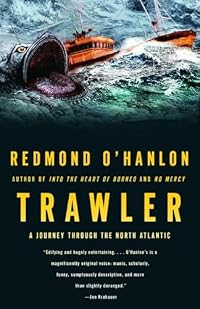
Trawler: A Journey Through the North Atlantic
by Redmond O'Hanlon
On This Page
Description
The author describes his odyssey aboard a deep-sea fishing trawler from the northern coast of Scotland and his adventures with the ship's captain and five-man crew through the North Atlantic at the height of a terrifying storm.Tags
Recommendations

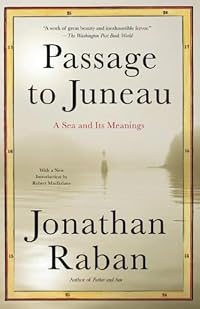
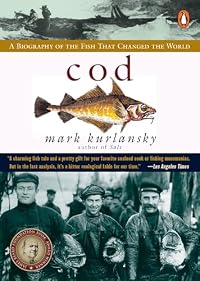




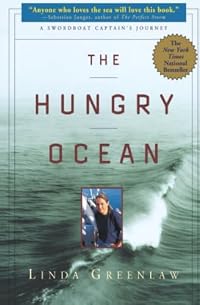

























Member Recommendations
Deep Sea and Foreign Going: Inside Shipping, the Invisible Industry that Brings You 90% of Everything by Rose George
nessreader The rigors of modern commercial shipping. Trawler is about a small, small-crewed ship facing the storms of the north atlantic. Going is about a ginormous, small-crewed vessel facing pirates in the pacific. Terrible conditions, terrible wages, invisible to outsiders.
The Last Fish Tale: The Fate of the Atlantic and Survival in Gloucester, America's Oldest Fishing Port and Most Original Town by Mark Kurlansky
Othemts Stories of the world's hardest and most dangerous job: commercial fishing.


Member Reviews
Being the Walter Mitty that I am, I thought it would always be fun to sail through a Force 12 storm (but only on an aircraft carrier or battleship or maybe the QM 2 being also a major chicken). Well, O'Hanlon had the same wish only he wanted to experience it on a fishing trawler in the North Sea. He was invited on the Norlantean by a fishing biologist friend. Jason, the captain, is very good at what he does -- he has to be since he took out a 2,000,000 pound loan to refit the ship. Talk about pressure to perform. Lots of really interesting details such as most of the ocean (99%) remains unexplored and is below 2 km deep. This is a deep trawling vessel so many of the fish that get pulled up are interesting, if not bizarre, something that show more truly excites O'Hanlon's friend.
O'Hanlon rather vividly describes what it is like to get seasick (no thanks, I remember being seasick - it's a state where you wish you would die, but unfortunately also realize you won't.) Not to mention, the terror of that 1 in 100,000 "lump," what we might call a rogue wave that towers about the normal huge waves in a storm. The crew, in the meantime, during the harsh weather is gutting fish with razor sharp knives.
I would have given this book more stars had he not spent so much time on the idiosyncratic characters. I prefer more detail about the technology and the social and cultural issues faced by the crew. show less
O'Hanlon rather vividly describes what it is like to get seasick (no thanks, I remember being seasick - it's a state where you wish you would die, but unfortunately also realize you won't.) Not to mention, the terror of that 1 in 100,000 "lump," what we might call a rogue wave that towers about the normal huge waves in a storm. The crew, in the meantime, during the harsh weather is gutting fish with razor sharp knives.
I would have given this book more stars had he not spent so much time on the idiosyncratic characters. I prefer more detail about the technology and the social and cultural issues faced by the crew. show less
Redmond O'Hanlon is used to hiking through rain forests in the Congo, Borneo or Brazil, but when personal circumstances require him to stay closer to home, he comes up with the idea of writing about the wild places in Britain. Most people would decide that meant hiking in the Pennines or walking the length of the Ridgeway, but to O'Hanlon wild entailed traveling through the North Atlantic. On a deep sea fishing trawler. In January. While a hurricane raged.
Trawlermen are well paid, not just because of the very real dangers they face, but because a fishing trip lasts two or three weeks in which each man will sleep only a handful of hours, while performing dangerous and arduous tasks in very cold weather. O'Hanlon, in his fifties, didn't show more keep up with the younger men, but he did stretch himself to his limit, gutting fish and packing them in ice alongside the others. He was there to help a graduate student in marine biology working on his dissertation, which made for the most interesting parts of the book. Luke had an exhaustive knowledge of the geography and zoology of the North Atlantic, and his monologues and explanations made for riveting reading. Also compelling were the personal lives of the trawlermen, whose working hours and conditions made it difficult for them to maintain relationships.
The weakness of the book, where it bogged down for me, were when O'Hanlon was monologuing. Extreme exhaustion causes all the men to talk without filters and while the others might go on and on about how working affected their marriages, the wonders of the Wyville Thomson Ridge or the defense mechanisms of the hagfish, this was welcome in a book about the North Atlantic. But O'Hanlon's areas of expertise; native customs of the Congo or famous naturalists he has known, are out of place and took me out of what was going on on the Norlantean. On the other hand, O'Hanlon did a beautiful job of describing what utter exhaustion felt like as well as the fear and violence of a force 12 hurricane. show less
Trawlermen are well paid, not just because of the very real dangers they face, but because a fishing trip lasts two or three weeks in which each man will sleep only a handful of hours, while performing dangerous and arduous tasks in very cold weather. O'Hanlon, in his fifties, didn't show more keep up with the younger men, but he did stretch himself to his limit, gutting fish and packing them in ice alongside the others. He was there to help a graduate student in marine biology working on his dissertation, which made for the most interesting parts of the book. Luke had an exhaustive knowledge of the geography and zoology of the North Atlantic, and his monologues and explanations made for riveting reading. Also compelling were the personal lives of the trawlermen, whose working hours and conditions made it difficult for them to maintain relationships.
The weakness of the book, where it bogged down for me, were when O'Hanlon was monologuing. Extreme exhaustion causes all the men to talk without filters and while the others might go on and on about how working affected their marriages, the wonders of the Wyville Thomson Ridge or the defense mechanisms of the hagfish, this was welcome in a book about the North Atlantic. But O'Hanlon's areas of expertise; native customs of the Congo or famous naturalists he has known, are out of place and took me out of what was going on on the Norlantean. On the other hand, O'Hanlon did a beautiful job of describing what utter exhaustion felt like as well as the fear and violence of a force 12 hurricane. show less
Each time I (re)read this book it terrifies me. As an ex-seaman I have no difficulty in recalling the necessary details, sensations and vision to “be there” with this fine scientific eccentric and it sincerely scares me. I once narrowly escaped being made a Fleet Auxiliary Officer that would have entailed duties in the very seas O’Hanlon describes – but even back then, forty years ago, I knew enough of “The Fishing” to quickly escape from that particular opportunity!
The book is best described in one of its jacket blurbs – unusually brilliant – “Trawler reads like The Perfect Storm meets Monty Python".
Because of true Sleep Deprivation, a technique known to the author from his training and exploring with the SAS, the show more on-board conversations of all the crew soon degenerate into pure ‘stream of consciousness’, the ‘crack-up’. But the best cracking is between Redmond, our Mad Scientists and a younger courageous Lifeboatman and Marine Biologist studying for his PhD who unwittingly undertakes to become Redmond’s teacher. Amongst the hilarity there is some true science to be gleaned, about fish, yes of course but from Redmond’s other adventures (Into the Heart of Borneo, Congo Journey) the key to the strength of the Spartans Army through homosexual love, the role of serotonin in the high rate of young American suicides, and how the League of Nations polio eradication efforts may have led to accidental spread of HIV by developing the vaccine locally in green monkeys instead of using the European stream, grown in cattle.
There is a moment of potential embarrassment for LibraryThing members when the two scientists, in mid rave, in mid storm, discuss the ‘bookish’ O’Hanlon. He is accused by Luke, the biologist, of being ‘the kind of freak’ who smells the inside of any new book. Freak!?
The sheer horrific hardships of the Trawlermen's life beggar belief, working conditions none of us would casually accept and even fewer, tolerate. The sleep deprivation is extreme and suffered each trip as the nets are shot and recovered and the fish gutted, sorted and boxed down into ice. Storms – terrifying storms in little ships – cold, lack of sleep, comfort and family, often poor wages, high risk of death .. it is still today the most deadly of all professions.
We must eat more fish, if we have not already allowed commercial meal factories to totally deplete our oceans. We must help “The Fishing’ afford safer and better conditions for these extreme, brave, hunters. This is one of the very best books on fishing, and fishermen.. an exciting read. show less
The book is best described in one of its jacket blurbs – unusually brilliant – “Trawler reads like The Perfect Storm meets Monty Python".
Because of true Sleep Deprivation, a technique known to the author from his training and exploring with the SAS, the show more on-board conversations of all the crew soon degenerate into pure ‘stream of consciousness’, the ‘crack-up’. But the best cracking is between Redmond, our Mad Scientists and a younger courageous Lifeboatman and Marine Biologist studying for his PhD who unwittingly undertakes to become Redmond’s teacher. Amongst the hilarity there is some true science to be gleaned, about fish, yes of course but from Redmond’s other adventures (Into the Heart of Borneo, Congo Journey) the key to the strength of the Spartans Army through homosexual love, the role of serotonin in the high rate of young American suicides, and how the League of Nations polio eradication efforts may have led to accidental spread of HIV by developing the vaccine locally in green monkeys instead of using the European stream, grown in cattle.
There is a moment of potential embarrassment for LibraryThing members when the two scientists, in mid rave, in mid storm, discuss the ‘bookish’ O’Hanlon. He is accused by Luke, the biologist, of being ‘the kind of freak’ who smells the inside of any new book. Freak!?
The sheer horrific hardships of the Trawlermen's life beggar belief, working conditions none of us would casually accept and even fewer, tolerate. The sleep deprivation is extreme and suffered each trip as the nets are shot and recovered and the fish gutted, sorted and boxed down into ice. Storms – terrifying storms in little ships – cold, lack of sleep, comfort and family, often poor wages, high risk of death .. it is still today the most deadly of all professions.
We must eat more fish, if we have not already allowed commercial meal factories to totally deplete our oceans. We must help “The Fishing’ afford safer and better conditions for these extreme, brave, hunters. This is one of the very best books on fishing, and fishermen.. an exciting read. show less
Trawler (2003) by Redmond O'Hanlon is one of those books where a novice goes on board a commercial fishing boat to see how hard life is for the trawlermen and finds it hard in ways one never imagined. No big surprise there, but what O'Hanlon does in this book is write almost entirely in dialogue rather than description. This means that O'Hanlon either brought on board a recording device or has a photographic memory for conversation. Either way it's remarkable considering that O'Hanlon spends much of the journey seasick, sleep-deprived, and unable to stay on his feet as the trawler Norlantean heads into a Force 12 hurricane.
Much of O'Hanlon's conversation is with Luke the marine biologist conducting field studies on board the trawler. show more But there is also the captain Jason, revered by his crew, and cast of tough fishermen, sometimes tight-lipped and sometimes revelatory in an almost hallucinatory way. The discussion varies from oceanography to ichthyology, superstition and religion, masculinity to mortality, and sometimes just plain crudity. O'Hanlon seems to make a pest of himself and gets a good bit of jibing in return.
This book not quite what I'd imagined it would be but it's a good, solid book. show less
Much of O'Hanlon's conversation is with Luke the marine biologist conducting field studies on board the trawler. show more But there is also the captain Jason, revered by his crew, and cast of tough fishermen, sometimes tight-lipped and sometimes revelatory in an almost hallucinatory way. The discussion varies from oceanography to ichthyology, superstition and religion, masculinity to mortality, and sometimes just plain crudity. O'Hanlon seems to make a pest of himself and gets a good bit of jibing in return.
This book not quite what I'd imagined it would be but it's a good, solid book. show less
O'Hanlon writes with a marvelous mix of goofy humor, knowledge and wonder at the natural world. Trawler gave me a look at commercial fishing and a huge appreciation for the people that bring me my seafood. I can't imagine writing this book much less doing the job for real. Damn hard way to make a living.
More testosterone than you'd think would fit on a page.
Exhausting to read, trying portray sleep deprivation via the device of runon sentence. I wanted to know how it felt to work there, and he told me, and I wanted to know a layperson take on the fishery industry, but he was still on at the runon sentence of horror, + I wanted to know about the background of the trawlermen, but we were all still remorselessly immersed in Redmond's psyche.
I am dying to know what his shipmates made of the eventual book.
Exhausting to read, trying portray sleep deprivation via the device of runon sentence. I wanted to know how it felt to work there, and he told me, and I wanted to know a layperson take on the fishery industry, but he was still on at the runon sentence of horror, + I wanted to know about the background of the trawlermen, but we were all still remorselessly immersed in Redmond's psyche.
I am dying to know what his shipmates made of the eventual book.
The book follows the author as he braves Force-12 conditions to document life on a trawler fishing off the north of Scotland. The seas in this area present some of the roughest conditions across the globe due to colliding currents and Arctic winds.
I have to say that I really struggled with this book. The setting for the novel would usually lend itself to a story that I'd love. However, O'Hanlon writes in such a unique way that it can be tough going at times. The book is made up of huge slabs of meandering dialogue that are often nonsensical, reflecting the crew's sleep deprived state. While it's effective in representing the psyche of the crew and what they regularly have to push themselves through, it also means that you learn little show more of the desires, motivations and history of the crew. I can recall three or four memorable exchanges. For a book of near 350 pages, that's little reward. show less
I have to say that I really struggled with this book. The setting for the novel would usually lend itself to a story that I'd love. However, O'Hanlon writes in such a unique way that it can be tough going at times. The book is made up of huge slabs of meandering dialogue that are often nonsensical, reflecting the crew's sleep deprived state. While it's effective in representing the psyche of the crew and what they regularly have to push themselves through, it also means that you learn little show more of the desires, motivations and history of the crew. I can recall three or four memorable exchanges. For a book of near 350 pages, that's little reward. show less
Members
- Recently Added By
Published Reviews
O'Hanlon's writing is as evocative as ever, his gift for instant characterisation as finely tuned. And, as one would expect, there are some very funny and touching passages here, along with several of great beauty - he is the only writer I can think of who would describe the shape of a boat as being as "pleasing as a buttock". But without a foil - a fall guy - to bounce jokes off and with show more little in the way of incident to get his comic teeth stuck into, there simply isn't enough to drive the narrative forward - especially when there's no real objective to the trip. For all his efforts, the end result feels disappointingly becalmed. show less
added by John_Vaughan
For the crew, apart from having a passenger, it was an otherwise normal winter fishing trip.
Fishermen will already be familiar with the activities involved in finding, processing and storing the catch, but particularly for the general reader, the wealth of detailed information about the machinery, electronics and technicalities of how it is all done, makes for an uneven read. This very show more personal account of a hair-raising trip will appeal to the many Redmond O’Hanlon enthusiasts. For everyone, however, it gives an opportunity to experience the perils of fishing in winter from the safety of an armchair. show less
Fishermen will already be familiar with the activities involved in finding, processing and storing the catch, but particularly for the general reader, the wealth of detailed information about the machinery, electronics and technicalities of how it is all done, makes for an uneven read. This very show more personal account of a hair-raising trip will appeal to the many Redmond O’Hanlon enthusiasts. For everyone, however, it gives an opportunity to experience the perils of fishing in winter from the safety of an armchair. show less
added by John_Vaughan
Lists

Best of Travel Narratives
142 works; 28 members

Best Books on Fisheries, Fishing Fleets and Fish
42 works; 3 members
Author Information

16+ Works 2,938 Members
Redmond O'Hanlon was the Natural History editor of The Times Literary Supplement.
Awards and Honors
Awards
Distinctions
Series
Belongs to Publisher Series
Gallimard, Folio (5249)
Common Knowledge
- Canonical title*
- Atlantique Nord
- Original title
- Trawler
- People/Characters*
- Redmond O'Hanlon
- Important places
- Atlantic Ocean; North Atlantic Ocean
*Some information comes from Common Knowledge in other languages. Click "Edit" for more information.
Classifications
- Genres
- Travel, Nonfiction, Hunting and Fishing, Sports and Leisure, General Nonfiction, Science & Nature, Biography & Memoir
- DDC/MDS
- 910 — History & geography Geography & travel modified standard subdivisions of Geography and travel
- LCC
- G540 .O36 — Geography, Anthropology and Recreation Geography (General) Seafaring life, ocean travel, etc.
- BISAC
Statistics
- Members
- 477
- Popularity
- 63,372
- Reviews
- 17
- Rating
- (3.56)
- Languages
- 5 — Dutch, English, French, German, Norwegian (Bokmål)
- Media
- Paper, Audiobook, Ebook
- ISBNs
- 17
- ASINs
- 3