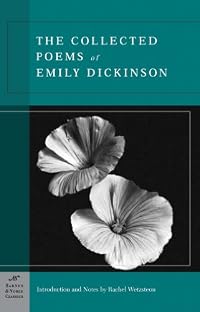
The Collected Poems of Emily Dickinson
by Emily Dickinson 
On This Page
Description
It is here, in "The Collected Poems of Emily Dickinson", that we witness Dickson's singular poetic depth and range of style. Collected are the first three series of her posthumous publishing career coming out respectively in 1890, 1891, and 1896. The myth that surrounds Dickinson's life is enhanced by the ethereal quality of her poetry. With the coming of New Criticism in the 1930's and 40's, Dickinson experienced unprecedented posthumous acclaim, solidifying her place in American letters. show more Dickinson's idiom is as varied as her meter, and her unconventional use of punctuation, metaphor, and image make her an innovator of the lyric akin to many of the early modernists. These poems examine love, death, and nature with an effortless yet complex tone and voice. Now one of the most read and admired American poets, Dickinson's poetry continues to resonate with readers. show lessTags
Recommendations









Member Reviews
Summary: A republication of Dickinson’s poems as first published in three series shortly after her death.
Thomas Wentworth Higginson, a literary scholar, received four poems from a women in Amherst in 1862. He returned them but kept in touch with Emily Dickinson. She continued to correspond and write poetry but never published during her lifetime. After her death in 1886, Dickinson’s sister found a box containing hundreds of her poems and thought them worthy of publication. She sought out Mabel Loomis Todd, the wife of a local professor who sought the help of Higginson. He edited her work, dealing with issues of rhyme, metre, line arrangements, and dialect. The two published a first series in 1890 and a second in 1891. Mabel Loomis show more Todd published a third series on her own in 1896.
This collection is based on those works but is not exhaustive. It follows four categories from the original editions: Life, Love, Nature, and Time and Eternity. It includes prefaces from each of the three series and a facsimile of “Renunciation” in Dickinson’s script from the first series. And it also includes artwork from the original publications. However it does not give indications of which poems were included in each series.
I don’t feel adept enough in poetry to offer a critical review of someone of Dickinson’s stature. So I will highlight poems from each section I particularly noticed. Under “Life,” the poems are focused on Dickinson’s observations of life, which are broad despite her secluded existence. Poem VI could be a motto with its lines “If I can stop one heart from breaking,/I shall not live in vain;.” “Hope, 1” has the memorable image of “Hope is the thing with feathers.” Finally, in an age where faith was highly prized, her “Lost Faith” observes that “To lose one’s faith surpasses/The loss of an estate.”
The poems on “Love” cover the various forms of love. “Proof” speaks of the love of God proven on Calvary. “The Lovers” captures her observations of “rosey” cheeks of two young people and staggering speech as they notice each other. Meanwhile, “The Wife” reflects the gendered expectations of the day of dropping life’s “playthings” for the “honorable work/of woman and of wife. There are poems of longing and contentment, and those attesting the loyalty of a loving friend.
“Nature” reveals her keen attention to the world about her. She writes of summer showers, sunsets, bees and bobolinks, butterflies and purple clover. Dickenson captures the deception of “Indian Summer”: “These are the days when skies put on/The old, old sophistries of June–/A blue and gold mistake.” She notices bats, rats, spiders, and their webs.
Finally, “Time and Eternity” deals with ultimate issues of death and the life ever after. Dickinson writes extensively about death, yet rarely is this morbid or maudlin. Much is informed by her own faith, that in the opening words of the first poem in this section believes “This world is not conclusion…” She observes the signs of the death of someone across the street–of neighbors in and out, of ministers and milliners and mattresses thrown out. The poet describes observing “the dying eye” “In search of something.”
She speaks of the remembrances of the dead when alive, so real, yet irrevocably confined to the sepulchre. Dickinson faces death honestly. She recourses to her heavenly hope. And in her final poem, “Farewell,” she accepts her own death. It begins, “tie the strings to my life, my Lord,/Then I’m ready to go.” A few verses later, she concludes: “Good-by to the life I used to live,/And the world I used to know;/And kiss the hills for me, just once;/now I am ready to go!”
I think part of the fascination of Dickinson’s poetry is how deeply she sees into all that really matters in life, while rarely leaving her home. She pays attention to both her human and creaturely neighbors. The poet names both the movements of her heart and the contours of her faith. and often she does all this in just a few lines. I’ll leave you with this example, number “VIII” in the section on “Time and Eternity.”
Each that we lose takes part of us ;
A crescent still abides,
Which like the moon, some turbid night,
Is summoned by the tides. show less
Thomas Wentworth Higginson, a literary scholar, received four poems from a women in Amherst in 1862. He returned them but kept in touch with Emily Dickinson. She continued to correspond and write poetry but never published during her lifetime. After her death in 1886, Dickinson’s sister found a box containing hundreds of her poems and thought them worthy of publication. She sought out Mabel Loomis Todd, the wife of a local professor who sought the help of Higginson. He edited her work, dealing with issues of rhyme, metre, line arrangements, and dialect. The two published a first series in 1890 and a second in 1891. Mabel Loomis show more Todd published a third series on her own in 1896.
This collection is based on those works but is not exhaustive. It follows four categories from the original editions: Life, Love, Nature, and Time and Eternity. It includes prefaces from each of the three series and a facsimile of “Renunciation” in Dickinson’s script from the first series. And it also includes artwork from the original publications. However it does not give indications of which poems were included in each series.
I don’t feel adept enough in poetry to offer a critical review of someone of Dickinson’s stature. So I will highlight poems from each section I particularly noticed. Under “Life,” the poems are focused on Dickinson’s observations of life, which are broad despite her secluded existence. Poem VI could be a motto with its lines “If I can stop one heart from breaking,/I shall not live in vain;.” “Hope, 1” has the memorable image of “Hope is the thing with feathers.” Finally, in an age where faith was highly prized, her “Lost Faith” observes that “To lose one’s faith surpasses/The loss of an estate.”
The poems on “Love” cover the various forms of love. “Proof” speaks of the love of God proven on Calvary. “The Lovers” captures her observations of “rosey” cheeks of two young people and staggering speech as they notice each other. Meanwhile, “The Wife” reflects the gendered expectations of the day of dropping life’s “playthings” for the “honorable work/of woman and of wife. There are poems of longing and contentment, and those attesting the loyalty of a loving friend.
“Nature” reveals her keen attention to the world about her. She writes of summer showers, sunsets, bees and bobolinks, butterflies and purple clover. Dickenson captures the deception of “Indian Summer”: “These are the days when skies put on/The old, old sophistries of June–/A blue and gold mistake.” She notices bats, rats, spiders, and their webs.
Finally, “Time and Eternity” deals with ultimate issues of death and the life ever after. Dickinson writes extensively about death, yet rarely is this morbid or maudlin. Much is informed by her own faith, that in the opening words of the first poem in this section believes “This world is not conclusion…” She observes the signs of the death of someone across the street–of neighbors in and out, of ministers and milliners and mattresses thrown out. The poet describes observing “the dying eye” “In search of something.”
She speaks of the remembrances of the dead when alive, so real, yet irrevocably confined to the sepulchre. Dickinson faces death honestly. She recourses to her heavenly hope. And in her final poem, “Farewell,” she accepts her own death. It begins, “tie the strings to my life, my Lord,/Then I’m ready to go.” A few verses later, she concludes: “Good-by to the life I used to live,/And the world I used to know;/And kiss the hills for me, just once;/now I am ready to go!”
I think part of the fascination of Dickinson’s poetry is how deeply she sees into all that really matters in life, while rarely leaving her home. She pays attention to both her human and creaturely neighbors. The poet names both the movements of her heart and the contours of her faith. and often she does all this in just a few lines. I’ll leave you with this example, number “VIII” in the section on “Time and Eternity.”
Each that we lose takes part of us ;
A crescent still abides,
Which like the moon, some turbid night,
Is summoned by the tides. show less
I like Emily Dickinson but this edition is generally poor. Barnes and Noble does some good things with their classics, but this is not it.
Organized into loosely defined 'groups' such as life, love, &c, the editors used what is now considered obsolete punctuation--the replacement of her trademark dashes with commas and ordinary spaces.
So, if looking for a good edition, seek elsewhere. If looking for a puzzling and intelligent poet, stop here.
(Edition rates >1 star. Her poetry pulled it up, I'm not the biggest fan, but she is not an idiot.)
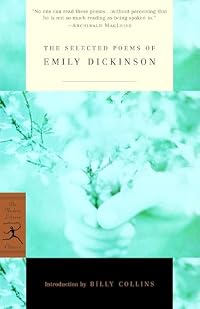
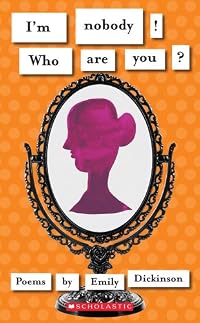
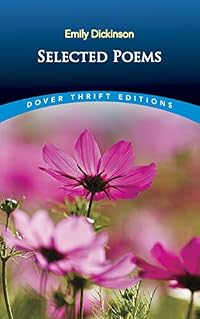
Also, the cover photograph isn't even the original, it's a touched up version of her--and it makes her look like a clown. I'd take the pale, sullen-haired mistress over that any day.
Organized into loosely defined 'groups' such as life, love, &c, the editors used what is now considered obsolete punctuation--the replacement of her trademark dashes with commas and ordinary spaces.
So, if looking for a good edition, seek elsewhere. If looking for a puzzling and intelligent poet, stop here.
(Edition rates >1 star. Her poetry pulled it up, I'm not the biggest fan, but she is not an idiot.)
Also, the cover photograph isn't even the original, it's a touched up version of her--and it makes her look like a clown. I'd take the pale, sullen-haired mistress over that any day.
Utterly brilliant.
Although it's marked by time - and what really isn't? - in a way which isn't my marred, modern cup of tea, the sheer potency of Dickinson's language, rhythm, coinage of words and non-rhymes win me over completely, and take me to another level totally.
I shan't say more on the poetry itself, but the imagery painted is sharp, veering from "the usual" in a way that has lived for more than a hundred years and will continue living forever, I'm sure.
While this collection does not contain all of her poems, it is annotated with short sentences on names, places and references, e.g. to passages from the christian bible and other poets.
This collection's only real flaw: it's too short.
Although it's marked by time - and what really isn't? - in a way which isn't my marred, modern cup of tea, the sheer potency of Dickinson's language, rhythm, coinage of words and non-rhymes win me over completely, and take me to another level totally.
I shan't say more on the poetry itself, but the imagery painted is sharp, veering from "the usual" in a way that has lived for more than a hundred years and will continue living forever, I'm sure.
While this collection does not contain all of her poems, it is annotated with short sentences on names, places and references, e.g. to passages from the christian bible and other poets.
This collection's only real flaw: it's too short.
Not sure how much "editing" Emily's friends and relatives contributed to this collection, virtually all of which are poems which Emily did not publish or even title before her death in 1886.
For example, the stark perplexity of "Going to Heaven!"
And it takes but little understanding to come to the realization that Emily's decisions about publication were utterly compromised by the reversals, hypocrisies, and gravity of the Civil War. And the relentless fraud of the Churches who prayed through all the suffering on all sides.
Finally, my readings largely concur with those who "see" that Emily Dickinson spoke robust and bold truth, with naked beauty, and unrelenting kindness.
Example for all who suffer curiosity and compassion:
Going to show more heaven!
I don't know when,
Pray do not ask me how,--
Indeed, I'm too astonished
To think of answering you!
Going to heaven!--
How dim it sounds!
And yet it will be done
As sure as flocks go home at night
Unto the shepherd's arm!
Perhaps you're going too!
Who knows?
If you should get there first,
Save just a little place for me
Close to the two I lost!
The smallest "robe" will fit me,
And just a bit of "crown";
For you know we do not mind our dress
When we are going home.
I'm glad I don't believe it,
For it would stop my breath,
And I'd like to look a little more
At such a curious earth!
I am glad they did believe it
Whom I have never found
Since the mighty autumn afternoon
I left them in the ground. show less
For example, the stark perplexity of "Going to Heaven!"
And it takes but little understanding to come to the realization that Emily's decisions about publication were utterly compromised by the reversals, hypocrisies, and gravity of the Civil War. And the relentless fraud of the Churches who prayed through all the suffering on all sides.
Finally, my readings largely concur with those who "see" that Emily Dickinson spoke robust and bold truth, with naked beauty, and unrelenting kindness.
Example for all who suffer curiosity and compassion:
Going to show more heaven!
I don't know when,
Pray do not ask me how,--
Indeed, I'm too astonished
To think of answering you!
Going to heaven!--
How dim it sounds!
And yet it will be done
As sure as flocks go home at night
Unto the shepherd's arm!
Perhaps you're going too!
Who knows?
If you should get there first,
Save just a little place for me
Close to the two I lost!
The smallest "robe" will fit me,
And just a bit of "crown";
For you know we do not mind our dress
When we are going home.
I'm glad I don't believe it,
For it would stop my breath,
And I'd like to look a little more
At such a curious earth!
I am glad they did believe it
Whom I have never found
Since the mighty autumn afternoon
I left them in the ground. show less
I kindly received a gift certificate for a book store so I put it to good use. One of my purchases was The collected Poems of Emily Dickinson.
Emily is considered one of the most important figures in American poetry and this is not the only copy of her poetry that I own.
This volume is split into four parts - Life, Love, Nature, and Time & Eternity. I tend to gravitate to her nature poetry.
What I like about her poetry is she was a recluse who wrote far ahead of her time. You recognize her appreciation for her garden and surroundings and much of her poetry is an expression of analyzing physical and natural science.
Her poetry is unconventional and she writes with the vision of a painter abroad though she spent the majority of her time in show more Amherst, Massachusetts. She uses a triad of essentials like abrupt line breaks and extended metaphors and readers obtain different angles due to different perspectives. She had an interest in life and death and wrote about it with honesty, and lack of pretension. show less
Emily is considered one of the most important figures in American poetry and this is not the only copy of her poetry that I own.
This volume is split into four parts - Life, Love, Nature, and Time & Eternity. I tend to gravitate to her nature poetry.
What I like about her poetry is she was a recluse who wrote far ahead of her time. You recognize her appreciation for her garden and surroundings and much of her poetry is an expression of analyzing physical and natural science.
Her poetry is unconventional and she writes with the vision of a painter abroad though she spent the majority of her time in show more Amherst, Massachusetts. She uses a triad of essentials like abrupt line breaks and extended metaphors and readers obtain different angles due to different perspectives. She had an interest in life and death and wrote about it with honesty, and lack of pretension. show less
I am deplorably little read in poetry. I have ambitions to read more of this highly visual and emotional literary art form, one with amazing precedents and history, but I rarely do. I bought this collection of poems by one of my country's esteemed poets many years back, and have finally taken the time to read her poetry.
Despite my limited expertise, I enjoyed her work. The poems were evocative of nature and eternity, and expressed intense emotions. They felt very intimate, but appealed to universal feelings. Her poems about nature were lush and full of awe, and revealed her deep love of the outdoors. Many of the natural elements described also functioned as metaphors for her feelings or ideas about life and love. My particular show more favorites were the poems that explored death and life and the mysteries of eternity. I have analyzed much more fiction and novels than poetry, and I know I am lacking in terminology, but I felt the rhythm of her meters (according to others she often used tetrameter rather than pentameter) and the effect of her abrupt breaks and pauses. According to one writer I unearthed online, Dickinson used "diamond hard language", and I find that a beautiful descriptor that accurately captures a sense of her words.
The book I own is a complete collection of her poetry. I would love to examine these poems more deeply someday, with other people who are interested in delving into intricacies of subject and form. Whether I will actually do so is unknown; in the meantime, I am delighted that I finally acquainted myself with the work of an amazing poet. She has inspired me to read more poetry. I heard a speaker say once that people get too worked up about poetry, that they view it as a chore when it is an experience that should be felt and enjoyed. I am trying to drop my apprehensions and enjoy poetry, even if it means that I don't understand or get everything out of it that I can. Emily Dickinson was a lovely starting point. show less
Despite my limited expertise, I enjoyed her work. The poems were evocative of nature and eternity, and expressed intense emotions. They felt very intimate, but appealed to universal feelings. Her poems about nature were lush and full of awe, and revealed her deep love of the outdoors. Many of the natural elements described also functioned as metaphors for her feelings or ideas about life and love. My particular show more favorites were the poems that explored death and life and the mysteries of eternity. I have analyzed much more fiction and novels than poetry, and I know I am lacking in terminology, but I felt the rhythm of her meters (according to others she often used tetrameter rather than pentameter) and the effect of her abrupt breaks and pauses. According to one writer I unearthed online, Dickinson used "diamond hard language", and I find that a beautiful descriptor that accurately captures a sense of her words.
The book I own is a complete collection of her poetry. I would love to examine these poems more deeply someday, with other people who are interested in delving into intricacies of subject and form. Whether I will actually do so is unknown; in the meantime, I am delighted that I finally acquainted myself with the work of an amazing poet. She has inspired me to read more poetry. I heard a speaker say once that people get too worked up about poetry, that they view it as a chore when it is an experience that should be felt and enjoyed. I am trying to drop my apprehensions and enjoy poetry, even if it means that I don't understand or get everything out of it that I can. Emily Dickinson was a lovely starting point. show less
The Collected Poems of Emily Dickinson contains a sizeable sample of the total works of the reclusive poet, who only came to prominence after her death. Containing 593 poems separated into five different themes, roughly a third of her overall productivity, this collection gives the reader a wonderful look into the talent of a woman who hid her art not only from the world but also her own family. Besides nearly 600 poems of Dickinson’s work, the reader is given a 25 page introduction to the poet and an analysis of her work by Dr. Rachel Wetzsteon who helps reveal the mysterious artist as best as she can and help the reader understand her work better. Although neither Wetzsteon’s introduction and analysis nor Dickinson’s work is show more wanting, the fact that this collection gives only a sample of the poet’s work is its main and only flaw. show less
Members
- Recently Added By
Lists

Female Author
1,235 works; 67 members

Northern Exposure's Chris in the Morning Reading List
31 works; 1 member

Emily Dickinson
9 works; 1 member

Books Read in 2016
4,666 works; 199 members

1964 College Preparatory Reading List
202 works; 8 members

American Lit for Eng 11 Research Project
368 works; 6 members

Greatest Books, allegedly
484 works; 9 members

New Lifetime Reading Plan by Fadiman and Major
225 works; 5 members
The Well-Educated Mind, Susan Wise Bauer, 2016
179 works; 3 members
Author Information

530+ Works 29,917 Members
Emily Dickinson was born in Amherst, Massachusetts on December 10, 1830. Although one of America's most acclaimed poets, the bulk of her work was not published until well after her death on May 15, 1886. The few poems published in her lifetime were not received with any great fanfare. After her death, Dickinson's sister Lavinia found over 1,700 show more poems Emily had written and stashed away in a drawer -- the accumulation of a life's obsession with words. Critics have agreed that Dickinson's poetry was well ahead of its time. Today she is considered one of the best poets of the English language. Except for a year spent at Mount Holyoke Female Seminary in South Hadley, Dickinson spent her entire life in the family home in Amherst, Massachusetts. She never married and began to withdraw from society, eventually becoming a recluse. Dickinson's poetry engages the reader and requires his or her participation. Full of highly charged metaphors, her free verse and choice of words are best understood when read aloud. Dickinson's punctuation and capitalization, not orthodox by Victorian standards and called "spasmodic" by her critics, give greater emphasis to her meanings. (Bowker Author Biography) show less
Emily Dickinson has a Legacy Library. Legacy libraries are the personal libraries of famous readers, entered by LibraryThing members from the Legacy Libraries group.
Some Editions
Awards and Honors
Series
Belongs to Publisher Series
Work Relationships
Common Knowledge
- Canonical title
- The Collected Poems of Emily Dickinson
- Original publication date
- [1890, 1891, 1896]
- Quotations
- I measure every grief I meet
With analytic eyes;
I wonder if it weighs like mine,
Or has an easier size.
I wonder if they bore it long,
Or did it just begin?
I could not tell the date of mine,
It feel... (show all)s so old a pain. - Disambiguation notice
- "Collected Poems of Emily Dickinson" is the collection of the three volumes of poetry originally published in 1890, 1891, and 1896; it was edited by Mary Loomis Todd and Thomas Wentworth Higginson.
Classifications
Statistics
- Members
- 4,038
- Popularity
- 3,833
- Reviews
- 25
- Rating
- (4.15)
- Languages
- English
- Media
- Paper, Ebook
- ISBNs
- 20
- ASINs
- 17