
The Voyage of the Space Beagle
by A. E. van Vogt
The Voyage of the Space Beagle (Collections and Selections — )
On This Page
Description
One of the great original classics of modern SF returns! An all-time classic space saga,The Voyage of the Space Beagle is one of the pinnacles of Golden Age SF, an influence on generations of stories. An episodic novel filled with surprises and provocative ideas, this is the story of a great exploration ship sent out into the unknown reaches of space on a long mission of discovery. They encounter several terrifying alien species, including the Ix, who lay their eggs in human bodies, which show more then devour the humans from within when they hatch. This is one of the most entertaining and gripping stories in all ofclassic SF. show lessTags
Recommendations
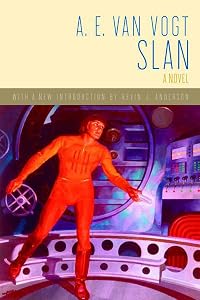


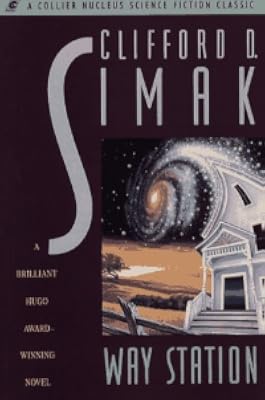

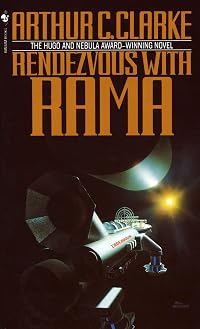


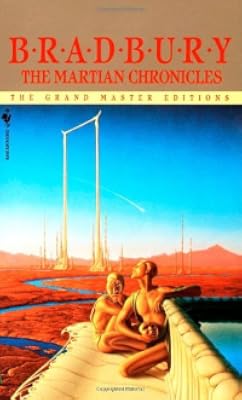


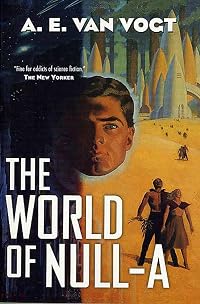


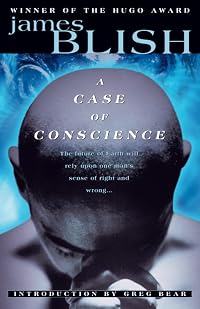

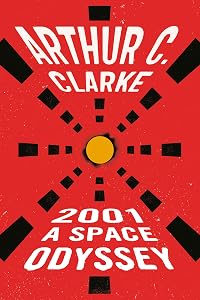


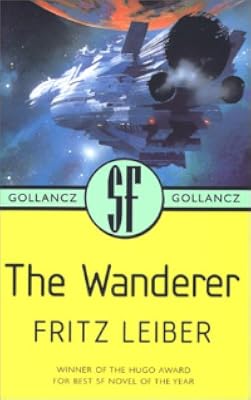

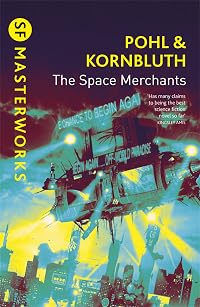


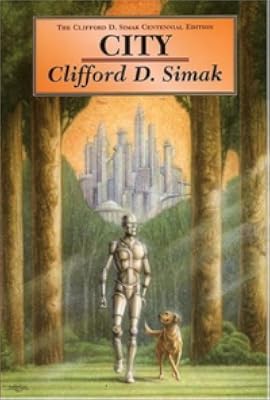








Member Recommendations

anonymous user Another Van Vogt masterpiece.
Member Reviews
The influence on the Space Beagle concepts and stories on later iconic SF fare such as Star Trek and Alien is undeniable and it’s an interesting read from that perspective. But as a piece of engaging entertainment on its own merits it failed to engage me. Vogt’s prose style is inelegant, the main protagonist not particularly likeable and prone to some some questionable moral tactics. This collection of short stories reworked into a single novel also lacks a through-line and suffers from inconsistent character actions and an increasing reliance of “super-science” as a plot device.
Yes it's little dated. Yes it's written in a slightly naive style. But it's also a cracking, classic Sci-Fi story that much belies its age. I rarely re-read books (too many books, too little time), but this was a re-read and worth it. Might even warrant another re-read in 20 years!
[The Voyage of the Space Beagle] by A. E. Van Vogt
Science fiction from 1950. I have recently read [The World of Null-A] by Van Vogt which had been published two years earlier and I had not been impressed; it was a number of shorter stories cobbled together into a novel which proved to be fairly incoherent. A similar approach had been taken with The Space Beagle, but obviously lessons had been learnt because it is a great success. Two interplanetary magazine stories from 1939, one from 1943 and one from 1950 are linked with an overarching story of the voyage of the Space Beagle. It is the first intergalactic expedition taking 1000 men of different professional fields in search of whatever lies out there. The men who have all been show more chemically altered to stop their sex drive are nevertheless competing on an interdepartmental basis, with the chemists and the mathematicians in the forefront, both trying to establish their control over the mission. In each of the stories this faction fighting crew face four life and death struggles with alien life forms, but it is Elliott Grosvenor of the newly formed Nexial department who is the only man who can analyse the problems effectively.
The four stories are all excellent, each one setting the crew against formidable odds. In the story formerly known as The Black Destroyer a large cat like creature (a coeurl) is encountered on a ruined planet and behaves in a neutral way when accosted, however it has an alien intelligence and it is hungry for living flesh, The crew take it on board the Space Beagle with disastrous results. In the War of Nerves members of the crew suffer hallucinations and they are pinpointed as coming from a nearby planet. Grosvenor realises that the only way of fighting the menace is to mind-meld with the alien race. Discord in Scarlet is a prototype story that predates “The Alien” films. A super powerful alien creature who can change its molecular structure tricks its way aboard the spaceship in its search for living material into which it will plant its eggs. Ixtl is the creature which appears to be indestructible, selecting its victims and carrying them off to the ship’s hold to foster its offspring. In the final story M33 in Andromeda the crew face an entire galaxy that has been taken over by a dominant life form which needs to expand.
In both The Black Destroyer and Discord in Scarlet, Van Vogt tells some of the story from the aliens point of view, inviting his readers to feel the hunger and desire of the Coeurl and Ixtl. This has the effect of lessening the mystery and perhaps the tension, but effectively ratchets up the horror and desperation facing the crew. Most of the action takes place on board the spaceship. War of Nerves strikes me as quite an original story and with the mind-melding aspect; Van Vogt is again able to describe an alien presence. The overarching story of the interdepartmental faction fighting develops into all out war in the final story and is a bigger threat to the mission than the alien menace. Grosvenor’s Nexial Department (there are only four of them) are intent in forging an holistic approach and Van Vogt’s big idea is that lives will be in danger if people do not work together. It is an effective way of binding the stories together with the same characters appearing in each story, learning or not learning from previous experiences.
This is excellent 1950’s science fiction, with enough science to make the stories plausible and enough psychology to make them believable. There is very little evidence of sexism with all the characters being men (apart from the obvious) and these men have left their sex drive back on earth. I thoroughly enjoyed the read and so 5 stars for the genre. show less
Science fiction from 1950. I have recently read [The World of Null-A] by Van Vogt which had been published two years earlier and I had not been impressed; it was a number of shorter stories cobbled together into a novel which proved to be fairly incoherent. A similar approach had been taken with The Space Beagle, but obviously lessons had been learnt because it is a great success. Two interplanetary magazine stories from 1939, one from 1943 and one from 1950 are linked with an overarching story of the voyage of the Space Beagle. It is the first intergalactic expedition taking 1000 men of different professional fields in search of whatever lies out there. The men who have all been show more chemically altered to stop their sex drive are nevertheless competing on an interdepartmental basis, with the chemists and the mathematicians in the forefront, both trying to establish their control over the mission. In each of the stories this faction fighting crew face four life and death struggles with alien life forms, but it is Elliott Grosvenor of the newly formed Nexial department who is the only man who can analyse the problems effectively.
The four stories are all excellent, each one setting the crew against formidable odds. In the story formerly known as The Black Destroyer a large cat like creature (a coeurl) is encountered on a ruined planet and behaves in a neutral way when accosted, however it has an alien intelligence and it is hungry for living flesh, The crew take it on board the Space Beagle with disastrous results. In the War of Nerves members of the crew suffer hallucinations and they are pinpointed as coming from a nearby planet. Grosvenor realises that the only way of fighting the menace is to mind-meld with the alien race. Discord in Scarlet is a prototype story that predates “The Alien” films. A super powerful alien creature who can change its molecular structure tricks its way aboard the spaceship in its search for living material into which it will plant its eggs. Ixtl is the creature which appears to be indestructible, selecting its victims and carrying them off to the ship’s hold to foster its offspring. In the final story M33 in Andromeda the crew face an entire galaxy that has been taken over by a dominant life form which needs to expand.
In both The Black Destroyer and Discord in Scarlet, Van Vogt tells some of the story from the aliens point of view, inviting his readers to feel the hunger and desire of the Coeurl and Ixtl. This has the effect of lessening the mystery and perhaps the tension, but effectively ratchets up the horror and desperation facing the crew. Most of the action takes place on board the spaceship. War of Nerves strikes me as quite an original story and with the mind-melding aspect; Van Vogt is again able to describe an alien presence. The overarching story of the interdepartmental faction fighting develops into all out war in the final story and is a bigger threat to the mission than the alien menace. Grosvenor’s Nexial Department (there are only four of them) are intent in forging an holistic approach and Van Vogt’s big idea is that lives will be in danger if people do not work together. It is an effective way of binding the stories together with the same characters appearing in each story, learning or not learning from previous experiences.
This is excellent 1950’s science fiction, with enough science to make the stories plausible and enough psychology to make them believable. There is very little evidence of sexism with all the characters being men (apart from the obvious) and these men have left their sex drive back on earth. I thoroughly enjoyed the read and so 5 stars for the genre. show less
I was interested to read this one as an example of science fiction in the classic age (to me, that’s the 1950s through the late 1960s) by one of the masters. To be honest, I think that might be one of the best reasons for reading it — it’s a good adventure, in that day's style, and stands up pretty well on that count, but I do think the best reasons for reading it are more nostalgic than anything else.
It was not originally written as a book. It’s really a combination of four short stories, woven together with a framing story. The framing story itself is kind of fun — it presages something like the original Star Trek series (more than it recalls Darwin’s Voyage of the Beagle, to me at least), with a spaceship (the Space show more Beagle) on an exploratory mission, even with much the same mission as the Enterprise. The individual stories were written as far back as 1939 and brought together into this book in 1950.
I have to say that it isn’t really an easy-flowing read. The framing story does introduce some overall themes, but the individual stories really kind of jump from one to another a little awkwardly.
The overall mood of the stories is that the universe is a VERY dangerous place. Each individual story reveals greater and greater dangers, beginning with a tiger-like creature, called Coeurl, with capabilities that the crew of the Space Beagle can’t immediately recognize. They take the creature on-board, only to find out what they’ve really got on their hands. It’s almost too late by then.
The second story (maybe let’s actually call them episodes) involves a less evil-intentioned type of creature, but even more dangerous. These are distant bird-like creatures, called Riim, with the ability to send telepathic signals over long distances in space. The signals they send to the Space Beagle’s crew don’t have their intended effect, and instead drive the crew mad.
In every episode, a central role in saving the crew and the Space Beagle is played by the book’s main character, Dr. Elliot Grosvenor. Grosvenor is an expert in a new scientific meta-discipline called nexialism. Nexialism has to do with the connectedness of the various scientific disciplines themselves. A nexialist can see how to put together and apply the insights and knowledge of the various sciences in ways that the experts in the particular sciences cannot.
Grosvenor is the one who saves the day, realizing what the Riim are doing and returning the crew to sanity.
The third episode is especially interesting, because it seems to presage the creature in the Alien movies. It is called Ixtl. It is perhaps the last survivor of a species that once ruled a universe of galaxies but now floats in intergalactic space. It is, more than anything else, driven to reproduce itself, and it does so by laying eggs inside the bodies of host victims. It manages to get itself onboard the Space Beagle and implants eggs in three crew members before its crew can figure out how to defeat it.
The last episode is an encounter with a creature called Anabis — a kind of distributed being with an infinite hunger which it can only satisfy via the death of living creatures. It transforms planets into primitive Petri dishes of life that it can feed off.
This last episode is one that brings out Grosvenor’s character the most. You have to decide for yourself what to make of him, and whether his ability to sort through these various threats and defeat ever-more-capable opponents justifies his apparent arrogance and his manipulation of the psychology and politics of the Space Beagle’s crew. Maybe nexialism itself is the next threat for the Space Beagle crew.
There’s another theme in the background — the Space Beagle’s crew is composed of scientific experts, with the nexialist starting out as a kind of outsider but rising, through merit, to take on the leader role. The crew, given their long-term mission and their semi-democratic order, is a kind of civilization in itself, one founded on this principle of expertise. Even the “soft” disciplines, like history, are treated as scientific disciplines, with law-like regularities on the basis of which to draw insights and hypotheses. Van Vogt may have had in mind a point to be made about the ascendance of scientific expertise while at the same time its weakness as compartmentalized into self-contained disciplines. Only nexialism can save us? show less
It was not originally written as a book. It’s really a combination of four short stories, woven together with a framing story. The framing story itself is kind of fun — it presages something like the original Star Trek series (more than it recalls Darwin’s Voyage of the Beagle, to me at least), with a spaceship (the Space show more Beagle) on an exploratory mission, even with much the same mission as the Enterprise. The individual stories were written as far back as 1939 and brought together into this book in 1950.
I have to say that it isn’t really an easy-flowing read. The framing story does introduce some overall themes, but the individual stories really kind of jump from one to another a little awkwardly.
The overall mood of the stories is that the universe is a VERY dangerous place. Each individual story reveals greater and greater dangers, beginning with a tiger-like creature, called Coeurl, with capabilities that the crew of the Space Beagle can’t immediately recognize. They take the creature on-board, only to find out what they’ve really got on their hands. It’s almost too late by then.
The second story (maybe let’s actually call them episodes) involves a less evil-intentioned type of creature, but even more dangerous. These are distant bird-like creatures, called Riim, with the ability to send telepathic signals over long distances in space. The signals they send to the Space Beagle’s crew don’t have their intended effect, and instead drive the crew mad.
In every episode, a central role in saving the crew and the Space Beagle is played by the book’s main character, Dr. Elliot Grosvenor. Grosvenor is an expert in a new scientific meta-discipline called nexialism. Nexialism has to do with the connectedness of the various scientific disciplines themselves. A nexialist can see how to put together and apply the insights and knowledge of the various sciences in ways that the experts in the particular sciences cannot.
Grosvenor is the one who saves the day, realizing what the Riim are doing and returning the crew to sanity.
The third episode is especially interesting, because it seems to presage the creature in the Alien movies. It is called Ixtl. It is perhaps the last survivor of a species that once ruled a universe of galaxies but now floats in intergalactic space. It is, more than anything else, driven to reproduce itself, and it does so by laying eggs inside the bodies of host victims. It manages to get itself onboard the Space Beagle and implants eggs in three crew members before its crew can figure out how to defeat it.
The last episode is an encounter with a creature called Anabis — a kind of distributed being with an infinite hunger which it can only satisfy via the death of living creatures. It transforms planets into primitive Petri dishes of life that it can feed off.
This last episode is one that brings out Grosvenor’s character the most. You have to decide for yourself what to make of him, and whether his ability to sort through these various threats and defeat ever-more-capable opponents justifies his apparent arrogance and his manipulation of the psychology and politics of the Space Beagle’s crew. Maybe nexialism itself is the next threat for the Space Beagle crew.
There’s another theme in the background — the Space Beagle’s crew is composed of scientific experts, with the nexialist starting out as a kind of outsider but rising, through merit, to take on the leader role. The crew, given their long-term mission and their semi-democratic order, is a kind of civilization in itself, one founded on this principle of expertise. Even the “soft” disciplines, like history, are treated as scientific disciplines, with law-like regularities on the basis of which to draw insights and hypotheses. Van Vogt may have had in mind a point to be made about the ascendance of scientific expertise while at the same time its weakness as compartmentalized into self-contained disciplines. Only nexialism can save us? show less
If you want to know the origins of Star Trek and the Alien movies, look no further. It’s essentially a mash-up of short stories with an encompassing theme. Set centuries in the future, the diverse human crew of the Space Beagle encounters hostile aliens as they explore the universe.
Each sub-story sometimes presents it from the alien’s perspective, and what a unique set of monsters they are! These various creatures run loose onboard the ship, and they possess incredible powers that could wipe everyone out. The protagonist uses a new generalist philosophy called Nexialism to defeat each one in turn. Sounds familiar? Of course it does, because this is the book that started it.
show more target="_top">https://shepherd.com/best-books/cult-sci-fi-and-fantasy-you-may-not-have-heard-o... show less
Each sub-story sometimes presents it from the alien’s perspective, and what a unique set of monsters they are! These various creatures run loose onboard the ship, and they possess incredible powers that could wipe everyone out. The protagonist uses a new generalist philosophy called Nexialism to defeat each one in turn. Sounds familiar? Of course it does, because this is the book that started it.
show more target="_top">https://shepherd.com/best-books/cult-sci-fi-and-fantasy-you-may-not-have-heard-o... show less
The Voyage of the Space Beagle by A.E. van Vogt is a novel comprised of four related short stories, woven together by some connecting text. As the title implies, the novel is about a futuristic ship of explorer-scientists who hope revolutionize mankind's scientific understanding in the same way that Darwin's observations on the Beagle did.
Van Vogt includes multiple points of view to sell his idea of Nexialism (a unifying theory for all fields of scientific study). He gets into the heads of the various scientists and crew as well as the super intelligent, incredibly alien, and of course, predatory and dangerous creatures the Beagle picks up for study.
And that's where things fell apart for me. The monster of the story isn't a sympathetic show more glimpse into understanding the Other. Instead it's the prototype for any number of B movies — the one who will invariably hunt down the crew and either kill them, mutate them, or impregnate them one at a time. show less
Van Vogt includes multiple points of view to sell his idea of Nexialism (a unifying theory for all fields of scientific study). He gets into the heads of the various scientists and crew as well as the super intelligent, incredibly alien, and of course, predatory and dangerous creatures the Beagle picks up for study.
And that's where things fell apart for me. The monster of the story isn't a sympathetic show more glimpse into understanding the Other. Instead it's the prototype for any number of B movies — the one who will invariably hunt down the crew and either kill them, mutate them, or impregnate them one at a time. show less
This 1950 science fiction novel is fantastic. It is considered a key inspiration for the movie "Alien" and the classic Star Trek series. Simply excellent. I love the focus on scientific curiosity and problem-solving. The cast of scientists (and some soldiers) reminds me of some of Asimov's works, which often featured scientists interacting with each other. To my delight, I also enjoyed that Vogt included sociology and historical perspectives in the book. Aside from the complete lack of female characters, the book holds up very well.
Members
- Recently Added By
Lists

Les 100 principaux titres de la science-fiction (1981)
126 works; 3 members
Author Information

335+ Works 22,549 Members
A. E. Van Vogt was born on April 26, 1912 in Manitoba, Canada. He graduated from the University of Ottawa in 1928. His first story sales were to true story confession magazines in the early 1930s while he was working as a census clerk and representative of Maclean Trade Papers. He wrote plays for Canadian radio and in 1939, he began submitting show more stories and serials to Astounding Science Fiction. He wrote more than 35 novels during his lifetime including Slan, The Weapon Shops of Isher, The World of Null-A, The Pawns of Null-A, The Weapons Makers, The Violent Man, The Silkie, The Battle of Forever, and The House That Stood Still. He died on January 26, 2000 at the age of 87. (Bowker Author Biography) show less
Some Editions
Awards and Honors
Notable Lists
Series

Belongs to Publisher Series
Work Relationships
Common Knowledge
- Canonical title
- The Voyage of the Space Beagle
- Original title
- The Voyage of the Space Beagle
- Original publication date
- 1950
- People/Characters
- Elliot Grosvenor; Morton; Kent; Coeurl
- Dedication
- To Ford McCormack
- First words
- On and on Coeurl prowled.
- Last words
- (Click to show. Warning: May contain spoilers.)And no beginning.
- Blurbers
- Dozois, Gardner
- Original language*
- Inglés
- Disambiguation notice
- Variant Titles: The Voyage of the Space Beagle and Mission:Interplanetary
*Some information comes from Common Knowledge in other languages. Click "Edit" for more information.
Classifications
Statistics
- Members
- 1,277
- Popularity
- 19,176
- Reviews
- 24
- Rating
- (3.56)
- Languages
- 13 — Dutch, English, French, German, Hebrew, Italian, Norwegian (Bokmål), Portuguese, Romanian, Russian, Spanish, Swedish, Turkish
- Media
- Paper, Ebook
- ISBNs
- 27
- ASINs
- 44