On This Page
Description
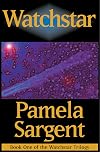
Alone in the desert, Daiya is faced with a dilemma that will determine her fate. If she can successfully resolve it, she will join the Net of her village, but if she fails, her life will be spent with the feared Merged Ones. Confused and torn between worlds near and far, Daiya harbors a secret of her people and must find a way to move beyond her discoveries to a safe place where she can survive.Tags
Recommendations






Member Reviews
This bk was.. fascinating.. I read it slowly.. so I didn't necessarily 'enjoy' it in the way I enjoy other fiction. I think of my childhood, when I started reading SF. I sometimes tell people that I learned my ethics from reading superhero comics - not from church. I have a similar relationship to SF.
Let's say I have the closest literary relationships to concrete poetry, language centered writing, OuLiPo, & SF. Of these 4, SF is the only one deeply rooted in my childhood. It's like a parent to me. It stimulated my thinking & still continues to do so. I've read 2 things by Sargent previously: "Venus of Dreams" & "The Sudden Star". I think I liked them ok but I don't really remember either of them. This one's different.
"Watchstar" is a show more pretty multi-leveled fable - it's easy to see it as an analog for growing up during the time I have. The anguish of the main character's growth is certainly something that I can identify w/. &, of course, there're no easy answers. I wonder what Sargent's personal history is? Was she raised, as I was, by 'religious' people whose 'stable' society was based around the destruction of scapegoats? Did she, personally, become such a scapegoat as a result of being a harbinger of change?
P47: "You are tempted by the evils in every human mind that would lead to anarchy and ruin if we gave in to them." Is this yet-another misuse of the word "anarchy"? It wd seem so. Or, perhaps, she's just presenting the mindset of the religious society - forever against free thinking as its primary enemy.
I'll definitely be reading more of Sargent &, in fact, I'm delighted to find that she's a GoodReads author! Hi Pamela! show less
Let's say I have the closest literary relationships to concrete poetry, language centered writing, OuLiPo, & SF. Of these 4, SF is the only one deeply rooted in my childhood. It's like a parent to me. It stimulated my thinking & still continues to do so. I've read 2 things by Sargent previously: "Venus of Dreams" & "The Sudden Star". I think I liked them ok but I don't really remember either of them. This one's different.
"Watchstar" is a show more pretty multi-leveled fable - it's easy to see it as an analog for growing up during the time I have. The anguish of the main character's growth is certainly something that I can identify w/. &, of course, there're no easy answers. I wonder what Sargent's personal history is? Was she raised, as I was, by 'religious' people whose 'stable' society was based around the destruction of scapegoats? Did she, personally, become such a scapegoat as a result of being a harbinger of change?
P47: "You are tempted by the evils in every human mind that would lead to anarchy and ruin if we gave in to them." Is this yet-another misuse of the word "anarchy"? It wd seem so. Or, perhaps, she's just presenting the mindset of the religious society - forever against free thinking as its primary enemy.
I'll definitely be reading more of Sargent &, in fact, I'm delighted to find that she's a GoodReads author! Hi Pamela! show less
Ratings
Members
- Recently Added By
Author Information

95+ Works 5,532 Members
Series

Belongs to Publisher Series
Science Fiction Book Club (3778)
Common Knowledge
- Original title
- Watchstar
- Original publication date
- 1980
Classifications
Statistics
- Members
- 199
- Popularity
- 165,211
- Reviews
- 1
- Rating
- (3.55)
- Languages
- English, French
- Media
- Paper, Ebook
- ISBNs
- 7
- ASINs
- 7