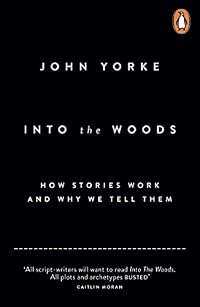
Into the Woods: A Five-Act Journey Into Story
by John Yorke
On This Page
Description
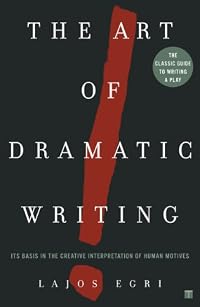
In this exciting and wholly original book, John Yorke not only shows that there is truly a unifying shape to narrative--one that echoes the great fairytale journey into the woods, and one, like any great art, that comes from deep within--he explains why, too. With examples ranging from The Godfather to True Detective, Mad Men to Macbeth, and fairy tales to Forbrydelsen (The Killing), Yorke utilizes Shakespearean five-act structure as a key to analyzing all storytelling in all narrative show more forms, from film and television to theatre and novel-writing--a big step from the usual three-act approach. Into the Woods: A Five-Act Journey Into Story is destined to sit alongside David Mamet's Three Uses of the Knife, Robert McKee's Story, Syd Field's Screenplay, and Lajos Egri's The Art of Dramatic Writing as one of the most original, useful, and inspiring books ever on dramatic writing. show lessTags
Recommendations
Member Reviews
An open-minded and expansive book, Into the Woods starts as a look at the story structure in screenwriting and quickly encompasses film, theatre and literature to delve into how and why humankind tells stories in general. The bulk of the book concerns the 'how', with the 'why' implied throughout, and all the threads brought together in the final chapter. Yorke's theories on the 'how' are sound, if a bit repetitive (but I suppose you could say that for any theoretical explanation of anything). It is refreshing that he's not trying to give us hard-and-fast rules on how to write (a sort of 'How to Become a Successful Writer in 10 Easy Steps'), and indeed Yorke even declines to advocate the conscious pursuit of a story structure (pg. xvi). show more Yorke is a bit more ambitious; he identifies the peculiarity that many stories throughout the ages bear uncanny similarities. Many of these storytellers must have been unaware of form or of any 'rules', and therefore a resilient and constant story structure must arise unconsciously, based on how the human mind orders itself. It is how one can draw similarities in basic story structure between stories created last week and those written thousands of years ago, and indeed to the stories told by unwitting children.
The 'why' is where Yorke differs from the bulk of film theory and screenwriting guides – dismissed here as written by 'snake-oil salesmen' (pg. xii) – as he presents a believable thesis that storytelling "mimics the way the brain assimilates knowledge" (pg. 213). The underlying structure of any story – in which order is made out of chaos, and the incomplete is made complete (pg. 212) – corresponds with how the human mind perceives and processes experiences. Yorke explains it better (and longer) than I have, but is a plausible idea and not at all half-baked; you don't feel short-changed from reading Into the Woods.
Most surprisingly, the book is a good read, at least for a book of theory which includes a suspicious number of graphs and diagrams. It is not quite the tour de force the reviews would have you believe, but it is more amiable and less dry than you would expect. (I liked the bit on page 54 where Yorke simultaneously respects the work of Joseph Campbell and exposes the limitations of his famous 'hero myth' theories, remarking that when he – Yorke – was a scriptwriter on EastEnders, he "simply couldn't see how a hero's journey could apply to Pauline Fowler in the launderette.") For film buffs, wannabe writers and geeks in general, it is always satisfying to talk casually about tropes and pop culture, as Yorke does successfully here. With Into the Woods, Yorke has provided an environment in which one can assimilate ideas on storytelling and writing without having to nail your colours to the mast. It is, perhaps uniquely, a 'how-to' guide which encourages one to expand, innovate and flourish rather than binding one to a constricting, disappointing and unresponsive set of rules. show less
The 'why' is where Yorke differs from the bulk of film theory and screenwriting guides – dismissed here as written by 'snake-oil salesmen' (pg. xii) – as he presents a believable thesis that storytelling "mimics the way the brain assimilates knowledge" (pg. 213). The underlying structure of any story – in which order is made out of chaos, and the incomplete is made complete (pg. 212) – corresponds with how the human mind perceives and processes experiences. Yorke explains it better (and longer) than I have, but is a plausible idea and not at all half-baked; you don't feel short-changed from reading Into the Woods.
Most surprisingly, the book is a good read, at least for a book of theory which includes a suspicious number of graphs and diagrams. It is not quite the tour de force the reviews would have you believe, but it is more amiable and less dry than you would expect. (I liked the bit on page 54 where Yorke simultaneously respects the work of Joseph Campbell and exposes the limitations of his famous 'hero myth' theories, remarking that when he – Yorke – was a scriptwriter on EastEnders, he "simply couldn't see how a hero's journey could apply to Pauline Fowler in the launderette.") For film buffs, wannabe writers and geeks in general, it is always satisfying to talk casually about tropes and pop culture, as Yorke does successfully here. With Into the Woods, Yorke has provided an environment in which one can assimilate ideas on storytelling and writing without having to nail your colours to the mast. It is, perhaps uniquely, a 'how-to' guide which encourages one to expand, innovate and flourish rather than binding one to a constricting, disappointing and unresponsive set of rules. show less
Leitura demorada da qual aproveitei muito. A ideia da divisão narrativa em cinco atos é muito interessante, mas a impressão mais forte é de ser um livro "pós-gurus". Yorke leu todos os manuais de construção de história, de Egri a McKee, e formula uma teoria baseada tanto nas leituras quanto na sua experiência em televisão. O seu comentário vai dos mitos à "reality TV" e a sua perspectiva - a história enquanto uma forma dialética, em que opostos se confrontam e dialogam até à mudança concluída na síntese final - é aberta e esclarecedora.
Why do stories work the way they do? Why are they structured the way they are?
These questions fascinate me. Storytelling—its nature, how it works, the role it plays in human lives and society—fascinates me. As much as anything, storytelling is what marks human beings as unique among all the animals of Earth. The act of telling stories partakes equally of our capacity for imagination and our need to discern pattern in world around us. We use stories to try and make sense of our experiences and simultaneously celebrate the mysterious and unknowable. It's both creative and formulaic.
The stories we choose to tell, and the ways we choose to tell them, tell us who we are and how we understand our role in existence.
There have been numerous show more works written through the ages which attempt to answer these questions, from Aristotle to Mamet. Go into any bookstore or search Amazon and you're sure to find dozens of titles which promise to teach the best formula for writing any kind of story you want.
John Yorke is a professional screenwriter with years of experience working in television. He has read and studied the full range of screenwriting manuals. In his studies, it became clear to him that all stories—across all formats, from screenplays, to novels, to myths and folktales, and spanning different cultures and traditions—conform to certain universal patterns. Even storytellers who intentionally seek to eschew standard structures end up conforming to them in some fashion.
It appears that structure is inescapable if you want your story to work.
Given the universality of these storytelling structures, it also seems clear that these patterns must grow out of some kind of neurological basis.
Such are Mr. Yorke's conclusions, at any rate. This book is the result of the years he spent studying these questions. He sets out to explain what these structures patterns are and, perhaps most importantly, to answer the question of why stories work the way they do.
He explores the full range of different writing theories (focused mostly on screenwriting techniques, most of which harken back to the seminal work of Joseph Campbell and the concept of the monomyth), the history of structural theory, and seeks out the central elements they all circle around. His quest takes him through concepts from psychology, philosophy, anthropology, and criticism. The work is remarkably comprehensive.
When Mr. Yorke describes what he believes are the universal structural elements of storytelling, there are moments when it all seems far too simple—the formula seems too easy. But he makes a very compelling case that this simplicity is a foundation capable of supporting an incredible variety of characters, settings, plots, tones, and themes in the stories that people tell. He argues that storytelling is fractal and that infinite complexity is contained within this simple set of rules.
It's his focus on the question of why stories are structured as they are which makes this work stand out from its predecessors. For all that has been written about storytelling through the ages, this question of why stories work this way has been sorely neglected.
It's remarkable, too, how readable this book is for all the density of its content. It flows easily and draws you along like any good story should. Illustrated with numerous examples from film and TV, as well as novels, this is a work of profound synthesis that applies to all storytelling.
It's a compelling tale, appropriate for anyone who tells stories or is fascinated by them. show less
These questions fascinate me. Storytelling—its nature, how it works, the role it plays in human lives and society—fascinates me. As much as anything, storytelling is what marks human beings as unique among all the animals of Earth. The act of telling stories partakes equally of our capacity for imagination and our need to discern pattern in world around us. We use stories to try and make sense of our experiences and simultaneously celebrate the mysterious and unknowable. It's both creative and formulaic.
The stories we choose to tell, and the ways we choose to tell them, tell us who we are and how we understand our role in existence.
There have been numerous show more works written through the ages which attempt to answer these questions, from Aristotle to Mamet. Go into any bookstore or search Amazon and you're sure to find dozens of titles which promise to teach the best formula for writing any kind of story you want.
John Yorke is a professional screenwriter with years of experience working in television. He has read and studied the full range of screenwriting manuals. In his studies, it became clear to him that all stories—across all formats, from screenplays, to novels, to myths and folktales, and spanning different cultures and traditions—conform to certain universal patterns. Even storytellers who intentionally seek to eschew standard structures end up conforming to them in some fashion.
It appears that structure is inescapable if you want your story to work.
Given the universality of these storytelling structures, it also seems clear that these patterns must grow out of some kind of neurological basis.
Such are Mr. Yorke's conclusions, at any rate. This book is the result of the years he spent studying these questions. He sets out to explain what these structures patterns are and, perhaps most importantly, to answer the question of why stories work the way they do.
He explores the full range of different writing theories (focused mostly on screenwriting techniques, most of which harken back to the seminal work of Joseph Campbell and the concept of the monomyth), the history of structural theory, and seeks out the central elements they all circle around. His quest takes him through concepts from psychology, philosophy, anthropology, and criticism. The work is remarkably comprehensive.
When Mr. Yorke describes what he believes are the universal structural elements of storytelling, there are moments when it all seems far too simple—the formula seems too easy. But he makes a very compelling case that this simplicity is a foundation capable of supporting an incredible variety of characters, settings, plots, tones, and themes in the stories that people tell. He argues that storytelling is fractal and that infinite complexity is contained within this simple set of rules.
It's his focus on the question of why stories are structured as they are which makes this work stand out from its predecessors. For all that has been written about storytelling through the ages, this question of why stories work this way has been sorely neglected.
It's remarkable, too, how readable this book is for all the density of its content. It flows easily and draws you along like any good story should. Illustrated with numerous examples from film and TV, as well as novels, this is a work of profound synthesis that applies to all storytelling.
It's a compelling tale, appropriate for anyone who tells stories or is fascinated by them. show less
This is a book I will be keeping near me for future reference. I have pages of notes inside the back cover and there are many underlined passages throughout the book.
Yorke states early in his book that it is not a “how-to” book prescribing how to write a story in whatever format, be it book, play, or film. He even has a few words of warning for readers in relation to books that put forward definitive structures and approaches for preparing any piece of art. He even goes so far as to name a number of “how-to” books and highlights what he sees as the flaws in their advice. All this is, however, incidental to the main purpose of “Into the Woods”.
In this book, Yorke’s hypothesis is that there is an underlying structure to show more stories and that this is neither the result of conscious planning nor has it been derived from Greek tragedies. He posits that this structure is fundamental to the way humans assimilate the world around us and it is the natural way we will tell a story and the most natural way for us to learn about our surroundings and our relationships with people and our environment.
His approach is to use well known films, books and television shows to demonstrate how they fit the structure he hypothesizes. He also reviews the views of commentators on structure, and discusses the works of writers who have argued against structure but who have, inadvertently, written their works within the structure he hypothesizes.
Yorke is quick to state there are exceptions but he claims they are few and far between.
Having outlined his hypothesis and used examples to demonstrate the structure in action and to provide evidence to support his hypothesis, he then addresses the question of why is this structure so ubiquitous and is there a psychological reason for this. His conclusion is that stories are the way we make sense of the world and learn.
By the way, along the way he gives great analysis of how characterization works, how audiences are engaged, and stories help us survive. show less
Yorke states early in his book that it is not a “how-to” book prescribing how to write a story in whatever format, be it book, play, or film. He even has a few words of warning for readers in relation to books that put forward definitive structures and approaches for preparing any piece of art. He even goes so far as to name a number of “how-to” books and highlights what he sees as the flaws in their advice. All this is, however, incidental to the main purpose of “Into the Woods”.
In this book, Yorke’s hypothesis is that there is an underlying structure to show more stories and that this is neither the result of conscious planning nor has it been derived from Greek tragedies. He posits that this structure is fundamental to the way humans assimilate the world around us and it is the natural way we will tell a story and the most natural way for us to learn about our surroundings and our relationships with people and our environment.
His approach is to use well known films, books and television shows to demonstrate how they fit the structure he hypothesizes. He also reviews the views of commentators on structure, and discusses the works of writers who have argued against structure but who have, inadvertently, written their works within the structure he hypothesizes.
Yorke is quick to state there are exceptions but he claims they are few and far between.
Having outlined his hypothesis and used examples to demonstrate the structure in action and to provide evidence to support his hypothesis, he then addresses the question of why is this structure so ubiquitous and is there a psychological reason for this. His conclusion is that stories are the way we make sense of the world and learn.
By the way, along the way he gives great analysis of how characterization works, how audiences are engaged, and stories help us survive. show less
Ostensibly this is a book about story structure in film rather than books, but the lessons are the same so it’s useful to writers of any sort, be they scriptwriters or novelists.
Most writers of fiction will have come across the concept of the three act structure which is largely what this book covers, although Yorke divides the three acts into five. That is itself isn’t original. He admits that he’s collected ideas on story structure from theorists and writers both alive and dead. As such it’s a pretty good introduction to the field for someone, like me, who has not really studied story structure in detail.
If I had to make a criticism I’d make two. The first is that, having chosen most of his examples from film, he is very show more reliant on the reader having seen the films he talks about. If you haven’t seen Thelma & Louise then I urge you to see it (perhaps twice) before reading this. There are probably others, perhaps three or four films that you would benefit from seeing to understand the references that he makes. (Unfortunately I can’t remember them all as it’s a while since I finished the book.) However he has drawn from so many film references that nobody will have seen all of them but most readers will have seen enough to benefit from what he says.
The second criticism is also really a recommendation. If anything there is too much in this book. I wouldn’t say it’s repetitive as he makes a point in enough ways for the reader to grasp a concept if they didn’t get the point from the first example (or they hadn’t seen the example film). However he does go into a lot of detail and as such it’s a bit much to pick all that up from a single reading. Perhaps it’s not intended as a light read as it’s really a text book. Film script students would probably refer back to it throughout a course.
Whether he is correct in his analysis is something I can’t say, but to understand the structuralist’s perspective it’s a good place to start. He suggests that even those who do not believe in structural story still write in this form without knowing it. I’ve looked at my own work and tried to identify the ‘mid-point’ and I’m not entirely convinced the séance scene is that mid-point, but he may be right. How my acts are defined from there is anybody’s guess. What I can’t tell having read Into the Words is whether my work is a load of old tosh, but I suspect that my next book will be better for having read it. show less
Most writers of fiction will have come across the concept of the three act structure which is largely what this book covers, although Yorke divides the three acts into five. That is itself isn’t original. He admits that he’s collected ideas on story structure from theorists and writers both alive and dead. As such it’s a pretty good introduction to the field for someone, like me, who has not really studied story structure in detail.
If I had to make a criticism I’d make two. The first is that, having chosen most of his examples from film, he is very show more reliant on the reader having seen the films he talks about. If you haven’t seen Thelma & Louise then I urge you to see it (perhaps twice) before reading this. There are probably others, perhaps three or four films that you would benefit from seeing to understand the references that he makes. (Unfortunately I can’t remember them all as it’s a while since I finished the book.) However he has drawn from so many film references that nobody will have seen all of them but most readers will have seen enough to benefit from what he says.
The second criticism is also really a recommendation. If anything there is too much in this book. I wouldn’t say it’s repetitive as he makes a point in enough ways for the reader to grasp a concept if they didn’t get the point from the first example (or they hadn’t seen the example film). However he does go into a lot of detail and as such it’s a bit much to pick all that up from a single reading. Perhaps it’s not intended as a light read as it’s really a text book. Film script students would probably refer back to it throughout a course.
Whether he is correct in his analysis is something I can’t say, but to understand the structuralist’s perspective it’s a good place to start. He suggests that even those who do not believe in structural story still write in this form without knowing it. I’ve looked at my own work and tried to identify the ‘mid-point’ and I’m not entirely convinced the séance scene is that mid-point, but he may be right. How my acts are defined from there is anybody’s guess. What I can’t tell having read Into the Words is whether my work is a load of old tosh, but I suspect that my next book will be better for having read it. show less
Riveting! Learning about story form is a close equivalent to looking under the hood of a car to see how the engine works. The core theme is that stories are both enormously complex and refreshingly simple and that their simplicity doesn't in any way undercut their value. It's like a puzzle piece when it snaps together with the one other correct piece. It's simple, yes, but more accurately it just feels right. That's how a good story feels, even the most complex ones.
The most important section is the first one and everything that follows builds from this. It's here where the author argues for the Five-Act structure over the too-simplistic Three-Act structure. It also makes the case for updating the classical dramatic structure, with show more Freytag's Pyramid being the prime example, to instead using a change paradigm which the author calls The Roadmap of Change. Here's an abbreviated sample:
(Act 1) No knowledge of the problem
(Act 1) Knowledge of the problem
(Act 2) Refusal to acknowledge the problem
(Act 2) Acknowledging the problem
(Act 3) Acquiring key knowledge (MIDPOINT)
(Act 4) Consequences of knowledge
(Act 4) Full knowledge (worst point)
(Act 5) Final choice
(Act 5) Final battle (climax)
(Act 5) Mastery of knowledge (resolution)
But don't take my word for it. Pick your favorite book, movie, play or even a video game and try to see this shape in the underlying structure. Note: the author points out that the MIDPOINT, perhaps the most crucial moment in the arc, could be the acquisition of key knowledge, for the protagonist OR the reader, or possibly a 'no turning back' point which would be more at home in a tragedy. And you'll be surprised at how often it arrives at or very near the literal midpoint of a story. Again, don't take my word for it. Flip to the middle of a book or scan to the middle of a movie and see for yourself. I'll wager 9 out 10 times you'll discover a significant scene there.
My other favorite takeaway is that this basic story structure—let's use the basic dramatic arc Exposition - Complications - Midpoint - Falling Action - Victory/Defeat—this narrative arc expectation is practically written into our DNA. A story we hear, any story, will 'feel right' the more closely it aligns with the basic structure. show less
The most important section is the first one and everything that follows builds from this. It's here where the author argues for the Five-Act structure over the too-simplistic Three-Act structure. It also makes the case for updating the classical dramatic structure, with show more Freytag's Pyramid being the prime example, to instead using a change paradigm which the author calls The Roadmap of Change. Here's an abbreviated sample:
(Act 1) No knowledge of the problem
(Act 1) Knowledge of the problem
(Act 2) Refusal to acknowledge the problem
(Act 2) Acknowledging the problem
(Act 3) Acquiring key knowledge (MIDPOINT)
(Act 4) Consequences of knowledge
(Act 4) Full knowledge (worst point)
(Act 5) Final choice
(Act 5) Final battle (climax)
(Act 5) Mastery of knowledge (resolution)
But don't take my word for it. Pick your favorite book, movie, play or even a video game and try to see this shape in the underlying structure. Note: the author points out that the MIDPOINT, perhaps the most crucial moment in the arc, could be the acquisition of key knowledge, for the protagonist OR the reader, or possibly a 'no turning back' point which would be more at home in a tragedy. And you'll be surprised at how often it arrives at or very near the literal midpoint of a story. Again, don't take my word for it. Flip to the middle of a book or scan to the middle of a movie and see for yourself. I'll wager 9 out 10 times you'll discover a significant scene there.
My other favorite takeaway is that this basic story structure—let's use the basic dramatic arc Exposition - Complications - Midpoint - Falling Action - Victory/Defeat—this narrative arc expectation is practically written into our DNA. A story we hear, any story, will 'feel right' the more closely it aligns with the basic structure. show less
It’s refreshing to read a book on the theory of storytelling that doesn’t claim to be the oracle on the subject, but is based on years of practice and study and doesn’t openly dismiss other approaches; instead Yorke takes each approach on merit and analyses the flaws. His own view on structure is hugely useful, a symmetrical shape that can be imposed on almost all works. In the process he divines exactly what’s unsettling about the structure of No Country For Old Men and illustrates how The Godfather, Thelma And Louise and are perfect illustrations of his theory of underlying structure. I’m not entirely certain whether this is imposition of the writer’s own model but they’re excellent and very helpful guidelines to follow show more if you’re constructing your own story and the illustrations from other stories are well chosen. Practical, thought provoking and engaging. show less
Members
- Recently Added By
Author Information
1 Work 502 Members
Common Knowledge
- Original publication date
- 2013
- Epigraph
- 'Art consists of limitation. The most beautiful part of every picture is the frame.' G.K. Chesterton
- First words
- A ship lands on an alien shore and a young man, desperate to prove himself, is tasked with befriending the inhabitants and extracting their secrets.
- Last words
- (Click to show. Warning: May contain spoilers.)Stories appear to be both as simple - and complex - as that.
- Disambiguation notice
- Please do not combine with the unrelated Sondheim work.
Classifications
- Genres
- Literature Studies and Criticism, Nonfiction
- DDC/MDS
- 808.036 — Literature & rhetoric Literature, rhetoric & criticism Rhetoric and collections of literary texts from more than two literatures Rhetoric and anthologies --
- LCC
- PN151 .Y58 — Language and Literature Literature (General) Literature (General) Authorship
- BISAC
Statistics
- Members
- 508
- Popularity
- 58,782
- Reviews
- 17
- Rating
- (3.99)
- Languages
- English, Swedish
- Media
- Paper, Ebook
- ISBNs
- 8
- ASINs
- 6