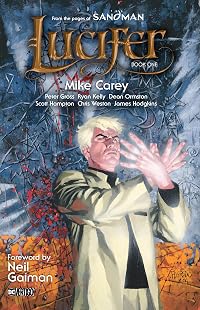
Lucifer: Book 01
by Mike Carey
Lucifer {2000-2006} (Biographies / Books — The Morningstar Option 1-3, 1-13)
On This Page
Description
Cast out of Heaven, thrown down to rule in Hell, Lucifer Morningstar has resigned his post and abandoned his kingdom for the mortal city of Los Angeles. Emerging from the pages of writer Neil Gaiman's award-winning series THE SANDMAN, the former Lord of Hell is now enjoying a quiet retirement as the propretor of Lux, L.A.'s most elite piano bar. But now an assignment from the Creator Himself is going to change all that. If Lucifer agrees to do Heaven's dirty work, he can name his own show more price-but both the task and reward are more than they seem. Thrown into a position of great threat and ultimate opportunity, Lucifer knows that threading a path through this maze will require the harshest of sacrifices. Also includes THE SANDMAN PRESENTS: LUCIFER #1-3!. show lessTags
Recommendations

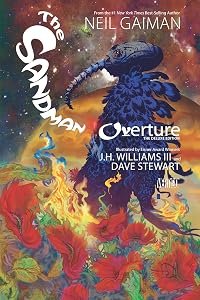

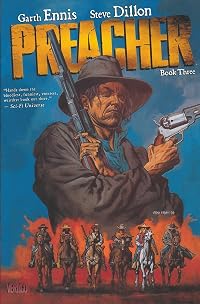

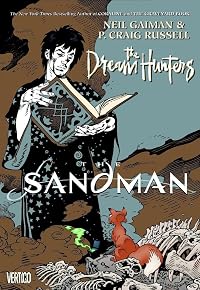


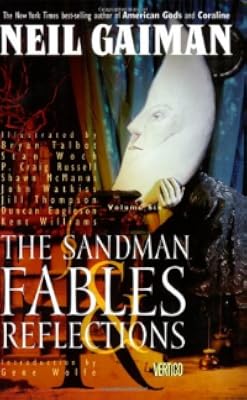

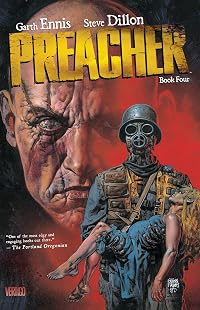






Member Recommendations
Member Reviews
I had never heard of the Lucifer series until the television show based upon it premiered on Fox this year. I really enjoy the show and since I love comics, I decided to try the source material (which spun out of Gaiman’s Sandman series). As is often the case, the show is really only inspired by the comic with some of the same character names and locations but not much more. Nevertheless, both are excellent in their own right.
The graphic novel is much darker, and Lucifer is less charismatic and more enigmatic. The premise, that Lucifer has retired as Lord of Hell and runs the piano bar Lux in LA, is the same. Here though, Lucifer has an end game in mind and all his “adventures” throughout the book are to further that goal. He’s show more ruthless and calculating, but weirdly honorable as well. This Lucifer is somehow more fitting (nee realistic) than the familiar fire & brimstone version of theology. He’s also far more powerful than the tv counterpart. Though he is the protagonist, the stories often focus on other people until their paths cross with his. One of these narrators is a little girl who can see the dead. After her best friend dies in an apparent suicide, she must discover what really happened. The story seems unimportant at first, until it isn’t – a common factor for all the stories herein.
Lucifer isn’t as likeable as the tv version, so it’s not so easy to “root for” him. However, he’s so cunning and so self-aware that I wanted him to succeed just to see how things panned out. It also helps that no one else is likeable either. The heavenly host, including the Amenadiel, are not so angelic despite being angels. The series makes it clear they are not human, with our emotions or even compassion. It’s an interesting counter balance to Lucifer himself. Overall, I enjoyed this book enough that I intend to finish the series. Highly recommended.
A note about the book itself. The price is excellent for the amount of material collected (just look at most Marvel or DC collection that cost $30-35 with half the material or less), but that means that the production quality is also not as high. The interior pages are not glossy like most graphic novel collections, but at least it is in color. Though disappointing, I didn’t deduct any stars because the price balances that out. show less
The graphic novel is much darker, and Lucifer is less charismatic and more enigmatic. The premise, that Lucifer has retired as Lord of Hell and runs the piano bar Lux in LA, is the same. Here though, Lucifer has an end game in mind and all his “adventures” throughout the book are to further that goal. He’s show more ruthless and calculating, but weirdly honorable as well. This Lucifer is somehow more fitting (nee realistic) than the familiar fire & brimstone version of theology. He’s also far more powerful than the tv counterpart. Though he is the protagonist, the stories often focus on other people until their paths cross with his. One of these narrators is a little girl who can see the dead. After her best friend dies in an apparent suicide, she must discover what really happened. The story seems unimportant at first, until it isn’t – a common factor for all the stories herein.
Lucifer isn’t as likeable as the tv version, so it’s not so easy to “root for” him. However, he’s so cunning and so self-aware that I wanted him to succeed just to see how things panned out. It also helps that no one else is likeable either. The heavenly host, including the Amenadiel, are not so angelic despite being angels. The series makes it clear they are not human, with our emotions or even compassion. It’s an interesting counter balance to Lucifer himself. Overall, I enjoyed this book enough that I intend to finish the series. Highly recommended.
A note about the book itself. The price is excellent for the amount of material collected (just look at most Marvel or DC collection that cost $30-35 with half the material or less), but that means that the production quality is also not as high. The interior pages are not glossy like most graphic novel collections, but at least it is in color. Though disappointing, I didn’t deduct any stars because the price balances that out. show less
Retired from being the ruler of Hell, Lucifer Morningstar is content with his life in LA, running an elite piano bar, but Heaven throws a wrench in the works when they make him an offer he can't refuse. What can I say, I've always loved Lucifer from the Sandman story, and, although not written by Gaiman, this feels perfectly in line with the character and his history. I'm not really sure where the story is going right now, but it's a great ride, extremely intriguing, and with Carey's strong story-telling skills, I am feeling that this will be an absolutely brilliant series.
Lucifer, having quit his job as hell's keeper, is happy running Lux (his piano bar). Lucifer is offered a mission to stop a creature which is providing wishes for mortals, because God does not want to get involved. As a boon, Lucifer requests a letter of indulgence from God, which gives him access to an alternate dimension outside of creation. Of course there's a catch. When Lucifer enters the portal, though he will effectively become a God, he cannot return. Lucifer, not satisfied with the deal decides to take action to make it more to his liking, thus drawing attention of the angels and Amendial in particular, who is determined to go to war. If that were not enough a whole host of supernatural beings are determined to use the portal show more for their own ambitions.
Let me start off my saying that if you pick up this comic in the hopes of a connection between it and Fox's show Lucifer, you will be sadly disappointed. Vertigo's Lucifer is a far cry from Fox's and the storyline itself is vastly different, even though both use some of the same characters.
As a protagonist, I must say that I found Lucifer very engaging. He's always one step ahead of everyone who is out to get him. Even when he arrives naked and unarmed in the "realm that knows no mornings", Lucifer is able to outwit his adversaries by playing their own game. No matter who proposes to bring an end to him, Lucifer is always more than ready to deal with them, making deals when necessary, sometimes using force and other times, simply being more cunning. He makes for a very interesting protagonist, even if he is the classic antihero. It's very difficult not to root for him.
Much of this comic concerns predestination. God supposedly knows how each situation will turn out because of predestination. This gives rise to the question as to whether anyone truly has free will? Lucifer is determined to be an independent agent whatever the cost and this is why he actively questions what the catch is with his letter of indulgence. If people are just playing out the roles they have been given, then choice is all an illusion.
My biggest problem with this comic are the moments of transition. Carey randomly introduces characters and they suddenly disappear, as Lucifer moves onto something else. Several pages later, the character may or may nor appear again, forcing the reader to try and remember not only who this character is but why they are relevant. At times, I actually was lost and had to go back and search for the initial introduction of said character to figure out how they fit in. Book one has absolutely no flow to it whatsoever and I can imagine reading it as individual comics (how they were first released) would have made it that much more difficult to follow.
Carey introduces several marginalized characters to the story and unfortunately every single one of them is problematic. Ray is a young gay Indian man and he is infatuated with a young man who unbeknownst to him is a White supremacist. Though Ray's family does not know about his sexuality, his friend encourages him to ask Karl for a date. When Ray finally works up the courage to ask Karl out, Karl uses it as an opportunity to set Ray up to be beaten up by his White supremacist friends. Karl stops just short of sodomizing Ray with a broken bottle. Later, a guilty Karl calls emergency services. While Karl waits for help, he is confronted by the angel Melios about his actions. It seems that Karl attacked Ray because he was disturbed by his attraction to him. I am sick to death of the idea that gay bashing is the result of a closeted gay man. Not only was the beating of Ray graphic and visual, to then have it arranged by another gay man is beyond problematic. In fact, this little snippet of the story is absolutely toxic. Neither Ray or Karl are major characters in this story and Ray's bashing seems to exist for the soul purpose of having Jill Peterson (Ray's friend) realise that she is magical now and able to see the different paths of destiny and exact punishment. It's Jill who kills Ray's attackers save Karl, promising to get to him later. We never learn if Ray survives or if Karl gets the justice he deserves. It's just a small little subplot for the growth of Jill's character. Need I say what's wrong with this?
Most of the storylines for marginalized people are simply small asides and yet Carey manages to insert toxic tropes. When it comes to people of colour, the most obvious example is that of Musubi in the realm that knows no mornings. All of the characters in this world are Asian and some definitely fall into the inscrutable Asian stereotype. They are all drawn in a way that's absolutely racist. Musubi, who is a demon, first appears as a geisha like creature and she bathes Lucifer and even offers him a happy ending. I could have done without that racist representation. It turns out that it's all a ruse because Musubi intends to kill Lucifer. Naturally, Lucifer talks her out of killing him and instead kills her, only to resurrect Musubi later to become his servant. To be clear, an Asian female demon was imprisoned by her own people and saw being a servant to Lucifer as freedom. Yeah for progress.
Read More show less
Let me start off my saying that if you pick up this comic in the hopes of a connection between it and Fox's show Lucifer, you will be sadly disappointed. Vertigo's Lucifer is a far cry from Fox's and the storyline itself is vastly different, even though both use some of the same characters.
As a protagonist, I must say that I found Lucifer very engaging. He's always one step ahead of everyone who is out to get him. Even when he arrives naked and unarmed in the "realm that knows no mornings", Lucifer is able to outwit his adversaries by playing their own game. No matter who proposes to bring an end to him, Lucifer is always more than ready to deal with them, making deals when necessary, sometimes using force and other times, simply being more cunning. He makes for a very interesting protagonist, even if he is the classic antihero. It's very difficult not to root for him.
Much of this comic concerns predestination. God supposedly knows how each situation will turn out because of predestination. This gives rise to the question as to whether anyone truly has free will? Lucifer is determined to be an independent agent whatever the cost and this is why he actively questions what the catch is with his letter of indulgence. If people are just playing out the roles they have been given, then choice is all an illusion.
My biggest problem with this comic are the moments of transition. Carey randomly introduces characters and they suddenly disappear, as Lucifer moves onto something else. Several pages later, the character may or may nor appear again, forcing the reader to try and remember not only who this character is but why they are relevant. At times, I actually was lost and had to go back and search for the initial introduction of said character to figure out how they fit in. Book one has absolutely no flow to it whatsoever and I can imagine reading it as individual comics (how they were first released) would have made it that much more difficult to follow.
Carey introduces several marginalized characters to the story and unfortunately every single one of them is problematic. Ray is a young gay Indian man and he is infatuated with a young man who unbeknownst to him is a White supremacist. Though Ray's family does not know about his sexuality, his friend encourages him to ask Karl for a date. When Ray finally works up the courage to ask Karl out, Karl uses it as an opportunity to set Ray up to be beaten up by his White supremacist friends. Karl stops just short of sodomizing Ray with a broken bottle. Later, a guilty Karl calls emergency services. While Karl waits for help, he is confronted by the angel Melios about his actions. It seems that Karl attacked Ray because he was disturbed by his attraction to him. I am sick to death of the idea that gay bashing is the result of a closeted gay man. Not only was the beating of Ray graphic and visual, to then have it arranged by another gay man is beyond problematic. In fact, this little snippet of the story is absolutely toxic. Neither Ray or Karl are major characters in this story and Ray's bashing seems to exist for the soul purpose of having Jill Peterson (Ray's friend) realise that she is magical now and able to see the different paths of destiny and exact punishment. It's Jill who kills Ray's attackers save Karl, promising to get to him later. We never learn if Ray survives or if Karl gets the justice he deserves. It's just a small little subplot for the growth of Jill's character. Need I say what's wrong with this?
Most of the storylines for marginalized people are simply small asides and yet Carey manages to insert toxic tropes. When it comes to people of colour, the most obvious example is that of Musubi in the realm that knows no mornings. All of the characters in this world are Asian and some definitely fall into the inscrutable Asian stereotype. They are all drawn in a way that's absolutely racist. Musubi, who is a demon, first appears as a geisha like creature and she bathes Lucifer and even offers him a happy ending. I could have done without that racist representation. It turns out that it's all a ruse because Musubi intends to kill Lucifer. Naturally, Lucifer talks her out of killing him and instead kills her, only to resurrect Musubi later to become his servant. To be clear, an Asian female demon was imprisoned by her own people and saw being a servant to Lucifer as freedom. Yeah for progress.
Read More show less
Took me a while to get into this one. Bored at first, then got more intrigued. Confession: coming at this with TV-colored glasses. Now, the current show isn't exactly brilliant, but Lucifer is a lot more fun, witty, snarky. This Lucifer is mostly cunning, which is slightly a letdown compared to the TV personality.
With the announcement of the cancellation of the TV show (which I quite enjoy) I thought I'd finally get around to checking out the source material. Adapted from characters originally featuring in [[Neil Gaiman]]'s [Sandman] graphic novels this book collects the first 13 volumes along with the 3 volumes forming the sandman presents: Lucifer featuring the fallen angel and titular character, Lucifer Morningstar himself. Having retired from running Hell as its lord and master he's now living in LA and running a piano bar called Lux with the demon Mazikeen for company. It is here that he receives a visit from Amenadiel with a job offer and the opportunity to name his price. With such a tempting proposal then how can the Lightbringer refuse show more and so he sets off to find who is granting human wishes before things get too out of hand. It will prove a test of all of Lucifer's skills and cunning if he is to succeed. Does he still have the edge now that he's retired?
There is a good and varied collection of stories in this book that showcase the character of Lucifer to its fullest extent. Overall in this collection there are two 3-volume arcs, one of 4 volumes, one of 5 and a one-shot. There's also a foreword by Gaiman and an introduction by Carey himself to set the scene. Both of these are spoiler free so can actually be read prior to the rest of the contents of the book without giving away what is still to come (a rare thing for intro's these days). Other than a few characters and Lucifer's base of operation there is little correlation between this book and the TV show and while the latter deals with more earthly concerns with a charismatic devil living amongst humans this graphic novel touches more upon the metaphysical and supernatural world and its entities. A very good start to what promises to be an excellent series. show less
There is a good and varied collection of stories in this book that showcase the character of Lucifer to its fullest extent. Overall in this collection there are two 3-volume arcs, one of 4 volumes, one of 5 and a one-shot. There's also a foreword by Gaiman and an introduction by Carey himself to set the scene. Both of these are spoiler free so can actually be read prior to the rest of the contents of the book without giving away what is still to come (a rare thing for intro's these days). Other than a few characters and Lucifer's base of operation there is little correlation between this book and the TV show and while the latter deals with more earthly concerns with a charismatic devil living amongst humans this graphic novel touches more upon the metaphysical and supernatural world and its entities. A very good start to what promises to be an excellent series. show less
I'm finally getting around to reading Lucifer. I mean, I loved him in Sandman and I happened to have seen a few episodes of the tv show, but I needed to KNOW, you know?
And it's a lot more wild than the tv show. By a lot. :)
This first book takes on the first thirteen comics and it manages to be messed up, clever, disturbing, and a great premise for more. There isn't any PD stuff. :)
There are new gods and angels, private hells, demiurge powers, ghosts, and an angelic battle to take out Lucifer right here on Earth. An all out affair.
That fails. :)
I'm hooked. It may not be the biggest and baddest comic out there, but it is definitely entertaining.
And it's a lot more wild than the tv show. By a lot. :)
This first book takes on the first thirteen comics and it manages to be messed up, clever, disturbing, and a great premise for more. There isn't any PD stuff. :)
There are new gods and angels, private hells, demiurge powers, ghosts, and an angelic battle to take out Lucifer right here on Earth. An all out affair.
That fails. :)
I'm hooked. It may not be the biggest and baddest comic out there, but it is definitely entertaining.
Oh man, I'm going to have to give this a 5. Wasn't sure after the first volume, but had to tear through it not long after, and definitely eying up Book 2 in the comic shop now.
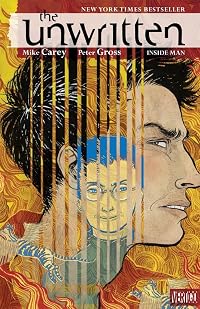
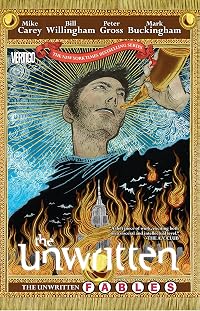
It wasn't until I finished that I realised (duh) Carey is also the writer of my other favourite ongoing, The Unwritten. Lucifer takes the Sandman story (read all that first) and runs with it like an intelligent, plotting overlord. Agendas and wings abound, and the threads run alongside each other like children playing.
It wasn't until I finished that I realised (duh) Carey is also the writer of my other favourite ongoing, The Unwritten. Lucifer takes the Sandman story (read all that first) and runs with it like an intelligent, plotting overlord. Agendas and wings abound, and the threads run alongside each other like children playing.
Members
- Recently Added By
Lists

Books Read in 2025
4,091 works; 97 members
Author Information

683+ Works 38,490 Members
All Editions
Some Editions
Series

Belongs to Publisher Series
Work Relationships
Contains
Common Knowledge
- Canonical title
- Lucifer: Book 01
- Original title
- Lucifer: Book One
- Original publication date
- 1999
- People/Characters
- Lucifer Morningstar; Mazikeen; Elaine Belloc; Jill Presto; Rachel Begai; Amenadiel (show all 21); Meleos; Michael Demiurgos; Sandalphon; Beatrice Wechsler; Izanami; Susano-O-No-Mikoto; Musubi; Kagutsuchi; Duma; Remiel; Pharamond; John Constantine; Mervyn Pumpkinhead; Lucien [Sandman]; Basanos
- Important places
- Los Angeles, California, USA; Hamburg, Germany; Hell; London, England, UK; The House of Windowless Rooms; The Silver City (show all 7); The Dreaming
- First words
- The Bible tells that story in terms of time--one thing after another.
- Last words
- (Click to show. Warning: May contain spoilers.)I want you to love me as much as you love him.
- Original language
- English
Classifications
- Genre
- Graphic Novels & Comics
- DDC/MDS
- 741.5 — Arts & recreation Drawing & decorative arts Drawing Comic books, graphic novels, fotonovelas, cartoons, caricatures, comic strips
- LCC
- PN6728 .L9 .L9 — Language and Literature Literature (General) Literature (General) Collections of general literature Comic books, strips, etc.
- BISAC
Statistics
- Members
- 375
- Popularity
- 83,630
- Reviews
- 18
- Rating
- (4.00)
- Languages
- English
- Media
- Paper, Ebook
- ISBNs
- 2
- ASINs
- 1