
Scott Hampton
Author of The Books of Magic
About the Author
Image credit: http://parkerspace.blogspot.com/2004_06_01_archive.html
Series
Works by Scott Hampton
Lucifer: The Morningstar Option (Lucifer: The Morningstar Option, #1-3) (2002) — Illustrator — 29 copies
Black Widow [2001] #3 - Breakdown, Part 3 of 3 — Illustrator — 5 copies
Black Widow [2001] #2 - Breakdown, Part 2 of 3 — Illustrator — 5 copies
Rage — Illustrator — 1 copy
Victims! 1 copy
Associated Works
Strip AIDS U.S.A.: A Collection of Cartoon Art to Benefit People With AIDS (1988) — Contributor — 65 copies
Penthouse Comix #24 | July/August 1997 — Cover artist — 2 copies
Tagged
Common Knowledge
- Birthdate
- 1959-04-10
- Gender
- male
- Relationships
- Hampton, Bo (Brother)
- Nationality
- USA
- Associated Place (for map)
- USA
Members
Discussions
Short Story: Susan Pevensie (of the Narnia Chronicles) as an old woman in Name that Book (July 2008)
Reviews
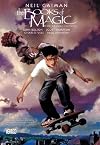
Neil Gaiman is one of my favorite authors and one of my favorite things about him is his unabashed, genuine, passionate love of story and myth. The Sandman is his greatest work because it allowed him to delve deep into this love and while I love or at least enjoy almost all of his other work, The Books of Magic is really the only thing I've read that captures that same magical enthusiasm that made The Sandman so captivating and thought-provoking so long ago.
In typical Sandman fashion this show more story is low on conflict but high on powerful themes. Basically, a group of DC characters with magical leanings decide that it's time to teach a boy about magic, because he could be the greatest magician of his age, and because others are eyeing the boy with envy and they want to make sure he knows all the choices laid out before him (obviously hoping that he will choose to use his magic for good).
What follows is, quite simply, magic. Pardon the pun, but really, it is. Between the illustrations, the themes, and Gaiman's beautiful prose this book made me feel like Alice, tumbling down the rabbit hole.
They show the boy how the universe was born, and how it ends. They show him the various planes of existence that exist beside our own: Faerie, Hell, The Dreaming, etc. Dream, Death, Destiny, Cain, and Abel from The Sandman all make an appearance. Many other DC characters I wasn't familiar with do as well.
My favorite line from the book was from Titania, queen of faerie, and perfectly shows off Gaiman's masterful prose which washes over you like a waterfall and smashes into you like a tsunami:
"You wish to see the distant realms? Very well. But know this first: the places you will visit, the places that you will see, do not exist. For there are only two worlds--your world, which is the real world, and other worlds, the fantasy...These worlds provide an alternative. Provide an escape. Provide a threat. Provide a dream, and power, provide refuge, and pain. They give your world meaning. They do not exist; and thus they are all that matters." show less
In typical Sandman fashion this show more story is low on conflict but high on powerful themes. Basically, a group of DC characters with magical leanings decide that it's time to teach a boy about magic, because he could be the greatest magician of his age, and because others are eyeing the boy with envy and they want to make sure he knows all the choices laid out before him (obviously hoping that he will choose to use his magic for good).
What follows is, quite simply, magic. Pardon the pun, but really, it is. Between the illustrations, the themes, and Gaiman's beautiful prose this book made me feel like Alice, tumbling down the rabbit hole.
They show the boy how the universe was born, and how it ends. They show him the various planes of existence that exist beside our own: Faerie, Hell, The Dreaming, etc. Dream, Death, Destiny, Cain, and Abel from The Sandman all make an appearance. Many other DC characters I wasn't familiar with do as well.
My favorite line from the book was from Titania, queen of faerie, and perfectly shows off Gaiman's masterful prose which washes over you like a waterfall and smashes into you like a tsunami:
"You wish to see the distant realms? Very well. But know this first: the places you will visit, the places that you will see, do not exist. For there are only two worlds--your world, which is the real world, and other worlds, the fantasy...These worlds provide an alternative. Provide an escape. Provide a threat. Provide a dream, and power, provide refuge, and pain. They give your world meaning. They do not exist; and thus they are all that matters." show less

Access a version of the below that includes illustrations on my blog.
I love Jim Gordon.
He's probably my favorite Batman supporting character, and I suppose that to anyone who knows me and my tastes, this is completely predictable. A man of the law, with no special powers, doing what he can to help in an unkind, unforgiving world, bit by bit. I like him a lot, but he's been a peripheral presence in most of these Batman tales I've been reading, bar Batman: Year One and a flash-forward in The show more Man Who Laughs. Night Cries features him shortly after his appointment to police commissioner, during an attempt to reconcile with his wife Barbara. (His niece/daughter Barbara is nowhere to be seen, but I think maybe she might be in college right now, living on campus.)
Night Cries shows that the fight Jim Gordon fights is not just against demons external, but internal ones as well. He's under a lot of stress here, trying to navigate the politics required of him by his new position while still wanting to be a beat cop and solve every crime himself, while not neglecting his family-- and also while dealing with his history of abuse. Night Cries reveals that Gordon was abused as a child, and that this has lingering effects. We saw his angry outbursts in Year One, which he channels for good, but here we see the darker side of Gordon, the one which he has to fight to keep in check, and which have a marked effect on his family, even if he's able to stop himself from hitting them.
Night Cries is a story about abuse; this moving story about Gordon is weaved together with one about Batman investigating a new serial killer in Gotham, one who seems to have their own issues with abuse. This is affecting in a different way, mostly for the sheer tragedy it evokes. The graphic novel opens with a meditation on the hearing of bats, cited to a 1990 book called A Guide to Wildlife. I didn't get it at first-- it just seemed kind of pretentious-- but upon finishing the book and seeing it repeated, I realized how awful its meaning. Batman fights crime, his whole reason for being is that having been touched by crime, Bruce Wayne devoted himself to (not unambitiously) the elimination of all crime. But at the end of the novel, as he stands and watches over Gotham, Batman realizes that there are crimes he just can't hear. There are children who need him... and he'll never know about it.
It's a sobering moment reflecting on a very real phenomenon, and in lesser hands, I think this book could be terrible. But in Archie Goodwin and Scott Hampton's hands, it's anything but. This book's seriousness and moodiness is such a contrast to what we just saw last week in The Cat and the Bat, yet it still works in its own way. It's a slow read, in a good way: they invite you to linger over the pages, to slowly absorb yourself in this sad, dark world, one which is our world. This superhero story is no fantasy, Batman can't swoop in and save the children here anymore than he can in ours. There are other ways child abuse has to be fought, and while it is, it will continue to have it pernicious effects on families long after the abusers are gone. As Gordon's story here shows, sometimes there are just no easy answers.
Or answers at all.
Batman "Year One" Stories: « Previous in sequence | Next in sequence » show less
I love Jim Gordon.
He's probably my favorite Batman supporting character, and I suppose that to anyone who knows me and my tastes, this is completely predictable. A man of the law, with no special powers, doing what he can to help in an unkind, unforgiving world, bit by bit. I like him a lot, but he's been a peripheral presence in most of these Batman tales I've been reading, bar Batman: Year One and a flash-forward in The show more Man Who Laughs. Night Cries features him shortly after his appointment to police commissioner, during an attempt to reconcile with his wife Barbara. (His niece/daughter Barbara is nowhere to be seen, but I think maybe she might be in college right now, living on campus.)
Night Cries shows that the fight Jim Gordon fights is not just against demons external, but internal ones as well. He's under a lot of stress here, trying to navigate the politics required of him by his new position while still wanting to be a beat cop and solve every crime himself, while not neglecting his family-- and also while dealing with his history of abuse. Night Cries reveals that Gordon was abused as a child, and that this has lingering effects. We saw his angry outbursts in Year One, which he channels for good, but here we see the darker side of Gordon, the one which he has to fight to keep in check, and which have a marked effect on his family, even if he's able to stop himself from hitting them.
Night Cries is a story about abuse; this moving story about Gordon is weaved together with one about Batman investigating a new serial killer in Gotham, one who seems to have their own issues with abuse. This is affecting in a different way, mostly for the sheer tragedy it evokes. The graphic novel opens with a meditation on the hearing of bats, cited to a 1990 book called A Guide to Wildlife. I didn't get it at first-- it just seemed kind of pretentious-- but upon finishing the book and seeing it repeated, I realized how awful its meaning. Batman fights crime, his whole reason for being is that having been touched by crime, Bruce Wayne devoted himself to (not unambitiously) the elimination of all crime. But at the end of the novel, as he stands and watches over Gotham, Batman realizes that there are crimes he just can't hear. There are children who need him... and he'll never know about it.
It's a sobering moment reflecting on a very real phenomenon, and in lesser hands, I think this book could be terrible. But in Archie Goodwin and Scott Hampton's hands, it's anything but. This book's seriousness and moodiness is such a contrast to what we just saw last week in The Cat and the Bat, yet it still works in its own way. It's a slow read, in a good way: they invite you to linger over the pages, to slowly absorb yourself in this sad, dark world, one which is our world. This superhero story is no fantasy, Batman can't swoop in and save the children here anymore than he can in ours. There are other ways child abuse has to be fought, and while it is, it will continue to have it pernicious effects on families long after the abusers are gone. As Gordon's story here shows, sometimes there are just no easy answers.
Or answers at all.
Batman "Year One" Stories: « Previous in sequence | Next in sequence » show less
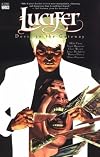
I recently reread Sandman, and while I do love it for its own sake, I must confess that my real reason for trekking through Gaiman's epic was to get to Carey's equally majestic, albeit much-less praised, story. Frankly, I'm not sure why that is, as in many ways, I think Lucifer surpasses its origin story. Both boast rich, and mostly independent cosmologies, but whereas for a significant part of its run, Sandman exists as a framework for Gaiman to write any kind of story he wants, Lucifer is show more surprisingly single-minded in telling the tale of the title character's most recent war against his creator. And frankly, I'd rather read about cunning, crafy, cold, cruel Lucifer than mopey Morpheus.
Volume one does little more than establish the setup for the rest of the series. Lucifer gets his Macguffin, and we meet the Basanos and Elaine. Sadly, Mazikeen gets short-shrift, but it's hard to do much with a character who can only barely be understood. But mostly, this book exists so that we can see what a brilliant bastard Lucifer can be. show less
Volume one does little more than establish the setup for the rest of the series. Lucifer gets his Macguffin, and we meet the Basanos and Elaine. Sadly, Mazikeen gets short-shrift, but it's hard to do much with a character who can only barely be understood. But mostly, this book exists so that we can see what a brilliant bastard Lucifer can be. show less
Sheer misery.
From the very first sentence, I just hate the way Gregory Maguire puts words together in a manner most purple and dull:
A mile above Oz, the Witch balanced on the wind's forward edge, as if she were a green fleck of the land itself, flung up and sent wheeling away by the turbulent air.
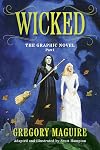
Mind you, I've never read the novel, but a quick comparison shows that adapter Scott Hampton frequently uses Maguire's original text. It certainly makes me appreciate how much effort the adapters of show more the musical put into eliminating all of Maguire's excesses and failures in prose and plot. I wish Hampton had followed suit for this graphic novel.
Hampton is a decent artist, though his work can be a little stiff. I have to wonder though if he drew this intending for a larger, album-sized edition. Detail in the art feels lost at this smaller presentation, and the text is microscopic. I strained my eyes wading through the overladen caption boxes and word balloons.
And this is only Part I? There is no way in hell I will come back and torture myself by reading Part II. show less
From the very first sentence, I just hate the way Gregory Maguire puts words together in a manner most purple and dull:
A mile above Oz, the Witch balanced on the wind's forward edge, as if she were a green fleck of the land itself, flung up and sent wheeling away by the turbulent air.
Mind you, I've never read the novel, but a quick comparison shows that adapter Scott Hampton frequently uses Maguire's original text. It certainly makes me appreciate how much effort the adapters of show more the musical put into eliminating all of Maguire's excesses and failures in prose and plot. I wish Hampton had followed suit for this graphic novel.
Hampton is a decent artist, though his work can be a little stiff. I have to wonder though if he drew this intending for a larger, album-sized edition. Detail in the art feels lost at this smaller presentation, and the text is microscopic. I strained my eyes wading through the overladen caption boxes and word balloons.
And this is only Part I? There is no way in hell I will come back and torture myself by reading Part II. show less
Lists
Awards


You May Also Like


Associated Authors
Statistics
- Works
- 44
- Also by
- 27
- Members
- 4,300
- Popularity
- #5,841
- Rating
- 3.8
- Reviews
- 88
- ISBNs
- 93
- Languages
- 9
- Favorited
- 1