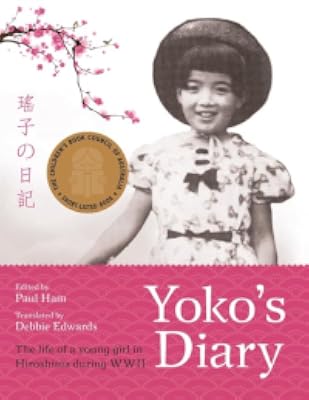
Yoko's Diary
by Paul Ham (Editor)
On This Page
Description
1945 was a hard time to be a child in Japan. Many had seen their cities destroyed by US bombers. Food, fuel and materials were in short supply. Yet spirits remained high. In April 1945, Yoko Moriwaki started high school in Hiroshima, excited to be a prestigious 'Kenjo' girl, and full of duty towards her parents, school and country. But the country was falling apart and in four months time her city would become the target for the first atomic bomb ever used as a weapon. In her diary, Yoko show more provides an account of that time - when conditions were so poor that children as young as twelve were required to work in industry; when fierce battles raged in the Pacific and children like Yoko believed victory was near. show lessTags
Recommendations

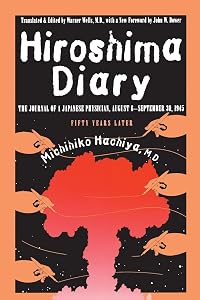
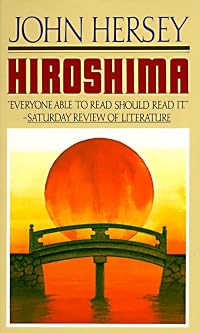















Member Recommendations

Tei by Tei Fujiwara
by meggyweg
Member Reviews
This is a beautifully presented book and whilst it is extremely sad that Yoko Moriwaki lost her life at such an early age the day the atomic bomb dropped on Hiroshima, I'm not sure about the book's appeal, especially for students. The start is too slow with a number of people talking about their memories of Yoko and the diary entries themselves are very simple, repetitive and often boring. What makes the book, in my opinion, are the photos of Yoko, the explanatory text throughout the book by editor, Paul Ham, expanding the reader's knowledge of certain events and living conditions at the time, and the final diary entry written by Yoko's father when he returned from the war two years later only to find that his daughter had passed away. show more Overall, a disappointing read. show less
Ratings
Members
- Recently Added By
Lists

Red Dot 2014-2015 - Older Readers - Longlist
37 works; 4 members
Author Information

Paul Ham is an Australian historian, journalist and author, He was born in Sydney, Australia in 1960. He earned his master's degree in economic history from the London School of Economics. He began working for the London Sunday Times in 1998 as their Australia correspondent. He is the author of Kokoda (2004), Vietnam: The Australian War (2007), show more Hiroshima Nagasaki (2011), Sandakan: The Untold Story of the Sandakan Death Marches (2012), 1914: The Year the World Ended (2013), and Passchendaele: Requiem for Doomed Youth (2017). He won the Queensland Literary Award for Non-Fiction in 2014 for his work, 1914: The Year the World Ended. He also received the 2018 NSW Premier's Literary Awards, Douglas Stewart Prize for Nonfiction for Passchendaele: Requiem for Doomed Youth. His other work includes 1913, The Target Committee, and Honey, We Forgot the Kids (co-authored with psychotherapist Bernie Brown). (Bowker Author Biography) show less
All Editions
Awards and Honors
Common Knowledge
- Important places
- Hiroshima, Japan
- Important events
- Bombing of Hiroshima
Classifications
- Genre
- Nonfiction
- DDC/MDS
- 940.53161 — History & geography History of Europe History of Europe 1918- World War II, 1939-1945 Social, political, economic history; Holocaust Noncombatants, pacifists, enemy sympathizers
- LCC
- D767.25 .H6 — History of Europe, Asia, Africa and Oceania History (General) World War II (1939-1945)
- BISAC
Statistics
- Members
- 50
- Popularity
- 605,251
- Reviews
- 1
- Rating
- (3.50)
- Languages
- English
- Media
- Paper, Ebook
- ISBNs
- 5
- ASINs
- 1