
Stephen Walker (1) (1961–)
Author of Shockwave : countdown to Hiroshima
For other authors named Stephen Walker, see the disambiguation page.
About the Author
Image credit: Sally George
Works by Stephen Walker
Beyond: The Astonishing Story of the First Human to Leave Our Planet and Journey into Space (2021) 167 copies, 6 reviews
Tagged
Common Knowledge
- Birthdate
- 1961
- Gender
- male
- Occupations
- documentary filmmaker
- Nationality
- UK
- Birthplace
- London, England, UK
- Places of residence
- London, England, UK
- Associated Place (for map)
- London, England, UK
Members
Reviews
Beyond: The Astonishing Story of the First Human to Leave Our Planet and Journey into Space by Stephen Walker
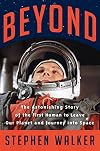
After recently reading “Mercury Rising” about the early days of the American manned space program (Book #69) this book provides an equally fascinating insight into what was happening on the other side of the so-called space race.
Walker does an excellent job in contrasting and comparing the approaches of USA and USSR to launching a man into space. But the focus of the book is firmly on the formerly hidden people behind the successful mission to put a man into orbit.
While it’s a story show more influenced by technological innovation and political meddling (on both sides of the Iron Curtain) it is above all a very human story, and one which Walker tells superbly.
This is a must read if you have any interest in the history of space exploration. show less
Walker does an excellent job in contrasting and comparing the approaches of USA and USSR to launching a man into space. But the focus of the book is firmly on the formerly hidden people behind the successful mission to put a man into orbit.
While it’s a story show more influenced by technological innovation and political meddling (on both sides of the Iron Curtain) it is above all a very human story, and one which Walker tells superbly.
This is a must read if you have any interest in the history of space exploration. show less
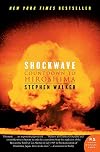
This is one of those books that reminds me, once again, of how much the general media (and school text books) have left out about important events. This particular volume covers multiple characters and perspectives of the people involved in and affected by the assembly and delivery of the first atomic bomb. It includes the scientists, the military personnel, the diplomats, the civilians, from multiple countries, and often reads like a mystery novel chewing through the "facts" of the case. On show more occasion, it seems almost too detailed, such as when it goes into some of the Japanese living in Hiroshima. I found myself asking, "Do I really care if Sunao had ever kissed or not kissed Reiko?", and similar seemingly incidental people and incidental situations. However, later, after the bomb is actually dropped and the reader has learned what happened with the bomber crew, and Truman, and the rest of the non-Hiroshima characters, the author takes you down to those same "common" folk in Hiroshima that were introduced earlier. Are you a "Walking Dead" or other zombie-type movie fan? Those shows are child's play compared to what actually happened in Hiroshima. Even so, I wonder how much more accepting today's population would be of seeing the after-effects of an atomic bomb blast compared to the 1945 population. The actual human impact of the bomb blast and the rationale given for completing that action is the main reason for reading this book. I should add that there's a scene in the book after the bomb blast in which it starts raining in Hiroshima. In just a few words, the author crafts perhaps the most chilling situation I could possibly image. show less
Beyond: The Astonishing Story of the First Human to Leave Our Planet and Journey into Space by Stephen Walker
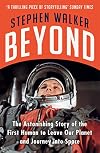
Written in a very engaging way and based on solid research, this book describes the international context for Yuri Gagarin's first human space flight, the flight itself and its aftermath.
Beyond: The Astonishing Story of the First Human to Leave Our Planet and Journey into Space by Stephen Walker
Header claims to be about the space race of the 1960s, but it's as much a reveal about the Soviet part of it. Much research in Russian must have been done to make this book engaging. In my opinion, the author's theme is that the Soviet space race was a combination of paranoia, politics and public relations. Maybe there's more to it?
Lists
Awards


You May Also Like


Statistics
- Works
- 4
- Members
- 497
- Popularity
- #49,747
- Rating
- 4.1
- Reviews
- 11
- ISBNs
- 113
- Languages
- 5