On This Page
Description
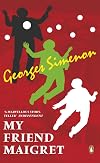
A small time crook has been murdered on an Mediterranean island--a thug, drunk, pimp and thief--yet just before he died he was heard boasting about his friend Maigret! Maigret, who is mentoring Scotland Yard detective, Inspector Pyke, travels to sun-drenched Porquerolles Island to investigate.Tags
Recommendations





































Member Reviews
Maigret leaves a rainy Paris for the balmy Mediterranan island of Porquerolles, three miles from the French coast, where he investigates the murder of Marcellin (also known as Marcel Picaud), a thug, drunkard, thief and pimp - in other words a ”mauvais garcon”. He is accompanied by Mr Pyke, a British detective who is shadowing Maigret to studying his method of working.
There are so many characters in My Friend Maigret that I got confused part way through this book and had to go back to sort out in my mind who they all were. Maigret, however, didn’t have the same problem as he talked to them all in connection with the murder.
The main point of interest for me was not who did the murder as the character of Marcellin remains indistinct show more throughout the book; he is just a small-time crook who claimed to be Maigret’s friend and that appears to be why he was killed. No one has left the island since the murder took place and at first there are no obvious suspects but gradually as Maigret meets and talks to the local people he discovers the truth and through analysis and intuition solves the crime. The interest for me lay in the relationship between Maigret and Mr Pyke, the very proper British detective, and in the location on the island of Porquerolles.
Maigret and Pyke are very different characters,and Maigret feels inhibited and irritated by his presence. He worries about whether Pyke is criticising him for drinking, smoking and his general behaviour - was he acting as a detective should? He almost seems to develop an inferiority complex and be feeling very self-conscious. He looks at himself in the mirror and tells himself “That’s the divisional chief inspector!”
Much is made of the differences between the French Maigret and the English Mr Pyke - in the food and drinks they like, their style of clothes, and the way they speak - Maigret vague and thoughtful, whereas Mr Pyke is methodical and speaks in clipped precise sentences.
Maigret’s vagueness is enhance on the island where the heat makes him feel sleepy and he loses the desire to work. Porquerolles, set in a silky sea that is an incredible blue, is conjured up by the sights, sounds and smells that Simenon scatters throughout the book. There are the smells of food, bouillabaise and saffron oil, wine, mimosa, eucalyptus and fresh coffee; and the sound of bells on Sunday, the noise of the boules players, the laughter and conversation in the Grand Hotel and the sound of the sea.
My thoughts as I finished this book were that it’s not so much a crime or detective story, but it’s really a study of Maigret himself, and of life on a small Mediterranean island. show less
There are so many characters in My Friend Maigret that I got confused part way through this book and had to go back to sort out in my mind who they all were. Maigret, however, didn’t have the same problem as he talked to them all in connection with the murder.
The main point of interest for me was not who did the murder as the character of Marcellin remains indistinct show more throughout the book; he is just a small-time crook who claimed to be Maigret’s friend and that appears to be why he was killed. No one has left the island since the murder took place and at first there are no obvious suspects but gradually as Maigret meets and talks to the local people he discovers the truth and through analysis and intuition solves the crime. The interest for me lay in the relationship between Maigret and Mr Pyke, the very proper British detective, and in the location on the island of Porquerolles.
Maigret and Pyke are very different characters,and Maigret feels inhibited and irritated by his presence. He worries about whether Pyke is criticising him for drinking, smoking and his general behaviour - was he acting as a detective should? He almost seems to develop an inferiority complex and be feeling very self-conscious. He looks at himself in the mirror and tells himself “That’s the divisional chief inspector!”
Much is made of the differences between the French Maigret and the English Mr Pyke - in the food and drinks they like, their style of clothes, and the way they speak - Maigret vague and thoughtful, whereas Mr Pyke is methodical and speaks in clipped precise sentences.
Maigret’s vagueness is enhance on the island where the heat makes him feel sleepy and he loses the desire to work. Porquerolles, set in a silky sea that is an incredible blue, is conjured up by the sights, sounds and smells that Simenon scatters throughout the book. There are the smells of food, bouillabaise and saffron oil, wine, mimosa, eucalyptus and fresh coffee; and the sound of bells on Sunday, the noise of the boules players, the laughter and conversation in the Grand Hotel and the sound of the sea.
My thoughts as I finished this book were that it’s not so much a crime or detective story, but it’s really a study of Maigret himself, and of life on a small Mediterranean island. show less
Surly Chief Inspector Maigret broods and stymies his usual freewheeling style because he’s being observed by Inspector Pyke, a Scotland Yard detective fluent in French sent over for the express purpose of studying Maigret’s methods. Maigret worries about the stolid Pyke even as the pair leave cold, rainy Paris for Porquerolles and its balmy Mediterranean weather to investigate the murder of a feckless fisherman who was bragging about his friendship with Maigret on the very night of his death.
Maigret seems grumpier and more self-conscious than usual; however, I enjoyed the novel, which — despite the beautiful, sun-dappled setting — was slightly sad.So many of the wonderfully realized characters have doomed themselves with bad show more decisions, so much wasted life and prospects. Maigret waxes philosophical about the nature of adulthood, wisdom, and aging, which I thoroughly enjoyed. Yet, just as I’m sure Inspector Pyke found shadowing Maigret to be less than satisfactory, I found My Friend Maigret a bit less thrilling than Georges Simenon’s usual fare. show less
Maigret seems grumpier and more self-conscious than usual; however, I enjoyed the novel, which — despite the beautiful, sun-dappled setting — was slightly sad.
Although My Friend Maigret by Georges Simenon is the 31st book in the Inspector Maigret series and originally published in 1949, it is the first book of the series that I have read. I chose it because it is listed in H.R.F. Keating’s 100 Best Crime & Mystery Books. I listened to an audio version as read by Gareth Armstrong and enjoyed it enough that I have decided to look for more books from this series.
Maigret is playing host to Inspector Pyke of Scotland Yard who has come to France to observe his methods. When Maigret receives word of a murder on the island of Porquerolles, he decides that a trip to the sunny Mediterranean is in order. The victim, Marcellin was boasting of his friendship with Maigret the evening before the murder. show more In actual fact Maigret remembers that he had more to do with Marcellin’s girlfriend, Ginette, a prostitute that he helped to place in a sanitarium due to her tuberculosis, years ago. Maigret and Pyke travel to the island where Maigret does some preliminary checking of witnesses and possible suspects. From a phone call that Marcellin made, he cleverly puts together what happened and why the murder occurred. Although the mystery is fairly straight forward, the inhabitants of the island are varied and interesting. Throughout the book Maigret was concerned that Pyke would get a bad impression of his “methods” and the interplay between the two men was a source of humor. Maigret appears to be somewhat grumpy and arrogant so I look forward to reading some of the earlier cases to see if he was always that way or if his fame has made him feel superior. show less
Maigret is playing host to Inspector Pyke of Scotland Yard who has come to France to observe his methods. When Maigret receives word of a murder on the island of Porquerolles, he decides that a trip to the sunny Mediterranean is in order. The victim, Marcellin was boasting of his friendship with Maigret the evening before the murder. show more In actual fact Maigret remembers that he had more to do with Marcellin’s girlfriend, Ginette, a prostitute that he helped to place in a sanitarium due to her tuberculosis, years ago. Maigret and Pyke travel to the island where Maigret does some preliminary checking of witnesses and possible suspects. From a phone call that Marcellin made, he cleverly puts together what happened and why the murder occurred. Although the mystery is fairly straight forward, the inhabitants of the island are varied and interesting. Throughout the book Maigret was concerned that Pyke would get a bad impression of his “methods” and the interplay between the two men was a source of humor. Maigret appears to be somewhat grumpy and arrogant so I look forward to reading some of the earlier cases to see if he was always that way or if his fame has made him feel superior. show less
Maigret receives a phone call from the sun-drenched Mediterranean island of Porquerolles, at the tip of the south of France, and learns that a man going by the name of Marcellin has been killed. Maigret is being informed because Marcellin spoke of him as a friend. But were they really friends? Even if that isn't the case, Maigret will still go down and investigate. At the very least, it will be a change of scenery from the gloomy rainy sidewalks of Paris.
I read this in the original French, which is my second language. I probably missed some jokes, allusions, or clever turns of phrase, but I was able to follow the story for the most part. The atmosphere of Porquerolles shone through and the whole book felt suffused in sunlight. (I only show more just looked up pictures of the island now -- it is a gorgeous place.) Another interesting touch was having Maigret play host to an English detective from Scotland Yard. Maigret was constantly second-guessing himself and overanalyzing everything the Englishman said, which was amusing, at least for me for some reason. I'm not sure whether it would have been possible to guess who done it -- the solution as explained by Maigret sounded convoluted, but that could have been because I wasn't picking up everything. Nevertheless, I liked the book and would like to read it again sometime. show less
I read this in the original French, which is my second language. I probably missed some jokes, allusions, or clever turns of phrase, but I was able to follow the story for the most part. The atmosphere of Porquerolles shone through and the whole book felt suffused in sunlight. (I only show more just looked up pictures of the island now -- it is a gorgeous place.) Another interesting touch was having Maigret play host to an English detective from Scotland Yard. Maigret was constantly second-guessing himself and overanalyzing everything the Englishman said, which was amusing, at least for me for some reason. I'm not sure whether it would have been possible to guess who done it -- the solution as explained by Maigret sounded convoluted, but that could have been because I wasn't picking up everything. Nevertheless, I liked the book and would like to read it again sometime. show less
Slightly pedestrian Maigret from 1949, but the Mediterranean setting makes a nice change. Maigret and the Scotland Yard officer who is studying his methods are summoned to solve a murder on the island of Porquerolles. The victim claimed to be an old friend of the Commissaire's.
Further thoughts on re-reading (2026): You can’t help suspecting that Simenon wrote a murder mystery set on Porquerolles the way we would post a hotel review on a travel site — there is a surprising amount about hotel beds and bathrooms and noises in the night here…
Like several other books from the years after Simenon moved to the US, we see Maigret being confronted with his past and the notion that he is growing old. Years before, he had helped out show more Marcellin, a petty criminal he had sent to jail, by arranging for his girlfriend to get medical treatment. Now Marcellin is dead and Ginette takes a long, hard look at the Commissaire and tells him that he is no longer the man he used to be. Maigret is also made slightly uncomfortable by the gentlemanly Scotland Yard officer who is following him around as part of an exchange programme, and by the fact that two of the suspects in the case belong to a generation he doesn’t seem to have any real comprehension of. He still solves the case, though. show less
Further thoughts on re-reading (2026): You can’t help suspecting that Simenon wrote a murder mystery set on Porquerolles the way we would post a hotel review on a travel site — there is a surprising amount about hotel beds and bathrooms and noises in the night here…
Like several other books from the years after Simenon moved to the US, we see Maigret being confronted with his past and the notion that he is growing old. Years before, he had helped out show more Marcellin, a petty criminal he had sent to jail, by arranging for his girlfriend to get medical treatment. Now Marcellin is dead and Ginette takes a long, hard look at the Commissaire and tells him that he is no longer the man he used to be. Maigret is also made slightly uncomfortable by the gentlemanly Scotland Yard officer who is following him around as part of an exchange programme, and by the fact that two of the suspects in the case belong to a generation he doesn’t seem to have any real comprehension of. He still solves the case, though. show less
Reading Simenon is more than merely reading a murder mystery. It's about an atmosphere, an ambiance, the setting of the 1940s-50s transpiring through each page.
The investigation? On Porquerolles island, a petty criminal who boasted of being friend with the famous Inspector is found brutally murdered. Who could have possibly do away with the poor man?
Maigret, accompanied here by an English Inspector willing to learn more about 'his method', would clearly have preferred enjoying the Mediterranean seaside and its slow-paced way of life. Well, no time for unending evenings at the local café here! An old English lady and her secretary (and the drunken parties on her yacht), failed artists, petty thieves and prostitutes... Porquerolles is show more full of surprise in this time of the year!
If you like these easy detective stories, which are as slow to read as their settings, then it's quite a nice read. show less
The investigation? On Porquerolles island, a petty criminal who boasted of being friend with the famous Inspector is found brutally murdered. Who could have possibly do away with the poor man?
Maigret, accompanied here by an English Inspector willing to learn more about 'his method', would clearly have preferred enjoying the Mediterranean seaside and its slow-paced way of life. Well, no time for unending evenings at the local café here! An old English lady and her secretary (and the drunken parties on her yacht), failed artists, petty thieves and prostitutes... Porquerolles is show more full of surprise in this time of the year!
If you like these easy detective stories, which are as slow to read as their settings, then it's quite a nice read. show less
Something I attempted to read in French, and mostly succeeded. M Simenon sets the lazy, sunny Mediterranean scene well. Of course Commissaire Maigret triumphs in the end, he always does. This time accompanied by an overseas observere from Scotland Yard, Detective Pike. M Simenon passes up the opportunity to contrast French and British policing methods and contents himseld with using Detective Pyke as a caricature Englishmand who always has bacon and eggs for breakfast. An enjoyable read, surprising racey in parts for a popular detective novel from 1949.
Members
- Recently Added By
Lists

H.R.F. Keating's 100 Best Crime & Mystery Books
100 works; 8 members

Books mentioned in Julian Symons’ Bloody Murder
438 works; 6 members

Books Read in 2020
4,379 works; 124 members

Reading LIst
648 works; 1 member
Author Information

1,324+ Works 62,954 Members
The prolific Belgian-born writer Georges Simenon produced hundreds of fictional works under his own name and 17 pseudonyms, in addition to more than 70 books about Inspector Maigret, long "the favorite sleuth of highbrow detective-story readers" (SR). More than 50 "Simenons" have been made into films. In addition to his mystery stories, he wrote show more what he called "hard" books, the serious psychological novels numbering well over 100. The autobiographical Pedigree, set in his native town of Liege, is perhaps his finest work. The publication of Simenon's intimate memoirs also attracted considerable attention. Simenon himself once said that he would never write a "great novel." Yet Gide called him "a great novelist, perhaps the greatest and truest novelist we have in French literature today," and Thornton Wilder (see Vol. 1) found that Simenon's narrative gift extends "to the tips of his fingers." The following are some of Simenon's novels, exclusive of the Maigret detective stories, that are in print. (Bowker Author Biography) Georges Simenon was born on February 13, 1903 in Liege, Belgium. He wrote more than 200 fiction works under 16 different pseudonyms. His first book, The Case of Peter the Lent led to 80 more of the like including the main character, Inspector Maigret. He published over 400 books that were translated into 50 different languages and sold by the millions. He also wrote psychological novels, including The Man Who Watched the Train Go By. He died on September 4, 1989 in Lausanne. (Bowker Author Biography) show less
Some Editions
Awards and Honors
Notable Lists
Series

Belongs to Publisher Series
Work Relationships
Common Knowledge
- Canonical title
- My Friend Maigret
- Original title
- Mon ami Maigret
- Original publication date
- 1949
- People/Characters
- Chief Inspector Maigret; Inspector Pyke of Scotland Yard; Inspector Lechat; Charlot; Jef de Graaf; Anna Bebelmanns (show all 12); Marcellin; Ginette; Mrs Wilcox; Philippe de Moricourt; Paul; Jojo
- Important places*
- Parigi, Francia; Francia; Porquerolles, Provenza-Alpi-Costa Azzurra, Francia
- Related movies*
- My Friend the Inspector (1960 | IMDb); Mon ami Maigret (2001 | IMDb); Mon ami Maigret (1973 | IMDb)
- First words
- 'You were standing in the doorway of your club?'
"So you were in the doorway of your establishment?" - Last words
- (Click to show. Warning: May contain spoilers.)After which, very quickly, he turned his head and looked at the bottom of the water.
- Blurbers
- James, P.D.
- Original language
- French
- Disambiguation notice
- Originally published in French as: Mon ami Maigret in 1949. Variously translated in English as:
(1) My Friend Maigret (tr. Nigel Ryan) (1956) (also published with the title The Methods of... (show all) Maigret in the USA (1957)) and;
(2) My Friend Maigret (tr. Sean Whiteside) (2016).
*Some information comes from Common Knowledge in other languages. Click "Edit" for more information.
Classifications
Statistics
- Members
- 676
- Popularity
- 42,493
- Reviews
- 18
- Rating
- (3.60)
- Languages
- 13 — Danish, Dutch, English, Estonian, Finnish, French, German, Hungarian, Italian, Portuguese, Slovak, Spanish, Swedish
- Media
- Paper, Audiobook, Ebook
- ISBNs
- 46
- ASINs
- 28