On This Page
Description
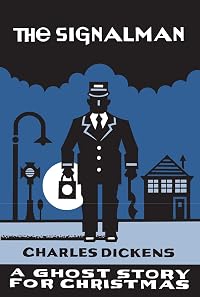
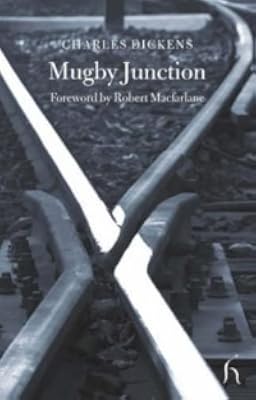
On the 9th of June 1865, Charles Dickens was travelling aboard the Folkestone to London Boat Train with his mistress and her mother, when it derailed while crossing a viaduct near Staplehurst in Kent. The train plunged down a bank into a dry river bed, killing ten passengers, and badly wounding forty.Dickens was profoundly affected by the disaster, and a year later, he published The Signalman, a supremely atmospheric ghost story in which the narrator, while investigating a dank and lonely show more railway cutting, meets the signalman who works there. His new acquaintance appears to live under the shadow of an unbearable secret, haunted by an apparition whose appearance prefigures terrible rail accidents.
Drawing on Dickens own experiences, and introduced by Simon Bradley, author of The Railways, The Signalman is both an important piece of rail history, and a sinister tale which will make you think twice next time you enter the quiet carriage.
. Literary Criticism. Politics. Fantasy. Fiction. show less
Tags
Recommendations





Member Reviews
A classic tale of premonitionary horror, 'The Signalman' (1866) channels Dickens' own experience of a rail crash and his audience's anxieties about such events. To mid-century Victorians, the train crash had the resonance that air crashes have today - mortality out of the blue.
In this case, the tragedy and horror lies in mortality not quite coming out of the blue. A horror could have been prevented 'if only we had known' and yet we do know but the way things are means that the knowing is useless because the origin of the knowledge is evidently supernatural.
There were two incidents to note in this case - the Staplehurst Rail Crash of 1865 (which Dickens experienced) on a line which I have used frequently myself and the even more serious show more Clayton Tunnel Train Crash of 1861 which is more obviously inspirational to the content of the story.
Since its publication, it has influenced so much subsequent ghost fiction that its impact has been lost to some degree. The cinematic 'jump scare' mentality plunders all previous literature and so comes to minimise the effect that shocks would have had on past audiences.
In this case, the mystery (essential to the initial telling) is lost because we can guess what will probably come next. Why? Because what came next in literature was a copying of premonitionary horror ending in the way that this story ends. We are saddened but not surprised.
Having said that, Dickens, as master of character, creates a very non-comical and serious figure in The Signalmen, a man riddled with his anxiety about the future who seems to reflect what may have been Dickens' own immediate anxieties every time he got on a train after Staplehurst.
The story makes sense both as a personal exorcism through writing and as literature making space for social anxieties. Both aspects of the case have enabled it rightly to be regarded as a classic. It is always sad that culture must always degrade its own past through influence and regurgitation of tropes. show less
In this case, the tragedy and horror lies in mortality not quite coming out of the blue. A horror could have been prevented 'if only we had known' and yet we do know but the way things are means that the knowing is useless because the origin of the knowledge is evidently supernatural.
There were two incidents to note in this case - the Staplehurst Rail Crash of 1865 (which Dickens experienced) on a line which I have used frequently myself and the even more serious show more Clayton Tunnel Train Crash of 1861 which is more obviously inspirational to the content of the story.
Since its publication, it has influenced so much subsequent ghost fiction that its impact has been lost to some degree. The cinematic 'jump scare' mentality plunders all previous literature and so comes to minimise the effect that shocks would have had on past audiences.
In this case, the mystery (essential to the initial telling) is lost because we can guess what will probably come next. Why? Because what came next in literature was a copying of premonitionary horror ending in the way that this story ends. We are saddened but not surprised.
Having said that, Dickens, as master of character, creates a very non-comical and serious figure in The Signalmen, a man riddled with his anxiety about the future who seems to reflect what may have been Dickens' own immediate anxieties every time he got on a train after Staplehurst.
The story makes sense both as a personal exorcism through writing and as literature making space for social anxieties. Both aspects of the case have enabled it rightly to be regarded as a classic. It is always sad that culture must always degrade its own past through influence and regurgitation of tropes. show less
In my opinion, 'The Signalman' is Dickens's finest and best-known ghost story and when I read it about 40 years ago, it made quite a lasting impression on me. This is the first time I've re-read it, and it has lost none of its mysterious atmosphere or sense of doom. (Forget the hammy TV adaptation repeated over Christmas this year.)
This edition also contains the short story 'The Boy at Mugby', a broadly satirical story that pokes fun at the so-called service travellers could expect in refreshment rooms at various train stations on lengthy train journeys in Dickens's time. In tone it is about as far away from that of 'The Signalman' as a vegan would be from an all-you-can-eat meat buffet.
Simon Bradley has written an illuminating show more introduction that offers an insight into Dickens's mind and the events that likely inspired these two stories. show less
This edition also contains the short story 'The Boy at Mugby', a broadly satirical story that pokes fun at the so-called service travellers could expect in refreshment rooms at various train stations on lengthy train journeys in Dickens's time. In tone it is about as far away from that of 'The Signalman' as a vegan would be from an all-you-can-eat meat buffet.
Simon Bradley has written an illuminating show more introduction that offers an insight into Dickens's mind and the events that likely inspired these two stories. show less
Long before “The Polar Express” gave us a train with a ghost, Dickens wrote this short story. A signalman tells the narrator of the story that he has seen a ghost, and that a terrible accident is going to occur. He is sure of it, but he has no details - not the place, or the day, or even the train involved. If he tries to report it, everyone will think him daft, so he does nothing except fret about it. It’s quite gripping for the entire short story, and the ending is worthy of a “One Step Beyond” episode, even if you don’t believe in ghosts. Dickens was a master of this genre.
This ghost story is more atmospheric and haunting than scary. A gentle, sad tale with distinctive characters and a great deal of charm, this story weaves a memorable yarn. It's very short, but Dickens sure packs a lot into a just a few pages. Very nicely done.
“Steeped in the glow of an angry sunset.”
A spooky short story by Dickens. Even though I’m familiar with the infrastructure of railways, cuttings, tunnels, and signal boxes, I found some of the initial details unengaging and the story itself takes a while to build up steam. Before that, it’s atmospheric in an unsettling and claustrophobic way.
“The cutting was extremely deep, and unusually precipitate. It was made through a clammy stone, that became oozier and wetter as I went down.”
The narrator comes across a lonely signalman who is haunted by premonitions to the extent:
“The monstrous thought came into my mind, as I perused the fixed eyes and the saturnine face, that this was a spirit, not a man.”
The signalman has a show more similar thought about the other man.
After that, there is a neat but tragic symmetry to what happens.
Image: The opposite of a claustrophobic train: “Rain, Steam, and Speed - The Great Western Railway” by JMW Turner (Source)
“On either side, a dripping-wet wall of jagged stone, excluding all view but a strip of sky; the perspective one way only a crooked prolongation of this great dungeon; the shorter perspective in the other direction terminating in a gloomy red light, and the gloomier entrance to a black tunnel, in whose massive architecture there was a barbarous, depressing, and forbidding air.”
Real life inspiration
This was published in 1866 and might have been inspired by an infamous accident five years earlier, the Clayton Tunnel rail crash, and more especially the Staplehurst rail crash. Dickens was on the train that derailed at Staplehurst. He tended the wounded, published this story a year later, but reportedly never fully recovered from the trauma. He died on the fifth anniversary of the derailment.
Short story club
I read this in Black Water: The Anthology of Fantastic Literature, by Alberto Manguel, from which I’m reading one story a week with The Short Story Club, starting 4 September 2023.
You can read this story here.
You can join the group here. show less
A spooky short story by Dickens. Even though I’m familiar with the infrastructure of railways, cuttings, tunnels, and signal boxes, I found some of the initial details unengaging and the story itself takes a while to build up steam. Before that, it’s atmospheric in an unsettling and claustrophobic way.
“The cutting was extremely deep, and unusually precipitate. It was made through a clammy stone, that became oozier and wetter as I went down.”
The narrator comes across a lonely signalman who is haunted by premonitions to the extent:
“The monstrous thought came into my mind, as I perused the fixed eyes and the saturnine face, that this was a spirit, not a man.”
The signalman has a show more similar thought about the other man.
After that, there is a neat but tragic symmetry to what happens.
Image: The opposite of a claustrophobic train: “Rain, Steam, and Speed - The Great Western Railway” by JMW Turner (Source)
“On either side, a dripping-wet wall of jagged stone, excluding all view but a strip of sky; the perspective one way only a crooked prolongation of this great dungeon; the shorter perspective in the other direction terminating in a gloomy red light, and the gloomier entrance to a black tunnel, in whose massive architecture there was a barbarous, depressing, and forbidding air.”
Real life inspiration
This was published in 1866 and might have been inspired by an infamous accident five years earlier, the Clayton Tunnel rail crash, and more especially the Staplehurst rail crash. Dickens was on the train that derailed at Staplehurst. He tended the wounded, published this story a year later, but reportedly never fully recovered from the trauma. He died on the fifth anniversary of the derailment.
Short story club
I read this in Black Water: The Anthology of Fantastic Literature, by Alberto Manguel, from which I’m reading one story a week with The Short Story Club, starting 4 September 2023.
You can read this story here.
You can join the group here. show less
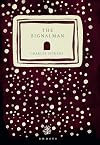
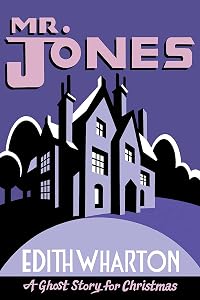
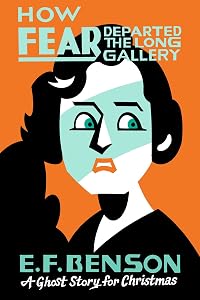
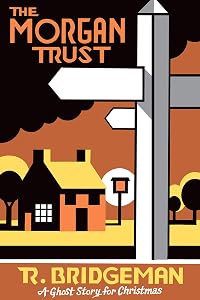
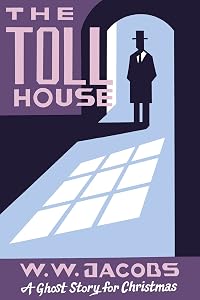
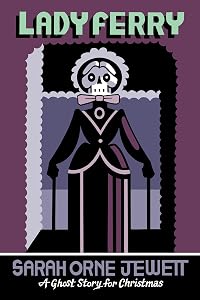
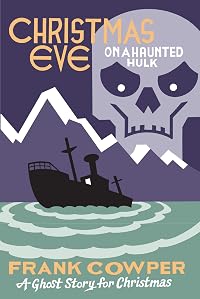
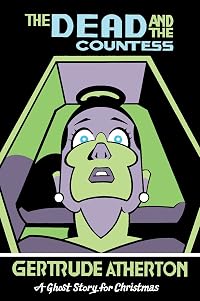
A chilling little story, albeit one where the outcome can be fairly easily guessed if you've read a lot of mysteries. Still, the atmosphere is great, and the Biblioasis edition illustrated by Seth is a delight to read from.
"A Ghost Story for Christmas"- 2.5 stars...
Introduction Excerpt:
"The telling or reading of ghost stories during long, dark and cold Christmas nights is a yuletide ritual which dates to at least the eighteenth century, and was once as much a part of Christmas tradition as decorating fir trees, feasting on goose and the singing of carols. During the Victorian era many magazines printed ghost stories specifically for the Christmas season. These "winter tales" did not necessarily explore Christmas themes in any manner. Rather, they were offered as an eerie pleasure to be enjoyed on Christmas eve with the family, adding a supernatural shiver to the seasonal chill. This tradition remained strong in the British Isles (and her colonies) show more throughout much of the twentieth century, though in recent years it has been on the wane. Certainly few in North America-in Canada or the United States-seem to know about it any longer. This series of small books seeks to rectify this, to revive a charming custom for the long dark nights we all know so well here at Christmas time."
The Signalman is a short ghost story written by Charles Dickens...When a guest at a nearby hotel is out taking a stroll, he comes upon a signalman working at a train tunnel. They start talking and the signalman tells him that he has encountered a ghost several times warning him of dangers on the tracks and each time something has happened. He's worried because he just saw the ghost again while the man was visiting him and he's at a loss at what to do and hopes the man can help him.
The story is written in the old style language so it took me a couple of paragraphs to get use to it but once I did the style didn't bother me too much. As for the plot, it started out great and the story was very atmospheric but then the ending just fell completely flat. Even after reading the last paragraph several times, I'm not sure that I even actually understood it. It really had the potential though to be a nice little ghost story but unfortunately the ending wasn't very satisfying. It's not something I would recommend to anyone on the hunt for a good ghost story.
*I received this ARC from Consortium Book Sales & Distribution and Edelweiss in exchange for an honest review. Thank you!
**I read this for my 2016 Halloween Book Bingo: ~Ghost Stories & Haunted Houses~ square show less
Introduction Excerpt:
"The telling or reading of ghost stories during long, dark and cold Christmas nights is a yuletide ritual which dates to at least the eighteenth century, and was once as much a part of Christmas tradition as decorating fir trees, feasting on goose and the singing of carols. During the Victorian era many magazines printed ghost stories specifically for the Christmas season. These "winter tales" did not necessarily explore Christmas themes in any manner. Rather, they were offered as an eerie pleasure to be enjoyed on Christmas eve with the family, adding a supernatural shiver to the seasonal chill. This tradition remained strong in the British Isles (and her colonies) show more throughout much of the twentieth century, though in recent years it has been on the wane. Certainly few in North America-in Canada or the United States-seem to know about it any longer. This series of small books seeks to rectify this, to revive a charming custom for the long dark nights we all know so well here at Christmas time."
The Signalman is a short ghost story written by Charles Dickens...When a guest at a nearby hotel is out taking a stroll, he comes upon a signalman working at a train tunnel. They start talking and the signalman tells him that he has encountered a ghost several times warning him of dangers on the tracks and each time something has happened. He's worried because he just saw the ghost again while the man was visiting him and he's at a loss at what to do and hopes the man can help him.
The story is written in the old style language so it took me a couple of paragraphs to get use to it but once I did the style didn't bother me too much. As for the plot, it started out great and the story was very atmospheric but then the ending just fell completely flat. Even after reading the last paragraph several times, I'm not sure that I even actually understood it. It really had the potential though to be a nice little ghost story but unfortunately the ending wasn't very satisfying. It's not something I would recommend to anyone on the hunt for a good ghost story.
*I received this ARC from Consortium Book Sales & Distribution and Edelweiss in exchange for an honest review. Thank you!
**I read this for my 2016 Halloween Book Bingo: ~Ghost Stories & Haunted Houses~ square show less
Members
- Recently Added By
Lists

Haunted Britain and Ireland
51 works; 7 members

Tonikat reading completed on Librarything journals
329 works; 2 members

Books Read in 2024
4,623 works; 126 members

Books Read in 2025
4,091 works; 97 members
Author Information

2,578+ Works 313,139 Members
Charles Dickens, perhaps the best British novelist of the Victorian era, was born in Portsmouth, Hampshire, England on February 7, 1812. His happy early childhood was interrupted when his father was sent to debtors' prison, and young Dickens had to go to work in a factory at age twelve. Later, he took jobs as an office boy and journalist before show more publishing essays and stories in the 1830s. His first novel, The Pickwick Papers, made him a famous and popular author at the age of twenty-five. Subsequent works were published serially in periodicals and cemented his reputation as a master of colorful characterization, and as a harsh critic of social evils and corrupt institutions. His many books include Oliver Twist, David Copperfield, Bleak House, Great Expectations, Little Dorrit, A Christmas Carol, and A Tale of Two Cities. Dickens married Catherine Hogarth in 1836, and the couple had nine children before separating in 1858 when he began a long affair with Ellen Ternan, a young actress. Despite the scandal, Dickens remained a public figure, appearing often to read his fiction. He died in 1870, leaving his final novel, The Mystery of Edwin Drood, unfinished. (Bowker Author Biography) show less
Some Editions
Series

Belongs to Publisher Series
Work Relationships
Is contained in
Christmas Stories (Thomas Nelson & Sons)(does not include Master Humphrey's Clock) by Charles Dickens (indirect)
Panik. Gruselgeschichten aus England und Amerika von R. L. Stevenson bis Ernest Hemingway by Mary Hottinger (indirect)
The Edge of the Chair: A Superlative Collection, Some Fact, Some Fiction, All Suspense by Joan Kahn (indirect)
Gather ‘Round the Sound: Holiday Stories from Beloved Authors and Great Performers Across the Globe by Audible Originals
Has the adaptation
Common Knowledge
- Canonical title
- The Signal-Man [short story]
- Original title
- The Signalman [short story]
- Original publication date
- 1866-12
- People/Characters
- Narrator; The Signalman; The Engine Driver
- Important places
- England, UK
- First words
- 'Halloa! Below there!'
- Last words
- (Click to show. Warning: May contain spoilers.)Without prolonging the narrative to dwell on any one of its curious circumstances more than on any other, I may, in closing it, point out the coincidence that the warning of the Engine-Driver included, not only the words which the unfortunate Signalman had repeated to me as haunting him, but also the words which I myself – not he – had attached, and that only in my own mind, to the gesticulation he had imitated.
- Original language
- English
- Canonical DDC/MDS
- 823.08733
Classifications
- Genres
- Fiction and Literature, General Fiction, Horror
- DDC/MDS
- 823.08733 — Literature & rhetoric English & Old English literatures English fiction By type Genre fiction Adventure fiction Horror and ghost fiction Ghost fiction
- LCC
- BF1461 .D535 — Philosophy, Psychology and Religion Psychology Occult sciences Ghosts. Apparitions. Hauntings
- BISAC
Statistics
- Members
- 283
- Popularity
- 113,833
- Reviews
- 19
- Rating
- (3.70)
- Languages
- 7 — Danish, English, German, Greek, Polish, Spanish, Turkish
- Media
- Paper, Audiobook, Ebook
- ISBNs
- 38
- ASINs
- 27