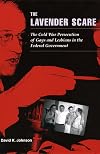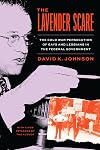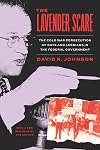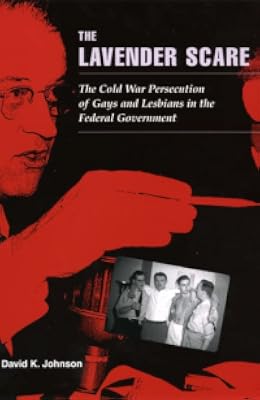
The Lavender Scare: The Cold War Persecution of Gays and Lesbians in the Federal Government
by David K. Johnson
On This Page
Description
A new edition of a classic work of history, revealing the anti-homosexual purges of midcentury Washington. In The Lavender Scare, David K. Johnson tells the frightening story of how, during the Cold War, homosexuals were considered as dangerous a threat to national security as Communists. Charges that the Roosevelt and Truman administrations were havens for homosexuals proved a potent political weapon, sparking a "Lavender Scare" more vehement and long-lasting than Joseph McCarthy's Red show more Scare. Drawing on declassified documents, years of research in the records of the National Archives and the FBI, and interviews with former civil servants, Johnson recreates the vibrant gay subculture that flourished in midcentury Washington and takes us inside the security interrogation rooms where anti-homosexual purges ruined the lives and careers of thousands of Americans. This enlarged edition of Johnson's classic work of history-the winner of numerous awards and the basis for an acclaimed documentary broadcast on PBS-features a new epilogue, bringing the still-relevant story into the twenty-first century. show lessTags
Recommendations











Member Reviews
n The Lavender Scare, David K. Johnson tells the frightening story of how, during the Cold War, homosexuals were considered as dangerous a threat to national security as Communists. Charges that the Roosevelt and Truman administrations were havens for homosexuals proved a potent political weapon, sparking a “Lavender Scare” more vehement and long-lasting than Joseph McCarthy’s Red Scare. Drawing on declassified documents, years of research in the records of the National Archives and the FBI, and interviews with former civil servants, Johnson recreates the vibrant gay subculture that flourished in midcentury Washington and takes us inside the security interrogation rooms where anti-homosexual purges ruined the lives and careers of show more thousands of Americans. This enlarged edition of Johnson’s classic work of history—the winner of numerous awards and the basis for an acclaimed documentary broadcast on PBS—features a new epilogue, bringing the still-relevant story into the twenty-first century. - from the publisher show less
The author sets out to prove that in 1950's America, the government crusade against the Third Sex was both more consequential and more popular with the common man than Senator Jos. McCarthy's parallel crusade against Communists. He has done his homework and I would say his point is proven very well. Factual errors are the only aspect of the book which make me queasy; at one point he puts Mata Hari in WWII Japan. To call that a schoolboy error would probably be unfair to the schoolboys. As an academic book this reads rather slowly, but its information value is significant, and it can be recommended to readers with an interest in the area.
This book showed how vicious the politics and policies of the U.S. government can be. And it was not that long ago. The only comfort is that the policy excluding homosexuals from federal employment ended. What scares me is how fragile our liberties are.
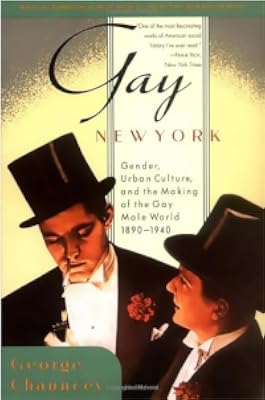
In The Lavender Scare: The Cold War Persecution of Gays and Lesbians in the Federal Government, David K. Johnson argues, “In 1950, many politicians, journalists, and citizens thought that homosexuals posed more of a threat to national security than Communists” (pg. 2). Johnson builds upon the framework George Chauncey established in his monograph, Gay New York, often describing a gay community that grew out of the history Chauncey covered. He writes, “By looking beyond McCarthy and behind the ambiguous term ‘security risk,’ this study reveals that a Lavender Scare – a fear that homosexuals posed a threat to national security and needed to be systemically removed from the federal government – permeated 1950s political show more culture” (pg. 9). Johnson’s history blends an example of political and cultural history to resurrect a seemingly tangential event from the sidelines of history in order to demonstrate its crucial role in 1950s culture.
Regarding Deputy Undersecretary for Administration John Peurifoy’s revelation of State Department firings, Johnson writes, “News that the State Department had fired ninety-one homosexuals gave credibility to McCarthy’s vague charges and enhanced his public standing. Though he was involved in neither their removal nor the revelation of their removal, McCarthy was soon given credit for both” (pg. 19). Further, “What made the homosexual issue even more of a liability for the administration was how many Americans began to conflate homosexuals and Communists. The constant pairing of ‘Communists and queers’ led many to see them as indistinguishable threats” (pg. 31). To fight this image, Washington, D.C. “codified for the first time the common-law notion of sodomy – defined as any penetration ‘however slight’ of the mouth or anus of one person with the sexual organs of another” (pg. 58). Johnson writes, “Propaganda about the Miller Sexual Psychopath law continually invoked the dangers posed to children; once passed, however, it was used to further criminalize consensual sex between adult homosexuals – both men and women” (pg. 58). Johnson argues that the Lavender Scare represented a significant pushback by Republicans against the New and Fair Deal.
Johnson writes, “By thus expanding the Lavender Scare, enemies of the Roosevelt and Truman administrations thus found a new, more effective way to cast aspersions on the goings-on in Washington. To such conservatives, Moscow ran only barely ahead of Washington as the city they most despised” (pg. 80). The Kinsey Report only added to the cultural battle over sexuality. Johnson writes, “Those who opposed or at least questioned the necessity of the purges would inevitably cite Kinsey to suggest not only the futility but also the danger in trying to effectively quarantine such a large percentage of the population from any work touching on national security” (pg. 88). Johnson concludes, “Though sharpened in the context of the Cold War, both the Red and Lavender Scares were outgrowths of a broader campaign led by members of Congress to halt the expansion of the bureaucracy they had neither the expertise nor the power to control. They were reactions against a major transformation in the role of government and in the city of Washington over the course of the New Deal and World War II” (pg. 97).
Beyond this, Johnson writes, “With the Hoey Committee investigation, the Lavender Scare began to move beyond partisan rhetoric to enjoy bipartisan support and become part of standard, government-wide policy. The avid participation of the Democratic members of the committee suggests that the notion that homosexuals in government posed a threat to national security was becoming part of a national consensus” (pg. 117). Furthermore, “To some people the Lavender Scare was a tactic in a political struggle to turn back the New Deal. To others it was a necessary measure to protect national security and counter what they saw as a nation in moral decline. But to gay and lesbian civil servants, it represented a real threat to their economic, social, and psychological well-being” (pg. 149). Finally, and in response to the sources George Chauncey uncovered regarding pre-World War II sexual dynamics, Johnson writes, “By stigmatizing homosexual behavior and labeling anyone with even one such encounter in their past as homosexual, the purges enforced a rigid homosexual/heterosexual divide. They thus facilitated the demise of an older sexual system based on gender identity and encouraged the classification of individuals based on their ‘sexual orientation’” (pg. 162). show less
Regarding Deputy Undersecretary for Administration John Peurifoy’s revelation of State Department firings, Johnson writes, “News that the State Department had fired ninety-one homosexuals gave credibility to McCarthy’s vague charges and enhanced his public standing. Though he was involved in neither their removal nor the revelation of their removal, McCarthy was soon given credit for both” (pg. 19). Further, “What made the homosexual issue even more of a liability for the administration was how many Americans began to conflate homosexuals and Communists. The constant pairing of ‘Communists and queers’ led many to see them as indistinguishable threats” (pg. 31). To fight this image, Washington, D.C. “codified for the first time the common-law notion of sodomy – defined as any penetration ‘however slight’ of the mouth or anus of one person with the sexual organs of another” (pg. 58). Johnson writes, “Propaganda about the Miller Sexual Psychopath law continually invoked the dangers posed to children; once passed, however, it was used to further criminalize consensual sex between adult homosexuals – both men and women” (pg. 58). Johnson argues that the Lavender Scare represented a significant pushback by Republicans against the New and Fair Deal.
Johnson writes, “By thus expanding the Lavender Scare, enemies of the Roosevelt and Truman administrations thus found a new, more effective way to cast aspersions on the goings-on in Washington. To such conservatives, Moscow ran only barely ahead of Washington as the city they most despised” (pg. 80). The Kinsey Report only added to the cultural battle over sexuality. Johnson writes, “Those who opposed or at least questioned the necessity of the purges would inevitably cite Kinsey to suggest not only the futility but also the danger in trying to effectively quarantine such a large percentage of the population from any work touching on national security” (pg. 88). Johnson concludes, “Though sharpened in the context of the Cold War, both the Red and Lavender Scares were outgrowths of a broader campaign led by members of Congress to halt the expansion of the bureaucracy they had neither the expertise nor the power to control. They were reactions against a major transformation in the role of government and in the city of Washington over the course of the New Deal and World War II” (pg. 97).
Beyond this, Johnson writes, “With the Hoey Committee investigation, the Lavender Scare began to move beyond partisan rhetoric to enjoy bipartisan support and become part of standard, government-wide policy. The avid participation of the Democratic members of the committee suggests that the notion that homosexuals in government posed a threat to national security was becoming part of a national consensus” (pg. 117). Furthermore, “To some people the Lavender Scare was a tactic in a political struggle to turn back the New Deal. To others it was a necessary measure to protect national security and counter what they saw as a nation in moral decline. But to gay and lesbian civil servants, it represented a real threat to their economic, social, and psychological well-being” (pg. 149). Finally, and in response to the sources George Chauncey uncovered regarding pre-World War II sexual dynamics, Johnson writes, “By stigmatizing homosexual behavior and labeling anyone with even one such encounter in their past as homosexual, the purges enforced a rigid homosexual/heterosexual divide. They thus facilitated the demise of an older sexual system based on gender identity and encouraged the classification of individuals based on their ‘sexual orientation’” (pg. 162). show less
Essential reading.
There's also an interview with the author on the book here on the Teaching Tolerance: Queer America podcast.
There's also an interview with the author on the book here on the Teaching Tolerance: Queer America podcast.
This book and a few others from my 'Movements of the 1960s' course really defined my understanding of the world. Been looking all over for a new copy since I lost my last one.
Ratings
Members
- Recently Added By
Lists

Queer History - Specialized
37 works; 1 member
Author Information
2 Works 334 Members
David K. Johnson is professor of history at the University of South Florida. He is the author of The Lavender Scare: The Cold War Persecution of Gays and Lesbians in the Federal Government (2004), which was made into an award-winning documentary.
Awards and Honors
Common Knowledge
- Important events
- Cold War; McCarthy Era
- Dedication
- To my parents, Kenneth and Julia Johnson
- First words
- In February 1950, two statements by U.S. government officials concerning security risks in the State Department captured national attention. One has come to be seen as a pivotal moment in American history - the Wheeling, West... (show all) Virginia, speech that catapulted Senator Joseph McCarthy (R-Wisconsin) into the national limelight and gave the era its name. In that speech McCarthy made the inflammatory claim that 205 card-carrying Communists were working for the State Department. The other statement, though in part a response to McCarthy's continuing charges about subversives in the State Department, has been all but forgotten. Appearing before a congressional committee, Deputy Undersecretary John Peurifoy denied that the department employed any actual Communists. At the same time, however, he revealed that a number of persons considered to be security risks had been forced out, and that among these were ninety-one homosexuals. -Introduction, "Panic on the Potomac"
Throughout the month of February 1950, the charges kept changing. In Wheeling, West Virgina, Senator Joseph McCarthy first made national headlines when he told a Republican women's group that the State Department harbored 240... (show all) "card-carrying Communists." In the next few days, as journalists swarmed his office and the State Department issued denials, he reduced their status to "bad risks" and the number to 57. -Chapter 1: Peurifoy's Revelation, The Politics of the Purges - Canonical DDC/MDS
- 352.6
- Canonical LCC
- JK723.H6
Classifications
- Genres
- Nonfiction, LGBTQ+, History, General Nonfiction, Sexuality and Gender Studies, Politics and Government
- DDC/MDS
- 352.6 — Society, government, & culture Public administration & military science General considerations of public administration Water and sewerage works
- LCC
- JK723 .H6 — Political Science Political institutions and public administration (United States) Political institutions and public administration United States Government. Public administration Executive branch Civil Service. Departments and agencies
- BISAC
Statistics
- Members
- 273
- Popularity
- 117,731
- Reviews
- 6
- Rating
- (4.36)
- Languages
- English
- Media
- Paper, Audiobook, Ebook
- ISBNs
- 7
- UPCs
- 1
- ASINs
- 6