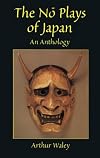
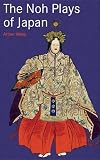
The NO Plays of Japan: An Anthology
by Arthur Waley (Editor)
On This Page
Description
This book looks at the changing nature of literacy and at the way in which new and different literacies are emerging in the first part of the 21st century. It considers how children are shaping and being shaped by these changes, it also looks at how teachers need to bridge-the-gap between children's out of school interests and school based curriculum demands. This edited collection, which features chapters by international experts and voices in the field, aims to: Take a closer look at (and show more demystify) some of the influences on literacy in the 21st century e.g. popular culture, multi-modal t show lessTags
Recommendations



















Member Reviews
Motivated by reading William T. Vollmann's Kissing the Mask , I re-read Arthur Waley's (1889-1966) translations of nineteen Noh plays (with summaries of sixteen others). Though reading a Noh play is much like reading the libretto of an opera, it is unavoidable, probably even for the Japanese, since the classic Noh plays (and that is most of them) are written in the formal language of the fourteenth century Japanese court. When Waley wrote this book (it appeared in 1921), he asserted that this courtly language was still used to write very formal letters in Japan. Nearly a century later, and knowing the enormous upheavals in Japanese society which have intervened, I feel safe in speculating that relatively few Japanese would have learned show more that archaic version of Japanese in our time. In the West, the opportunities to actually see a live performance of a Noh play are rare indeed. Even in Japan, where the Noh acting troupes are partially supported by the government, Noh performances are not frequent and most definitely sinfully expensive. Except for the occasional performance for a temple or other public institution (where they are free and are serving an outside purpose), Noh performances are attended by the old and exceedingly wealthy, to a degree that goes well beyond the situation of classical music in the West, where a certain minority of the young are still drawn to the music and into the concerts. When I asked my Japanese friends about Noh performances, they snorted with disdain and said they are for very old poseurs who go there to sleep. This news saddened me at the time but did not surprise.
Though, of course, Noh grew out of earlier forms of theater and performance, it attained its unique and traditional form in the fourteenth century due largely to the efforts of a father and son team, Kiyotsugu Kwanami (or Kanami) (1333-1384) and Motokiyo Zeami (or Seami or Kanze) (1363-1443/4). Zeami became the theorist of Noh, writing essays about its aesthetics, and composed many of the plays which became the models for later authors. He also wrote very concrete and practical advice for Noh actors (excerpted by Waley). Some of these essays are assiduously kept secret by the oldest troupes, which are associated with families - either you are born into the family or adopted into it if you want to be a Noh actor. Though the occasional woman was a Noh actor in the far past, all roles have been performed by men for a very long time (some of the troupes are relaxing this somewhat, but the actresses must learn to play the women's roles "with the strength of a man").
I have only ever seen videos of Noh performances and heard recordings of the performances (Noh music is strikingly unique) and have resigned myself to never seeing a live performance. You should find some of the videos online to get a flavor of the totally unique nature of Noh performance techniques. But what about Noh plays as literature? Waley explicitly writes that to explore and display precisely this aspect was the purpose of this book. Let's turn to that.
The plays translated in full were written in the fifteenth and sixteenth centuries, 6 or 7 by Zeami. As dance, long silences, slow chanting and singing are major components of Noh, the actual texts are less than 10 pages long. Distillation and constraint, yugen (that which lies beneath the surface, that which is hinted but not stated) are basic elements in these texts, as they are in most medieval Japanese art.
The stories are largely based upon famous stories from ancient and medieval Japanese history, though not exclusively so. They are permeated with Buddhist attitudes, though, somewhat surprisingly to me, by Amida-school Buddhist traits, not by Zen. Of course, the fact that karma plays a large role in the plays is common to all schools of Buddhism. And there are many ghost stories. As Waley explains, the ghost stories enable the Noh author to describe, not show, violent and dramatic events; this is advantageous because to show such things would be vulgar, offensive and not yugen . Typically, there are two characters (though not always), 4 musicians, and a chorus filling roles not unlike those of the chorus in ancient Greek drama; but the chorus also chanted or sang the lines of the shite , the main character, when the actor was too involved in his dancing and gesturing to comfortably chant or sing himself. (Any sign of strain or effort would not be yugen .)
The texts are mixtures of poetry and prose; often they open with a Buddhist-inspired couplet, then lapse into prose as the waki , one of the two main characters, introduces himself, the setting and then the shite . As the dramatic tension heightens, the prose usually intensifies into poetry. Viewed as literature these translations are truly admirable - graceful, charming, quite yugen (Vollmann loves them, too). Let me show you a few passages.
First, the opening couplet from Kagekiyo (Zeami):
Late dewdrops are our lives that only wait
Till the wind blows, the wind of morning blows.
A chorus from Kagekiyo :
Though my eyes be darkened
Yet, no word spoken,
Men's thoughts I see.
Listen now to the wind
In the woods upon the hill:
Snow is coming, snow!
Oh bitterness to wake
From dreams of flowers unseen!
And on the shore,
Listen, the waves are lapping
Over the rough stones to the cliff.
The evening tide is in.
From the title character in Atsumori (Zeami):
When they were on high they afflicted the humble;
When they were rich they were reckless in pride.
And so for twenty years and more
They ruled this land.
But truly a generation passes like the space of a dream.
[.............]
Wild geese were they rather, whose ranks are broken
As they fly to southward on their doubtful journey. show less
Though, of course, Noh grew out of earlier forms of theater and performance, it attained its unique and traditional form in the fourteenth century due largely to the efforts of a father and son team, Kiyotsugu Kwanami (or Kanami) (1333-1384) and Motokiyo Zeami (or Seami or Kanze) (1363-1443/4). Zeami became the theorist of Noh, writing essays about its aesthetics, and composed many of the plays which became the models for later authors. He also wrote very concrete and practical advice for Noh actors (excerpted by Waley). Some of these essays are assiduously kept secret by the oldest troupes, which are associated with families - either you are born into the family or adopted into it if you want to be a Noh actor. Though the occasional woman was a Noh actor in the far past, all roles have been performed by men for a very long time (some of the troupes are relaxing this somewhat, but the actresses must learn to play the women's roles "with the strength of a man").
I have only ever seen videos of Noh performances and heard recordings of the performances (Noh music is strikingly unique) and have resigned myself to never seeing a live performance. You should find some of the videos online to get a flavor of the totally unique nature of Noh performance techniques. But what about Noh plays as literature? Waley explicitly writes that to explore and display precisely this aspect was the purpose of this book. Let's turn to that.
The plays translated in full were written in the fifteenth and sixteenth centuries, 6 or 7 by Zeami. As dance, long silences, slow chanting and singing are major components of Noh, the actual texts are less than 10 pages long. Distillation and constraint, yugen (that which lies beneath the surface, that which is hinted but not stated) are basic elements in these texts, as they are in most medieval Japanese art.
The stories are largely based upon famous stories from ancient and medieval Japanese history, though not exclusively so. They are permeated with Buddhist attitudes, though, somewhat surprisingly to me, by Amida-school Buddhist traits, not by Zen. Of course, the fact that karma plays a large role in the plays is common to all schools of Buddhism. And there are many ghost stories. As Waley explains, the ghost stories enable the Noh author to describe, not show, violent and dramatic events; this is advantageous because to show such things would be vulgar, offensive and not yugen . Typically, there are two characters (though not always), 4 musicians, and a chorus filling roles not unlike those of the chorus in ancient Greek drama; but the chorus also chanted or sang the lines of the shite , the main character, when the actor was too involved in his dancing and gesturing to comfortably chant or sing himself. (Any sign of strain or effort would not be yugen .)
The texts are mixtures of poetry and prose; often they open with a Buddhist-inspired couplet, then lapse into prose as the waki , one of the two main characters, introduces himself, the setting and then the shite . As the dramatic tension heightens, the prose usually intensifies into poetry. Viewed as literature these translations are truly admirable - graceful, charming, quite yugen (Vollmann loves them, too). Let me show you a few passages.
First, the opening couplet from Kagekiyo (Zeami):
Late dewdrops are our lives that only wait
Till the wind blows, the wind of morning blows.
A chorus from Kagekiyo :
Though my eyes be darkened
Yet, no word spoken,
Men's thoughts I see.
Listen now to the wind
In the woods upon the hill:
Snow is coming, snow!
Oh bitterness to wake
From dreams of flowers unseen!
And on the shore,
Listen, the waves are lapping
Over the rough stones to the cliff.
The evening tide is in.
From the title character in Atsumori (Zeami):
When they were on high they afflicted the humble;
When they were rich they were reckless in pride.
And so for twenty years and more
They ruled this land.
But truly a generation passes like the space of a dream.
[.............]
Wild geese were they rather, whose ranks are broken
As they fly to southward on their doubtful journey. show less
Included the following No plays:
Atsumori
Ikuta
Tsunemasa
Kumasaka
Eboshi-ori*
Benkei on the Bridge
Kagekiyo
Hachi No Ki*
Sotoba Komachi
Ikai
Aya No Tsuzumi
Aoi No Uye
Kantan*
The Hoka Priests
Hagoromo
Taniko (part 1 only)
Ikeniye (part 1 only)
Hatsuyuki
Haku Rakuten
Kyogen
* = personal favorites. I read this book here and there over the course of a year. I really enjoyed reading these. They can be read individually in short sittings and are an interesting glimpse into a part of Japanese culture. The translator's notes are pretty detailed and add some appreciated context.
Atsumori
Ikuta
Tsunemasa
Kumasaka
Eboshi-ori*
Benkei on the Bridge
Kagekiyo
Hachi No Ki*
Sotoba Komachi
Ikai
Aya No Tsuzumi
Aoi No Uye
Kantan*
The Hoka Priests
Hagoromo
Taniko (part 1 only)
Ikeniye (part 1 only)
Hatsuyuki
Haku Rakuten
Kyogen
* = personal favorites. I read this book here and there over the course of a year. I really enjoyed reading these. They can be read individually in short sittings and are an interesting glimpse into a part of Japanese culture. The translator's notes are pretty detailed and add some appreciated context.
Ratings
Members
- Recently Added By
Author Information

Arthur Waley (1889-1966) is highly regarded for his many translations of Chinese & Japanese literature. (Bowker Author Biography)
All Editions
Some Editions
Series
Belongs to Publisher Series
Work Relationships
Common Knowledge
- Original publication date
- 1922
- Important places
- Japan
Classifications
- Genres
- Fiction and Literature, Poetry
- DDC/MDS
- 895.62 — Literature & rhetoric Literatures of other languages Literatures of East and Southeast Asia Japanese Japanese drama
- LCC
- PL887 .W3 — Language and Literature Languages and literatures of Eastern Asia, Africa, Oceania Languages of Eastern Asia, Africa, Oceania Japanese language and literature Japanese literature Local literature
- BISAC
Statistics
- Members
- 249
- Popularity
- 130,730
- Reviews
- 2
- Rating
- (3.83)
- Languages
- English, Japanese
- Media
- Paper, Ebook
- ISBNs
- 13
- UPCs
- 1
- ASINs
- 13