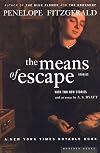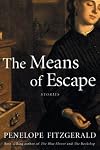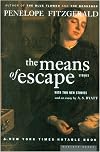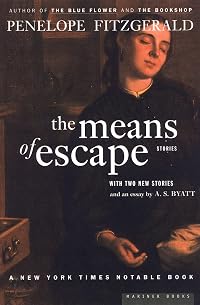
The Means of Escape
by Penelope Fitzgerald
On This Page
Description
With the death of Penelope Fitzgerald this year, the literary world lost one of its finest, most original, and most beloved authors. Fitzgerald began her writing career at age sixty and wrote eight remarkable novels in rapid succession over the next twenty years. Completed just before her death, THE MEANS OF ESCAPE is Fitzgerald's first new book since the best-selling THE BLUE FLOWER. Never before have her short stories been collected in book form, and none of them has ever appeared in the show more United States. THE MEANS OF ESCAPE showcases this incomparable author at her most intelligent, her funniest, her best. Like her novels, these brilliant stories are miniature studies of the endless absurdity of human behavior. Concise, comic, biting, and mischievous, they are vintage Fitzgerald. Roaming the globe and the ages, the stories travel from England to France to New Zealand and from today to the seventeenth century. Uniting them is a universal theme: the shifting balance between those who are in positions of power--by wealth, status, or class--and those who, deceptively, are not. THE MEANS OF ESCAPE memorializes a life and a writer guided by a generous but unwavering moral gaze. show lessTags
Recommendations























Member Reviews
must have been living in a cave. I’d never heard of Penelope Fitzgerald before her death at 83 this past April. Perhaps I had heard her name; but if so, it was on the periphery of my consciousness.
Now I’ve just finished reading a posthumous collection of her short stories, The Means of Escape. After working my way voraciously through this ultra-slim volume, you can bet I will never forget Penelope Fitzgerald’s name.
These eight stories are as well-honed as an assassin’s dagger, as well-boiled as a New England stew (and just as tasty), as well-written as anything from the pens of Chekhov, O’Connor or that other Fitzgerald, F. Scott. These eight stories perform an amazing literary trick: they are as slim as a runway model, but show more when you finish reading each of them you’ll lie there gasping and satiated like someone who has just spent an afternoon tryst with a generous lover who has the proportions of a Rubenesque model. I don’t know any other way to describe them: they come off as anorexic, but they’re roly-poly with thematic depth.
The entire volume weighs in at just 117 pages, but in those brief pages is packed more comic wit, more evocative description, more mind-turning exchanges of dialogue than any bloated bestseller you’ll find at the supermarket checkout stand. Means of Escape is one of the very few books I’ve read this year where I turned the last page and immediately scrambled back to the beginning to start it all over again.
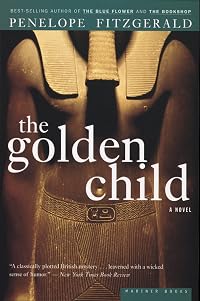
Of course, I also immediately turned to the Internet and searched for everything I should have already known about Penelope Fitzgerald. She started her literary career late in life—her first novel, The Golden Child, was published in 1977—but quickly joined the growing ranks of British women writers making their marks in publishing (Iris Murdoch, Anita Brookner and Muriel Spark among them). Critics started slathering on the praise, saying things like “the breadth of her knowledge, the lucidity of her intelligence and the quirkiness of her characters provide the satisfaction of a 19th-century novelâÂ? and âÂÂan uncommonly perceptive writer, acute though not sour about human nature and the master of a spare, subtle style.âÂ?
I read things like that and say aloud, âÂÂPenelope, where have you been all my life?âÂ? (saying it âÂÂbeanâÂ? in faux British voice, of course).
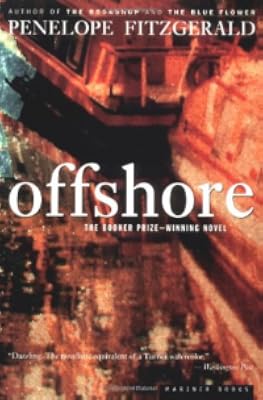
The settings of FitzgeraldâÂÂs nine novels are as hard to pin down as a still-fluttering butterfly. The Golden Child is a mystery which takes place in a London museum; her most famous work, The Blue Flower, is about an 18th-century poetâÂÂs love for a 12-year-old girl. Oh yeah, she also won BritainâÂÂs prestigious Booker Prize for 1979âÂÂs Offshore, a novel about life on a Thames River barge.
The stories in The Means of Escape are just as wide-ranging. The titular tale is about a rectorâÂÂs daughter living in New Zealand in 1852 who promises to help an escaped convict (a man only known by the name âÂÂSavage,âÂ? our first description of him is of âÂÂa rancid stenchâÂ?). Another story, âÂÂDesideratus,âÂ? is set in 1674 when an 11-year-old boy loses a precious gilded medal and must go retrieve it from the areaâÂÂs richest landowner. Still another, âÂÂThe Axe,âÂ? is a bloodcurdling tale of 20th-century corporate downsizing. Fitzgerald moves with remarkable intelligence through all of these worlds.
Binding all the stories is the unsubtle theme of powerâÂÂthe iron grip those with all the money use to choke the lower classes. Frequently, however, the tables are flipped and, by the final sentences, the iron-fisted ones often find themselves sprawled on the ground, rubbing their noggins and wondering how they were outsmarted by the rancid, stinking peasants. Ms. Fitzgerald makes her point as keenly as Dickens ever did but with much greater economy of words. At one point, a character says, âÂÂEverybody wants the same things. The only difference is what they will do to get them;âÂ? later, Fitzgerald writes, âÂÂa dominating figure creates discord.âÂ?
At this point in the review, I should bow out with a criticâÂÂs grace, perhaps urging you to hightail it down to your local Books R Us to snatch up all the volumes of Penelope Fitzgerald in sight.
But IâÂÂm not graceful. IâÂÂm going to keep slathering on the adulation simply because I just cannot get over my excitement at discovering this literary treasure. If you want to bow out of this review gracefully at this point, by all means, youâÂÂre very welcome (just remember to hightail it down to Books R Us). Otherwise, bear with me as I continue.
The stories in The Means of Escape bear the marks of the kind of craftsmanship artisans in past centuries gave to their works. Reading delightful concoctions like âÂÂBeehernzâÂ? and âÂÂAt Hiruharama,âÂ? is like admiring a fine silversmithed bracelet or a perfectly-pottered vase. Such great care has been taken with each sentenceâÂÂnay, each word!âÂÂthat it is impossible to see the seams.
Because her prose is so intricately meshed, itâÂÂs difficult to quote passages out of context without draining them of their power. Still, I am particularly fond of this description of a nondescript housekeeper in the first story, âÂÂThe Means of EscapeâÂ?:
Mrs. Watson had no documents which indicated her age, and her pale face was not so much seamed or lined as knocked, apparently, out of the true by a random blow which might have been time or chance. Perhaps she had always looked like that.
Such wit, such worlds of meaning in those 45 words! They are probably my two favorite sentences in all the reams of this yearâÂÂs literature.
In fact, the language in the entire collection is so perfect, the wit so sharp that I wish I could spend more time with these characters in their fully-imagined worlds. And that is where my one complaint about Fitzgerald comes in (at least the Fitzgerald on display in this collection). The short form feels, at times, like a hobble. We barely get started in each of these stories before we find ourselves at the last sentence. The pace has a strange dualityâÂÂitâÂÂs lightning-quick, but it compels you to linger (harking back to that previous analogy of the runway model and the Rubenesque lover).
Some of the stories seem to conclude in mid-air, hovering there like a penultimate note in a symphony. Sometimes, I wanted that definitive, concluding cymbal crash; yet other times the sustained and indefinite pause works to good effect, making me turn FitzgeraldâÂÂs words over and over in my mind.
And now it truly is time for me to bow out with whatever grace I can muster. IâÂÂll leave you with this one last passage, from an interview with Fitzgerald herself in the late 1980s:
I've heard my novels described as âÂÂlight,âÂ? but I mean them very seriously. If ever I see somebody reading one of my paperbacks on a bus or in the Underground I have to restrain myself from sitting down next to them and asking them whether they see the world as I do.
Well, now that IâÂÂve been introduced to FitzgeraldâÂÂs world, I donâÂÂt think IâÂÂll be leaving any time soon. show less
Now I’ve just finished reading a posthumous collection of her short stories, The Means of Escape. After working my way voraciously through this ultra-slim volume, you can bet I will never forget Penelope Fitzgerald’s name.
These eight stories are as well-honed as an assassin’s dagger, as well-boiled as a New England stew (and just as tasty), as well-written as anything from the pens of Chekhov, O’Connor or that other Fitzgerald, F. Scott. These eight stories perform an amazing literary trick: they are as slim as a runway model, but show more when you finish reading each of them you’ll lie there gasping and satiated like someone who has just spent an afternoon tryst with a generous lover who has the proportions of a Rubenesque model. I don’t know any other way to describe them: they come off as anorexic, but they’re roly-poly with thematic depth.
The entire volume weighs in at just 117 pages, but in those brief pages is packed more comic wit, more evocative description, more mind-turning exchanges of dialogue than any bloated bestseller you’ll find at the supermarket checkout stand. Means of Escape is one of the very few books I’ve read this year where I turned the last page and immediately scrambled back to the beginning to start it all over again.
Of course, I also immediately turned to the Internet and searched for everything I should have already known about Penelope Fitzgerald. She started her literary career late in life—her first novel, The Golden Child, was published in 1977—but quickly joined the growing ranks of British women writers making their marks in publishing (Iris Murdoch, Anita Brookner and Muriel Spark among them). Critics started slathering on the praise, saying things like “the breadth of her knowledge, the lucidity of her intelligence and the quirkiness of her characters provide the satisfaction of a 19th-century novelâÂ? and âÂÂan uncommonly perceptive writer, acute though not sour about human nature and the master of a spare, subtle style.âÂ?
I read things like that and say aloud, âÂÂPenelope, where have you been all my life?âÂ? (saying it âÂÂbeanâÂ? in faux British voice, of course).
The settings of FitzgeraldâÂÂs nine novels are as hard to pin down as a still-fluttering butterfly. The Golden Child is a mystery which takes place in a London museum; her most famous work, The Blue Flower, is about an 18th-century poetâÂÂs love for a 12-year-old girl. Oh yeah, she also won BritainâÂÂs prestigious Booker Prize for 1979âÂÂs Offshore, a novel about life on a Thames River barge.
The stories in The Means of Escape are just as wide-ranging. The titular tale is about a rectorâÂÂs daughter living in New Zealand in 1852 who promises to help an escaped convict (a man only known by the name âÂÂSavage,âÂ? our first description of him is of âÂÂa rancid stenchâÂ?). Another story, âÂÂDesideratus,âÂ? is set in 1674 when an 11-year-old boy loses a precious gilded medal and must go retrieve it from the areaâÂÂs richest landowner. Still another, âÂÂThe Axe,âÂ? is a bloodcurdling tale of 20th-century corporate downsizing. Fitzgerald moves with remarkable intelligence through all of these worlds.
Binding all the stories is the unsubtle theme of powerâÂÂthe iron grip those with all the money use to choke the lower classes. Frequently, however, the tables are flipped and, by the final sentences, the iron-fisted ones often find themselves sprawled on the ground, rubbing their noggins and wondering how they were outsmarted by the rancid, stinking peasants. Ms. Fitzgerald makes her point as keenly as Dickens ever did but with much greater economy of words. At one point, a character says, âÂÂEverybody wants the same things. The only difference is what they will do to get them;âÂ? later, Fitzgerald writes, âÂÂa dominating figure creates discord.âÂ?
At this point in the review, I should bow out with a criticâÂÂs grace, perhaps urging you to hightail it down to your local Books R Us to snatch up all the volumes of Penelope Fitzgerald in sight.
But IâÂÂm not graceful. IâÂÂm going to keep slathering on the adulation simply because I just cannot get over my excitement at discovering this literary treasure. If you want to bow out of this review gracefully at this point, by all means, youâÂÂre very welcome (just remember to hightail it down to Books R Us). Otherwise, bear with me as I continue.
The stories in The Means of Escape bear the marks of the kind of craftsmanship artisans in past centuries gave to their works. Reading delightful concoctions like âÂÂBeehernzâÂ? and âÂÂAt Hiruharama,âÂ? is like admiring a fine silversmithed bracelet or a perfectly-pottered vase. Such great care has been taken with each sentenceâÂÂnay, each word!âÂÂthat it is impossible to see the seams.
Because her prose is so intricately meshed, itâÂÂs difficult to quote passages out of context without draining them of their power. Still, I am particularly fond of this description of a nondescript housekeeper in the first story, âÂÂThe Means of EscapeâÂ?:
Mrs. Watson had no documents which indicated her age, and her pale face was not so much seamed or lined as knocked, apparently, out of the true by a random blow which might have been time or chance. Perhaps she had always looked like that.
Such wit, such worlds of meaning in those 45 words! They are probably my two favorite sentences in all the reams of this yearâÂÂs literature.
In fact, the language in the entire collection is so perfect, the wit so sharp that I wish I could spend more time with these characters in their fully-imagined worlds. And that is where my one complaint about Fitzgerald comes in (at least the Fitzgerald on display in this collection). The short form feels, at times, like a hobble. We barely get started in each of these stories before we find ourselves at the last sentence. The pace has a strange dualityâÂÂitâÂÂs lightning-quick, but it compels you to linger (harking back to that previous analogy of the runway model and the Rubenesque lover).
Some of the stories seem to conclude in mid-air, hovering there like a penultimate note in a symphony. Sometimes, I wanted that definitive, concluding cymbal crash; yet other times the sustained and indefinite pause works to good effect, making me turn FitzgeraldâÂÂs words over and over in my mind.
And now it truly is time for me to bow out with whatever grace I can muster. IâÂÂll leave you with this one last passage, from an interview with Fitzgerald herself in the late 1980s:
I've heard my novels described as âÂÂlight,âÂ? but I mean them very seriously. If ever I see somebody reading one of my paperbacks on a bus or in the Underground I have to restrain myself from sitting down next to them and asking them whether they see the world as I do.
Well, now that IâÂÂve been introduced to FitzgeraldâÂÂs world, I donâÂÂt think IâÂÂll be leaving any time soon. show less
As well as being a wonderful writer, Penelope Fitzgerald had quite an inspiring literary career; she was sixty years old when her first novel was published but she went on to write eight others, plus several biographies, receive great critical acclaim, and win the Booker prize. Before beginning to write, she had various jobs that inspired some of her novels, including editing a literary journal, running a bookshop, working for the BBC, and teaching at a theatrical school. The novel I like best is The Blue Flower, but The Bookshop comes a close second. The Means of Escape is a volume of her short stories, and I found this small collection of eight stories just as interesting and beautifully written as her novels.
Penelope Fitzgerald’s show more fiction covers a wide variety of subjects, and she writes elegantly and apparently effortlessly about people living in many different times and places. The characters in The Means of Escape range from a small boy who loses a locket in seventeenth-century England, to a rector’s daughter in nineteenth-century Tasmania, and a group of Victorian painters in Brittany. For some reason, I always feel her writing seems very authentic and each story is like spying down a telescope for a few moments into a completely different world. Some of the stories in the book are very brief, only little snapshots, but they all leave a strong and usually quite odd impression. Beehernz, the story of a visit to an ancient and eccentric musician on a remote Scottish island, was one of this kind, leaving me both wondering what it all means, and wishing for more about these unusual characters.
I liked the title story, about a young woman who helps an escaped convict she meets in church, and At Hiruharama, a moving story about a young couple expecting a child in New Zealand. Both of these stories reminded me of The Blue Flower, as they perform a similar trick of creating a very vivid image of the past and then returning to the present where all we have are old letters or keepsakes, admitting that there are some things, intangible things like thoughts and motivations, that we will never know, that the reader has to imagine for him or herself. The story that has just been read is lost in the distant past, and its secrets will never be truly revealed.
The blurb on my copy points out the theme of ‘misunderstandings and missed opportunities’ in these stories. Some of the stories did leave me with a rather bittersweet feeling that the characters had missed some chance of happiness in their lives, that another person had entered their world but hadn’t been properly known or understood, and had disappeared before anything could really change. The Red-Haired Girl, about an artist and the servant girl who models for him, had this melancholy air about it. However, I don’t want to give the wrong impression as the stories aren’t at all depressing; they are full of wit and absurdity, and make me laugh just as often as they make me feel a little sad. And Penelope Fitzgerald’s writing varies so much that there are many different themes and emotions in her work. The Axe, one of my favourite stories, is a brilliantly creepy story about redundancies in an office, written in a very clever way as a report from an office worker to his manager. Recommended. [2011] show less
Penelope Fitzgerald’s show more fiction covers a wide variety of subjects, and she writes elegantly and apparently effortlessly about people living in many different times and places. The characters in The Means of Escape range from a small boy who loses a locket in seventeenth-century England, to a rector’s daughter in nineteenth-century Tasmania, and a group of Victorian painters in Brittany. For some reason, I always feel her writing seems very authentic and each story is like spying down a telescope for a few moments into a completely different world. Some of the stories in the book are very brief, only little snapshots, but they all leave a strong and usually quite odd impression. Beehernz, the story of a visit to an ancient and eccentric musician on a remote Scottish island, was one of this kind, leaving me both wondering what it all means, and wishing for more about these unusual characters.
I liked the title story, about a young woman who helps an escaped convict she meets in church, and At Hiruharama, a moving story about a young couple expecting a child in New Zealand. Both of these stories reminded me of The Blue Flower, as they perform a similar trick of creating a very vivid image of the past and then returning to the present where all we have are old letters or keepsakes, admitting that there are some things, intangible things like thoughts and motivations, that we will never know, that the reader has to imagine for him or herself. The story that has just been read is lost in the distant past, and its secrets will never be truly revealed.
The blurb on my copy points out the theme of ‘misunderstandings and missed opportunities’ in these stories. Some of the stories did leave me with a rather bittersweet feeling that the characters had missed some chance of happiness in their lives, that another person had entered their world but hadn’t been properly known or understood, and had disappeared before anything could really change. The Red-Haired Girl, about an artist and the servant girl who models for him, had this melancholy air about it. However, I don’t want to give the wrong impression as the stories aren’t at all depressing; they are full of wit and absurdity, and make me laugh just as often as they make me feel a little sad. And Penelope Fitzgerald’s writing varies so much that there are many different themes and emotions in her work. The Axe, one of my favourite stories, is a brilliantly creepy story about redundancies in an office, written in a very clever way as a report from an office worker to his manager. Recommended. [2011] show less
Short stories that reflect Fitzgerald's style of her novels: Deceptively simple writing that captures and reveals to the reader enormously powerful thoughts, characters that seem initially simple but do and say things that leave your gasping but are never out of character. The stories all in one way or another are about power – whether between two people over position, money, sex, land; or even between someone and the nominal home as in the title story "The Means of Escape." There is no sugar-coating, the stories are tough; there is no convenient tying up; the endings are often abrupt, one expecting to turn the page but finding only that Penelope's part of the story is done. The rest is up to the reader, although how the story goes on show more is simple enough, if the reader has learned from Penelope to be both honest and sensible to how all of us manage to deal with the reality of lives. show less
The Means of Escape is a mercifully short collection of ten stories. I read half of them before throwing in the towel. The title story, where a woman helps an escaped convict in hopes of running off with him, was the best of the bunch. One story, The Prescription, was so indecipherable to me that my notes just say, "???". The last story I read, The Axe, began with promise. It took the form of a letter written by a manager who had recently made a long-time employee redundant. Clearly he felt the decision was unjust and had sympathy for the employee. But it took a sudden turn into very strange territory, and that's when I knew I was done with this book.
This book was just too full of "quirky" characters and bizarre situations. These might show more work better in a long-form novel, but encountering a new set every ten pages or so was just too much for me. show less
This book was just too full of "quirky" characters and bizarre situations. These might show more work better in a long-form novel, but encountering a new set every ten pages or so was just too much for me. show less
A marvelously quirky ciollection of short stories. Fitzgerald has a brilliant ability to make us chuckle and/or cringe at human foibles. i particularly like her ability to write unexpected endings which often brought me up short and made me sit back and think. Excellent!
I don't generally care for these stories, but one of the better ones is titled "Our Lives Are Only Lent to Us" and it apparently only appears in the paperback edition, which includes an additional two stories over the original eight in the hardcover. For the sake of completeness, if acquiring this book, get the paperback for that reason.
2.5 stars.
Members
- Recently Added By
Author Information

24+ Works 12,081 Members
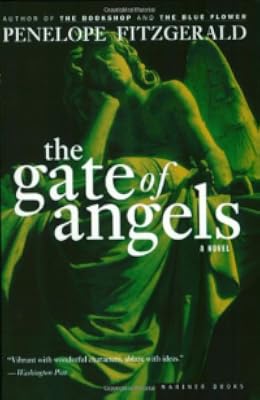
In 1997 Penelope Fitzgerald's novel The Blue Flower was named one of the New York Times Book Review's eleven Best Books of the Year. Winner of the 1979 Booker Prize for Offshore, Fitzgerald was also short-listed for the Booker for The Bookshop. The Beginning of Spring, and The Gate of Angels. Penelope Fitzgerald lives in England. (Bowker Author show more Biography) Penelope Fitzgerald, one of England's most-celebrated contemporary writers, is the author of "The Blue Flower," which won the National Book Critics Circle Award. Winner of the 1979 Booker Prize for "Offshore," she was also shortlisted for the Booker for "The Bookshop," "The Beginning of Spring," & "The Gate of Angels." She lives in London. (Bowker Author Biography) Admired by many as one of the leading English novelists of her day, Penelope Fitzgerald (1916-2000) wrote some twelve books of fiction and nonfiction over the course of her writing career; which began at the age of sixty. She won the National Book Critics Circle Award for "The Blue Flower" and the Booker Prize for "Offshore". She died on April 28, 2000, at the age of eighty-three. (Bowker Author Biography) show less
Work Relationships
Contains
Common Knowledge
- Original publication date
- 2000
Classifications
Statistics
- Members
- 349
- Popularity
- 90,370
- Reviews
- 7
- Rating
- (3.73)
- Languages
- English, Italian
- Media
- Paper, Audiobook, Ebook
- ISBNs
- 12
- UPCs
- 2
- ASINs
- 3