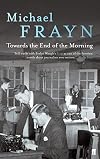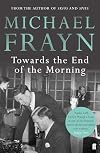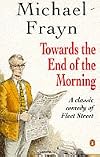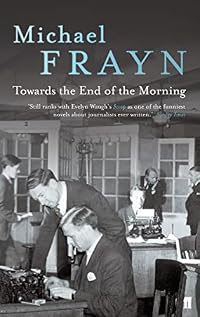
Towards the End of the Morning
by Michael Frayn
On This Page
Description
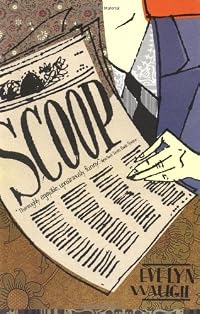
Michael Frayn's classic novel is set in the crossword and nature notes department of an obscure national newspaper during the declining years of Fleet Street, where John Dyson dreams wistfully of fame and the gentlemanly life - until one day his great chance of glory at last arrives. Michael Frayn is the celebrated author of fifteen plays including Noises Off, Copenhagen and Afterlife. His bestselling novels include Headlong, which was shortlisted for the Man Booker Prize, Spies, which won show more the Whitbread Best Novel Award and Skios, which was longlisted for the Man Booker Prize. 'Still ranks with Evelyn Waugh's Scoop as one of the funniest novels about journalists ever written.' Sunday Times 'A sublimely funny comedy about the ways newspapers try to put lives into words.' Spectator show lessTags
Recommendations



















Member Recommendations


SomeGuyInVirginia Both newspaper books.
Member Reviews
I started Frayn's "Towards the End of the Morning" to accompany me on what was otherwise going to be a pretty irritating train journey, and it worked - I was laughing out loud, and arrived in very good spirits. But when I finished it the next morning, the comedy seemed to me to peter out and the ending seemed like a cop-out, the last scene like a Ray Cooney farce (or rather, as I imagine a Cooney farce to end since I've never seen one).
The note on this edition, at the start of the book, is delightful reading, describing Fleet Street as it was when Frayn began in journalism. As an exemplary passage, this one will do:
"The other [favourite drinking hole] was El Vino's (always so-called, with an apostrophe s, like Piele's or Auntie's as if show more it had a landlord called Elmer Vino). [...] Women were strongly discouraged from entering. Any woman who insisted was not allowed to disturb the collegiate atmosphere of the bar itself but was directed to a room at the back furnished with chairs and tables, where Elmer's grand head-waiter would ritually shame her by forcing one of the more elderly and infirm old soaks taking refuge there to give up his seat to her."
The note also contains an excellent conceit of Fleet Street as it grinds towards the end of its life before everyone fled to Canary Wharf and Wapping. The conceit likens Fleet Street to an old-people's home, where "The Sun and the Independent were still undreamed of, and the appearance of anything new in this run-down world seemed as unlikely as the birth of a baby..." The Chronicle is depicted as a family mausoleum, its masthead bearing all the names of the papers it had swallowed up; "I'd scarcely been there a year when the whole vault finally collapsed, taking the Star and all the old names with it." It reminded me of the excellent passage about Ford motorcar-manufacture in Delaware in Jeffrey Eugenides' "Middlesex".
As for the novel itself, each first encounter with each character is a real treat. They're all likeable characters, apart from Reg Mounce I'd say, who really comes into his ghastly own towards the end of the book. The conversations are hilarious to eavesdrop on, whether they're vacuous beer-fuelled non-stories in the pub at lunchtime, or embarrassing encounters in Bob Bill's flat - he who writes like an angel, or equally vacuous schmoozing at the television studio. There are a few still passages of reflection, following a death or a memory, and they're poignant but unresolved, which is the one reservation I have about the writing. In fact, by the end, Mounce is the one character I felt quite relieved to have stayed in the narrative if only because he stuck so solidly to his clear-cut caricature. The others tipped into the realms of reality, jarring with each other, caring for each other, redeeming themselves, questioning themselves, stoking up compassion in the reader, but for me they needed some resolution, or at least Bob's girlfriend clumsy, young Tessa did, and John and Jannie Dyson for instance, since their parts were written with so much pathos.
There are a couple of playful characters in the background, like the editor, spotted by Tessa and wrongly identified as an old tramp, and a cleaning-lady of utmost sweetness and discretion - the editor, particularly, almost has his own musical leitmotif ringing in your head as you spot him sneakingabout the novel. The two wives, Jannie Dyson and Glenda Mounce are great contrasts as they each advise Bob and Tessa on their housing, blithely ignorant of the truth of the couple's relationship, and utterly informed by their own desires for neighbours and tenants respectively.
Well worth the read because he's such an entertaining pithy funny writer, but yes, a disappointing ending - but then I suppose that's in the title... show less
The note on this edition, at the start of the book, is delightful reading, describing Fleet Street as it was when Frayn began in journalism. As an exemplary passage, this one will do:
"The other [favourite drinking hole] was El Vino's (always so-called, with an apostrophe s, like Piele's or Auntie's as if show more it had a landlord called Elmer Vino). [...] Women were strongly discouraged from entering. Any woman who insisted was not allowed to disturb the collegiate atmosphere of the bar itself but was directed to a room at the back furnished with chairs and tables, where Elmer's grand head-waiter would ritually shame her by forcing one of the more elderly and infirm old soaks taking refuge there to give up his seat to her."
The note also contains an excellent conceit of Fleet Street as it grinds towards the end of its life before everyone fled to Canary Wharf and Wapping. The conceit likens Fleet Street to an old-people's home, where "The Sun and the Independent were still undreamed of, and the appearance of anything new in this run-down world seemed as unlikely as the birth of a baby..." The Chronicle is depicted as a family mausoleum, its masthead bearing all the names of the papers it had swallowed up; "I'd scarcely been there a year when the whole vault finally collapsed, taking the Star and all the old names with it." It reminded me of the excellent passage about Ford motorcar-manufacture in Delaware in Jeffrey Eugenides' "Middlesex".
As for the novel itself, each first encounter with each character is a real treat. They're all likeable characters, apart from Reg Mounce I'd say, who really comes into his ghastly own towards the end of the book. The conversations are hilarious to eavesdrop on, whether they're vacuous beer-fuelled non-stories in the pub at lunchtime, or embarrassing encounters in Bob Bill's flat - he who writes like an angel, or equally vacuous schmoozing at the television studio. There are a few still passages of reflection, following a death or a memory, and they're poignant but unresolved, which is the one reservation I have about the writing. In fact, by the end, Mounce is the one character I felt quite relieved to have stayed in the narrative if only because he stuck so solidly to his clear-cut caricature. The others tipped into the realms of reality, jarring with each other, caring for each other, redeeming themselves, questioning themselves, stoking up compassion in the reader, but for me they needed some resolution, or at least Bob's girlfriend clumsy, young Tessa did, and John and Jannie Dyson for instance, since their parts were written with so much pathos.
There are a couple of playful characters in the background, like the editor, spotted by Tessa and wrongly identified as an old tramp, and a cleaning-lady of utmost sweetness and discretion - the editor, particularly, almost has his own musical leitmotif ringing in your head as you spot him sneakingabout the novel. The two wives, Jannie Dyson and Glenda Mounce are great contrasts as they each advise Bob and Tessa on their housing, blithely ignorant of the truth of the couple's relationship, and utterly informed by their own desires for neighbours and tenants respectively.
Well worth the read because he's such an entertaining pithy funny writer, but yes, a disappointing ending - but then I suppose that's in the title... show less
An incredibly precocious novel, written by the then 31 year-old Frayn, yet displaying the insights and technique of writers 30 years his senior. A bitter-sweet story about people who make life far too hard for themselves, peppered with laugh-out-loud set pieces that show Frayn testing the waters for later works like 'Noises Off' and 'Clockwise'.
The blurb says things like: "classic novel", "probably England's funniest writer"; "keeps you laughing"; "like a brilliant, fast game of poker with the author holding all the best hands, and the ghosts of Wodehouse and Waugh whispering advice over his shoulder".
Sadly, I still haven't laughed once and I've read three-quarters of it. There's specks of humour here and there, but for the most part it's a book about self-absorbed people who aren't particularly nice and don't do anything particularly interesting. The humour, where I can find it, seems to rely on characters being embarrassed and on self-importance. I liked a few elements - like the editor so shy he can't actually meet anyone - but eventually I noticed I didn't care what the show more end of the story was or what happened to the characters.
As a friend commented on putting up with me moaning about this: "Actually that's sounds quite a lot like the poker game - not much fun for anyone but the author." show less
Sadly, I still haven't laughed once and I've read three-quarters of it. There's specks of humour here and there, but for the most part it's a book about self-absorbed people who aren't particularly nice and don't do anything particularly interesting. The humour, where I can find it, seems to rely on characters being embarrassed and on self-importance. I liked a few elements - like the editor so shy he can't actually meet anyone - but eventually I noticed I didn't care what the show more end of the story was or what happened to the characters.
As a friend commented on putting up with me moaning about this: "Actually that's sounds quite a lot like the poker game - not much fun for anyone but the author." show less
Fictional account of journalists working on Fleet Street. I liked it, don't get me wrong but Frayn's updated introduction was more enjoyable than the whole book. The first couple of chapters were fine concentrating on the journalists on Fleet street & gave a pretty good rendition of how newspapers worked - not to mention the long pub lunches, but the end pretty much petered out with the domestic lives of the main characters, and recounting of John's airline screwup of his Persian Gulf trip. I guess I was hoping for more action, more journalistic action. Dialogue and characterisation were good. The end was just a bit meh. Having worked at Fairfax in the 80's this seems incredibly slow, almost Victorian & tame to me, except for the guy show more dying at his desk and noone noticing (which could have easily happened in the Fairfax reading room)!. In any case I really wanted to give this 4 stars - the writing was good enough, there just wasn't enough plot.
1 of 25 books bought today for $10 (the lot). show less
1 of 25 books bought today for $10 (the lot). show less
This novel includes a funeral at the Golders Green Crematorium. For some reason I was moved to reflect on what a very large percentage of the novels I have read in the last few years describe funerals at the Golders Green Crematorium (and what a large percentage of those in attendance at any given funeral must be novelists). Am I reading too many of the same kind of novel? I may very well be.
This is billed as a brilliant English farce, but I found it sadly lacking in laughs and devoid of subtlety, without an interesting plot and with just one strong character. You could recommend it as a book about Fleet Street, but not, in my opinion, as a very good one.
read it on Libby; might have been better on paper - someday I'll have room for more of his
Members
- Recently Added By
Lists

The Guardian's 1000 Novels Everyone Must Read
1,005 works; 546 members

20 books to cheer you up now.
20 works; 2 members
Author Information

87+ Works 9,757 Members
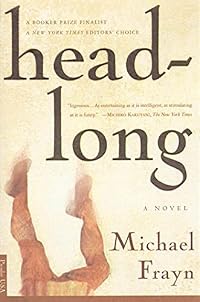
Michael Frayn is the author of the award-winning "Copenhagen" & twelve other plays, including "Noises Off". The most recent of his nine novels is "Headlong", a New York Times Editor's Choice & Booker Prize finalist. He lives in London. (Bowker Author Biography)
Some Editions
Awards and Honors
Notable Lists
Series
Belongs to Publisher Series
Common Knowledge
- Original publication date
- 1967
- People/Characters
- John Dyson; Jannie Dyson; Bob Bell; Tessa Pennycuick; Eddie Moulton; Glenda Mounce (show all 8); Reg Mounce; Erskine Morris
- Important places
- London, England, UK
- First words
- The sky grew darker and darker as the morning wore on.
- Quotations
- 'Canon Morley? This copy you phoned in; when you say, "I know only that I have a deeply satisfying face which shines with a radiance beyond the brightness of this world" - should that be "faith"? And what about "justifying G... (show all)od's wheeze to man"?'
‘There's nothing to it really,' said Bob modestly. `It’s just a matter of checking the facts and the spelling, crossing out the first sentence, and removing any attempt at jokes.’ - Last words
- (Click to show. Warning: May contain spoilers.)"Sure", he said with the suggestion of a cryptic smile. "Oh, sure, sure."
Classifications
Statistics
- Members
- 443
- Popularity
- 68,896
- Reviews
- 8
- Rating
- (3.46)
- Languages
- English, Estonian, German
- Media
- Paper, Ebook
- ISBNs
- 13
- ASINs
- 9