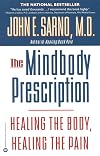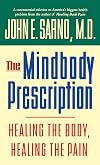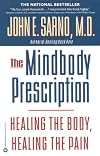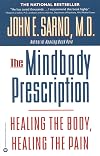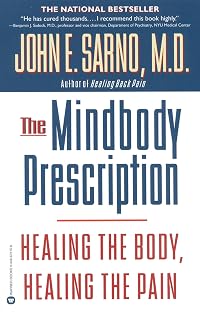
The Mindbody Prescription: Healing the Body, Healing the Pain
by John E. Sarno
On This Page
Description
The New York Times bestselling guide to a healthy and pain-free life. Musculoskeletal pain disorders have reached epidemic proportions in the United States, with most doctors failing to recognize their underlying cause. In this acclaimed volume, Dr. Sarno reveals how many painful conditions-including most neck and back pain, migraine, repetitive stress injuries, whiplash, and tendonitises-are rooted in repressed emotions, and shows how they can be successfully treated without drugs, physical show more measures, or surgery. "My life was filled with excruciating back and shoulder pain until I applied Dr. Sarno's principles, and in a matter of weeks my back pain disappeared. I never suffered a single symptom again...I owe Dr. Sarno my life." - Howard Stern show lessTags
Recommendations





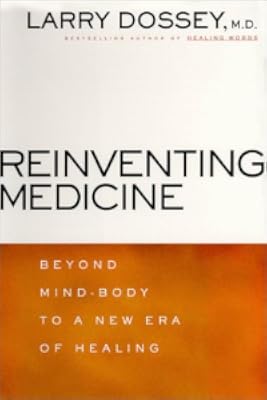
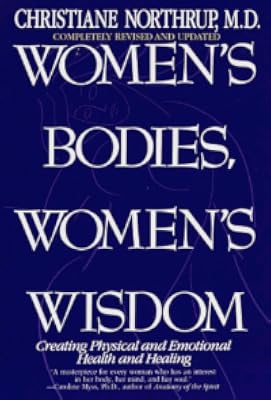

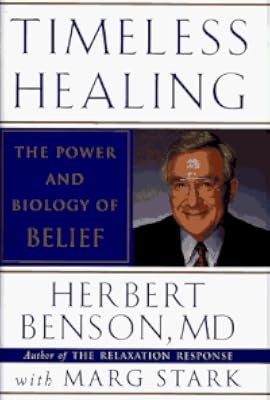



Member Reviews
About 15 years ago this book saved me from the chronic pain of RSI. Dr Sarno says that our emotions and particularly our unconscious anger cause chronic pain. He believes in the knowledge cure, that we have to understand and accept that we have a great unknown reservoir of rage and chronic pain is our body trying to distract from that. It sounds completely woo-woo and it may not be what the mainstream medical establishment (ie the money making machine) wants to hear but it made sense for me and it worked. Unfortunately I am suffering a flare up of a different kind of chronic pain at the moment and I had stopped doing the journalling that Sarno recommends, so I am currently rereading this book and some of the newer stuff that has been show more published (this is still the best though). But you can't just casually read it through, you have to reread and reread and makes notes on the bits that resonate with you and reread again until you are actually sick of it. I have returned to journalling to explore this current chronic pain. I know it won't be quick but it will work.
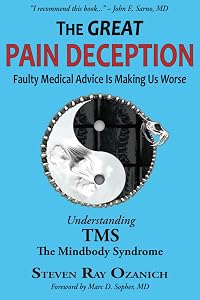
I am also reading for the first time the book by Ozanich - "The Great Pain deception" and that is so far striking me as a good companion for Sarno's book. Will reread that also and make notes.
If you would like a more scientific read on the control your brain has on your body, then "Molecules of Emotion" by Candace Pert is a good back up - but read Sarno first. show less
I am also reading for the first time the book by Ozanich - "The Great Pain deception" and that is so far striking me as a good companion for Sarno's book. Will reread that also and make notes.
If you would like a more scientific read on the control your brain has on your body, then "Molecules of Emotion" by Candace Pert is a good back up - but read Sarno first. show less
Dr. John Sarno has written another book on the mindbody connection or what he calls TMS (tension myositis syndrome), a psychosomatic disorder that can involve pain in many areas of the body, headache, high blood pressure, asthma, and many other disorders. He is very clear in the text that first, you must have a medical examination to rule out serious disease and follow the advice of your physician. But, when there is no apparent cause for the illness and pain (and signs of aging in neck and spine are probably not responsible for chronic pain), your mind may be using the pain or disease to avoid facing crises and rage in life. He has had great success with patients who are receptive to the ideas he presents, even after numerous show more treatments and surgeries that failed to help. The book lists the therapeutic program that is recommended to patients with the understanding that, in some patients, this is all they need; some need a lecture experience and some need psychotherapy with a trained therapist to recover. And it is not unusual for the cure to work and then the pain or disease recur in another part of the body, the minds way of repressing thoughts to difficult to bear.
The book is written for the layman in simple to understand language. Dr. Sarno has included an appendix for academic concerns with extensive notes and there is a complete bibliography and index.
Although I have not seen improvement in my case as it is probably medical rather than TMS, I am still open to any help in this area and am reading more of Dr. Sarno’s works as well as others in the field. Since the mind and body are interconnected, I am surprised that more doctors aren’t open to this theory. show less
The book is written for the layman in simple to understand language. Dr. Sarno has included an appendix for academic concerns with extensive notes and there is a complete bibliography and index.
Although I have not seen improvement in my case as it is probably medical rather than TMS, I am still open to any help in this area and am reading more of Dr. Sarno’s works as well as others in the field. Since the mind and body are interconnected, I am surprised that more doctors aren’t open to this theory. show less
Written for the masses, this book sometimes comes across as a long pat-on-the-author's-back. The author is trying to convince you of why his method to relieve pain works and why he knows without being too academic, but because of all this the book ends up being very self-congratulatory. Aside from that minor distraction, his argument is strong and the book really makes you wonder why more in the medical profession don't study the mindbody connection. I've only just finished it, so I can't say yet how well his methods work on my migraines, but I'm optiistic.
Who reads this? People with chronic pain and they need help. If it's physical, then it can be fixed with drugs and surgery. But often times, the author notes that the pain comes and goes in different areas, at different times of the day and it's hard to diagnose. He notes that its evolved from rage and highly stressful times that may have been there for years and just happens to develop in a form of pain. He says that rather than drugs, the patient needs therapy or a change with their way of thinking when actually the physical body is fine.
It seems complicated but a lot of people have read this book and sometimes overnight the pain that has been with them for years just happens to disappear like one big miracle. He addresses various show more physical manifestations of mind-body orders in the book and the power of the mind that can change things. It's worth a try anyway to read the book and try to make some sense out of it. show less
It seems complicated but a lot of people have read this book and sometimes overnight the pain that has been with them for years just happens to disappear like one big miracle. He addresses various show more physical manifestations of mind-body orders in the book and the power of the mind that can change things. It's worth a try anyway to read the book and try to make some sense out of it. show less
Ratings
Members
- Recently Added By
Lists

wish list
61 works; 3 members
Author Information

10+ Works 1,273 Members
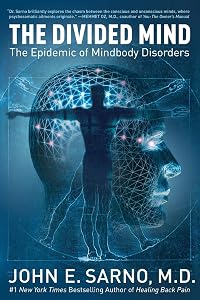
John Ernest Sarno Jr. was born in Brooklyn, New York on June 23, 1923. He attended Kalamazoo College in Michigan for three years before leaving in 1943 to join the Army. During World War II, he worked in field hospitals in Europe. He received a medical degree from Columbia University in 1950 and spent nearly a decade in family practice. He show more returned to New York in 1960 for a residency in pediatric medicine at Columbia-Presbyterian Medical Center and then another residency at the Institute of Physical Medicine and Rehabilitation at New York University. He joined N.Y.U.'s Rusk Institute for Rehabilitation Medicine in 1965 and practiced there until his retirement in 2012. He maintained that most instances of non-traumatic chronic pain - including back pain, gastrointestinal disorders, headaches, and fibromyalgia - are physical manifestations of deep-seated psychological anxieties. He wrote several books including Healing Back Pain: The Mind-Body Connection; The Mindbody Prescription: Healing the Body, Healing the Pain; The Divided Mind: The Epidemic of Mindbody Disorders; Stroke; and Mind Over Back Pain: A Radically New Approach to the Diagnosis and Treatment of Back Pain. He died from cardiac failure on June 22, 2017 at the age of 93. (Bowker Author Biography) show less
Classifications
- Genres
- Nonfiction, General Nonfiction
- DDC/MDS
- 616.0472 — Applied science & technology Medicine & health Diseases, Allergies, Skin Conditions Pathology; Diseases; Treatment Genetic and hereditary diseases Symptoms as a problem Pain
- LCC
- RC49 .S34 — Medicine Internal medicine Internal medicine Psychosomatic medicine
- BISAC
Statistics
- Members
- 375
- Popularity
- 83,437
- Reviews
- 4
- Rating
- (3.71)
- Languages
- English, Spanish
- Media
- Paper, Audiobook, Ebook
- ISBNs
- 9
- ASINs
- 4