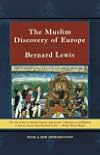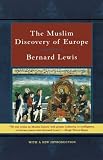
The Muslim Discovery of Europe
by Bernard Lewis
On This Page
Description
The Muslim world of the 11th century was a great civilization, a center of art and science stretching from Spain to the Middle East, while Europe lay slumbering in the Dark Ages. The two worlds knew little of one another. Slowly, inevitably, however, Europe and Islam came together through trade and war, crusade and diplomacy. The Muslims began to take note of the Europeans and to write about them, to acquire information on languages, science, government, religion, economics. -- Back cover.Tags
Recommendations

































Member Recommendations

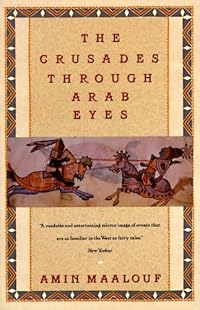
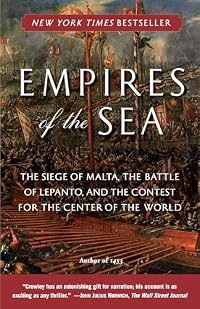
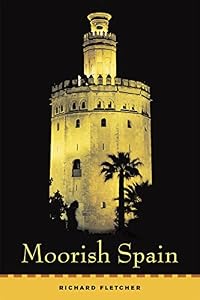
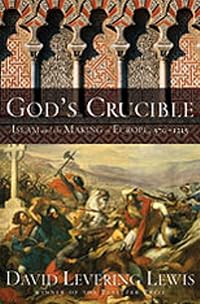
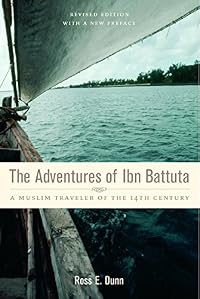
Oct326 Cardini's book is a good complement to Lewis's one because it looks at the same subject from the opposite viewpoint: Islam (mainly mediterranean Islam) as seen by Europeans, from the middle ages onwards. What I found most interesting in it is the description of the influences of Islamic culture on European culture, and how the Europeans' view about Islam (often distorted and prejudiced) changed over time.
Member Reviews
In 2002 Bernard Lewis wrote "What Went Wrong," a question directed by the Islamic community to itself, trying to figure out how the Islamic world found itself lagging so far behind the West in so many ways. Lewis may have already supplied the answer to the question in the other title in his "The Muslim Discovery of Europe," first published in 1982.
Lewis points out that in the early days of Islam there was a rule called "ifjihad," the exercise of independent judgment on issues that had not been discussed or answered in the Koran. However, the "gate of ifjihad closed" about two centuries after the death of the Prophet, and an entire civilization came to believe that all important issues had been decided. All that was expected of a devout show more Muslim was to follow and obey what had already been written.
Lewis notes that almost no one in the Islamic world had any interest in the developments occurring in Europe, which was universally perceived as a barbaric place. The disdain for Europe derived primarily from the Muslims' sense of superiority in religion and civilization [which to them were much the same things]. Not only were the Muslims not discovering anything new [why bother since everything important was already known and written in the Koran and interpretive writings?], but they remained completely uninterested in developments in the rest of the world. For example, a Muslim scholar, Katib Celebi, writing about Christian religion in 1655 never mentions the Protestant Reformation, the wars of religion, or even the schism between Rome and Constantinople.
Contributing to the Muslim lack of interest was the fact that their world spoke only one language--Arabic. Turkish and Persian became important only in the late Middle Ages. European thought appeared in a multiplicity of languages and dialects, and the Muslims were woefully short of translators, almost all of whom were Jews or Christians living as Djimis in Muslim lands. In the late 18th century, not a single grammar or dictionary of any Western language existed in either manuscript or print in Arabic, Turkish, or Persian.
Only after stunning defeats of Ottoman arms at the gates of Vienna in the 16th and 17th centuries did the Muslim world show any interest in learning about Europe, and then their curiosity was largely limited to military issues.
Napoleon's invasion and temporary conquest of Egypt came as a startling wake up call to the Islamic world. The ideas of the French Revolution and its anti-religious sentiment were truly startling.
Lewis includes many amusing observations of the few Muslims who visited Europe from the 8th to the 18th century, mostly to the effect that the Europeans were very different and very inferior to the folks at home.
Lewis points out that the Crusades had surprisingly little effect on Muslim perceptions. There was not even a word for Crusades in Arabic until long after the events.
Lewis debunks at least one Western European conceit, showing that the Muslim perception of the event showed a better sense of proportion than the European. The invasion of France in the 8th century was seen only as a raid or reconnaisance in force by the Muslims, not an all-out attempt at conquest. The defense of Constantinople, beginning at about the same time and lasting for 6 centuries, had much more to do with the survival of European Christianity than the efforts of Charles Martel and the Franks.
Westerners have much to learn from Lewis' book. For at least 2 centuries we have ignored the Islamic world because of its backwardness. Like the 18th century Muslims, our ignorance has led us to underestimate the threat the others present to our way of life. Note in particular the theme of a lack of sufficient translators.
(JAB) show less
Lewis points out that in the early days of Islam there was a rule called "ifjihad," the exercise of independent judgment on issues that had not been discussed or answered in the Koran. However, the "gate of ifjihad closed" about two centuries after the death of the Prophet, and an entire civilization came to believe that all important issues had been decided. All that was expected of a devout show more Muslim was to follow and obey what had already been written.
Lewis notes that almost no one in the Islamic world had any interest in the developments occurring in Europe, which was universally perceived as a barbaric place. The disdain for Europe derived primarily from the Muslims' sense of superiority in religion and civilization [which to them were much the same things]. Not only were the Muslims not discovering anything new [why bother since everything important was already known and written in the Koran and interpretive writings?], but they remained completely uninterested in developments in the rest of the world. For example, a Muslim scholar, Katib Celebi, writing about Christian religion in 1655 never mentions the Protestant Reformation, the wars of religion, or even the schism between Rome and Constantinople.
Contributing to the Muslim lack of interest was the fact that their world spoke only one language--Arabic. Turkish and Persian became important only in the late Middle Ages. European thought appeared in a multiplicity of languages and dialects, and the Muslims were woefully short of translators, almost all of whom were Jews or Christians living as Djimis in Muslim lands. In the late 18th century, not a single grammar or dictionary of any Western language existed in either manuscript or print in Arabic, Turkish, or Persian.
Only after stunning defeats of Ottoman arms at the gates of Vienna in the 16th and 17th centuries did the Muslim world show any interest in learning about Europe, and then their curiosity was largely limited to military issues.
Napoleon's invasion and temporary conquest of Egypt came as a startling wake up call to the Islamic world. The ideas of the French Revolution and its anti-religious sentiment were truly startling.
Lewis includes many amusing observations of the few Muslims who visited Europe from the 8th to the 18th century, mostly to the effect that the Europeans were very different and very inferior to the folks at home.
Lewis points out that the Crusades had surprisingly little effect on Muslim perceptions. There was not even a word for Crusades in Arabic until long after the events.
Lewis debunks at least one Western European conceit, showing that the Muslim perception of the event showed a better sense of proportion than the European. The invasion of France in the 8th century was seen only as a raid or reconnaisance in force by the Muslims, not an all-out attempt at conquest. The defense of Constantinople, beginning at about the same time and lasting for 6 centuries, had much more to do with the survival of European Christianity than the efforts of Charles Martel and the Franks.
Westerners have much to learn from Lewis' book. For at least 2 centuries we have ignored the Islamic world because of its backwardness. Like the 18th century Muslims, our ignorance has led us to underestimate the threat the others present to our way of life. Note in particular the theme of a lack of sufficient translators.
(JAB) show less
"The Muslim Discovery of Europe" shows what it's like when we're the "savages" being examined by a supposedly superior civilisation: a good antidote to Victorian delusions of cultural supremacy.
A real good overview by someone who clearly knows his subject. At first I thought that the book being published before 9/11 would be a problem, but I came to believe it is actually a strength. Fairly dry and sometimes feel repetitive, but still worth reading and I recommend it.
Opera molto interessante. Sappiamo tutto di noi, "la culla della civiltà", e cosa pensiamo degli "altri". Ma gli altr, il mondo musulmano come ci vedono e come ci hanno visto nel passato? Sorprendente, interessante ed illuminante. Lettura che consiglio.
Another fine one by Bernard Lewis!
Ratings
Members
- Recently Added By
Author Information

69+ Works 11,196 Members
Bernard Lewis was born in London, England on May 31, 1916. He graduated with honors in history from the School of Oriental Studies at the University of London in 1936 with special reference to the Middle East. In 1938, he was named an assistant lecturer at the University of London, where he received a Ph.D. the next year. In 1940, he was drafted show more into the British armed forces and assigned to the Army tank corps. He was soon transferred to intelligence. He taught at the University of London for 25 years. In 1974, he accepted joint appointments at the Institute for Advanced Study in Princeton, New Jersey and Princeton University. He also taught at Cornell from 1984 to 1990. He became an American citizen in 1982. He was a scholar of Middle Eastern history and a prolific writer. His books included The Emergence of Modern Turkey, What Went Wrong?: The Clash between Islam and Modernity in the Middle East, and From Babel to Dragomans: Interpreting the Middle East. Because he was considered an expert on interactions between the Christian and Islamic worlds, his view helped shape American foreign policy under President George W. Bush. He died on May 19, 2018 at the age of 101. (Bowker Author Biography) show less
Some Editions
Common Knowledge
- Original title
- The Muslim discovery of Europe
- Alternate titles*
- 穆斯林發現歐洲 : 天下大國的視野轉換
- Important places
- Europe; Middle East
- Original language
- English
*Some information comes from Common Knowledge in other languages. Click "Edit" for more information.
Classifications
- Genres
- Nonfiction, History, Religion & Spirituality, General Nonfiction
- DDC/MDS
- 303.4821767104 — Society, Government, and Culture Social sciences, sociology & anthropology Social processes Social change Causes of change Contact between cultures
- LCC
- DS63.2 .E8 .L48 — History of Europe, Asia, Africa and Oceania Asia History of Asia Middle East. Southwestern Asia. Ancient Orient. History
- BISAC
Statistics
- Members
- 431
- Popularity
- 71,152
- Reviews
- 5
- Rating
- (3.74)
- Languages
- 6 — Chinese, English, French, German, Italian, Portuguese
- Media
- Paper, Ebook
- ISBNs
- 19
- ASINs
- 4