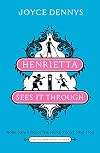
Henrietta Sees It Through: More News from the Home Front 1942-1945
by Joyce Dennys
Henrietta's War (2)
On This Page
Description
The war is now in its third year and although nothing can dent the fierce patriotic spirit of Henrietta's friends even they have their anxious moments. The indomitable Lady B who, at seventy, tries to enlist in the A.T.S. can barely face the thought of life without elastic. But elastic, along with coal, meat and silk stockings are soon forgotten in the battle over the British Restaurant and the endlessly ingenious and distracting fund-raising events from the Red Cross Bowling Tournament show more which Lady B recklessly enters with Henrietta in tow ('It will be unfortunate for our partners, but good for their self control') to the Croquet Doubles in which the Admiral's wife takes part even though she has just learnt of the death of her son. When an inspiring W.V.S. dignitary addresses her wilting audience of housewives as 'the army that Hitler forgot' she was speaking no more than the truth. show lessTags
Recommendations

























Member Recommendations


Member Reviews
Henrietta Sees It Through is the second collection of columns written by Joyce Dennys during World War II for the magazine Sketch where they appeared, along with her wonderful illustrations, throughout the war. Like the first volume, Henreitta's War, the collections were originally published in book form in the 1980's by Andre Deutch and are now being reissued by Bloomsbury in attractive paperback editions. Each column is in the form of a letter, written by Dennys' alter ego, Henrietta, to her childhood friend Robert who is off fighting on one front or another. Henrietta and her doctor husband Charles live in an unnamed seaside village in Devonshire and, despite the constant threat of bombs, rockets and invasion, somehow manage to shop, show more garden, attend dog shows, take in kittens and evacuees with equal aplomb and mix with a cast of characters who would feel right at home in an episode of The Vicar of Dibley. This is English comic writing of the highest order, on a par with Wodehouse or the best of Jerome K. Jerome. Henrietta, or, rather, Dennys made me laugh out loud at least once per column and, had that been all she set out to do the books would still be worth reading. But Dennys had so much more on her mind and the brilliance of these books is that, in between the many moments of mirth, she makes us look long and hard at the cost of war, it's effect on those far from the front lines, how problems of gender and class may mutate during a war but certainly never go away. One gets a real sense of how exhausting it must have been to "keep calm and carry on," to maintain that famous stiff upper lip even while it was trembling.
I'm enormously grateful to Library Thing and to Bloomsbury for getting the second book into my hands. I've already ordered a copy of the first one to join it in a place of honor on my shelves. If I could afford it, I'd buy both of these books in bulk and press copies of them into the hands of everyone I know and care about. show less
I'm enormously grateful to Library Thing and to Bloomsbury for getting the second book into my hands. I've already ordered a copy of the first one to join it in a place of honor on my shelves. If I could afford it, I'd buy both of these books in bulk and press copies of them into the hands of everyone I know and care about. show less
 This review was written for LibraryThing Early Reviewers.
This is one of the most charming books I've read in a very long time. Henrietta, writing to her friend Robert, details the ins and outs of home life during the last few years of WWII. I wasn't sure that I would necessarily like this book, but after I had read a dozen pages and laughed at least that many times, I knew that the rest of it was going to be fantastic. Filled with wonderful wit and pitch-perfect illustrations by the author, Henrietta & friends are a pure delight. I'm so glad that I have the first book, [Henrietta's War], on my shelf already. Do yourself a favor - drop all of your "okay" books, and pick this one up instead. I don't see how you could go wrong!
This review was written for LibraryThing Early Reviewers.This second installment of Henrietta Brown's affectionate letters to her "Childhood's Friend" during WWII was just as good as the first, Henrietta's War. It's odd to find fictional letters from the British home front to a soldier stationed who-knows-where during WWII soothing, but that's just what this book is---balm for the soul. Henrietta; her calm and stable husband, Charles; their friends Lady B, the Admiral, the Conductor and Faith all epitomize the British spirit of "Keep calm and carry on" in the face of rationing, Fuel Target notices, gin shortages, anxiety over the safety of loved ones in service, air raids, mice, bindweed and the exasperating Mrs. Savernack. As did its predecessor, Henrietta Sees it Through makes the reader show more feel that it is possible to cope with nearly anything as long as one keeps the chin up and remembers to appreciate what simple pleasures remain available. Review written in 2012. show less
I read the first of the two Henrietta books earlier this winter and was so charmed, that I immediately ordered the sequel. The two books form a compendium of the column that the author wrote for The Sketch during WWII. Each column takes the form of a letter from Henrietta, a middle-aged woman living in a village in England, to her cousin Robert who is fighting overseas. Together these two epistolary novels cover the entire duration of the war. Most of the letters focus on issue of life on the home front, like rationing, materiel drives, and refugees from the Blitz.
Henrietta is the wife of the village doctor and mother to two adult children: Linnet is a nurse and Bill a soldier. When she was younger, Henrietta was an accomplished show more artist, but now she is confined to the role of a doctor's wife and a mother. Henrietta is the alter ego of the author, who was also an artist, mother and doctor's wife, and who resented the limitations on her life.
Although the letters in this volume continue in much the same tone as in the first, there is a bit more bite in Henrietta's voice. As the war progresses, and women take on new roles, Henrietta is forced to stay confined to home and hearth, and she starts to speak out and advocate for herself.
'And this is our Doctor's Wife,' said Mrs Savernack, and I was propelled unwillingly into the Presence.
'I'm not. I'm Henrietta Brown,' I said.
'Yes?' they said, with gracious Government House smiles.
'At least, of course I am the Doctor's Wife, but I'm Henrietta Brown too, if you know what I mean. I always think it is rather depressing being called somebody's wife all the time.'
The Best Dressed Woman looked at me without sympathy. 'It has always made me very proud,' she said simply, and she and the Cabinet Minister exchanged a long, loving smile. After that there was a pause.
Feeling it was up to me to make a non-committal remark, I asked if they had seen the Savernacks' garden. They said they had, and that the fruit was magnificent.
I said: 'We're going to have a plumper bum crop this year.' Then Lady B came and led me away.
Alas Henrietta rarely fares well in her attempts at autonomy. Her husband, Charles comes across as even more self-centered and smug in this book, and I ended up disliking him quite heartily.
But the thread of thwarted feminism running through the books cannot prevent them from also being charming and funny. I wish that she had written more fiction, because she is so observant and witty. Joyce Dennys would have made a lovely, and lively, addition to a dinner party, I feel sure. show less
Henrietta is the wife of the village doctor and mother to two adult children: Linnet is a nurse and Bill a soldier. When she was younger, Henrietta was an accomplished show more artist, but now she is confined to the role of a doctor's wife and a mother. Henrietta is the alter ego of the author, who was also an artist, mother and doctor's wife, and who resented the limitations on her life.
Although the letters in this volume continue in much the same tone as in the first, there is a bit more bite in Henrietta's voice. As the war progresses, and women take on new roles, Henrietta is forced to stay confined to home and hearth, and she starts to speak out and advocate for herself.
'And this is our Doctor's Wife,' said Mrs Savernack, and I was propelled unwillingly into the Presence.
'I'm not. I'm Henrietta Brown,' I said.
'Yes?' they said, with gracious Government House smiles.
'At least, of course I am the Doctor's Wife, but I'm Henrietta Brown too, if you know what I mean. I always think it is rather depressing being called somebody's wife all the time.'
The Best Dressed Woman looked at me without sympathy. 'It has always made me very proud,' she said simply, and she and the Cabinet Minister exchanged a long, loving smile. After that there was a pause.
Feeling it was up to me to make a non-committal remark, I asked if they had seen the Savernacks' garden. They said they had, and that the fruit was magnificent.
I said: 'We're going to have a plumper bum crop this year.' Then Lady B came and led me away.
Alas Henrietta rarely fares well in her attempts at autonomy. Her husband, Charles comes across as even more self-centered and smug in this book, and I ended up disliking him quite heartily.
But the thread of thwarted feminism running through the books cannot prevent them from also being charming and funny. I wish that she had written more fiction, because she is so observant and witty. Joyce Dennys would have made a lovely, and lively, addition to a dinner party, I feel sure. show less
I am the proud owner of five of the Bloomsbury Group’s reissues of some slightly obscure books which don’t deserve that obscurity so was greatly chuffed to learn that I was to receive “Henrietta Sees it Through: More News From the Home Front 1942-1945", another of this collection with its happy-coloured covers. It arrived on the 100th anniversary of International Women’s Day, which somehow seemed significant, and Pancake Tuesday, which had no bearing on anything.
Joyce Dennys (b. 1893) was trained as an artist, initially enjoying some success with it until the increasing demands of motherhood and her duties as the wife of a doctor joined forces to shove her personal creativity further and further back. Her frustration found a show more voice in the character of Henrietta, created for Sketch magazine. Henrietta struck such a chord with its readers that the magazine was inundated with requests for more of her. These articles - in the form of letters from Henrietta to her childhood friend, Robert, fighting at the front in WWII - were published as “Henrietta’s War” and “Henrietta Sees it Through” in 1985 and 1986 respectively.
Henrietta and Charles (the doctor) live in a little Devonshire village near a cathedral town. Charles is exempt from war service as he is needed at home. Henrietta, feeling impotent in the face of the war, has taken up weeding as her war effort, somewhat equating the Nazis with bindweed. The indomitable villagers try to carry on with life despite food and fuel shortages, blackouts, uncooperative boilers, the occasional plane flying overhead, American and Canadian soldiers passing through, and survivors from London being billeted with them.
But as the war goes on, with its gnawing worry about the safety of loved ones never far from their minds, the villagers become increasingly ill-tempered, their nerves stretched taut from waiting and coping. Even the wonderful Lady B. is not exempt, at one point. War is the shark circling in the depths beneath the surface of Dennys’ wonderful humour. In one letter (no spoilers but it’s the one about the Admiral and his wife), the shark surfaces and we see its ghastly maw.
Humour and toughness, the earmarks of the English character during the war, are the substance of Henrietta’s letters to Robert but we see too the vulnerability, the extraordinary courage, the faith and wonderful hope the villagers sustained as she writes about all the goings-on of home to her friend. She captured the essence of the English resistance for me, my last coherent late night thought being ‘Hitler could never have defeated these people. Bloodied them, yes, but defeated them, never.’ show less
Joyce Dennys (b. 1893) was trained as an artist, initially enjoying some success with it until the increasing demands of motherhood and her duties as the wife of a doctor joined forces to shove her personal creativity further and further back. Her frustration found a show more voice in the character of Henrietta, created for Sketch magazine. Henrietta struck such a chord with its readers that the magazine was inundated with requests for more of her. These articles - in the form of letters from Henrietta to her childhood friend, Robert, fighting at the front in WWII - were published as “Henrietta’s War” and “Henrietta Sees it Through” in 1985 and 1986 respectively.
Henrietta and Charles (the doctor) live in a little Devonshire village near a cathedral town. Charles is exempt from war service as he is needed at home. Henrietta, feeling impotent in the face of the war, has taken up weeding as her war effort, somewhat equating the Nazis with bindweed. The indomitable villagers try to carry on with life despite food and fuel shortages, blackouts, uncooperative boilers, the occasional plane flying overhead, American and Canadian soldiers passing through, and survivors from London being billeted with them.
But as the war goes on, with its gnawing worry about the safety of loved ones never far from their minds, the villagers become increasingly ill-tempered, their nerves stretched taut from waiting and coping. Even the wonderful Lady B. is not exempt, at one point. War is the shark circling in the depths beneath the surface of Dennys’ wonderful humour. In one letter (no spoilers but it’s the one about the Admiral and his wife), the shark surfaces and we see its ghastly maw.
Humour and toughness, the earmarks of the English character during the war, are the substance of Henrietta’s letters to Robert but we see too the vulnerability, the extraordinary courage, the faith and wonderful hope the villagers sustained as she writes about all the goings-on of home to her friend. She captured the essence of the English resistance for me, my last coherent late night thought being ‘Hitler could never have defeated these people. Bloodied them, yes, but defeated them, never.’ show less
This review was written for LibraryThing Early Reviewers.Charming little book with a wonderful protagonist/narrator. Henrietta is a lovely creation, instantly sympathetic and appealing. The many short vignettes of village life during WWII are (for the most part) delightfully humorous and lively. But the sobering aspects of a world at war are always there, just beneath the surface. Reading this was a lot like getting enmeshed in a really good BBC mini-series. Very addictive and a lot of fun.
This review was written for LibraryThing Early Reviewers.This is a little gem of a book. Sequel to the equally delightful Henrietta's War, Henrietta Sees It Through picks up in early 1942, shortly after the first book left off and takes Henrietta and friends to the end of the war. Both books are collections of material written for Sketch magazine during WW2 by Joyce Dennys.
As in the previous book, Henrietta Sees It Through is a series of letters from Henrietta Brown to her childhood friend, Robert, who is overseas with the army. They're full of the daily life of a doctor's wife in a Devonshire village during World War II – looking after her husband, bomb scares, evacuees, life without elastic for ladies' unmentionables, etc. Henrietta does battle with weeds, plays the triangle in the show more village orchestra, takes part in fund-raising for the war effort, describes the sorrows and antics of her friends and neighbours and tries valiantly to keep calm and carry on, which is tough when you're afraid of bombs and worried sick about your children, friends and neighbours who are away at the front. However, Henrietta, husband Charles, the indomitable Lady B, Mrs Savernack, the Conductor, Faith and the other villagers muddle through. Highly recommended. show less
As in the previous book, Henrietta Sees It Through is a series of letters from Henrietta Brown to her childhood friend, Robert, who is overseas with the army. They're full of the daily life of a doctor's wife in a Devonshire village during World War II – looking after her husband, bomb scares, evacuees, life without elastic for ladies' unmentionables, etc. Henrietta does battle with weeds, plays the triangle in the show more village orchestra, takes part in fund-raising for the war effort, describes the sorrows and antics of her friends and neighbours and tries valiantly to keep calm and carry on, which is tough when you're afraid of bombs and worried sick about your children, friends and neighbours who are away at the front. However, Henrietta, husband Charles, the indomitable Lady B, Mrs Savernack, the Conductor, Faith and the other villagers muddle through. Highly recommended. show less
This review was written for LibraryThing Early Reviewers.Members
- Recently Added By
Lists

Books About World War II
102 works; 29 members

Favorite Epistolary Fiction
143 works; 144 members
Author Information

8+ Works 570 Members
Series

Belongs to Publisher Series
Common Knowledge
- Canonical title
- Henrietta Sees It Through: More News from the Home Front 1942-1945
- Original publication date
- 1986
- People/Characters
- Henrietta Brown; Charles Brown; Lady B; Faith; Conductor; The Linnet Brown (show all 9); Bill Brown; George; Robert
- Important places
- West Country, England, UK
- Important events
- World War II
- Dedication
- For my granddaughters Deborah, Prue and Julie
- First words
- February 11, 1942 My Dear Robert, Is there anything more fascinating than cutting the edges of the lawn?
- Last words
- (Click to show. Warning: May contain spoilers.)When last I saw the Canadian he had a pretty girl on each side of him and was singing 'Auld lang Syne'.
Always your affectionate Childhood's Friend, Henrietta
Classifications
Statistics
- Members
- 183
- Popularity
- 178,017
- Reviews
- 36
- Rating
- (4.01)
- Languages
- English
- Media
- Paper, Ebook
- ISBNs
- 5
- ASINs
- 6