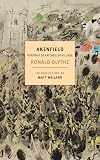
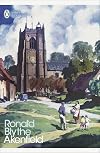
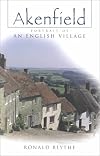
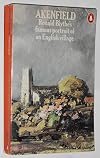
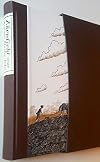
Akenfield: Portrait of an English Village
by Ronald Blythe
On This Page
Description
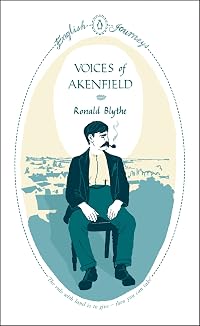
Woven from the words of the inhabitants of a small Suffolk village in the 1960s, Akenfield is a masterpiece of twentieth-century English literature, a scrupulously observed and deeply affecting portrait of a place and people and a now vanished way of life. Ronald Blythe's wonderful book raises enduring questions about the relations between memory and modernity, nature and human nature, silence and speech.Tags
Recommendations
















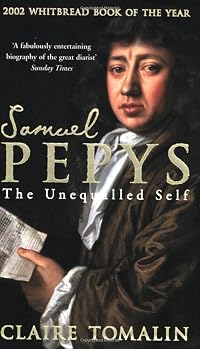

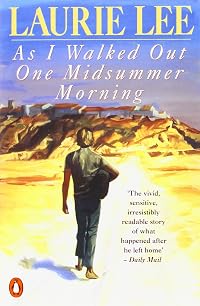

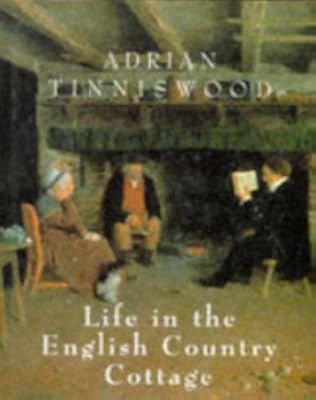


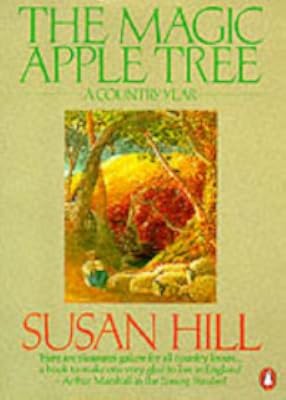




Member Recommendations
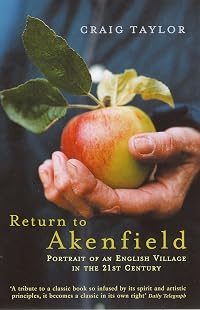
chrisharpe Published in 1969, Ronald Blythe's "Akenfield" is a portrait of early C20th English rural life recounted by Suffolk farmers and villagers. Thirty five years later, Craig Taylor returned to the area on which Akenfield was based and conducted interviews with locals to find out how their lives had changed, as well as interviewing the octogenarian Ronald Blythe. Both books are classics of English environmental literature.
10


Member Reviews
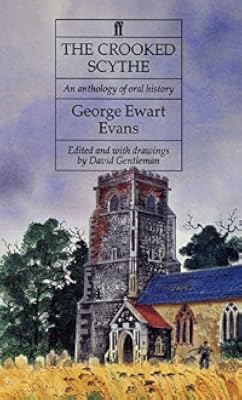
This is at first sight a similar project to Ask the fellows who cut the hay, an oral history project based around the residents of a small Suffolk village. Blythe merged the real villages of Charsfield and Debach, where he lived, into the fictitious "Akenfield" to protect the privacy of his contributors. But it's not quite the same thing. Where Evans focusses on memories of pre-mechanical times, Blythe is really more interested in how the village works now, in the late 1960s. It's oral sociology, rather than history. The villagers' memories of earlier times are relevant for the context it gives to their present attitudes to their work, the people they work for, and the kind of aspirations they have, but the past here isn't a show more disappearing world of splendid traditions so much as an era of social inequality, squalid living conditions, poor education and low wages. A time when men left the village only to be killed pointlessly in South Africa or Flanders.
That isn't to say that Blythe is an uncritical supporter of "progress" — his contributors note that agricultural wages are still very low compared to unskilled factory jobs, that the agricultural workers' union has little real power to change things, and that technical college courses for farm-workers (he talks to both students and lecturers) don't seem to be designed to help young people advance in their jobs.
Moreover, it's clear (even more so 60 years on!) that farms in 1967 were still going through big technical transitions in directions many farmers and farm-workers weren't happy with — factory-farming of pigs and poultry, heavy use of chemicals, etc.
A fascinating book, very influential at the time, and much less dated than you might expect. show less
That isn't to say that Blythe is an uncritical supporter of "progress" — his contributors note that agricultural wages are still very low compared to unskilled factory jobs, that the agricultural workers' union has little real power to change things, and that technical college courses for farm-workers (he talks to both students and lecturers) don't seem to be designed to help young people advance in their jobs.
Moreover, it's clear (even more so 60 years on!) that farms in 1967 were still going through big technical transitions in directions many farmers and farm-workers weren't happy with — factory-farming of pigs and poultry, heavy use of chemicals, etc.
A fascinating book, very influential at the time, and much less dated than you might expect. show less
Ronald Blythe's 'strange journey to a familiar land' is an oral history classic. Written more than 40 years ago, it still seems quite fresh. It is prescient - documenting the beginnings of factory farming and monoculture. It makes observations about people retiring to the village for a life in the country - who purchase plants from garden centres and can name 100 different kinds of roses, but have no idea what grows in the hedgerows. The book can also be heartbreaking, full of loneliness and stifled ambitions.
I know there was a follow-up written in the 1980's , but it does not give us updates on individuals. I would like to know what happened to some of their hopes and dreams.
I know there was a follow-up written in the 1980's , but it does not give us updates on individuals. I would like to know what happened to some of their hopes and dreams.
Wonderful book. So many insights to Suffolk village life between the wars. The remnants of the feudal system; deference of the working class, arrogance of the landed class. At times brutal and unsympathetic. Suffolk folk were tradionally reluctant to express true feelings but these characters so insightful and articulate. Reminded me of Dad's suspicion of middle-class professional newcomers to the village! Destroys the illusion of a golden age of village life. But so many memorable characters and stories.
Wonderful book. So many insights to Suffolk village life between the wars. The remnants of the feudal system; deference of the working class, arrogance of the landed class. At times brutal and unsympathetic. Suffolk folk were tradionally reluctant to express true feelings but these characters so insightful and articulate. Reminded me of Dad's suspicion of middle-class professional newcomers to the village! Destroys the illusion of a golden age of village life. But so many memorable characters and stories.
I read this four years ago and still think about it frequently. It is an incredible historical and historiographical document, and reminds me a little of the Up series (oral history of selected subjects, examining life and class in Great Britain in the 60s, using problematic and outdated methods that nonetheless lead to a phenomenal work of art, etc.). If you have any interest in social history, especially of the UK, there really is not another book I can think of as good as Akenfield.
I reread this after a long break. Akenfield is a microhistory of a Suffolk village written in the style of a novel or ethnography. It is based on intimate interviews with people who lived for generations in the same place. The most moving for me are those with those Blythe calls 'The Survivors'. These are those whose memories extend back before the first world war and the introduction of mechanization into agriculture. Their lives were unspeakably hard and narrow. Besides beer, which was paid to rural workers in the field as part of their wages, there were almost no pleasures. 'We had singing', one man says, but Blythe describes a song delivered in a pub as 'violent and full of attack'. Religion provided the main cultural life - and show more there were plenty to choose from. Most C of E but a proliferation of Chapel-based activities, especially the Strict Baptists who follow a rigid bible-led piety that shores up the boundaries between the insiders and outsiders. Blythe lists the Rules of the Strict Baptist Church and it seems a marvel that it had any members at all. At the CofE, the Rural Dean seems like a visitor from another world. He had arrived after the war and had seen the rural revolution, but he saw the village people as fundamentally the children of Dissent - Unitarianism, anabaptism, socialism. These were their creeds. Because of low levels of literacy, those who escaped this constrained world by emigration to Canada or Australia were really lost - no letters came back. Overall, a justly famous study of a world that no longer exists. show less
This has perhaps got to be one of my favourite books of all time. The true tales of the inhabitants of a 60s village told in their own words not only grab the reader with their authenticity, they tell of a bygone age and teach of how it was that we came to be where we are now. So much forgotten wisdom and knowledge is shared within the pages of this treasure trove I am excited every time I come to open my lovely second hand first edition copy and always delighted by what I find; from the tragedy of the first world war losses to the farmers' Dickenisan treatment of their workers it doesn't paint a happy picture of rural England in the first half of the 20th century but it does bring it to life in the everyday language of the men and show more women who lived in a small farming community in the SE of England. show less
Members
- Recently Added By
Published Reviews
ThingScore 100
What does it feel like to be anyone other than ourselves?
The great subject of Akenfield, and the reason it remains such a vital book to read now, even in America, thousands of miles from its milieu, is the ways people grapple with changes in the patterns of life in their own time—whether through social flux, cultural variation, demographic shifts, technological progress, environmental show more degradation, or some combination. Blythe recognized that under the placid surface of a place as seemingly unchanging as Akenfield lay a clash of virtual tectonic plates, as a class-riven, tradition-bound, nearly feudal community began to erupt and fissure. show less
The great subject of Akenfield, and the reason it remains such a vital book to read now, even in America, thousands of miles from its milieu, is the ways people grapple with changes in the patterns of life in their own time—whether through social flux, cultural variation, demographic shifts, technological progress, environmental show more degradation, or some combination. Blythe recognized that under the placid surface of a place as seemingly unchanging as Akenfield lay a clash of virtual tectonic plates, as a class-riven, tradition-bound, nearly feudal community began to erupt and fissure. show less
added by elenchus
Lists

Mustich's 1000 Books to Read Before You Die: A Life Changing List
1,001 works; 19 members
Author Information

55+ Works 2,075 Members
Ronald Blythe is a Fellow of the Royal Society of Literature and President of the John Clare, Robert Kilvert and Robert Bloomfield Societies
Some Editions
Awards and Honors
Series
Belongs to Publisher Series
Common Knowledge
- Canonical title
- Akenfield: Portrait of an English Village
- Original title
- Akenfield. Portrait of an English village
- Original publication date
- 1969
- Important places
- Akenfield, Suffolk, England, UK
- Dedication
- To John Nash
- First words
- The village lies folded away in one of the shallow valleys which dip into the East Anglia coastal plain.
- Last words
- (Click to show. Warning: May contain spoilers.)Straight from the flames to the winds, and let that be that.
- Publisher's editor*
- Malaurie, Jean (Directeur de collection)
- Original language*
- Anglais (Royaume-Uni) (Royaume-Uni)
- Disambiguation notice*
- BLYTHE, RONALD, Mémoires d’un village anglais,
Traduit de l'anglais par Jacques B. Hess,
Plon, 1972.
Edition originale en anglais en 1969, Akenfield: Portrait of an English Village, Dell Publishing Co.: New ... (show all)York.
*Some information comes from Common Knowledge in other languages. Click "Edit" for more information.
Classifications
- Genres
- Nonfiction, History, General Nonfiction, Biography & Memoir
- DDC/MDS
- 942.6 — History & geography History of Europe England and Wales Eastern England
- LCC
- DA670 .S9 .B59 — History of Europe, Asia, Africa and Oceania Great Britain History of Great Britain England Local history and description Counties, regions, etc., A-Z
- BISAC
Statistics
- Members
- 920
- Popularity
- 29,063
- Reviews
- 20
- Rating
- (4.07)
- Languages
- Dutch, English, French, Swedish
- Media
- Paper, Audiobook, Ebook
- ISBNs
- 17
- ASINs
- 22