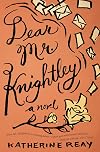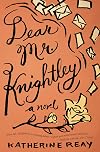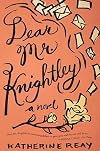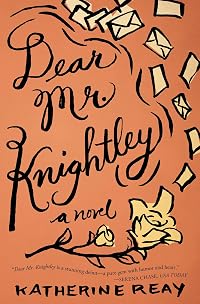
Dear Mr. Knightley
by Katherine Reay 
On This Page
Description
When an anonymous benefactor offers to put Samantha Moore through school, with the stipulation that she write frequent letters to him on her progress, Sam finds safety in the letters as her program and her peers force her to confront her past.Tags
Recommendations
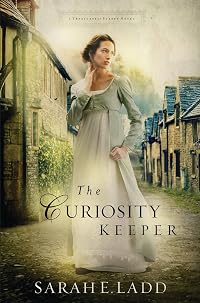
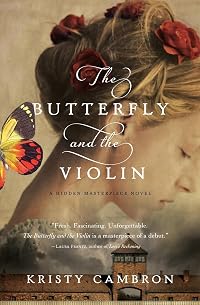
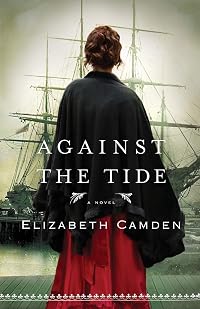
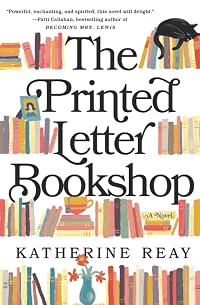







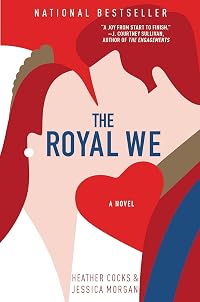
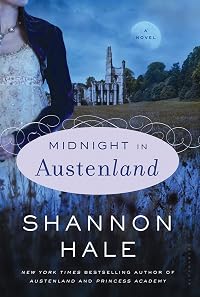
Member Recommendations

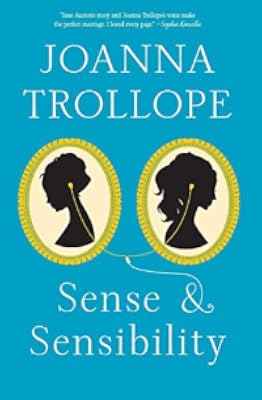
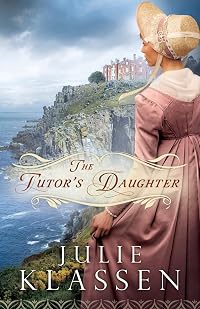
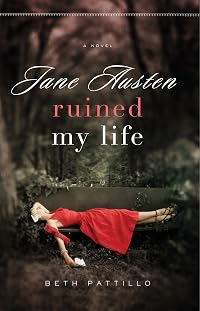
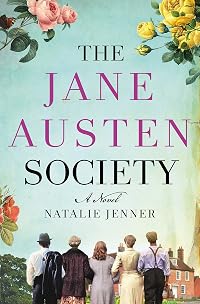
JenniferRobb both are written with the characters communicating via letters
by anonymous user
Member Reviews
This is a reimagined version of Daddy-Long-Legs for lovers of Jane Austen, Charles Dickens, and Jane Eyre. I found this to be so much more enjoyable and fulfilling than Daddy-Long-Legs. It delves into the insecurities of a young woman who spent her life moving from one foster home to another and enduring horrific abuse from her parents as well as from some foster families. She learned to hide herself in books, especially Jane Austen, and to protect herself from being hurt emotionally by hiding behind quotations from those books. Her letters to her unknown benefactor provide a safe, "soul-purging" outlet as she learns to live in the real world, make real friendships, learn to trust and be trusted, forgive and be forgiven. This book has show more many of the elements that I love: complex, imperfect characters who make mistakes, are confronted, and grow; great dialog, and literary allusions to books that I love. And there were a couple of books referenced that I haven't read -- those are now on my to-read list. There are "breadcrumbs" of truth about God and Christ and the gospel, but no explicit explanation. This story was very powerful and moving to me. I stayed up way too late to finish it and then had to re-read it again more slowly to digest, absorb, and relish it more fully.
The story impressed on me (but not it's explicitly stated) that every person has a "back-story" -- a complicated web of circumstances and interactions that cause or influence them to think and act the way they do. This "back-story" of a person's past does not have to define them or grant them status as a "victim", and it does not excuse wrongdoing, but knowing it does help others to understand them and give them grace. Just knowing that each person you meet has a back-story, even if you don't know what it is, can help you be kinder and more compassionate. Even those shy, withdrawn people or those aggressive bullies have deep hurts that color their view of the world and how they interact with people. I guess I also identified with the main character in that I probably tend to "escape" into books and stories (though not quoting them) when dealing with real life gets too hard.
Content considerations: several uses of the word "crap," kissing, pressure by a boyfriend to spend the night as his apartment (she doesn't), descriptions of physical abuse of a child by adults, and attempted trafficking. show less
The story impressed on me (but not it's explicitly stated) that every person has a "back-story" -- a complicated web of circumstances and interactions that cause or influence them to think and act the way they do. This "back-story" of a person's past does not have to define them or grant them status as a "victim", and it does not excuse wrongdoing, but knowing it does help others to understand them and give them grace. Just knowing that each person you meet has a back-story, even if you don't know what it is, can help you be kinder and more compassionate. Even those shy, withdrawn people or those aggressive bullies have deep hurts that color their view of the world and how they interact with people. I guess I also identified with the main character in that I probably tend to "escape" into books and stories (though not quoting them) when dealing with real life gets too hard.
Content considerations: several uses of the word "crap," kissing, pressure by a boyfriend to spend the night as his apartment (she doesn't), descriptions of physical abuse of a child by adults, and attempted trafficking. show less
My love of Emma, and the sad truth that Jane Austen's novel is not enough to fuel my voracious love for the character, occasionally leads me to fall foul of the odd marketing ploy. I was so keen to read a story that isn't another sequel/prequel/reworking of the original novel that I rushed to download - nay, pre-order - Katherine Reay's book simply because of the title. 'What a clever little homage to Austen,' thought I. Sadly, I was wrong. Again.
Reay's story is more a reworking of Great Expectations than Emma, although she does liberally quote from Austen. (The only time I identified with Sam the narrator, or correspondent, was when she admitted to 'adoring Emma, though she's out of my reach' but gravitating 'toward Fanny Price, show more morally spot on but commonly thought dull'.) Actually, the concept of Dear Mr Knightley disturbed me throughout, and the big reveal only increased my distaste. Secret benefactors demanding certain 'conditions' in return for their support might work in a nineteenth century novel, but reading about a young woman writing letters to a man who insists she correspond with him in order to receive a scholarship is - worrying. Especially in a novel for the teen market, which I'm presuming this is.
Also, the first person narration - via Sam's letters to the anonymous 'Mr Knightley' - does not quite ring true. If the concept is contrived, then the writing is forced - I might almost say 'textbook'. I'm sure the author did her research into kids in care/foster homes/abusive backgrounds, all that, but Sam's voice is never convincing enough to translate the necessary emotions. I can imagine the author checking off a list of typical personality traits in kids from Sam's background - insecurity, anger, fear of rejection, etc. - and then studiously applying them to not only Sam, but Kyle, Cara, and even poor little rich girl Ashley. Only nobody really talks like Sam does, psycho-analysing every little word or deed - I got completely bored with all the 'personal reflection' Sam gets lost in, and didn't believe a word she was spouting. I don't like authors who use abuse in any form as a device, and that's how Sam and Kyle and the others came across to me - Disney-fied victims who are 'feisty' enough to go after that happy ever after. Reay was obviously trying to make Sam into a 'tough and real and flawed' heroine, but missed the mark by telling and not showing enough of what makes her who she is.
On a side note - Sam's 'Mr Knightley' is an insult to Austen's hero! I won't give away the 'twist', but Sam herself writes that the reason she prefers the original Mr Knightley over Darcy is because he is 'a kinder, softer man with no pretence or dissimilation'. And then he turns out to be the biggest lying skunk in the book! Austen's Knightley would never have toyed with Emma's feelings in such an underhand way. And then Sam forgives him! What a travesty.
Katherine Reay's love of Austen and other classic authors shines through, but unfortunately her understanding of troubled teens does not. show less
Reay's story is more a reworking of Great Expectations than Emma, although she does liberally quote from Austen. (The only time I identified with Sam the narrator, or correspondent, was when she admitted to 'adoring Emma, though she's out of my reach' but gravitating 'toward Fanny Price, show more morally spot on but commonly thought dull'.) Actually, the concept of Dear Mr Knightley disturbed me throughout, and the big reveal only increased my distaste. Secret benefactors demanding certain 'conditions' in return for their support might work in a nineteenth century novel, but reading about a young woman writing letters to a man who insists she correspond with him in order to receive a scholarship is - worrying. Especially in a novel for the teen market, which I'm presuming this is.
Also, the first person narration - via Sam's letters to the anonymous 'Mr Knightley' - does not quite ring true. If the concept is contrived, then the writing is forced - I might almost say 'textbook'. I'm sure the author did her research into kids in care/foster homes/abusive backgrounds, all that, but Sam's voice is never convincing enough to translate the necessary emotions. I can imagine the author checking off a list of typical personality traits in kids from Sam's background - insecurity, anger, fear of rejection, etc. - and then studiously applying them to not only Sam, but Kyle, Cara, and even poor little rich girl Ashley. Only nobody really talks like Sam does, psycho-analysing every little word or deed - I got completely bored with all the 'personal reflection' Sam gets lost in, and didn't believe a word she was spouting. I don't like authors who use abuse in any form as a device, and that's how Sam and Kyle and the others came across to me - Disney-fied victims who are 'feisty' enough to go after that happy ever after. Reay was obviously trying to make Sam into a 'tough and real and flawed' heroine, but missed the mark by telling and not showing enough of what makes her who she is.
On a side note - Sam's 'Mr Knightley' is an insult to Austen's hero! I won't give away the 'twist', but Sam herself writes that the reason she prefers the original Mr Knightley over Darcy is because he is 'a kinder, softer man with no pretence or dissimilation'. And then he turns out to be the biggest lying skunk in the book! Austen's Knightley would never have toyed with Emma's feelings in such an underhand way. And then Sam forgives him! What a travesty.
Katherine Reay's love of Austen and other classic authors shines through, but unfortunately her understanding of troubled teens does not. show less
I was looking for a light, entertaining read, so I selected this from my TBR bookshelf. I was surprised to discover it was an altogether different story from what I was expecting as it deals with orphans, the foster care system, and abuse - but nothing is graphic. Written pretty much as letters from the main character, Samantha Moore, to her secret benefactor Mr. Knightly, it is the story of an intelligent young woman with a sad past. The novel traces her journey as she sheds her protective persona and learns to trust herself as well as others. In some ways this character is a lot like Tara Westover, the author of Educated. Unlike that memoir, there are many upbeat and entertaining aspects to this novel, including memorable characters show more demonstrating healthy relationships.
With themes of family, relationships, trust and faith, this debut cleverly incorporates Jane Austin's characters, as well as other classic literature. Elements of faith are gracefully woven into the story in a natural, conversational style.
Ultimately it's a feel-good, heartwarming story you'll be glad you read. show less
With themes of family, relationships, trust and faith, this debut cleverly incorporates Jane Austin's characters, as well as other classic literature. Elements of faith are gracefully woven into the story in a natural, conversational style.
Ultimately it's a feel-good, heartwarming story you'll be glad you read. show less
A contemporary retelling of Daddy-Long-Legs. Samantha Moore is offered a grant to get a masters in journalism on the condition that she keep writing to her anonymous benefactor.
This was unexpectedly compelling and I finished the audiobook in a couple of days.I like stories about universities and making friends. I like literary quotations. I like the way epistolary letters require some reading between the lines -- Sam’s letters give the sense that she’s being fully open, but she’s still writing for a specific audience, and it’s plausible that there are details she omits, or wording she might use in real life (or in her head) but wouldn’t write to the man paying her tuition.
And I liked how, when certain things come to light, show more those are acknowledged as problematic and Sam is supported.
I just thought Sam should have been allowed to be angry about a few more things. I was irate on her behalf. It’s dawned on me that I’ve reacted to Sam like she’s a real person. My criticism, both the noteworthy ones and the smaller quibbles, are mainly about times when I think others are being unfair or they have misunderstood Sam or they should support her differently. I haven’t really thought about the book as a story.
One of my criticisms was about the way Sam is pushed into studying journalism. Yes, she does have a choice, but it felt coercive and I was annoyed that that aspect wasn't addressed further. (I remain unconvinced that journalism is inherently a better use of Sam’s talents or a more reliable path to employment)
There are various characters’ who see Sam’s tendency to quote as a sign she’s not being genuine or living in the real world, and while it’s believable that people might think so, I was annoyed that the book narrative seemed to agree with them. I understand having quotes just pop into one’s head. It’s just the way some people’s brains work! Admittedly I don’t quote at people the way Sam sometimes does, but neither have I had Sam's upbringing -- I think she has very understandable reasons for using the words which pop into her head as a shield or a coping mechanism.
I found my first copy of Pride and Prejudice on the 'L' when I was nine. I loved Austen's world. It was safe and I could breathe. By the time I looked up, the book was disintegrating from wear and I had barely registered two foster placement switches. My “inability to relate” caused a few headaches at the Department of Children and Family Services. And that’s never changed. show less
This was unexpectedly compelling and I finished the audiobook in a couple of days.I like stories about universities and making friends. I like literary quotations. I like the way epistolary letters require some reading between the lines -- Sam’s letters give the sense that she’s being fully open, but she’s still writing for a specific audience, and it’s plausible that there are details she omits, or wording she might use in real life (or in her head) but wouldn’t write to the man paying her tuition.
And I liked how, when certain things come to light, show more those are acknowledged as problematic and Sam is supported.
I just thought Sam should have been allowed to be angry about a few more things. I was irate on her behalf. It’s dawned on me that I’ve reacted to Sam like she’s a real person. My criticism, both the noteworthy ones and the smaller quibbles, are mainly about times when I think others are being unfair or they have misunderstood Sam or they should support her differently. I haven’t really thought about the book as a story.
One of my criticisms was about the way Sam is pushed into studying journalism. Yes, she does have a choice, but it felt coercive and I was annoyed that that aspect wasn't addressed further. (I remain unconvinced that journalism is inherently a better use of Sam’s talents or a more reliable path to employment)
There are various characters’ who see Sam’s tendency to quote as a sign she’s not being genuine or living in the real world, and while it’s believable that people might think so, I was annoyed that the book narrative seemed to agree with them. I understand having quotes just pop into one’s head. It’s just the way some people’s brains work! Admittedly I don’t quote at people the way Sam sometimes does, but neither have I had Sam's upbringing -- I think she has very understandable reasons for using the words which pop into her head as a shield or a coping mechanism.
I found my first copy of Pride and Prejudice on the 'L' when I was nine. I loved Austen's world. It was safe and I could breathe. By the time I looked up, the book was disintegrating from wear and I had barely registered two foster placement switches. My “inability to relate” caused a few headaches at the Department of Children and Family Services. And that’s never changed. show less
Just...no.
The premise of this book is good: a sensitive, intelligent girl who was abused by her parents and betrayed by child protection services finds shelter in books and hides her real self behind literary characters.
That idea is fine. The execution is an epic fail.
Dear Mr. Knightley is also based on Daddy Longlegs, the 1912 novel by Jean Webster. If you haven't read that, I highly recommend it. It's aged so well that my 16-year-old son, who sports a Mohawk, teaches LEGO engineering classes, and composes electronic dance music, read it and laughed his head off. It's just that good.
Daddy Longlegs is the story of an orphan who's given a scholarship to college. The only condition is, she has to write letters regularly to her show more benefactor, whom she regularly yells at in print for never writing back to her. The story is terrific and the ending makes you want to hug the whole world. It's my new favorite book ever, and I only read it because another reviewer mentioned that Dear Mr. Knightley is based on it.
So I'm grateful to Dear for introducing me to that older, terrific story. But this book still bites.
Daddy may not have been particularly realistic in its premise, but the reader doesn't care. The narrator wins you over immediately, and not in some mushy-gushy way – she's sharp as a tack.
Transporting that premise to the present day feels weird. The narrator, Sam Moore, is designed to annoy – oh, sorry, I mean she has lessons to learn and lots of growing to do!
Whatever. She's irritating.
Plus Dear is trying to be a combination of magic-wonderfulness and gritty realism, and it fails on both counts.
So what's a reader left with?
Hmm.
Um.
Well, the author comes up with some refreshingly new and original character types! Like a kindly old priest who never loses his temper and is very helpful! And a kindly old couple who have everything they could ever want except children of their own to love! And a seemingly tough high school coach with a heart of gold! And a black teenager who uses the word "ain't" a lot!
Okay, no.
Well...how about a narrator who's in her twenties and has apparently never even heard of sex, and wouldn't be the slightest bit interested in it if she had? That sounds awesome, right?
Yeah, it really isn't. It turns out that any direct, lewd, crude description of sex couldn't possibly be as creepy as the tiptoeing around it this book does. Put it to you this way: Sam is such a freakin' delicate little flower of a thing, she can't even bring herself to say the phrase "sports bra" when describing exactly what attire she needs to go running. As in, it's important to the plot that she's suddenly shopping for top-to-toe coverage for an impulse ten-mile run she's about to take. She can mention needing "shoes." "Shorts," fine. And then there's just, you know, "everything else" she needs.
Really? For heaven's sake, somebody tell this author it's okay to talk about sports bras. Like, in front of your grandma and everything. Even if they're there to support "the girls."
Some people have pointed out that this is a Christian novel. Weirdly, I would have felt better if it had been more so. If Sam were a character being pulled one way by secular "anything goes" ideas and another by the Christians trying to show her the way to real happiness, that would at least have made sense. As it is, Sam has only a vague idea of what she believes so far as religion goes; but she's kissed for the first time in her twenties, and apparently that's the farthest she ever feels like going.
No. Just no. You can have a character who has trust issues too damaging to allow her to feel safe being intimate with someone. You can have a character with strong ideas about sex being Marriage Only territory, and then put her in a setting where physical attraction and moral ideals have to duke it out. But to have a woman in her twenties just kind of floating around thinking, "Wow, kissing is kind of fun! That guy's kind of cute! Wait...he wants what now? Me to 'spend the night'? Well...I guess maybe...if that's what he wants...but no, I think that's sort of supposed to be not something I should do..."
Please.
Add some lousy scene-setting and a lot of atrocious dialogue, and you've got yourself a crowd-pleaser! If that crowd is people who've never read a good book before and don't know what one's supposed to be like!
Also: what is up with that last chapter being in the third-person, when the rest of the book is first-person narrative via letters? Is this supposed to be the novelist character telling things? Why? Why? Why would it be in third-person? Does that mean he's just making stuff up now? Did the whole ending never even happen?
That would be fine with me. The ending of Daddy Longlegs works. Borrowing it for a contemporary novel is creepy with a side of stalker.
I'm so done with this book. Thank heaven.
Save yourself. Read Daddy Longlegs. Read real Austen novels. Do NOT read Dear Mr. Knightley. show less
The premise of this book is good: a sensitive, intelligent girl who was abused by her parents and betrayed by child protection services finds shelter in books and hides her real self behind literary characters.
That idea is fine. The execution is an epic fail.
Dear Mr. Knightley is also based on Daddy Longlegs, the 1912 novel by Jean Webster. If you haven't read that, I highly recommend it. It's aged so well that my 16-year-old son, who sports a Mohawk, teaches LEGO engineering classes, and composes electronic dance music, read it and laughed his head off. It's just that good.
Daddy Longlegs is the story of an orphan who's given a scholarship to college. The only condition is, she has to write letters regularly to her show more benefactor, whom she regularly yells at in print for never writing back to her. The story is terrific and the ending makes you want to hug the whole world. It's my new favorite book ever, and I only read it because another reviewer mentioned that Dear Mr. Knightley is based on it.
So I'm grateful to Dear for introducing me to that older, terrific story. But this book still bites.
Daddy may not have been particularly realistic in its premise, but the reader doesn't care. The narrator wins you over immediately, and not in some mushy-gushy way – she's sharp as a tack.
Transporting that premise to the present day feels weird. The narrator, Sam Moore, is designed to annoy – oh, sorry, I mean she has lessons to learn and lots of growing to do!
Whatever. She's irritating.
Plus Dear is trying to be a combination of magic-wonderfulness and gritty realism, and it fails on both counts.
So what's a reader left with?
Hmm.
Um.
Well, the author comes up with some refreshingly new and original character types! Like a kindly old priest who never loses his temper and is very helpful! And a kindly old couple who have everything they could ever want except children of their own to love! And a seemingly tough high school coach with a heart of gold! And a black teenager who uses the word "ain't" a lot!
Okay, no.
Well...how about a narrator who's in her twenties and has apparently never even heard of sex, and wouldn't be the slightest bit interested in it if she had? That sounds awesome, right?
Yeah, it really isn't. It turns out that any direct, lewd, crude description of sex couldn't possibly be as creepy as the tiptoeing around it this book does. Put it to you this way: Sam is such a freakin' delicate little flower of a thing, she can't even bring herself to say the phrase "sports bra" when describing exactly what attire she needs to go running. As in, it's important to the plot that she's suddenly shopping for top-to-toe coverage for an impulse ten-mile run she's about to take. She can mention needing "shoes." "Shorts," fine. And then there's just, you know, "everything else" she needs.
Really? For heaven's sake, somebody tell this author it's okay to talk about sports bras. Like, in front of your grandma and everything. Even if they're there to support "the girls."
Some people have pointed out that this is a Christian novel. Weirdly, I would have felt better if it had been more so. If Sam were a character being pulled one way by secular "anything goes" ideas and another by the Christians trying to show her the way to real happiness, that would at least have made sense. As it is, Sam has only a vague idea of what she believes so far as religion goes; but she's kissed for the first time in her twenties, and apparently that's the farthest she ever feels like going.
No. Just no. You can have a character who has trust issues too damaging to allow her to feel safe being intimate with someone. You can have a character with strong ideas about sex being Marriage Only territory, and then put her in a setting where physical attraction and moral ideals have to duke it out. But to have a woman in her twenties just kind of floating around thinking, "Wow, kissing is kind of fun! That guy's kind of cute! Wait...he wants what now? Me to 'spend the night'? Well...I guess maybe...if that's what he wants...but no, I think that's sort of supposed to be not something I should do..."
Please.
Add some lousy scene-setting and a lot of atrocious dialogue, and you've got yourself a crowd-pleaser! If that crowd is people who've never read a good book before and don't know what one's supposed to be like!
Also: what is up with that last chapter being in the third-person, when the rest of the book is first-person narrative via letters? Is this supposed to be the novelist character telling things? Why? Why? Why would it be in third-person? Does that mean he's just making stuff up now? Did the whole ending never even happen?
That would be fine with me. The ending of Daddy Longlegs works. Borrowing it for a contemporary novel is creepy with a side of stalker.
I'm so done with this book. Thank heaven.
Save yourself. Read Daddy Longlegs. Read real Austen novels. Do NOT read Dear Mr. Knightley. show less
I enjoyed this a lot. It seemed like an updated Daddy Longlegs or Dear Enemy. An epistolary novel that catches you up and carries you along. It has an old fashioned feel though complete with email and texts. Lovely characters. You cheer them on as you worry when they are learning hard lessons.
Katherine's letter-writing approach is fresh, a form rarely seen in Christian fiction. Any initial reservations I might have had quickly disappeared as I began to get caught up in the action and fast-paced dialogue of Sam's letters to Mr. Knightley. What at first seems to be a light, Austen-based romance surprisingly goes far deeper and turns out to be so much more.
Katherine is very knowledgeable on foster care system and classic novels; her love for classical fiction shines through every page. It is my understanding that this story is a modern version of Jean Webster’s Daddy Long Legs, which I've never read. Neither have I read the Austen classics from which these characters frequently quote, but that in no way lessened my show more understanding and enjoyment of this novel.
Sam is a delightfully human heroine - fun, quirky, smart, warm, loving, flawed and broken all at the same time. As a child who had known abuse and neglect, she used literature almost as a defense mechanism, erecting walls around herself to keep from getting hurt, only to discover that "no matter how many characters I hide behind, how much work I bury myself beneath, my past still pushes me every day and haunts me every night." She seemed to find a sanctuary in the letters she was required to write, and Mr. Knightley became a glorified diary as she began to pour her heart out to her unknown benefactor.
Sam and Alex are complex characters and there's a great supporting cast. I loved Sam's rapport with the young teen Kyle and how they helped each other open up about the abuse they had experienced. And I wish I could pull Professor Muir and his wife off the pages and into my own life. One of my favorite takeaways from this story is the Professor's admonition to Sam concerning her background: "It's your past - your story to share. But never let something so unworthy define you."
While the spiritual element is subtle, grace is a major theme from beginning to end. When Sam questions Father John at Grace House about the grant, he tells her, "Consider it grace - a gift unwarranted and undeserved." Sam felt so real that I was walking along beside her as she gradually matured both emotionally and spiritually. Her words give voice to the grace she received: "How can I not believe that there is a God who exists and loves, when the people before me are infused with that love and pour it out daily? I still can't grasp that it's for me, but what if it is?"
Storylines are tied up pretty neatly at the conclusion, but that flowed nicely with the theme of grace and I loved it. I especially enjoyed the last section which was written outside the letter format.
Rarely do I finish a novel and wish I had time to start again at the beginning, but I think a second reading would reveal so many things that I missed the first time. Dear Mr. Knightley should easily appeal to fans of the classics, but I don't hesitate to recommend it to all readers.
This book was provided by Litfuse Publicity in exchange for my honest review. show less
Katherine is very knowledgeable on foster care system and classic novels; her love for classical fiction shines through every page. It is my understanding that this story is a modern version of Jean Webster’s Daddy Long Legs, which I've never read. Neither have I read the Austen classics from which these characters frequently quote, but that in no way lessened my show more understanding and enjoyment of this novel.
Sam is a delightfully human heroine - fun, quirky, smart, warm, loving, flawed and broken all at the same time. As a child who had known abuse and neglect, she used literature almost as a defense mechanism, erecting walls around herself to keep from getting hurt, only to discover that "no matter how many characters I hide behind, how much work I bury myself beneath, my past still pushes me every day and haunts me every night." She seemed to find a sanctuary in the letters she was required to write, and Mr. Knightley became a glorified diary as she began to pour her heart out to her unknown benefactor.
Sam and Alex are complex characters and there's a great supporting cast. I loved Sam's rapport with the young teen Kyle and how they helped each other open up about the abuse they had experienced. And I wish I could pull Professor Muir and his wife off the pages and into my own life. One of my favorite takeaways from this story is the Professor's admonition to Sam concerning her background: "It's your past - your story to share. But never let something so unworthy define you."
While the spiritual element is subtle, grace is a major theme from beginning to end. When Sam questions Father John at Grace House about the grant, he tells her, "Consider it grace - a gift unwarranted and undeserved." Sam felt so real that I was walking along beside her as she gradually matured both emotionally and spiritually. Her words give voice to the grace she received: "How can I not believe that there is a God who exists and loves, when the people before me are infused with that love and pour it out daily? I still can't grasp that it's for me, but what if it is?"
Storylines are tied up pretty neatly at the conclusion, but that flowed nicely with the theme of grace and I loved it. I especially enjoyed the last section which was written outside the letter format.
Rarely do I finish a novel and wish I had time to start again at the beginning, but I think a second reading would reveal so many things that I missed the first time. Dear Mr. Knightley should easily appeal to fans of the classics, but I don't hesitate to recommend it to all readers.
This book was provided by Litfuse Publicity in exchange for my honest review. show less
Members
- Recently Added By
Lists

Austenland
166 works; 11 members

KayStJ's to-read list
1,616 works; 11 members

Top Five Books of 2017
757 works; 231 members

Books to read
18 works; 1 member
Author Information

15 Works 2,827 Members
Katherine Reay is a LibraryThing Author, an author who lists their personal library on LibraryThing.
Some Editions
Awards and Honors
Awards
Work Relationships
Common Knowledge
- Canonical title
- Dear Mr. Knightley
- Original publication date
- 2013
- People/Characters
- Samantha 'Sam' Moore; Father John; Kyle; Hannah; Laura Temper; George Knightley (show all 17); Johnson; Robert Muir; Frances Muir; Alex Powell; Debbie; Ashley; Ridgely; Simone; Josh; Mrs. Conley; Isabelle Conley
- Important places
- Evanston, Illinois, USA; Chicago, Illinois, USA; New York, New York, USA
- Dedication
- To Matthew, Elizabeth, and Mary Margaret--for your unfailing love and support. And to Mason--who gave me the idea in the first place.
- First words
- Dear sir, It has been a year since I turned down your generous offer.
- Last words
- (Click to show. Warning: May contain spoilers.)This time Sam reached for Alex.
- Blurbers
- James, Eloisa; Chase, Serena; Ladd, Sarah E.; Rigler, Laurie Viera; Coble, Colleen; Nattress, Laurel Ann
- Original language
- English US
Classifications
Statistics
- Members
- 598
- Popularity
- 48,950
- Reviews
- 51
- Rating
- (3.72)
- Languages
- Dutch, English
- Media
- Paper, Audiobook, Ebook
- ISBNs
- 11
- ASINs
- 2