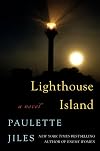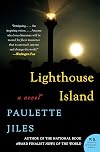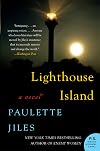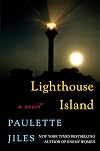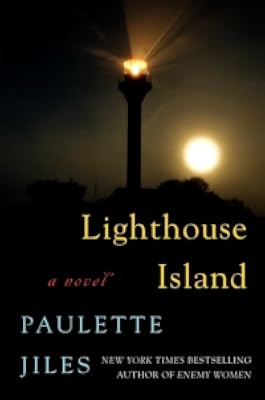
Lighthouse Island
by Paulette Jiles
On This Page
Description
Paulette Jiles, the bestselling author of the highly praised novels The Color of Lightning, Stormy Weather, and Enemy Women, pushes into new territory with Lighthouse Island-a captivating and atmospheric story set in the far future-a literary dystopian tale resonant with love and hope. In the coming centuries the world's population has exploded. The earth is crowded with cities, animals are nearly all extinct, and drought is so widespread that water is rationed. There are no maps, no show more borders, no numbered years, and no freedom, except for an elite few. It is a harsh world for an orphan like Nadia Stepan. Growing up, she dreams of a green vacation spot called Lighthouse Island, in a place called the Pacific Northwest. When an opportunity for escape arises, Nadia embarks on a dangerous and sometimes comic adventure. Along the way she meets a man who changes the course of her life: James Orotov, a mapmaker and demolition expert. Together, they evade arrest and head north toward a place of wild beauty that lies beyond the megapolis-Lighthouse Island. show lessTags
Recommendations
















Member Reviews
I was immediately swept into the world of this creatively different post-apocalytic dystopian reverie for adults.
As with many post-apocalyptic scenarios, the world has been decimated by unsupportable levels of population growth, environmental devastation, decline of education and technology, urban wars and perhaps most central to this story, “the ineradicable fungus of bureaucratic jargon.” And you have to love how political districts are now referred to as Gerrymanders.
In this shady world where freedom is uncertain and aleatory, people kept disappearing, “but everybody pretended not to notice and stayed neutral and colorless like fabric lampshades.”
Ubiquitous large television screens now provide the opiate of the masses, with show more news programs that gave people “the feeling of being informed"; public trials to shame and destroy those who don’t comply with regulations; fantasy serials to satisfy peoples’ desires for a better life; and even public executions to titillate them while instilling more mind-controlling fear. And always there are ads encouraging people to save up for a vacation at Lighthouse Island, a supposed paradise somewhere in the Northwest.
But that isn’t the only entertainment available to the masses. While the language on the tv was “crushed by fear and boredom," there was also “Big Radio,” a voice from an abandoned satellite that cycles through all the old classics of literature all year long. It is in this way that Nadia, an orphan abandoned when she was four, acquires her unusual education. Since she was briefly blind, her eyes never adjusted well to television, and she relied on Big Radio to fill her hours with entertainment, and her imagination with dreams. In addition, “Nadia plunged into books because there was no danger of fictional characters disappearing, and even better, they were not subject to arrest.”
Like so many others, Nadia aspires to go to Lighthouse Island, but she is smarter and more resourceful than most. When circumstances dictate that she needs to run and hide for her life, she decides to try to make her way there. She finds an unlikely source of help from a politically powerful paraplegic, James, who falls in love with Nadia, and is determined to help her.
Discussion: There are many elegantly phrased passages in this book, as well as apt allusions to poems and classics reflecting Nadia’s frame of reference - snippets inserted slyly that will titillate more literate readers. When Nadia first sees an airplane, for example, her wonder at its creation evokes William Blake’s “The Tiger.” There are whispers of Eliot and Yeats and opera and plays. Everything comes together without fanfare but in symphonic alignment, as with this nice passage, when Nadia and her fellow prisoner Charity are in a room with their prison administrator and James:
“Nadia glanced quickly from one side to the other. The entire room seemed to be electrified, its photons and electrons and atoms and beige-and-blue-striped curtains in a slubby weave were all charged with desire. With potential and kinetic love. With poetry and antique emotions. With faith, hope, and Charity, who was standing quietly by with a bread knife in her hand thinking of slitting the administrator’s throat.”
I admired the many ways in which the author (a poet as well as a writer) juxtaposes the ugliness of the man-made world to the beauty of nature, such as her description of the sea when it beat and spangled on the rocks “and threw sequins into the air and overhead the gulls sailed and watched.”
And there is this well-crafted and astute definition of love:
“James searched [Nadia’s] face as if wondering how a blind orphan child had become this ardent young woman with her face now smoothed out by wet and damp. To him she was erotic and steadfast and endearing and if she were not this to other people, then he alone held the key to her being. Sometimes love is blind and sometimes it is sighted, perhaps with a third eye.”
Sometimes the tone of the prose was a bit dream-like and fantastical, and some aspects of Nadia’s journey lacked for realism, but while I didn’t like those aspects of the story as much, they fit.
Evaluation: I was quite impressed with this surprising book, and consistently absorbed in the story. Those who like poetry will find this book especially rewarding, as the author - through her craft, manages to transmogrify bleak destruction and hopelessness into transcendent beauty and salvation. show less
As with many post-apocalyptic scenarios, the world has been decimated by unsupportable levels of population growth, environmental devastation, decline of education and technology, urban wars and perhaps most central to this story, “the ineradicable fungus of bureaucratic jargon.” And you have to love how political districts are now referred to as Gerrymanders.
In this shady world where freedom is uncertain and aleatory, people kept disappearing, “but everybody pretended not to notice and stayed neutral and colorless like fabric lampshades.”
Ubiquitous large television screens now provide the opiate of the masses, with show more news programs that gave people “the feeling of being informed"; public trials to shame and destroy those who don’t comply with regulations; fantasy serials to satisfy peoples’ desires for a better life; and even public executions to titillate them while instilling more mind-controlling fear. And always there are ads encouraging people to save up for a vacation at Lighthouse Island, a supposed paradise somewhere in the Northwest.
But that isn’t the only entertainment available to the masses. While the language on the tv was “crushed by fear and boredom," there was also “Big Radio,” a voice from an abandoned satellite that cycles through all the old classics of literature all year long. It is in this way that Nadia, an orphan abandoned when she was four, acquires her unusual education. Since she was briefly blind, her eyes never adjusted well to television, and she relied on Big Radio to fill her hours with entertainment, and her imagination with dreams. In addition, “Nadia plunged into books because there was no danger of fictional characters disappearing, and even better, they were not subject to arrest.”
Like so many others, Nadia aspires to go to Lighthouse Island, but she is smarter and more resourceful than most. When circumstances dictate that she needs to run and hide for her life, she decides to try to make her way there. She finds an unlikely source of help from a politically powerful paraplegic, James, who falls in love with Nadia, and is determined to help her.
Discussion: There are many elegantly phrased passages in this book, as well as apt allusions to poems and classics reflecting Nadia’s frame of reference - snippets inserted slyly that will titillate more literate readers. When Nadia first sees an airplane, for example, her wonder at its creation evokes William Blake’s “The Tiger.” There are whispers of Eliot and Yeats and opera and plays. Everything comes together without fanfare but in symphonic alignment, as with this nice passage, when Nadia and her fellow prisoner Charity are in a room with their prison administrator and James:
“Nadia glanced quickly from one side to the other. The entire room seemed to be electrified, its photons and electrons and atoms and beige-and-blue-striped curtains in a slubby weave were all charged with desire. With potential and kinetic love. With poetry and antique emotions. With faith, hope, and Charity, who was standing quietly by with a bread knife in her hand thinking of slitting the administrator’s throat.”
I admired the many ways in which the author (a poet as well as a writer) juxtaposes the ugliness of the man-made world to the beauty of nature, such as her description of the sea when it beat and spangled on the rocks “and threw sequins into the air and overhead the gulls sailed and watched.”
And there is this well-crafted and astute definition of love:
“James searched [Nadia’s] face as if wondering how a blind orphan child had become this ardent young woman with her face now smoothed out by wet and damp. To him she was erotic and steadfast and endearing and if she were not this to other people, then he alone held the key to her being. Sometimes love is blind and sometimes it is sighted, perhaps with a third eye.”
Sometimes the tone of the prose was a bit dream-like and fantastical, and some aspects of Nadia’s journey lacked for realism, but while I didn’t like those aspects of the story as much, they fit.
Evaluation: I was quite impressed with this surprising book, and consistently absorbed in the story. Those who like poetry will find this book especially rewarding, as the author - through her craft, manages to transmogrify bleak destruction and hopelessness into transcendent beauty and salvation. show less
Have you ever read a book where the writing is beautifully done but there's just something missing and so you end up not appreciating the book as much as the writing says you should? Lighthouse Island by Paulette Jiles is a book like that for me. I am admittedly not a huge dystopian fiction reader but I have read a few in the past that have pleasantly surprised me so that I don't automatically discount this particular setting anymore and I very much wanted Lighthouse Island to be one of these unexpected surprises. Instead, I really had to work to keep turning the pages.
Nadia is an orphan abandoned in the street by her parents as a very young child. Being an orphan in the dystopian future is not easy at all, especially one who spends an show more unidentified amount of time blind and unable to watch the television shows that obsess the rest of the populace before having her sight restored, although her eyes remain a weakness for her always. The terribly overpopulated world she lives in is suffering from a severe drought, water is rationed, megacities sprawl across the dirty, dusty landscape of the former US, and the government is restrictive, cruel, and unbalanced in its treatment of its highest and lowest citizens. Nadia is of minimal importance in this random, oppressive world and she keeps slipping closer and closer to being in danger of being eliminated entirely with each of her infractions, small and large.
When she has an ill-advised affair with her oversupervisor's husband, she knows that she is no longer safe and rather than be taken and potentially executed for the gruesome new televised executions, she runs, striking out for Lighthouse Island, the vacation spot she's long fantasized about and the place where she imagines her parents waiting for her. So starts her long journey through the unending city and to her fateful meeting with cartographer and demolitions expert, the wheelchair bound James Ortolov. James is much higher up in the hierarchy than she is and yet when he stumbles across her on the rooftop of the Ritz-Carlton, they spend the evening talking, they fall in love, and he works to aid her on her way to Lighthouse Island.
Nadia is a smart, resourceful, and inventive character but she is also lying and manipulative in the face of desperation to survive. She mostly shows a curious lack of empathy for others trapped under the same governmental strictures to which she is a hostage and yet her callousness is rewarded time and time again. But her very emotionlessness makes it hard to believe in her love for James. The love story itself is necessary to the plot, otherwise he has no real reason to aid her in such potentially dangerous ways, but it is underdeveloped.
Jiles builds this future world of Nadia and James masterfully but then continues to repeat the descriptions ad infinitum as Nadia plods through one sector after another trying to make it to the Northwest. Having intentionally stripped the world of place names and dates, in fact, having stripped Nadia herself of her original name both through governmental decree and then over and over again as she tries to travel undiscovered through the city, there were an awful lot of instances where characters used the supposedly forgotten and verboten ancient names to orient themselves. The world itself is a strange and frightening one, close enough to a possible future for us to cause a reader a lot of discomfort. And yet there are some strange incongruous things about this future world. For instance, people no longer know how to create many things we take for granted. All the manufacturing of things like computers was shipped overseas and then those foreign societies which retained the knowledge of how to create collapsed, and yet the whole of the future world and its corrupt government is reliant on computer technology. Not entirely compatible ideas here. The tone of most of the book is one of bleakness and despair and yet it ends on a completely incongruous, hopeful note. It is a book that exults the power of literature through the broadcasts of novels on the radio and through Nadia's prodigious memory of poetry and it holds these things as important and life changing. Combine this with Jiles' beautiful facility with language and it should have been a wonderful quest novel. Instead it was dense, oftentimes repetitive, and ultimately underdeveloped. Regular readers of dystopian fiction might feel differently about it than I did however. show less
Nadia is an orphan abandoned in the street by her parents as a very young child. Being an orphan in the dystopian future is not easy at all, especially one who spends an show more unidentified amount of time blind and unable to watch the television shows that obsess the rest of the populace before having her sight restored, although her eyes remain a weakness for her always. The terribly overpopulated world she lives in is suffering from a severe drought, water is rationed, megacities sprawl across the dirty, dusty landscape of the former US, and the government is restrictive, cruel, and unbalanced in its treatment of its highest and lowest citizens. Nadia is of minimal importance in this random, oppressive world and she keeps slipping closer and closer to being in danger of being eliminated entirely with each of her infractions, small and large.
When she has an ill-advised affair with her oversupervisor's husband, she knows that she is no longer safe and rather than be taken and potentially executed for the gruesome new televised executions, she runs, striking out for Lighthouse Island, the vacation spot she's long fantasized about and the place where she imagines her parents waiting for her. So starts her long journey through the unending city and to her fateful meeting with cartographer and demolitions expert, the wheelchair bound James Ortolov. James is much higher up in the hierarchy than she is and yet when he stumbles across her on the rooftop of the Ritz-Carlton, they spend the evening talking, they fall in love, and he works to aid her on her way to Lighthouse Island.
Nadia is a smart, resourceful, and inventive character but she is also lying and manipulative in the face of desperation to survive. She mostly shows a curious lack of empathy for others trapped under the same governmental strictures to which she is a hostage and yet her callousness is rewarded time and time again. But her very emotionlessness makes it hard to believe in her love for James. The love story itself is necessary to the plot, otherwise he has no real reason to aid her in such potentially dangerous ways, but it is underdeveloped.
Jiles builds this future world of Nadia and James masterfully but then continues to repeat the descriptions ad infinitum as Nadia plods through one sector after another trying to make it to the Northwest. Having intentionally stripped the world of place names and dates, in fact, having stripped Nadia herself of her original name both through governmental decree and then over and over again as she tries to travel undiscovered through the city, there were an awful lot of instances where characters used the supposedly forgotten and verboten ancient names to orient themselves. The world itself is a strange and frightening one, close enough to a possible future for us to cause a reader a lot of discomfort. And yet there are some strange incongruous things about this future world. For instance, people no longer know how to create many things we take for granted. All the manufacturing of things like computers was shipped overseas and then those foreign societies which retained the knowledge of how to create collapsed, and yet the whole of the future world and its corrupt government is reliant on computer technology. Not entirely compatible ideas here. The tone of most of the book is one of bleakness and despair and yet it ends on a completely incongruous, hopeful note. It is a book that exults the power of literature through the broadcasts of novels on the radio and through Nadia's prodigious memory of poetry and it holds these things as important and life changing. Combine this with Jiles' beautiful facility with language and it should have been a wonderful quest novel. Instead it was dense, oftentimes repetitive, and ultimately underdeveloped. Regular readers of dystopian fiction might feel differently about it than I did however. show less
Lighthouse Island is as much about Nadia’s escape from the brutal cityscape as it is about mankind’s perpetual fight against repression and the absurd. Humans will tolerate dictatorships in the guise of benevolent and well-meaning governments for only so long before something happens that changes their minds. What is particularly interesting is the mindset shift between acceptance and revolt, how slowly it happens in some and how quickly in others. Nadia might not be able to recognize the clues, but readers will definitely understand a character’s double-speak and identify the growing disquiet among the masses as well as the increasing panic among the elite as their world threatens to crumble.
Ms. Jiles does her world-building as show more Nadia attends to her journey. Readers not only get glimpses of the massive cityscape, they also learn a bit more about how the world expanded so hugely and grew into the current government with its lack of time, borders, maps, and the like. However, for something as complex as the Eastern and Western Cessation, there are still plenty of unanswered questions about which readers must either hazard a guess or fill in the gaps using their own imaginations. One gets the impression that James knows the answers but has not shared them with Nadia. As the story is told by Nadia, what she does not know or understand the reader does not know or understand. It is at times a frustrating experience, as there is so much about this strange world that remains inexplicable.
Still, Nadia makes for a most excellent narrator. The speed and frequency with which she adopts new personas and bluffs her way out of dicey situations is both admirable and disconcerting. It is fascinating to see her thought process as she switches from Nadia to someone else. Yet, it does raise the question of whether she is a totally reliable narrator. If she can tell such bald-faced lies so boldly as to avoid detection and arrest, is she truthfully telling her story? Is she even capable of distinguishing between lies and truth anymore? Regardless of the answers to the questions raised by her con artist habits, she carries with her the fragility inherent with any orphan. She may not be a wallflower, but she is obviously searching for a sense of belonging as well as love. That she is extremely clever, fiercely determined, and incapable of quitting makes her underlying delicateness very touching. Then again, with a character like Nadia, discerning how much of her supposed fragility is a lie meant to manipulate readers and how much of it is the truth is most difficult indeed.
The plot may be creative and the heroine delightfully plucky, but the story itself ultimately descends into the ridiculous and convenient. A reader has no doubt that Nadia will ultimately reach Lighthouse Island, but how she gets there is unfairly easy, especially after everything she faces during the first leg of her journey. The world to which readers are first introduced changes so much over the course of the novel that it is unrecognizable by the time she obtains her goal, changing readers’ perceptions and expectations. Also, what happens on the island is suspiciously opportune. People and circumstances have a way of colliding that is just too pat. It makes for a hopeful, even happy, ending, but the story loses its gritty realism entirely as a result. It is a surprisingly dissatisfying ending to what starts out as an imaginative story. show less
Ms. Jiles does her world-building as show more Nadia attends to her journey. Readers not only get glimpses of the massive cityscape, they also learn a bit more about how the world expanded so hugely and grew into the current government with its lack of time, borders, maps, and the like. However, for something as complex as the Eastern and Western Cessation, there are still plenty of unanswered questions about which readers must either hazard a guess or fill in the gaps using their own imaginations. One gets the impression that James knows the answers but has not shared them with Nadia. As the story is told by Nadia, what she does not know or understand the reader does not know or understand. It is at times a frustrating experience, as there is so much about this strange world that remains inexplicable.
Still, Nadia makes for a most excellent narrator. The speed and frequency with which she adopts new personas and bluffs her way out of dicey situations is both admirable and disconcerting. It is fascinating to see her thought process as she switches from Nadia to someone else. Yet, it does raise the question of whether she is a totally reliable narrator. If she can tell such bald-faced lies so boldly as to avoid detection and arrest, is she truthfully telling her story? Is she even capable of distinguishing between lies and truth anymore? Regardless of the answers to the questions raised by her con artist habits, she carries with her the fragility inherent with any orphan. She may not be a wallflower, but she is obviously searching for a sense of belonging as well as love. That she is extremely clever, fiercely determined, and incapable of quitting makes her underlying delicateness very touching. Then again, with a character like Nadia, discerning how much of her supposed fragility is a lie meant to manipulate readers and how much of it is the truth is most difficult indeed.
The plot may be creative and the heroine delightfully plucky, but the story itself ultimately descends into the ridiculous and convenient. A reader has no doubt that Nadia will ultimately reach Lighthouse Island, but how she gets there is unfairly easy, especially after everything she faces during the first leg of her journey. The world to which readers are first introduced changes so much over the course of the novel that it is unrecognizable by the time she obtains her goal, changing readers’ perceptions and expectations. Also, what happens on the island is suspiciously opportune. People and circumstances have a way of colliding that is just too pat. It makes for a hopeful, even happy, ending, but the story loses its gritty realism entirely as a result. It is a surprisingly dissatisfying ending to what starts out as an imaginative story. show less
The poet’s foray into dystopian literature offers a glimpse of a world ravaged by human greed. An almost cold heroine with a single-minded desire to reach the mythical Lighthouse Island on the western shore of the United States leads the reader through a nightmarish America of unending drought-ridden city and prison work camps. Jiles’ distinctive writing style is even more disjointed and lyrical in this enchanting but disconnected story of survival and drive.
Lighthouse Island by Paulette Jilesis a highly recommended (with a codicil) dystopian novel set in the future.
The earth is an endless, borderless city where water is scare and people are disposable. Lighthouse Island opens: "The winds carried dust to every part of the great cities; left it on roofs and windowsills and uneven streets. It scoured glass to an iridescent glaze. The city covered the entire earth, if people think of the earth as 'where I live.'”(Page 1) "As far as anyone knew, the world had become nothing but city and the rains had failed for a century. (Page 3)
Raisa was abandoned by her parents at age 4: "Her parents had given her a coin purse of red leather—in it were five coins—and a note, and another piece of paper show more on which were drawn the constellations of the Big Dipper, Cassiopeia’s Chair, and the North Star. Her mother handed her the paper and said, Look to the North Star and we will always be there. You’ll be lonely for a while but things will get better. (Page 2). Raisa became a PD--a Parentless Dependent, and was renamed Nadia Stepan at the orphanage where she grew up.
Nadia, who temporarily went blind as a child, listened to the television but, even after her sight returned, she avoided watching it, preferring to read and memorize poetry. The one thing she heard about on TV that enchanted her was Lighthouse Island and, even though she is not sure it is real, she wants to visit it. When she grows up, events send her running for her life and in search of Lighthouse Island.
James Orotov is a demolitions expert who became a paraplegic. He is fascinated by geography and cartography, even though most old maps have been destroyed and are outlawed. He and Nadia meet and he instantly knows he must help her for he also knows he will be running for his life shortly too.
Lighthouse Island is a beautifully written novel. Jiles does an exceptional job describing her setting, the barren, dusty, decaying, over-populated earth. In a way, Jiles novel brought to my mind China Miéville's Bas-Lag novels and his city of New Crobunzon, like Perdido Street Station. Although they are also very different novels, I think the connection is due to the incredible ability both authors have demonstrated in creating their dirty, dusty, crowded, urban police state cities, although Jiles' Lighthouse Island is definitely set on earth in the future. They both have some steampunk influence.
That brings me to the codicil on my rating. Lighthouse Island started out strong and held my rapt attention for much of the novel. There are some brilliant moments and observations throughout the novel. But, as other reviewers have pointed out, while the writing is beautiful, Jiles also needlessly does some repetition of descriptions, and the plot does move at a very slow pace. Then, in the last third of the book or so, the tone of the novel changes dramatically and it felt like a different novel with an ending that is... interesting, but not conclusive, and it feels somewhat rushed and incomplete.
Thanks to TLC for providing me with a review copy for my Kindle. show less
The earth is an endless, borderless city where water is scare and people are disposable. Lighthouse Island opens: "The winds carried dust to every part of the great cities; left it on roofs and windowsills and uneven streets. It scoured glass to an iridescent glaze. The city covered the entire earth, if people think of the earth as 'where I live.'”(Page 1) "As far as anyone knew, the world had become nothing but city and the rains had failed for a century. (Page 3)
Raisa was abandoned by her parents at age 4: "Her parents had given her a coin purse of red leather—in it were five coins—and a note, and another piece of paper show more on which were drawn the constellations of the Big Dipper, Cassiopeia’s Chair, and the North Star. Her mother handed her the paper and said, Look to the North Star and we will always be there. You’ll be lonely for a while but things will get better. (Page 2). Raisa became a PD--a Parentless Dependent, and was renamed Nadia Stepan at the orphanage where she grew up.
Nadia, who temporarily went blind as a child, listened to the television but, even after her sight returned, she avoided watching it, preferring to read and memorize poetry. The one thing she heard about on TV that enchanted her was Lighthouse Island and, even though she is not sure it is real, she wants to visit it. When she grows up, events send her running for her life and in search of Lighthouse Island.
James Orotov is a demolitions expert who became a paraplegic. He is fascinated by geography and cartography, even though most old maps have been destroyed and are outlawed. He and Nadia meet and he instantly knows he must help her for he also knows he will be running for his life shortly too.
Lighthouse Island is a beautifully written novel. Jiles does an exceptional job describing her setting, the barren, dusty, decaying, over-populated earth. In a way, Jiles novel brought to my mind China Miéville's Bas-Lag novels and his city of New Crobunzon, like Perdido Street Station. Although they are also very different novels, I think the connection is due to the incredible ability both authors have demonstrated in creating their dirty, dusty, crowded, urban police state cities, although Jiles' Lighthouse Island is definitely set on earth in the future. They both have some steampunk influence.
That brings me to the codicil on my rating. Lighthouse Island started out strong and held my rapt attention for much of the novel. There are some brilliant moments and observations throughout the novel. But, as other reviewers have pointed out, while the writing is beautiful, Jiles also needlessly does some repetition of descriptions, and the plot does move at a very slow pace. Then, in the last third of the book or so, the tone of the novel changes dramatically and it felt like a different novel with an ending that is... interesting, but not conclusive, and it feels somewhat rushed and incomplete.
Thanks to TLC for providing me with a review copy for my Kindle. show less
A unexpected dystopian novel from the author of "Enemy Women", one of my favorites. I liked this one - it reminded me of Phillip Pullman's "Golden Compass" trilogy. It's the year 2138 and life in the remnants of the USA is overpopulated, underhydrated, and miserable. Our heroine is abandoned by her parents in the street at age 4 and makes her way north through her wit and stubbornness. Her reward is a new way of life, new companions, and a man who is almost her equal in strength and resilience. I really liked it, but there's too much inconsequential detail of the new world and not enough background on what destroyed our old familiar one (Ted Cruz is not involved, apparently).
I found this novel disjointed and the ending too quick, leaving a lot of unanswered questions. Maybe there is going to be a sequel but that's a poor excuse for not wrapping things up.
Nadia was abandoned by her parents when she was very young with them telling her to keep looking for the north star. The whole of the US practically is covered by a city and almost everyone is poor. They have jobs for the most part but the jobs are in huge bureaucracies and the pay is minimal. Water rationing is extreme, food is synthetic and everyone spends their leisure hours glued to the state run TV. People are often rounded up for small infractions and sent to work camps. Nadia, who is very smart and well-read, escapes that fate by the skin of her show more teeth. She decides to walk across the continent to Lighthouse Island which has been touted as a vacation spot for those people who manage to earn enough credits. Nadia has dreamed of going there almost all her life and figures she has nothing to lose.
Would I read the sequel? Perhaps, because I would like to answer some of those questions. show less
Nadia was abandoned by her parents when she was very young with them telling her to keep looking for the north star. The whole of the US practically is covered by a city and almost everyone is poor. They have jobs for the most part but the jobs are in huge bureaucracies and the pay is minimal. Water rationing is extreme, food is synthetic and everyone spends their leisure hours glued to the state run TV. People are often rounded up for small infractions and sent to work camps. Nadia, who is very smart and well-read, escapes that fate by the skin of her show more teeth. She decides to walk across the continent to Lighthouse Island which has been touted as a vacation spot for those people who manage to earn enough credits. Nadia has dreamed of going there almost all her life and figures she has nothing to lose.
Would I read the sequel? Perhaps, because I would like to answer some of those questions. show less
Members
- Recently Added By
Lists

I Could Live There
185 works; 12 members
Author Information

21+ Works 6,831 Members
Paulette Jiles is a poet, memoirist, and novelist, born in 1943, and based in San Antonio, Texas. She is the author of a memoir entitled, Cousins. Her novels include Enemy Woman, Stormy Weather, The Color of Lightning, Lighthouse Island, and News of the World. (Bowker Author Biography)
Common Knowledge
- Canonical title
- Lighthouse Island
- Original publication date
- 2013-10-08
- People/Characters
- Nadia Stepan; James Orotov; Farrell Orotov
Classifications
- Genres
- Fiction and Literature, General Fiction, Science Fiction
- DDC/MDS
- 813.54 — Literature & rhetoric American literature in English American fiction in English 1900-1999 1945-1999
- LCC
- PR9199.3 .J54 .L54 — Language and Literature English English Literature English literature: Provincial, local, etc.
- BISAC
Statistics
- Members
- 183
- Popularity
- 178,032
- Reviews
- 14
- Rating
- (3.25)
- Languages
- English
- Media
- Paper, Audiobook, Ebook
- ISBNs
- 8
- ASINs
- 2