On This Page
Description
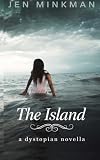
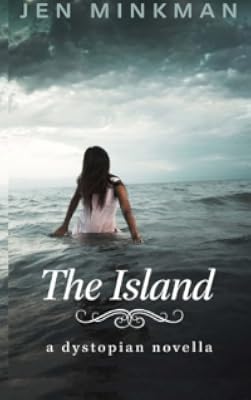
I walk toward the sea. The endless surface of the water extends to the horizon, whichever way I look. Our world is small. We are on our own, and we only have ourselves to depend on. We rely on the Force deep within us, as taught to us by our forefathers. If I were to walk westward from here, I would come across a barrier - the Wall. Behind it, there are Fools. At least, that's what everyone says. I have never seen one. Leia lives on the Island, a world in which children leave their parents show more to take care of themselves when they are ten years old. Across this Island runs a wall that no one has ever crossed. The Fools living behind it are not amenable to reason - they believe in illusions. That's what The Book says, the only thing left to the Eastern Islanders by their ancestors. But when a strange man washes ashore and Leia meets a Fool face to face, her life will never be the same. Is what she and her friends believe about the Island really true? Or is everyone in their world, in fact, a Fool? show lessTags
Recommendations





















Member Recommendations

Member Reviews
The Island is a futuristic novella by Jen Minkman that has the ability to borrow from several different predecessors yet be unique enough to create a world of its own. Minkman creates a world in the not too distant future where the bonds of family are broken by ritual and the gap between children and parents severed by the society they live in.
"...I go my own way," I say softly. The words that every child utters at age ten - the words my brother will say after me today - don't sound as if I'm sure of them. But I am, because I know this is right. I clear my throat and speak up. "I stand on my own two feet. No one takes care of me but me..."
With those words the children leave their homes and their family and travel to the Manor where show more they will be taught to stand on their own and depend on no one. It is a brutal place run by a young dictator named Saul. In this setting a very Lord of The Flies existence is prevalent. Separated from their parents the children learn that they alone can provide and care for themselves.
"...In front of me right now is a different kind of book that I've read many times as well. A book containing imaginative stories called 'fairytales'. Even in a fantasy world, parents are not to be trusted - the stories of Snow White and Cinderella make that perfectly clear. The mothers in those tales didn't love their children either..."
In this isolated world the children are taught from a book, a tale of a brother and sister who fight against the greatest evil represented by their father. Here the children are learning that perhaps a greater evil is coming from within.
The Island was slow in some parts but well paced. Do not be dissuaded by the Star Wars references, this is not about Star Wars. If anything Minkman has used the pop culture sensation of Star Wars to show how much the current media; entertainment and otherwise, has such a strong impact on the children of today.
If a ten year old was removed from his parents and isolated, what would he really know of the world? What would he retain most of his past? Would it not be the Television and Movie shows; video games as well, that they spend so much of their early lives with? And do not most of these tales teach children that adults are not to be trusted? Or at the least are to stupid and self-involved to be of any help at all?
The Island is a well written dystopian story and as the best of that genre does, has a very well crafted comment on the society of today.
A very good read. show less
"...I go my own way," I say softly. The words that every child utters at age ten - the words my brother will say after me today - don't sound as if I'm sure of them. But I am, because I know this is right. I clear my throat and speak up. "I stand on my own two feet. No one takes care of me but me..."
With those words the children leave their homes and their family and travel to the Manor where show more they will be taught to stand on their own and depend on no one. It is a brutal place run by a young dictator named Saul. In this setting a very Lord of The Flies existence is prevalent. Separated from their parents the children learn that they alone can provide and care for themselves.
"...In front of me right now is a different kind of book that I've read many times as well. A book containing imaginative stories called 'fairytales'. Even in a fantasy world, parents are not to be trusted - the stories of Snow White and Cinderella make that perfectly clear. The mothers in those tales didn't love their children either..."
In this isolated world the children are taught from a book, a tale of a brother and sister who fight against the greatest evil represented by their father. Here the children are learning that perhaps a greater evil is coming from within.
The Island was slow in some parts but well paced. Do not be dissuaded by the Star Wars references, this is not about Star Wars. If anything Minkman has used the pop culture sensation of Star Wars to show how much the current media; entertainment and otherwise, has such a strong impact on the children of today.
If a ten year old was removed from his parents and isolated, what would he really know of the world? What would he retain most of his past? Would it not be the Television and Movie shows; video games as well, that they spend so much of their early lives with? And do not most of these tales teach children that adults are not to be trusted? Or at the least are to stupid and self-involved to be of any help at all?
The Island is a well written dystopian story and as the best of that genre does, has a very well crafted comment on the society of today.
A very good read. show less
Before I started reading The Island I was warned that it could seem like Star Wars fan fiction and I want to set one thing straight from the very beginning: This is NOT fan fiction! If you think it is, you have either not read the entire story or you have no idea what fan fiction is. But yes, Star Wars is mentioned and actually plays a rather important part of the story, but never in a fan fiction kind of way (I’m not saying there is something wrong with fan fiction – I’m just trying to separate things!) All right, how many times did I just write ‘fan fiction?’ Let’s get on with the real review:
I have to admit that the first couple of times either Star Wars or The Force was mentioned, I found it rather weird and the fact show more that the main character is called Leia certainly doesn’t help. But as the story unfolds everything started to make sense and it ended up being so much more than I could ever have thought.
Leia is a classic dystopian main character; she discovers that something is wrong and decides to change it and along the way she figures out that everything is worse than she thought. Leia is smart and determined, but it’s her actions more than her thoughts that carries the book and as a reader, you never really get to know her 100 %. There are a lot of quiet important secondary characters who are easily separated despite the fact that the reader never gets to know them very well.
My main problem with the story is the length – is just too short! A lot has to be explained and solved in very few pages and it shows in quick solutions and easy conflicts. It also makes the story a bit shallow since there is an overload of action and very little character development.
The story is filled with interesting subject which I could talk about for hours (or write about for hours maybe?) but it’s difficult to do so without spoiling. Believing, humanity and will power are all very important matter in the story and it makes the reader think afterwards. Jen Minkman is a great author and rumors of a sequel make me very happy. show less
I have to admit that the first couple of times either Star Wars or The Force was mentioned, I found it rather weird and the fact show more that the main character is called Leia certainly doesn’t help. But as the story unfolds everything started to make sense and it ended up being so much more than I could ever have thought.
Leia is a classic dystopian main character; she discovers that something is wrong and decides to change it and along the way she figures out that everything is worse than she thought. Leia is smart and determined, but it’s her actions more than her thoughts that carries the book and as a reader, you never really get to know her 100 %. There are a lot of quiet important secondary characters who are easily separated despite the fact that the reader never gets to know them very well.
My main problem with the story is the length – is just too short! A lot has to be explained and solved in very few pages and it shows in quick solutions and easy conflicts. It also makes the story a bit shallow since there is an overload of action and very little character development.
The story is filled with interesting subject which I could talk about for hours (or write about for hours maybe?) but it’s difficult to do so without spoiling. Believing, humanity and will power are all very important matter in the story and it makes the reader think afterwards. Jen Minkman is a great author and rumors of a sequel make me very happy. show less
First things first, the writing is excellent, and the plot had potential.
BUT.
This is otherwise really not for me. I had so many problems with it, from the main character finding being suspected of being gay laughable and insulting and a sign she wasn't feminine (no acknowledgement that anyone might be Bi or Asexual, of course)to the reveal that this group had based their entire religion on FUCKING STAR WARS to how easily everything came.
It's a quick read, at least, and not painful to read, just none of it read true to me. The worldbuilding was lax and poorly thought through, and the characters were one dimensional at best. The ways the secrets were revealed were silly, and everyone accepted them far too easily.
I'm aware this is for show more people who are younger than I am, and who perhaps aren't as widely read as I am. Perhaps my expectations were too high. But all I can do is give my honest opinion of the work, which is that it didn't live up to its description or potential. show less
BUT.
This is otherwise really not for me. I had so many problems with it, from the main character finding being suspected of being gay laughable and insulting and a sign she wasn't feminine (no acknowledgement that anyone might be Bi or Asexual, of course)to the reveal that this group had based their entire religion on
It's a quick read, at least, and not painful to read, just none of it read true to me. The worldbuilding was lax and poorly thought through, and the characters were one dimensional at best. The ways the secrets were revealed were silly, and everyone accepted them far too easily.
I'm aware this is for show more people who are younger than I am, and who perhaps aren't as widely read as I am. Perhaps my expectations were too high. But all I can do is give my honest opinion of the work, which is that it didn't live up to its description or potential. show less
The Island by Jen Minkman
"The Island" series #1
setting: Two small towns on a little island in the middle of the ocean; "Newexter" (pop. 250) and "Hope Harbor" (pop. 1000). Approx. 150 years in the future.
Dystopian novella centering around 16yo Leia and her twin brother, Colin, who were forced out of their parents' home at age 10 (the age of adulthood) to go live a distance away in the "manor" with around 50 other children. There they are taught the necessary skills to survive--hunting, fishing, building, sewing, gardening, etc.--without the assistance of any parents.
"I go my own way. I stand on my own two feet. No one takes care of me but me."
They do have a leader, Saul, who is one of the older boys. He follows "the Book" which was show more passed down from their ancestors, Luke and Leia. In the book are stories about Dark Father, who chose to do evil and betrayed his children. The cover of the Book has a picture of them with strange weapons which light up from the Force. Although he never allows anyone else to read the Book, he reads portions of it to the children on occasion. The rules state he can be removed from his leadership position but it can only be done by a test of strength, and none of the other children are big enough to cross him. Everyone is required to serve him in order to keep up the "Force" within themselves and to help him in also keeping the Force.
There is a dividing point of their land called "the Wall" which no one is to cross. There is another civilization on the other side where the "Fools" live. The Fools believe there will come a time when salvation will reach them from across the ocean. They do not believe in the Force within themselves.
Saul begins to show signs of instability and violence, making everyone fear him. There is some question that he has passed the age of living at the manor and serving as their leader. They just need proof, so Leia sets out to provide it, and finds not only evidence of what caused the rift between the two villages but salvation for her people.
This was fairly riveting for a novella. I found the Star Wars references funny at first; although the way the ending tied in to explain it all, it actually made sense. It's actually thought-provoking what could possibly survive, either in physical artifacts or in stories, after an apocalyptic event, and how the surviving information could affect future generations. show less
"The Island" series #1
setting: Two small towns on a little island in the middle of the ocean; "Newexter" (pop. 250) and "Hope Harbor" (pop. 1000). Approx. 150 years in the future.
Dystopian novella centering around 16yo Leia and her twin brother, Colin, who were forced out of their parents' home at age 10 (the age of adulthood) to go live a distance away in the "manor" with around 50 other children. There they are taught the necessary skills to survive--hunting, fishing, building, sewing, gardening, etc.--without the assistance of any parents.
"I go my own way. I stand on my own two feet. No one takes care of me but me."
They do have a leader, Saul, who is one of the older boys. He follows "the Book" which was show more passed down from their ancestors, Luke and Leia. In the book are stories about Dark Father, who chose to do evil and betrayed his children. The cover of the Book has a picture of them with strange weapons which light up from the Force. Although he never allows anyone else to read the Book, he reads portions of it to the children on occasion. The rules state he can be removed from his leadership position but it can only be done by a test of strength, and none of the other children are big enough to cross him. Everyone is required to serve him in order to keep up the "Force" within themselves and to help him in also keeping the Force.
There is a dividing point of their land called "the Wall" which no one is to cross. There is another civilization on the other side where the "Fools" live. The Fools believe there will come a time when salvation will reach them from across the ocean. They do not believe in the Force within themselves.
Saul begins to show signs of instability and violence, making everyone fear him. There is some question that he has passed the age of living at the manor and serving as their leader. They just need proof, so Leia sets out to provide it, and finds not only evidence of what caused the rift between the two villages but salvation for her people.
This was fairly riveting for a novella. I found the Star Wars references funny at first; although the way the ending tied in to explain it all, it actually made sense. It's actually thought-provoking what could possibly survive, either in physical artifacts or in stories, after an apocalyptic event, and how the surviving information could affect future generations. show less
The dystopian genre has always intrigued me, and now that it’s a popular type of book to find, there are many choices to read. It’s also because of this, that I try to be a bit picky when choosing which to read. I’m glad I came across The Island.
What I found interesting for The Island is that the author took on the dystopian genre in the form of a novella, and it turns out that it used the length well. While the story in question could easily have been written into a full-length novel, I think as a novella there wasn’t room to fluff it up. That fluff might have ended up being more of a romance story, and I’m glad it wasn’t. The focus was the conflict in this society and the discover of what’s really going on, among a few show more other important factors.
A society in which at 10, a child moves out of his/her parents’ house and into a collective of other young children in order to grow up, get married, and continue the cycle…well, that was definitely something to ponder. And this is how the story starts out. Soon after, the world building expands, the island is established, and there’s mention the others, the Fools. When I already had questions as to how things came to be, more questions arose with the inclusion of more people, separated from a society already foreign to me.
I found myself drawn in by Leia’s account of what was occurring. While she’s knowledgeable, there is room for her to grow and she does; on her own and through others. The other characters, like Luc (Leia’s twin brother), Ando, Sol, etc also added to this story in many ways. While there might be a lack of in-depth developing of most characters, I feel that there was enough given in the short length of being a novella, to be effective.
I think I should make mention that due to not fully reading the blurb for The Island, I missed the note about there being a major sci-fi movie as an element of the plot. And to be honest, I’m actually glad I missed that. When I made the connection even before the full reveal of what’s going on, I got a little amused. This movie wasn’t used in a cheesy way. It was a great device to show how influential a story can be, and how with the right conditions, stories of our modern world can become the mythology in the world of tomorrow. Even today, many of our fictional characters and stories are a mythology just like the gods and heroes of Greece and the stories in the Bible are a mythology of the times in which they’re from. This has been an area of interest for me due to my enjoyment of Greek and Roman myth. I was pleased to see how this came to be for this world, and the effect it took over the years. show less
What I found interesting for The Island is that the author took on the dystopian genre in the form of a novella, and it turns out that it used the length well. While the story in question could easily have been written into a full-length novel, I think as a novella there wasn’t room to fluff it up. That fluff might have ended up being more of a romance story, and I’m glad it wasn’t. The focus was the conflict in this society and the discover of what’s really going on, among a few show more other important factors.
A society in which at 10, a child moves out of his/her parents’ house and into a collective of other young children in order to grow up, get married, and continue the cycle…well, that was definitely something to ponder. And this is how the story starts out. Soon after, the world building expands, the island is established, and there’s mention the others, the Fools. When I already had questions as to how things came to be, more questions arose with the inclusion of more people, separated from a society already foreign to me.
I found myself drawn in by Leia’s account of what was occurring. While she’s knowledgeable, there is room for her to grow and she does; on her own and through others. The other characters, like Luc (Leia’s twin brother), Ando, Sol, etc also added to this story in many ways. While there might be a lack of in-depth developing of most characters, I feel that there was enough given in the short length of being a novella, to be effective.
I think I should make mention that due to not fully reading the blurb for The Island, I missed the note about there being a major sci-fi movie as an element of the plot. And to be honest, I’m actually glad I missed that. When I made the connection even before the full reveal of what’s going on, I got a little amused. This movie wasn’t used in a cheesy way. It was a great device to show how influential a story can be, and how with the right conditions, stories of our modern world can become the mythology in the world of tomorrow. Even today, many of our fictional characters and stories are a mythology just like the gods and heroes of Greece and the stories in the Bible are a mythology of the times in which they’re from. This has been an area of interest for me due to my enjoyment of Greek and Roman myth. I was pleased to see how this came to be for this world, and the effect it took over the years. show less
First things first, the writing is excellent, and the plot had potential.
BUT.
This is otherwise really not for me. I had so many problems with it, from the main character finding being suspected of being gay laughable and insulting and a sign she wasn't feminine (no acknowledgement that anyone might be Bi or Asexual, of course)to the reveal that this group had based their entire religion on FUCKING STAR WARS to how easily everything came.
It's a quick read, at least, and not painful to read, just none of it read true to me. The worldbuilding was lax and poorly thought through, and the characters were one dimensional at best. The ways the secrets were revealed were silly, and everyone accepted them far too easily.
I'm aware this is for show more people who are younger than I am, and who perhaps aren't as widely read as I am. Perhaps my expectations were too high. But all I can do is give my honest opinion of the work, which is that it didn't live up to its description or potential. show less
BUT.
This is otherwise really not for me. I had so many problems with it, from the main character finding being suspected of being gay laughable and insulting and a sign she wasn't feminine (no acknowledgement that anyone might be Bi or Asexual, of course)to the reveal that this group had based their entire religion on
It's a quick read, at least, and not painful to read, just none of it read true to me. The worldbuilding was lax and poorly thought through, and the characters were one dimensional at best. The ways the secrets were revealed were silly, and everyone accepted them far too easily.
I'm aware this is for show more people who are younger than I am, and who perhaps aren't as widely read as I am. Perhaps my expectations were too high. But all I can do is give my honest opinion of the work, which is that it didn't live up to its description or potential. show less
A Very Good Start!
Dystopian Novella Fan fiction -- The Island.
One hundred fifty years or so ago, biological warfare nearly decimates the planet's population. The population is dying off toward extinction by man-made biological warfare among those nations greedy for dominant power. A ship of kids is sent away in hopes of allowing mankind to survive the unsurvivable. On the ship, among the necessities the adults & parents believe the children will require to survive, such as food, plants, hunting and fishing tools, clothing, etc, are a few books, including books of fiction. As time passes, one of these books is no longer known to be a book of fiction, but is taken to be a guidebook of sorts. A book "describing" the fall of the children's show more ancestors' and a "guide" to how the children should live together, work together, grow together and what will be their saving grace, the force within their hearts and soul.
Really good concept going on here!!
This less-than-80-pages novella is a Star Wars based piece of fan fiction. I didn't realize this when I began the book because the summary I read at NetGalley described the dystopian society oddities with no reference to Star Wars. The book description captured my attention and, as usual, I did not read others' reviews beforehand. I didn't want to bias my expectations with others' reviews.
I am a fan of YA dystopian societies and I am a fan of fanfiction, but up until now, I have only read pieces related to Pride & Prejudice and pieces related to Twilight . I have seen all of the Star Wars movies, but none more than 3 times -- meaning I have a passing knowledge of the series, but not a detailed memory of any. So. That's where I am coming from before reading The Island.
If you don't have patience for fan fiction or if you can't let yourself be carried away by the fantasy of a futuristic dystopian society, there's no way you will like this. Stop reading here and move on -- no harm, no foul.
If you're still reading, you're probably obstinate because I told you to move on or you're curious because I have piqued your interest.
In this form, this book is not a revelation and won't draw a following, but is a very good beginning. The author did a fine job developing the characters, their current society, as well as explaining the distorted beliefs that created this world 150 years after biological warfare nearly decimated the planet's population. I say this is a good beginning because where the author lost my support is when Leia, the heroine, goes to the forbidden "other side" of the Wall for help. "Knowledge" is thrown at her and she all-too-easily accepts the new "knowledge" without question. Granted, she is primed and ready to hear that her people's "world" leaves much to question. She knows in her soul that change in the leadership and their ways is necessary, but she still accepts too readily. Then, in a flurry of activity that seems impossible to bring about in mere hours, a group of "rescuers" readies a ship, boards & sails it to the other side of the island and confronts the "misguided leader" all to easily, quickly and without question.
It is from the moment Leia resolves to get help from Walt and crosses the Wall that I believe the author can develop and create a full-length novel from this good beginning.
I've rated this novella three stars because I find the story line novel, clever and creative. I've rated this fan fiction three stars because I think this is a good beginning to a potentially interesting story. The irony of an "old" book (of fiction, no less) interpreted as a "bible" of how society should live, work together and conduct itself is very interesting. That's how all dystopian societies are formed and function; a misguided idea built up until it implodes.
Ms. Minkman, I hope you consider developing this story further. I wish the cat wasn't yet let out of the bag, that the fictional book wasn't yet named... but, please, consider developing your novella to a full-length book. show less
Dystopian Novella Fan fiction -- The Island.
One hundred fifty years or so ago, biological warfare nearly decimates the planet's population. The population is dying off toward extinction by man-made biological warfare among those nations greedy for dominant power. A ship of kids is sent away in hopes of allowing mankind to survive the unsurvivable. On the ship, among the necessities the adults & parents believe the children will require to survive, such as food, plants, hunting and fishing tools, clothing, etc, are a few books, including books of fiction. As time passes, one of these books is no longer known to be a book of fiction, but is taken to be a guidebook of sorts. A book "describing" the fall of the children's show more ancestors' and a "guide" to how the children should live together, work together, grow together and what will be their saving grace, the force within their hearts and soul.
Really good concept going on here!!
This less-than-80-pages novella is a Star Wars based piece of fan fiction. I didn't realize this when I began the book because the summary I read at NetGalley described the dystopian society oddities with no reference to Star Wars. The book description captured my attention and, as usual, I did not read others' reviews beforehand. I didn't want to bias my expectations with others' reviews.
I am a fan of YA dystopian societies and I am a fan of fanfiction, but up until now, I have only read pieces related to Pride & Prejudice and pieces related to Twilight . I have seen all of the Star Wars movies, but none more than 3 times -- meaning I have a passing knowledge of the series, but not a detailed memory of any. So. That's where I am coming from before reading The Island.
If you don't have patience for fan fiction or if you can't let yourself be carried away by the fantasy of a futuristic dystopian society, there's no way you will like this. Stop reading here and move on -- no harm, no foul.
If you're still reading, you're probably obstinate because I told you to move on or you're curious because I have piqued your interest.
In this form, this book is not a revelation and won't draw a following, but is a very good beginning. The author did a fine job developing the characters, their current society, as well as explaining the distorted beliefs that created this world 150 years after biological warfare nearly decimated the planet's population. I say this is a good beginning because where the author lost my support is when Leia, the heroine, goes to the forbidden "other side" of the Wall for help. "Knowledge" is thrown at her and she all-too-easily accepts the new "knowledge" without question. Granted, she is primed and ready to hear that her people's "world" leaves much to question. She knows in her soul that change in the leadership and their ways is necessary, but she still accepts too readily. Then, in a flurry of activity that seems impossible to bring about in mere hours, a group of "rescuers" readies a ship, boards & sails it to the other side of the island and confronts the "misguided leader" all to easily, quickly and without question.
It is from the moment Leia resolves to get help from Walt and crosses the Wall that I believe the author can develop and create a full-length novel from this good beginning.
I've rated this novella three stars because I find the story line novel, clever and creative. I've rated this fan fiction three stars because I think this is a good beginning to a potentially interesting story. The irony of an "old" book (of fiction, no less) interpreted as a "bible" of how society should live, work together and conduct itself is very interesting. That's how all dystopian societies are formed and function; a misguided idea built up until it implodes.
Ms. Minkman, I hope you consider developing this story further. I wish the cat wasn't yet let out of the bag, that the fictional book wasn't yet named... but, please, consider developing your novella to a full-length book. show less
Members
- Recently Added By
Lists

World without adults
27 works; 2 members
Author Information

28+ Works 464 Members

Jen Minkman is a LibraryThing Author, an author who lists their personal library on LibraryThing.
Series

Work Relationships
Is contained in
Classifications
- Genres
- Fiction and Literature, Teen, Young Adult
- BISAC
Statistics
- Members
- 151
- Popularity
- 217,008
- Reviews
- 15
- Rating
- (3.07)
- Languages
- English, French, German
- Media
- Paper, Audiobook, Ebook
- ISBNs
- 6
- ASINs
- 4