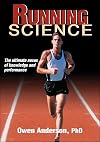
Running Science
by Owen Anderson
On This Page
Description
A comprehensive guide to all things running explains running physiology, biomechanics, medicine, genetics, biology, psychology, training, and racing.Tags
Recommendations







Member Reviews
I have really been putting off writing this review. I have had this book sitting on my nightstand making me feel guilty for several weeks. I just couldn't bring myself to review it, for one simple reason....I didn't enjoy it.
I feel badly that I didn't like the book. I wanted to. I mean, I really really wanted to! I'm a runner! I love running! I even look forward to training and improving. Not only that, I'm a nurse... I love science! I really enjoy understanding the physical process of running. So, why didn't I like this book?
Simply put, it's too complicated. The information is thorough, science and training based, but never simplified to the point where I could access it easily. Reading through the chapters I found little that I, as an show more amateur, could easily put into my routine. I subscribe to both Runners World and Running Times. People familiar with those magazines will understand what I mean when I say this book is far more similar to Running Times than runners world. If you want to improve your 5k - Marathon time, there are many other books that are more accessible.
This book is for coaches and professional runners. show less
I feel badly that I didn't like the book. I wanted to. I mean, I really really wanted to! I'm a runner! I love running! I even look forward to training and improving. Not only that, I'm a nurse... I love science! I really enjoy understanding the physical process of running. So, why didn't I like this book?
Simply put, it's too complicated. The information is thorough, science and training based, but never simplified to the point where I could access it easily. Reading through the chapters I found little that I, as an show more amateur, could easily put into my routine. I subscribe to both Runners World and Running Times. People familiar with those magazines will understand what I mean when I say this book is far more similar to Running Times than runners world. If you want to improve your 5k - Marathon time, there are many other books that are more accessible.
This book is for coaches and professional runners. show less
 This review was written for LibraryThing Early Reviewers.
Running Science by Dr. Owen Anderson is exactly what it claims to be: a science textbook on running. Anderson has reviewed a large chunk of (if not all of) the scientific literature on running published in the last 30 years and has come up with surprising results. With the data to back him, he dispels myriad common running beliefs, from the role that lactic acid plays in the muscles (it's not what you think) to the benefits of advances in running-shoe technology (next to nothing, as it turns out) to the effectiveness of the vaunted weekly long run (minimal value for increasing endurance). Indeed, the method of training he espouses in this book is almost certainly unlike anything you've ever come across. I was a competitive runner for a show more number of years, and I learned something new or had misconceptions challenged on nearly every page.
A few notes to the potential reader:
-This book is definitely written for the serious runner or perhaps medical student! A recreational runner could take and apply elements of Anderson's book to improve his or her training, but the book is really aimed at the runner who wants to maximize race times--and this is a goal not all runners share.
-You won't find a series of training plans that you can pick from in this book. There is a sample half-marathon plan, and that is it. However, if you read the book, you will have the knowledge to create your own, and Anderson does provide sample workouts at times in the body of the text. To his credit, he provides fully illustrated guides for all of his weight and form exercises.
-You will need access to a gym with weights, a treadmill or indoor track, and possibly a pool or bike to really implement Anderson's training methodology. Since I have limited training time and facilities, for instance, I can't adopt much of what he recommends. But then again, I'm not at a point with my running where I'm too worried about personal records (see note #1 above). I will, however, be introducing some of the concepts from this book into my training.
Overall, for the experienced or competitive runner (or coach), this is a must-have.
Note: I received this book as part of the Early Reviewers program. show less
A few notes to the potential reader:
-This book is definitely written for the serious runner or perhaps medical student! A recreational runner could take and apply elements of Anderson's book to improve his or her training, but the book is really aimed at the runner who wants to maximize race times--and this is a goal not all runners share.
-You won't find a series of training plans that you can pick from in this book. There is a sample half-marathon plan, and that is it. However, if you read the book, you will have the knowledge to create your own, and Anderson does provide sample workouts at times in the body of the text. To his credit, he provides fully illustrated guides for all of his weight and form exercises.
-You will need access to a gym with weights, a treadmill or indoor track, and possibly a pool or bike to really implement Anderson's training methodology. Since I have limited training time and facilities, for instance, I can't adopt much of what he recommends. But then again, I'm not at a point with my running where I'm too worried about personal records (see note #1 above). I will, however, be introducing some of the concepts from this book into my training.
Overall, for the experienced or competitive runner (or coach), this is a must-have.
Note: I received this book as part of the Early Reviewers program. show less
This review was written for LibraryThing Early Reviewers.Running Science cites scientific studies of different training techniques to dispel some widely held misconceptions about the kinds of training that contribute most effectively to better performance in middle distance and distance events. This book makes a compelling case for training programs built around high quality workouts performed at anaerobic threshold pace(or faster) instead of programs that emphasize high mileage at slow-to-moderate paces. It also explains why improving maximum sprinting speed and muscular strength are important factors for success in events from 800 meters on up.
In addition to the impressive scientific content, Running Science provides useful training schedules for middle distance and distance events that show more incorporate the theoretical into a practical approach for success. Based on my own experiences as a competitive runner and coaching techniques I have used to train my two sons (who are accomplished runners in USATF youth competitions), this speed-based approach to distance training also resonates with my personal experience.
Although there is some repetitive material here and certain passages in which the science may run a bit deeper than necessary, the book is well organized, allowing readers to focus on those sections of greatest interest and relevance to their training. All in all, I consider this book a must-have resource for any serious distance runner's library.
-Kevin Joseph, author of The Champion Maker show less
In addition to the impressive scientific content, Running Science provides useful training schedules for middle distance and distance events that show more incorporate the theoretical into a practical approach for success. Based on my own experiences as a competitive runner and coaching techniques I have used to train my two sons (who are accomplished runners in USATF youth competitions), this speed-based approach to distance training also resonates with my personal experience.
Although there is some repetitive material here and certain passages in which the science may run a bit deeper than necessary, the book is well organized, allowing readers to focus on those sections of greatest interest and relevance to their training. All in all, I consider this book a must-have resource for any serious distance runner's library.
-Kevin Joseph, author of The Champion Maker show less
This review was written for LibraryThing Early Reviewers.I have been winning quite a few fitness books lately and they vary widely with regards to quality... this is one of the better ones. As mentioned below, it provides a detailed overview with some great new techniques that I have begun implementing in my own workout routine. The only real drawback that I noted was it's length and breadth. It is almost too detailed; it is a bit daunting to open a book on running that is THIS long. I would recommend it to others though; you can always skim parts that are not as interesting to you!
This review was written for LibraryThing Early Reviewers.This is a textbook survey of the latest running science. In almost 600 pages, the book covers every area of running one could think of, from biomechanics to physiology, from all types of training goals and variables to psychology and nutrition. It's a great reference for anyone interested in becoming more serious about running and applying science to do so. A caveat should be remembered that running science is in many ways in its infancy. Much of this research has limitations or is even contradictory. The most important thing for any runner to remember is to do what works for you--don't beat yourself up doing something that may or may not work for other people if it's not working for you.
This review was written for LibraryThing Early Reviewers.A very comprehensive book that looks at pretty much all aspects of running from a scientific point of view. I'm not sure how relevant it would be to a runner who is just out for fun, but for coaches or serious athletes this book would be a must read.
Currently I'm out of the loop with a broken ankle so it was hard to read this book and not want to go out for a run... and while it covered running injuries in great depths, it doesn't talk at all about what happens when your injury occurs from another sport! ;)
Currently I'm out of the loop with a broken ankle so it was hard to read this book and not want to go out for a run... and while it covered running injuries in great depths, it doesn't talk at all about what happens when your injury occurs from another sport! ;)
This review was written for LibraryThing Early Reviewers.This is ALL about running. You can thin your running library down after you get this one! This is smart and interesting and packed with everything you need to know about the sport of running. It is interesting enough to be read by people who don't like running all that well with sections on genetics, biomechanics, physiology and performance, training modes and methods, conditioning, strength training, distance-specific running, sports medicine for runners, nutrition for running and psychology. This is a terrific value from your wallet's stance as well as from your already packed library shelving. Great read on the science of running.
This review was written for LibraryThing Early Reviewers.Members
- Recently Added By
Lists

Human Kinetics
45 works; 1 member
Author Information

1 Work 34 Members
Classifications
- Genres
- Sports and Leisure, Nonfiction, Science & Nature, General Nonfiction
- DDC/MDS
- 796.42 — Arts & recreation Recreation, sports, and performing arts Athletic and outdoor sports and games Olympic sports Track events, running; General track and field
- LCC
- GV1061.5 .A63 — Geography, Anthropology and Recreation Recreation. Leisure Recreation. Leisure Sports Track and field athletics
- BISAC
Statistics
- Members
- 35
- Popularity
- 818,435
- Reviews
- 12
- Rating
- (4.07)
- Languages
- English
- Media
- Paper, Ebook
- ISBNs
- 5
- ASINs
- 1