The Price of the Ticket: Collected Nonfiction, 1948-1985
by James Baldwin
On This Page
Description
Complete collection of major nonfiction writings by author James Baldwin, composed between 1948 and 1985, providing his perceptions of the twentieth century black American experience.Tags
Recommendations














Member Reviews
If They Take You In the Morning
I remember the first time I realized that James Baldwin was a genius. I was 18 years old with a single year of college under my belt. And, I was trapped in the thick of Midwestern humidity in an unairconditioned bedroom of a co-op. At this time, I was actually a research assistant for an Astrophysics professor within the Physics Department. I discovered that I loved physics and hated physicists.
So at 5pm everyday I would run accross the diag to the Graduate library and check out 7-10 books at a time. It never occurred to me, to pick up any Baldwin. I read Go Tell It on the Mountain in high school, foolishly I was not impressed. In those days, I was calling myself a revolutionary so I picked up one of show more Angela Davis's autobiographies. I found one of the most beautifully crafted letters ever exchanged from one writer to another.
Some of us white and black know how great a price has already been paid to bring into existence a new consciousness, a new people, an unprescedented nation. If we know, and do nothing, were are worse than the murderers hired in our name. If we know, then we must fight for your life as though it were our own - which it is - and render impassible with our bodies the corridor to the gas chamber. For, if they take you in the morning, they will be coming for us that night.
And with one five page letter, I fell in love.
I am certain that The Price of the Ticket must be one of the greatest collections of essays ever bound into a single volume. If someone would like to challenge that, please be my guest. And, I believe that James Baldwin is probably the second most widley quoted African American writer in epithets, speeches and dedications after Martin Luther King. I admit, I have no statistical data to support these claims. I have no quantitative proof. Just keep your eyes and ears open and you will understand what I mean. Whether it was the text Many Thousands Gone I read in An African History course on Slavery, or the article entitled The Price of the Ticket that I discovered in my Art History course. Baldwin has left an indelible mark on history.
James warned us that, "It is very nearly impossible, after all, to become an educated person in a country so distrustful of the independent mind." (The Can't Turn Back) He proved to us that, "freedom is not something that anybody can be given; freedom is something people take and people are as free as they want to be." (Notes for a Hypothetical Novel) Long before Morrison & Cose explanation of the Envy of the World we knew, "alas, that to be an American Negro Male is also to be a kind of walking phallic symbol: which means that one pays, in one's own personality, for the sexual insecurity of others." (The Black Boy Looks at the White Boy) Before Mumia reminded us Baldwin informed us, "What passes for identity in America is a serise of myths about one's heroic ancestors. It's astounding to me, for example that so many people really appear to believe that the country was founded by a band of heroes who wanted to be free." (A Talk to Teachers) And years later we still have not grasped the fact that, "Guilt is a luxury we can no longer afford." (Words of a Native Son) Perhaps Genovese was smiling when Baldwin wrote, "We won our Christianity, our faith, at the point of a gun, not because of the example afforded by white Christains, but in spite of it. It was very difficult to become a Christian if you were a black man on a slave ship, and the slave ship was called "The Good Ship Jesus."
Perhaps the scarriest thing that Baldwin has showed us, is how seldom things change.
Any writer, I suppose, feels that the world into which he was born is nothing less than a conspiracy against the cultivation of his talent. Talent is not to be ignored. Dreams are to be followed, Challenges are to be faced and Art is to be created.
Love,
Lhea J
http://blackbookshelf.blogspot.com/2006_08_01_blackbookshelf_archive.html show less
I remember the first time I realized that James Baldwin was a genius. I was 18 years old with a single year of college under my belt. And, I was trapped in the thick of Midwestern humidity in an unairconditioned bedroom of a co-op. At this time, I was actually a research assistant for an Astrophysics professor within the Physics Department. I discovered that I loved physics and hated physicists.
So at 5pm everyday I would run accross the diag to the Graduate library and check out 7-10 books at a time. It never occurred to me, to pick up any Baldwin. I read Go Tell It on the Mountain in high school, foolishly I was not impressed. In those days, I was calling myself a revolutionary so I picked up one of show more Angela Davis's autobiographies. I found one of the most beautifully crafted letters ever exchanged from one writer to another.
Some of us white and black know how great a price has already been paid to bring into existence a new consciousness, a new people, an unprescedented nation. If we know, and do nothing, were are worse than the murderers hired in our name. If we know, then we must fight for your life as though it were our own - which it is - and render impassible with our bodies the corridor to the gas chamber. For, if they take you in the morning, they will be coming for us that night.
And with one five page letter, I fell in love.
I am certain that The Price of the Ticket must be one of the greatest collections of essays ever bound into a single volume. If someone would like to challenge that, please be my guest. And, I believe that James Baldwin is probably the second most widley quoted African American writer in epithets, speeches and dedications after Martin Luther King. I admit, I have no statistical data to support these claims. I have no quantitative proof. Just keep your eyes and ears open and you will understand what I mean. Whether it was the text Many Thousands Gone I read in An African History course on Slavery, or the article entitled The Price of the Ticket that I discovered in my Art History course. Baldwin has left an indelible mark on history.
James warned us that, "It is very nearly impossible, after all, to become an educated person in a country so distrustful of the independent mind." (The Can't Turn Back) He proved to us that, "freedom is not something that anybody can be given; freedom is something people take and people are as free as they want to be." (Notes for a Hypothetical Novel) Long before Morrison & Cose explanation of the Envy of the World we knew, "alas, that to be an American Negro Male is also to be a kind of walking phallic symbol: which means that one pays, in one's own personality, for the sexual insecurity of others." (The Black Boy Looks at the White Boy) Before Mumia reminded us Baldwin informed us, "What passes for identity in America is a serise of myths about one's heroic ancestors. It's astounding to me, for example that so many people really appear to believe that the country was founded by a band of heroes who wanted to be free." (A Talk to Teachers) And years later we still have not grasped the fact that, "Guilt is a luxury we can no longer afford." (Words of a Native Son) Perhaps Genovese was smiling when Baldwin wrote, "We won our Christianity, our faith, at the point of a gun, not because of the example afforded by white Christains, but in spite of it. It was very difficult to become a Christian if you were a black man on a slave ship, and the slave ship was called "The Good Ship Jesus."
Perhaps the scarriest thing that Baldwin has showed us, is how seldom things change.
Any writer, I suppose, feels that the world into which he was born is nothing less than a conspiracy against the cultivation of his talent. Talent is not to be ignored. Dreams are to be followed, Challenges are to be faced and Art is to be created.
Love,
Lhea J
http://blackbookshelf.blogspot.com/2006_08_01_blackbookshelf_archive.html show less
Nonfiction essays (1948-1985) - race and identity, literary criticism, other topics -- original publication dates are provided in the back of the book. Some essays were written in/about Paris during the years Baldwin lived there, and some in NYC (Baldwin was born and raised in Harlem); quite a few take place in the American South as well.
One has to have a lot of respect for a Black writer who was able to become a household name in a world that definitely did not (and largely still does not) welcome Black success. I hoped that reading some of his nonfiction would help me at least get to understand the person better, so in that respect this was a positive reading experience, but there is a lot here and I skimmed a large portion (ok, most) show more of it--as a consequence I am sure I missed some finer points but also realistically I wouldn't have gotten much more out of it (more a reflection of my comprehension skills than of Mr. Baldwin's writing skills).
There are parts that I can definitely appreciate or at least find more interesting, compared to, for example, critical commentary about events/books/movies I have never heard of before or since, though he was apparently well acquainted with many Black notables (Lorraine Hansberry, Malcolm X, Medgar and Myrlie, and so on). As with anthologies some essays are going to be better than others; it gets a bit more weighty/interesting/consequential after the first quarter or third, as he becomes more of an established writer and perhaps feels more comfortable revealing more of himself and his thoughts.
a sample of highlights:
"Many Thousands Gone" (1951) - his thoughts on Native Son are helpful to provide a path to processing the extremeness of its plot.
"The Male Prison" (1954) touches on his thoughts on how another queer author Andre Gide should have stayed closeted.
"Equal in Paris" (1955) relates his short stay in a Paris jail for an alleged petty theft of hotel sheets (brought over by a friend who was staying with him).
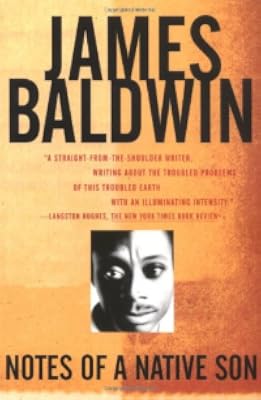
"Notes of a Native Son" (1955) provides some autobiographical details, particularly surrounding the death of his father when the author was 19.
"A Fly in the Buttermilk" (1958) interviewing a Black student on his experiences integrating a school in the South.
"A Talk to Teachers" (1963).
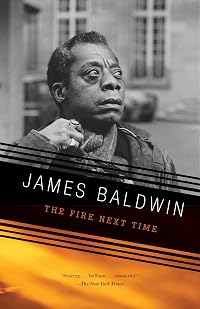
"The Fire Next Time" (1962), especially the letter to his nephew
"A Report from Occupied Territory" (1966) - interactions with police officers in 1960s NYC.
"No Name in the Street" (1972) more autobiographical details as well as historical references of note.
"Here Be Dragons" (1985) re: the author's sexuality.
...More scholarly readers should definitely be able to find much more good stuff in these 700 pages. show less
One has to have a lot of respect for a Black writer who was able to become a household name in a world that definitely did not (and largely still does not) welcome Black success. I hoped that reading some of his nonfiction would help me at least get to understand the person better, so in that respect this was a positive reading experience, but there is a lot here and I skimmed a large portion (ok, most) show more of it--as a consequence I am sure I missed some finer points but also realistically I wouldn't have gotten much more out of it (more a reflection of my comprehension skills than of Mr. Baldwin's writing skills).
There are parts that I can definitely appreciate or at least find more interesting, compared to, for example, critical commentary about events/books/movies I have never heard of before or since, though he was apparently well acquainted with many Black notables (Lorraine Hansberry, Malcolm X, Medgar and Myrlie, and so on). As with anthologies some essays are going to be better than others; it gets a bit more weighty/interesting/consequential after the first quarter or third, as he becomes more of an established writer and perhaps feels more comfortable revealing more of himself and his thoughts.
a sample of highlights:
"Many Thousands Gone" (1951) - his thoughts on Native Son are helpful to provide a path to processing the extremeness of its plot.
"The Male Prison" (1954) touches on his thoughts on how another queer author Andre Gide should have stayed closeted.
"Equal in Paris" (1955) relates his short stay in a Paris jail for an alleged petty theft of hotel sheets (brought over by a friend who was staying with him).
"Notes of a Native Son" (1955) provides some autobiographical details, particularly surrounding the death of his father when the author was 19.
"A Fly in the Buttermilk" (1958) interviewing a Black student on his experiences integrating a school in the South.
"A Talk to Teachers" (1963).
"The Fire Next Time" (1962), especially the letter to his nephew
"A Report from Occupied Territory" (1966) - interactions with police officers in 1960s NYC.
"No Name in the Street" (1972) more autobiographical details as well as historical references of note.
"Here Be Dragons" (1985) re: the author's sexuality.
...More scholarly readers should definitely be able to find much more good stuff in these 700 pages. show less
Let me add myself to the extremely long list of essayist who proclaim James Baldwin on of the best essayists of the 20th century. There are two books that every essayist should have on her shelf - The Art of the Personal Essay, edited by Phillip Lopate, and The Price of the Ticket, a full collection of the essays of James Baldwin. And if, like with other collections you have the propensity for skipping about and snatching an essay here or there to read, fight it. Read every single essay in this collection. It's a fat book. It will take you a while. You'll read and have to stop for days and absorb and come back and read more and stop and wonder and continue this process for a month or a year or however long it takes, but make your way show more through what is a startlingly clear look at the internal and the external makings of America in the 20th century. show less
This is not something that you can rush through. I have been reading it on and off for two months. Each essay takes a good deal of time and thought to process and reflect upon. Although his topics are not in my particular areas of expertise or study, I found many things in them to enjoy and contemplate.
Baldwin's grimoire, his collected magnum opus, on dealing with America's number one problem.
Ratings
Members
- Recently Added By
Lists

Harold Bloom - The Western Canon: D. The Chaotic Age
833 works; 24 members
Works Cited in The History of White People by Nell Irvin Painter
321 works; 2 members
Author Information

120+ Works 41,816 Members
James Baldwin was born on August 2, 1924, in New York. Baldwin's father was a pastor who subjected his children to poverty, abuse, and religious fanaticism. As a result, many of Baldwin's recurring themes, such as alienation and rejection, are attributable to his upbringing. Living the life of a starving artist, Baldwin went through numerous jobs, show more including dishwasher, office boy, factory worker, and waiter. In 1948, he moved to France, where much work originated. Baldwin published Go Tell It on the Mountain in 1953. A largely autobiographical work, it tells of the religious awakening of a fourteen-year-old. In addition to his childhood experiences, his experiences as a black man and a homosexual provided inspiration for such works as Giovanni's Room, Nobody Knows My Name, and Another Country. Baldwin holds a distinguished place in American history as one of the foremost writers of both black and gay literature. He was an active participant in the Civil Rights movement. Baldwin succumbed to cancer on December 1, 1987. (Bowker Author Biography) show less
Awards and Honors
Notable Lists
Work Relationships
Contains
Common Knowledge
- Original publication date
- 1985
- Quotations
- It is not really a "Negro revolution" that is upsetting the country. What is upsetting the country is a sense of its own identity. If, for example, one managed to change the curriculum in all the schools so that Negroes learn... (show all)ed more about themselves and their real contributions to this culture, you would be liberating not only Negroes, you'd be liberating white people who known nothing about their own history. And the reason is that if you are compelled to lie about one aspect of anybody's history, you must lie about it all. If you have to lie about my real role here, if you have to pretend that I hoed all that cotton just because I loved you, then you have done something to yourself. You are mad. (p. 334)
- Disambiguation notice
- This anthology appears to include two selections omitted from the Library of America volume, James Baldwin: Collected Essays:
- A Review of Roots
- Here Be Dragons
Classifications
Statistics
- Members
- 386
- Popularity
- 81,062
- Reviews
- 5
- Rating
- (4.55)
- Languages
- English
- Media
- Paper, Audiobook, Ebook
- ISBNs
- 8
- ASINs
- 2