On This Page
Description
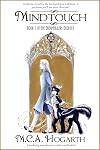
Seersana University is worlds-renowned for its xenopsychology program, producing the Alliance's finest therapists, psychiatric nurses and alien researchers. When Jahir, one of the rare and reclusive Eldritch espers, arrives on campus, he's unprepared for the challenges of a vast and multicultural society... but fortunately, second-year student Vasiht'h is willing to take him under his wing. Will the two win past their troubles and doubts and see the potential for a once-in-a-lifetime show more partnership? show lessTags
Recommendations



















Member Recommendations

Member Reviews
Wow. Utter wow. I got this from the library, and I was just checking the publication data - didn't intend to read it. But I read the first bit...and I couldn't stop. I stayed up way past midnight reading, until I finished it. This is a _fantastic_ story - I love the characters, the universe, and the writing. This is, as far as I know, the first Hogarth I've read - it won't be the last! Jahir is fascinating - the impulses that drive him and the relationships that draw him are beautifully expressed. Vasiht'h is equally interesting, with entirely different cultural and physical drivers. I loved watching the two of them develop their relationship (and yes, it's entirely asexual - a rare and precious thing. But not what I focused on while show more reading). It is somewhat...amusing? Is that the right word? to watch two psychology students, who are also espers, get things so entirely wrong on so many levels - not understanding either themselves or each other, except when they do. But no hint of author fiat here - every choice and decision springs from who they are. It was an amazing book, my eyes hurt from crying (at least twice), and it ends on a sort of cliffhanger - the decision has been made, but the implementation hasn't happened yet. I usually don't enjoy books that consist mostly of the characters muddling around in their heads - as others have said, very little actually happens here, it's all about reactions and emotions and choices. One thing that made it work for me is that nearly every character, and all the major ones, are _good_. And caring, and wanting to help one another. Even the one a-hole professor accepts truth when it's expressed bluntly enough - whether it'll change his actions, I don't know, but he accepts it. Fantastic, and now I want more. But not tonight. Oh, and I have to make kerinne, at least once - it does sound horrifyingly rich (which is Jahir's reaction, too), but it also sounds delicious. show less
Reading this book feels like curling up under a warm, soft blanket.
It plays like a romance, but instead of actually being one, it's a deep and committed friendship. Jahir and Vasith't meet cute and grow close, they come to love each other and may or may not be in love despite the fact that they have no interest in ever having sex with each other (or, in Vasith't's case, with anyone). I'm not certain, but I think this is a good example of what people in our society would call a queerplatonic/quasiplatonic relationship.
It's also set in a space university that features medical school, alien psychology students and a paediatric hospital for children of various sapient species, so I was pretty much guaranteed to love it.
It plays like a romance, but instead of actually being one, it's a deep and committed friendship. Jahir and Vasith't meet cute and grow close, they come to love each other and may or may not be in love despite the fact that they have no interest in ever having sex with each other (or, in Vasith't's case, with anyone). I'm not certain, but I think this is a good example of what people in our society would call a queerplatonic/quasiplatonic relationship.
It's also set in a space university that features medical school, alien psychology students and a paediatric hospital for children of various sapient species, so I was pretty much guaranteed to love it.
I picked this up because an author that I adore recommended it very highly. It, sadly, was not my cup of tea. I gather that the lead characters develop into an asexual romance, which is actually really cool and I'd like to read more about asexuality in my fiction, but the writing style grated on me. Hogarth is quite a competent author, truly, but they've taken a deliberate philosophical approach here which, to me, means the story's pace is glacially slow and yet every possible thought and action is dissected in excruciating detail.
The internet tells me that reviews for this range from glowing (my favorite: 'Original and quietly profound') to meh ('A Very Long Book Where Nothing Really Happens Although Things Are Discussed At Great show more Length'). If philosophical approaches appeal to you, I think you'll enjoy this book.
Me? DNF at Chapter 5. Two stars. show less
The internet tells me that reviews for this range from glowing (my favorite: 'Original and quietly profound') to meh ('A Very Long Book Where Nothing Really Happens Although Things Are Discussed At Great show more Length'). If philosophical approaches appeal to you, I think you'll enjoy this book.
Me? DNF at Chapter 5. Two stars. show less
I’d only read one novel of Hogarth’s before, set in a different universe – a novel I helped back on Kickstarter called A Rosary of Stones and Thorns – and had thoroughly enjoyed it. Hogarth had a way with character and setting that rivaled few I’d ever read before. However, I am hesitant to step into an author’s established world without good reason. While I’d spoken with her on Twitter a few times, and she speaks with several other authors I know there as well, few seemed to be well-versed in her work.
However, after Hogarth sent out a plea on Twitter for beta readers, my copy editing job (and boss) tossed me into the fray. I received a file in my email, was given my timeline, and I set forth – thinking that it would be show more good for me to edit something from a world I didn’t know. It would make me objective – able to see the flaws without being entranced by the world itself.
I didn’t hold my distance long. It took me about a chapter to acclimate myself to the word usage and the new races, but as is her wont, Hogarth made it easy for me to find my way. We meet Jahir Seni Galare, a new student at the school who’s come from his xenophobic home world to study psychology. The Eldritch – Jahir’s race – are touch espers, beings that can sense emotions by touch. The Eldritch do not embrace this, finding it uncomfortable and improper. Jahir is not your average Eldritch…but neither is he that far distanced from his people.
Next we meet the co-leader of the plot, Vasiht’h – a Glaseah, a bit of a cross between a centaur and a pegasus. Vasiht’h becomes Jahir’s roommate – an accommodation to the unfortunate forcing of Jahir to have a roommate in the first place – and from there, the plot blooms.
Mindtouch is a story about coming of age, in a way. It’s a story about finding yourself – a story about carving your own path where one has not been laid. It’s about friendship, and about trust. It’s about walking into a world where no one matches you, forcing your way into some small niche, and realizing that there’s been someone waiting for you there the whole time. And it’s about finding out what to do with that person when you find them.
Hogarth describes herself on her website as “the daughter of two Cuban political exiles.” The concept of the Other, of the outsider, is likely not one that she finds new. But she doesn’t play up the Other-ness of the characters, letting them sit in their exclusion and refuse to become part of the rest (much like Eldritch culture indoctrinates). Hogarth brings them – and their Other-ness – to the forefront and makes it the point of the story, without ever allowing it to be a caricature of itself. Jahir and Vasiht’h fight their own natures in themselves, the natures of each other, and the natures of their friends around them. The Glaseah and the Eldritch are well-matched in some ways – and exactly polar opposites in others. And when something that’s only spoken of in fairy tales and romance novels begins to happen…well, it will take each and every one of them to figure out what is happening – and if they like it.
It was far too easy to fall in love with both of these characters. I wrote in my response to Hogarth with the edited draft I had that I was afraid more of my notes were me personally commenting to the characters and less actual help. Being able to watch each one grow, being able to see them come into their own – fall away from each other – fight their way back… Each one was a personal thing for me. My heart tightened with each hurdle to be jumped, and sang with each victory. I mourned with them in their loss and celebrated in their joy. Each and every writer should be aspiring to make their characters as real as themselves in a reader’s mind, and Hogarth has done just that.
The plot doesn’t need to be “new” and “edgy.” It doesn’t need to set out to tackle something that “no one has ever tackled before.” It finds its novelty and its power through Hogarth’s writing and her characters, and the reader can be surprised each step of the way as they learn alongside their protagonists. And by the end, with its dramatic twists, vicious turns, and the sudden heart-dropping cliffhanger that the book is left on, the end result is obvious.
Each and every reader, just like myself, should be on edge waiting for the sequel Mindline to come out.
This is cross-posted on my blog here. show less
However, after Hogarth sent out a plea on Twitter for beta readers, my copy editing job (and boss) tossed me into the fray. I received a file in my email, was given my timeline, and I set forth – thinking that it would be show more good for me to edit something from a world I didn’t know. It would make me objective – able to see the flaws without being entranced by the world itself.
I didn’t hold my distance long. It took me about a chapter to acclimate myself to the word usage and the new races, but as is her wont, Hogarth made it easy for me to find my way. We meet Jahir Seni Galare, a new student at the school who’s come from his xenophobic home world to study psychology. The Eldritch – Jahir’s race – are touch espers, beings that can sense emotions by touch. The Eldritch do not embrace this, finding it uncomfortable and improper. Jahir is not your average Eldritch…but neither is he that far distanced from his people.
Next we meet the co-leader of the plot, Vasiht’h – a Glaseah, a bit of a cross between a centaur and a pegasus. Vasiht’h becomes Jahir’s roommate – an accommodation to the unfortunate forcing of Jahir to have a roommate in the first place – and from there, the plot blooms.
Mindtouch is a story about coming of age, in a way. It’s a story about finding yourself – a story about carving your own path where one has not been laid. It’s about friendship, and about trust. It’s about walking into a world where no one matches you, forcing your way into some small niche, and realizing that there’s been someone waiting for you there the whole time. And it’s about finding out what to do with that person when you find them.
Hogarth describes herself on her website as “the daughter of two Cuban political exiles.” The concept of the Other, of the outsider, is likely not one that she finds new. But she doesn’t play up the Other-ness of the characters, letting them sit in their exclusion and refuse to become part of the rest (much like Eldritch culture indoctrinates). Hogarth brings them – and their Other-ness – to the forefront and makes it the point of the story, without ever allowing it to be a caricature of itself. Jahir and Vasiht’h fight their own natures in themselves, the natures of each other, and the natures of their friends around them. The Glaseah and the Eldritch are well-matched in some ways – and exactly polar opposites in others. And when something that’s only spoken of in fairy tales and romance novels begins to happen…well, it will take each and every one of them to figure out what is happening – and if they like it.
It was far too easy to fall in love with both of these characters. I wrote in my response to Hogarth with the edited draft I had that I was afraid more of my notes were me personally commenting to the characters and less actual help. Being able to watch each one grow, being able to see them come into their own – fall away from each other – fight their way back… Each one was a personal thing for me. My heart tightened with each hurdle to be jumped, and sang with each victory. I mourned with them in their loss and celebrated in their joy. Each and every writer should be aspiring to make their characters as real as themselves in a reader’s mind, and Hogarth has done just that.
The plot doesn’t need to be “new” and “edgy.” It doesn’t need to set out to tackle something that “no one has ever tackled before.” It finds its novelty and its power through Hogarth’s writing and her characters, and the reader can be surprised each step of the way as they learn alongside their protagonists. And by the end, with its dramatic twists, vicious turns, and the sudden heart-dropping cliffhanger that the book is left on, the end result is obvious.
Each and every reader, just like myself, should be on edge waiting for the sequel Mindline to come out.
This is cross-posted on my blog here. show less
Well written. Mankind has now expanded to other stars and has modified several life forms to become sentient. True alien forms also exist and the alliance of species has found a unity and acceptance among the stars. Some beings have forms of telepathic abilities which vary by species and individual. A friendship story about how 2 different people from different species develop a very profound friendship link. First in a series, worth looking into to follow the story.
I'm still on the lookout for decently written romantic stories featuring at least one asexual character. This was tagged with “asexual” in Smashwords. There was no guarantee it contained any romance, but the cover art looked good and I liked the excerpt well enough, so I decided to give it a shot. This is, I think, the first time I've purchased something through Smashwords without having at least read a freebie by the author, so it was a bit of a risk. I'm happy to say that it turned out to be a risk worth taking. Despite its incredibly frustrating ending.
There are several reasons I should not have liked this book as much as I did.
- There were occasional things about the writing that bothered me, such as a few instances of two show more characters speaking within a single paragraph.
- I had no clue how to mentally pronounce Vasiht'h's name, which also made it hard for me to remember what his name was. In my notes, he was V.
- Several terminally ill children were prominent minor characters. I dislike reading books that are guaranteed to make me cry, and there were lots of warning signs that I would be crying at some point. (A slight spoiler, but a necessary one for some: one of the children dies on-page. For me, the most painful part was reading characters' reactions after the death. The death itself was pretty peaceful.)
- I had trouble taking the Pelted seriously at first, figuring they were just something that Hogarth dumped into her world because Yay Furries! I mean, there was Vasiht'h, a mammal with eight limbs (four legs, two arms, and two wings). Hogarth won me over, though. The Pelted turned out to have a rich history (and icky origins) that had an effect on how certain characters thought and behaved.
- I had no clue what kind of story this was going to be. Neither the description nor the one review I read told me much. For the longest time, even while I was reading the book I had no idea what its focus was and what sort of ending it might be working towards.
But I liked it anyway, mostly because I liked Jahir and Vasiht'h a lot. Like I said, not much really happened. Jahir and Vasiht'h went to class, worked on papers and assignments, went out for ice cream and other goodies together, and occasionally visited a group of sick children at the hospital. There was no villain, but there were plenty of absolutely lovely conversations. The focus was mostly on Jahir and Vasiht'h's budding friendship and their struggles to figure out what they wanted to do with their lives. Reading Mindtouch sometimes felt more like checking up on a couple friends than like reading a story.
Except real life goes on and on, and stories are supposed to have an actual ending. It took a while, but I did eventually start to see what Mindtouch was working towards.
Fairly early on, maybe around the 20% mark, I started noticing signs that there might eventually be some asexual romance between Vasiht'h and Jahir. As the story progressed, those signs became clearer. For several reasons, there was absolutely nothing sexual about their relationship and how they interacted, but the level of intimacy between them was so high that when, for instance, they exchanged gifts on Maker's Day, a Pelted holiday, I actually blushed a little. I loved how homey they were together. Jahir did their shopping while Vasiht'h did most of their cooking. Jahir noticed that Vasiht'h liked to bake when he was upset, so he shopped accordingly, without having to be asked. Little things like that made me smile.
As Jahir and Vasiht'h grew closer, they also had to make more decisions about their futures and what they were going to do with their xenopsychology degrees, and that's where some of the conflict came in. They both had reasons for choosing the paths they chose, but those paths weren't necessarily good for them and also had a high probability of forcing them apart after graduation. I wanted so badly to jump into the book and shout, “You're both making the wrong choices! Stop it!!!”
Unfortunately, at some point I started reading this book like it was a romance that happened not to have any sex in it. Maybe if I hadn't done that, then the ending wouldn't have upset me so much. Or maybe not. At any rate, the book ended juuust before the point where a romance novel would have ended. I felt like I'd smacked into an invisible wall only a few feet away from the finish line. Since Book 2 doesn't even have a release date yet, my only consolation is that Hogarth has written several short stories starring Jahir and Vasiht'h. Those will have to do, I guess, but I really hope Book 2 comes out sometime in 2014.
Extras:
A glossary and a recipe for kerinne, a drink Vasiht'h enjoyed. I wish I had known about this recipe back when I was on meds that I needed to take with fatty foods – it would have been perfect. Now, though, it sounds horrifyingly rich.
(Original review posted on A Library Girl's Familiar Diversions.) show less
There are several reasons I should not have liked this book as much as I did.
- There were occasional things about the writing that bothered me, such as a few instances of two show more characters speaking within a single paragraph.
- I had no clue how to mentally pronounce Vasiht'h's name, which also made it hard for me to remember what his name was. In my notes, he was V.
- Several terminally ill children were prominent minor characters. I dislike reading books that are guaranteed to make me cry, and there were lots of warning signs that I would be crying at some point. (A slight spoiler, but a necessary one for some: one of the children dies on-page. For me, the most painful part was reading characters' reactions after the death. The death itself was pretty peaceful.)
- I had trouble taking the Pelted seriously at first, figuring they were just something that Hogarth dumped into her world because Yay Furries! I mean, there was Vasiht'h, a mammal with eight limbs (four legs, two arms, and two wings). Hogarth won me over, though. The Pelted turned out to have a rich history (and icky origins) that had an effect on how certain characters thought and behaved.
- I had no clue what kind of story this was going to be. Neither the description nor the one review I read told me much. For the longest time, even while I was reading the book I had no idea what its focus was and what sort of ending it might be working towards.
But I liked it anyway, mostly because I liked Jahir and Vasiht'h a lot. Like I said, not much really happened. Jahir and Vasiht'h went to class, worked on papers and assignments, went out for ice cream and other goodies together, and occasionally visited a group of sick children at the hospital. There was no villain, but there were plenty of absolutely lovely conversations. The focus was mostly on Jahir and Vasiht'h's budding friendship and their struggles to figure out what they wanted to do with their lives. Reading Mindtouch sometimes felt more like checking up on a couple friends than like reading a story.
Except real life goes on and on, and stories are supposed to have an actual ending. It took a while, but I did eventually start to see what Mindtouch was working towards.
Fairly early on, maybe around the 20% mark, I started noticing signs that there might eventually be some asexual romance between Vasiht'h and Jahir. As the story progressed, those signs became clearer. For several reasons, there was absolutely nothing sexual about their relationship and how they interacted, but the level of intimacy between them was so high that when, for instance, they exchanged gifts on Maker's Day, a Pelted holiday, I actually blushed a little. I loved how homey they were together. Jahir did their shopping while Vasiht'h did most of their cooking. Jahir noticed that Vasiht'h liked to bake when he was upset, so he shopped accordingly, without having to be asked. Little things like that made me smile.
As Jahir and Vasiht'h grew closer, they also had to make more decisions about their futures and what they were going to do with their xenopsychology degrees, and that's where some of the conflict came in. They both had reasons for choosing the paths they chose, but those paths weren't necessarily good for them and also had a high probability of forcing them apart after graduation. I wanted so badly to jump into the book and shout, “You're both making the wrong choices! Stop it!!!”
Unfortunately, at some point I started reading this book like it was a romance that happened not to have any sex in it. Maybe if I hadn't done that, then the ending wouldn't have upset me so much. Or maybe not. At any rate, the book ended juuust before the point where a romance novel would have ended. I felt like I'd smacked into an invisible wall only a few feet away from the finish line. Since Book 2 doesn't even have a release date yet, my only consolation is that Hogarth has written several short stories starring Jahir and Vasiht'h. Those will have to do, I guess, but I really hope Book 2 comes out sometime in 2014.
Extras:
A glossary and a recipe for kerinne, a drink Vasiht'h enjoyed. I wish I had known about this recipe back when I was on meds that I needed to take with fatty foods – it would have been perfect. Now, though, it sounds horrifyingly rich.
(Original review posted on A Library Girl's Familiar Diversions.) show less
I didn't have high expectations, but this actually followed some very interesting characters and only hinted at how they came to be. Apparently this is a series, so more may be revealed later on. This story was fairly character-driven, it's interesting to see how various "pelted" anthropomorphic sentient animal hybrids interact and their curiosity in the eldritch reclusives.
While there were sometimes heavy themes (around sickness, dying, mental health) it was largely a lighter and pleasant story, so I hesitate to call it "dark academia" but it made me think of that a little bit.
I don't think this story is for everyone, but if you want some light fantasy that really looks at boundaries and how people interact, this might be for you.
While there were sometimes heavy themes (around sickness, dying, mental health) it was largely a lighter and pleasant story, so I hesitate to call it "dark academia" but it made me think of that a little bit.
I don't think this story is for everyone, but if you want some light fantasy that really looks at boundaries and how people interact, this might be for you.
Members
- Recently Added By
Lists

LGBTQ+ Speculative Fiction
821 works; 51 members

Fiction with Prominent Confirmed Asexual Characters
20 works; 3 members

Books Read in 2023
5,638 works; 147 members
Author Information

131+ Works 1,633 Members
Series


Common Knowledge
- Canonical title
- Mindtouch
- Original publication date
- 2013
Classifications
Statistics
- Members
- 161
- Popularity
- 203,901
- Reviews
- 11
- Rating
- (4.20)
- Languages
- English
- Media
- Paper, Audiobook, Ebook
- ISBNs
- 2
- ASINs
- 2