On This Page
Description
Sector General: A massive deep-space hospital station on the Galactic Rim, where human and alien medicine meet. Its 384 levels and thousands of staff members are supposedly able to meet the needs of any conceivable alien patient--though that capacity is always being strained as more (and stranger) alien races turn up to join the galactic community. Sentient viruses, interspecies romances, undreamed-of institutional catering problems--it all lands on Sector General's doorstep. And the only show more thing weirder than a hitherto unknown alien species is having a member of that species turn up in your Emergency Room. The first of two omnibus volumes reprints the works that began the Sector General series, which were previously published asHospital Station(1962),Star Surgeon (1963), andMajor Operation (1971). show lessTags
Recommendations
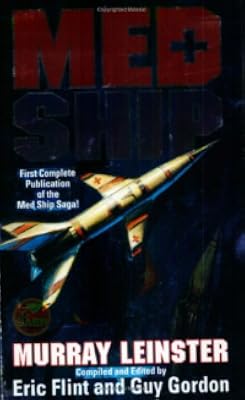




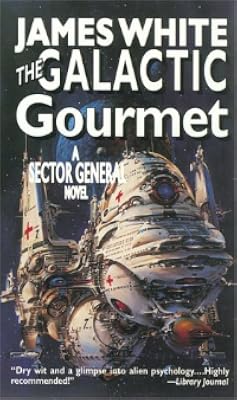

























Member Recommendations

Member Reviews
I first read Jim White's 'Sector General' stories, about a gigantic multi-species hospital in a distant part of the Galaxy, back in the early 1970s in John Carnell's 'New Writings in SF' anthologies. I was just discovering science fiction; everything was new to me then. I had hardly seen them since, but remembered them fairly clearly, especially the very first story, 'Medic', about a disgraced construction worker on the (then) unfinished Sector General having to care for an orphaned and injured alien, and figuring out for himself what to do. I also recollected the four-character species classification employed in the hospital, and one of the supporting characters, who was a giant empathic insect.
Time, however, has erased many of the show more details, so I was a bit in anticipation to see what I'd find when I went back into these stories. I needn't have worried. Certainly, the majority of the stories in this first volume are quite old - 'Hospital Station' dates from 1961 (and was a 'fix-up' novel from earlier short stories) and 'Star Surgeon' from 1962 - and in places it shows. Dialogue is firmly in mid-Atlantic, and some attitudes firmly in the 1960s, almost to the point where it begins to sound like a pastiche of itself (be prepared to come across the phrase "your pretty little head"; my mouth rather dropped open at that one). (Now, if Dr Conway had used it to address an alien nurse, that would have been a) funny, b) science-fictional, and c) probably more ironic than Jim usually managed.) And although the human medical staff acknowledge that women can be medical professionals, in this volume at least, none make their appearance until the third novel, 'Major Operation' (1971), where the main human character's love interest, a nurse (described in quite chauvinistic terms in the earlier books) is promoted to pathologist - I suspect that this may have been as much to keep her in the books when her man flies off to strange new worlds to tackle increasingly odd medical crises. And indeed, the empathic alien insect doctor I mentioned earlier, Prilicia, turned out to my surprise to be male, and not female as I remembered the character! (I don't know if that says more about me than it does about the books...)
Other aspects of the books are equally dated: the Educator Tapes (which implant knowledge about alien species directly into the minds of medical staff) are just that, tapes; the Translator computers are massive, single-purpose and centralised; the spaceships are distinctly rocket-shaped.
None of this matters. Because the overwhelming theme of the books is the focus on the medical profession, its ethics and its principles - "do no harm", "save life wherever possible" and "all sentient life is worth saving". This is so clear from the outset that it overrides all other considerations; indeed, the main point-of-view character, Doctor Conway, has more alien friends than human ones through the appreciation of alien viewpoints due to his use of the educator tapes (the catch is that they don't just impart knowledge, they are full personality recordings of top alien surgeons and physicians, so anyone using the tapes has the benefit of thinking and feeling like an alien whilever they have the tape implanted). These viewpoints make the whole 'Sector General' series a most refreshing and different take on the entire space opera subgenre.
This even extends to the extended Galactic Federation that Sector General is a part of. The military arm of the Federation, the Monitor Corps, is actually founded on the same basis as the medical service, and only acts as a police force rather than a military force of conquest. In 'Star Surgeon' and 'Major Operation', the Corps actually acts in subordination to Conway and the medical teams; any objections lodged by Monitor officers are operational, not ideological.
White also points out that running a hospital is a matter of a bigger and better bureaucracy, and there are times when the action consists of Conway reading reports, or co-ordinating plans for treatment with colleagues, or discussing the progress of cases. But don't run away with the idea that this is action-lite, worthy and dull story-telling. By this time, the reader is fully engaged in the intellectual problems of finding cures for aliens who haven't been encountered before and who we might not be able to communicate with. And some of these aliens are perhaps as strange as any you might come across in any other fiction . Dismiss any thoughts you might have of aliens as humanoids with rubber masks. Creatures of all shapes and sizes, breathing all sorts of atmospheres and taking in nourishment in a range of different ways all present their own problems. And given the scope for misunderstanding in any first contact situation, it should not come as a surprise when such first contact deteriorates into a shooting war. Later, in 'Major Operation', the medical treatment itself is hard to differentiate from a shooting war. Action abounds.
Almost fifty years since I first encountered them, and sixty years after some of them were first written, these three novels held me captivated. Yes, I cringed at some things that we just don't do now; and in a few instances, I mentally inserted my own witty ripostes to some of the comments passed by characters. (I met Jim White on a few occasions. He was a charming man, and I'm sure he would have approved.) But I emerged from this reading with a feeling of elation, that this is what science fiction is about - challenging viewpoints and exposing the reader to something new and different. Recommended. show less
Time, however, has erased many of the show more details, so I was a bit in anticipation to see what I'd find when I went back into these stories. I needn't have worried. Certainly, the majority of the stories in this first volume are quite old - 'Hospital Station' dates from 1961 (and was a 'fix-up' novel from earlier short stories) and 'Star Surgeon' from 1962 - and in places it shows. Dialogue is firmly in mid-Atlantic, and some attitudes firmly in the 1960s, almost to the point where it begins to sound like a pastiche of itself (be prepared to come across the phrase "your pretty little head"; my mouth rather dropped open at that one). (Now, if Dr Conway had used it to address an alien nurse, that would have been a) funny, b) science-fictional, and c) probably more ironic than Jim usually managed.) And although the human medical staff acknowledge that women can be medical professionals, in this volume at least, none make their appearance until the third novel, 'Major Operation' (1971), where the main human character's love interest, a nurse (described in quite chauvinistic terms in the earlier books) is promoted to pathologist - I suspect that this may have been as much to keep her in the books when her man flies off to strange new worlds to tackle increasingly odd medical crises. And indeed, the empathic alien insect doctor I mentioned earlier, Prilicia, turned out to my surprise to be male, and not female as I remembered the character! (I don't know if that says more about me than it does about the books...)
Other aspects of the books are equally dated: the Educator Tapes (which implant knowledge about alien species directly into the minds of medical staff) are just that, tapes; the Translator computers are massive, single-purpose and centralised; the spaceships are distinctly rocket-shaped.
None of this matters. Because the overwhelming theme of the books is the focus on the medical profession, its ethics and its principles - "do no harm", "save life wherever possible" and "all sentient life is worth saving". This is so clear from the outset that it overrides all other considerations; indeed, the main point-of-view character, Doctor Conway, has more alien friends than human ones through the appreciation of alien viewpoints due to his use of the educator tapes (the catch is that they don't just impart knowledge, they are full personality recordings of top alien surgeons and physicians, so anyone using the tapes has the benefit of thinking and feeling like an alien whilever they have the tape implanted). These viewpoints make the whole 'Sector General' series a most refreshing and different take on the entire space opera subgenre.
This even extends to the extended Galactic Federation that Sector General is a part of. The military arm of the Federation, the Monitor Corps, is actually founded on the same basis as the medical service, and only acts as a police force rather than a military force of conquest. In 'Star Surgeon' and 'Major Operation', the Corps actually acts in subordination to Conway and the medical teams; any objections lodged by Monitor officers are operational, not ideological.
White also points out that running a hospital is a matter of a bigger and better bureaucracy, and there are times when the action consists of Conway reading reports, or co-ordinating plans for treatment with colleagues, or discussing the progress of cases. But don't run away with the idea that this is action-lite, worthy and dull story-telling. By this time, the reader is fully engaged in the intellectual problems of finding cures for aliens who haven't been encountered before and who we might not be able to communicate with. And some of these aliens are perhaps as strange as any you might come across in any other fiction . Dismiss any thoughts you might have of aliens as humanoids with rubber masks. Creatures of all shapes and sizes, breathing all sorts of atmospheres and taking in nourishment in a range of different ways all present their own problems. And given the scope for misunderstanding in any first contact situation, it should not come as a surprise when such first contact deteriorates into a shooting war. Later, in 'Major Operation', the medical treatment itself is hard to differentiate from a shooting war. Action abounds.
Almost fifty years since I first encountered them, and sixty years after some of them were first written, these three novels held me captivated. Yes, I cringed at some things that we just don't do now; and in a few instances, I mentally inserted my own witty ripostes to some of the comments passed by characters. (I met Jim White on a few occasions. He was a charming man, and I'm sure he would have approved.) But I emerged from this reading with a feeling of elation, that this is what science fiction is about - challenging viewpoints and exposing the reader to something new and different. Recommended. show less
James White’s Sector General series should be required reading for ANYONE assigned to first contact missions. Note in the first paragraph below (from Alien Emergencies), the inclusion of specialists in communications, philosophy, and psychology. Note the exclusion of specialists in any of the hard sciences. And the military. (Note also, the more effective way.)
“The Cultural contact people were the elite of the Monitor Corps, a small group of specialists in e-t communications, philosophy and psychology. Although small, the group was not, regrettably, overworked …
“… During the past twenty years,” O’Mara went on, “they have initiated First Contact procedure on three occasions, all of which resulted in the species concerned show more joining the Federation. I will not bore you with the details of the number of survey operations mounted and the ships, personnel and materiel involved, or shock you with the cost of it all. I mention the Cultural Contact group’s three successes simply to make the point that within the same time period this hospital became fully operational and also initiated First contacts, which resulted in seven new species joining the Federation. This was accomplished not by a slow, patient buildup and widening of communications until the exchange of complex philosophical and sociological concepts became possible, but by giving medical assistance to a sick alien.”
I can’t recommend White’s work enough. Finally, an intelligent approach to alien life. (Because yes, pretty much every novel I’ve read, and every movie I’ve seen, to date, has been embarrassing for its UNintelligent approach to alien. Why haven’t we discovered intelligent life out there? Because we’re too stupid to visit.) show less
“The Cultural contact people were the elite of the Monitor Corps, a small group of specialists in e-t communications, philosophy and psychology. Although small, the group was not, regrettably, overworked …
“… During the past twenty years,” O’Mara went on, “they have initiated First Contact procedure on three occasions, all of which resulted in the species concerned show more joining the Federation. I will not bore you with the details of the number of survey operations mounted and the ships, personnel and materiel involved, or shock you with the cost of it all. I mention the Cultural Contact group’s three successes simply to make the point that within the same time period this hospital became fully operational and also initiated First contacts, which resulted in seven new species joining the Federation. This was accomplished not by a slow, patient buildup and widening of communications until the exchange of complex philosophical and sociological concepts became possible, but by giving medical assistance to a sick alien.”
I can’t recommend White’s work enough. Finally, an intelligent approach to alien life. (Because yes, pretty much every novel I’ve read, and every movie I’ve seen, to date, has been embarrassing for its UNintelligent approach to alien. Why haven’t we discovered intelligent life out there? Because we’re too stupid to visit.) show less
I found a small, unassuming mass market member of this series at the library, probably because "White" is awfully close to "Zelazny." That was back in the old days when inter-library loan was a serious pain in the butt, so I discovered new reads by eyeballing Every Single Book in the Sci-Fi/Fantasy section. Because how else would I know it was there? The only way was to use these paper cards and that's how you found out if the library had that book (the cards were typewritten, no less, and sometimes had White-out corrections and sometimes very precise, tiny writing by a librarian). I know that this reference will be confusing to the kids, so here's a picture:
Which, by the way, made my Virgo heart super nostalgic for this:
At any rate, show more that was how I discovered the Sector General series, which was an absolute treat. This was even before I was a medical person, mind you; back in the day when I loved all things biological. What I loved about the series then are the same things I love about it now: first, the conviction that there is a path of co-existence; and second, that the universe is full of some really strangely cool beings. As one brilliant reviewer said, "it's more Star Trek than Star Trek" because there aren't any villains.
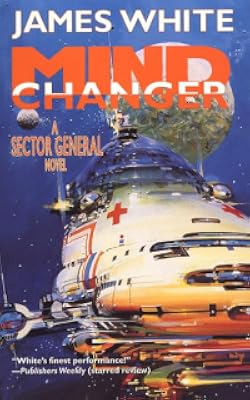
But the absolute truth is that I sort-of-read and sort-of-skimmed this. A lengthy introduction clues the reader in to how Sector General began, and the transition from magazine serial to full-length story. Having read many of the later books, the first book, [b:Hospital Station|1695570|Hospital Station (Sector General, #1)|James White|https://d2arxad8u2l0g7.cloudfront.net/books/1352460814s/1695570.jpg|1692514] seems particularly rough. Chapters introduce some of the main cast at Sector General. Interestingly, some of the concepts played around with here will get their day in print, namely, how Chief O'Mara really became Station head ([b:Mind Changer|64480|Mind Changer (Sector General, #11)|James White|https://d2arxad8u2l0g7.cloudfront.net/books/1390213716s/64480.jpg|62592]), the problems with diagnostician tapes ([b:Star Healer|1707262|Star Healer (Sector General, #6)|James White|https://d2arxad8u2l0g7.cloudfront.net/books/1387742578s/1707262.jpg|1704428]), and how giant silky caterpillars manage in space.
The second book, [b:Star Surgeon|1695599|Star Surgeon (Sector General, #2)|James White|https://d2arxad8u2l0g7.cloudfront.net/books/1187031294s/1695599.jpg|1692544] suffers from early writer-itis, particularly the transition from serial stories to full-length books. Chapters seem choppy, with little sense of an overall arc, and in fact, storylines that one would think continue end up being sidelined.
The last [b:Major Operation|1695610|Major Operation (Sector General, #3)|James White|https://d2arxad8u2l0g7.cloudfront.net/books/1298927740s/1695610.jpg|1692555] ended up being a very odd mix. While conceptually the aliens were fascinating, at a certain point there is so much danger and lives lost by the hospital staff, it seems to negate the anti-violent premise.
The last thing I'll throw in there is that these early editions have a strong sexist bent... when a woman--a nurse--finally appears. Her role will be improved in later editions, but there's a fair bit of objectification here. Annoying, but generally benevolent in that old-man kind of way, particularly as she is amazingly competent.
I wanted to go back and re-read to do one of my real reviews, but just... couldn't. And the library called in their loan (because they are still my main supplier). For a really thoughtful, comprehensive review, see https://www.goodreads.com/review/show/650725768?book_show_action=true&from_r...
Two and a half stars, rounding up because of positivity. show less
Which, by the way, made my Virgo heart super nostalgic for this:
At any rate, show more that was how I discovered the Sector General series, which was an absolute treat. This was even before I was a medical person, mind you; back in the day when I loved all things biological. What I loved about the series then are the same things I love about it now: first, the conviction that there is a path of co-existence; and second, that the universe is full of some really strangely cool beings. As one brilliant reviewer said, "it's more Star Trek than Star Trek" because there aren't any villains.
But the absolute truth is that I sort-of-read and sort-of-skimmed this. A lengthy introduction clues the reader in to how Sector General began, and the transition from magazine serial to full-length story. Having read many of the later books, the first book, [b:Hospital Station|1695570|Hospital Station (Sector General, #1)|James White|https://d2arxad8u2l0g7.cloudfront.net/books/1352460814s/1695570.jpg|1692514] seems particularly rough. Chapters introduce some of the main cast at Sector General. Interestingly, some of the concepts played around with here will get their day in print, namely, how Chief O'Mara really became Station head ([b:Mind Changer|64480|Mind Changer (Sector General, #11)|James White|https://d2arxad8u2l0g7.cloudfront.net/books/1390213716s/64480.jpg|62592]), the problems with diagnostician tapes ([b:Star Healer|1707262|Star Healer (Sector General, #6)|James White|https://d2arxad8u2l0g7.cloudfront.net/books/1387742578s/1707262.jpg|1704428]), and how giant silky caterpillars manage in space.
The second book, [b:Star Surgeon|1695599|Star Surgeon (Sector General, #2)|James White|https://d2arxad8u2l0g7.cloudfront.net/books/1187031294s/1695599.jpg|1692544] suffers from early writer-itis, particularly the transition from serial stories to full-length books. Chapters seem choppy, with little sense of an overall arc, and in fact, storylines that one would think continue end up being sidelined.
The last [b:Major Operation|1695610|Major Operation (Sector General, #3)|James White|https://d2arxad8u2l0g7.cloudfront.net/books/1298927740s/1695610.jpg|1692555] ended up being a very odd mix. While conceptually the aliens were fascinating, at a certain point there is so much danger and lives lost by the hospital staff, it seems to negate the anti-violent premise.
The last thing I'll throw in there is that these early editions have a strong sexist bent... when a woman--a nurse--finally appears. Her role will be improved in later editions, but there's a fair bit of objectification here. Annoying, but generally benevolent in that old-man kind of way, particularly as she is amazingly competent.
I wanted to go back and re-read to do one of my real reviews, but just... couldn't. And the library called in their loan (because they are still my main supplier). For a really thoughtful, comprehensive review, see https://www.goodreads.com/review/show/650725768?book_show_action=true&from_r...
Two and a half stars, rounding up because of positivity. show less
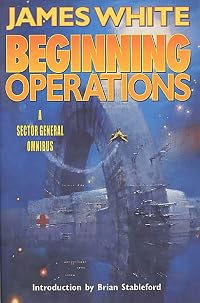
Beginning Operations (A Sector General Omnibus) by James White
I was looking forward to reading this book because I had very much enjoyed a couple of the later works of this author. However, Beginning Operations (which is an omnibus of the first three Sector General novels) did not quite live up to my expectations.
This is classic science fiction from the 1960s, but with a rare pacifist message.
The book is really a series of short stories or vignettes which unfold in the setting of the same massive galactic hospital.
While the content is very imaginative and positive, it certainly has a dated feel to it.
James White proved that he had a fertile imagination through the aliens he envisaged, who are certainly not of the Roswell kind. He show more described oxygen, chlorine, and methane breathers, and the many strange shapes and sizes of those from planets with wildly different environments and gravitational strengths. There are even some who need hard radiation to survive, and like to bathe in the heat of atomic furnaces.
However, it will probably be noted that the author failed to predict technologies and attitudes of the coming decades. For example, despite the many widely differing environments on the hospital station, many of which would be instantly lethal to a being unsuited to them, people can simply walk in and out through the airlocks without any security measures like ID cards or passwords. For this reason, a runaway shape-changing alien is able cause havoc on the station. Also, the staff do not carry portable communicators, and have to rush to the nearest wall unit to answer urgent messages.
All the doctors and administrators seem to be male, while the nurses who get ordered around are female and sometimes objects of desire. At one point, the protagonist's superior states that misogyny is an allowable neurosis. So, while some elements of the story may be considered groundbreaking, in other ways it is very much a work of its time.
Although this is pacifist literature in an age dominated by military science fiction, and features many species of aliens all working together toward a common objective, the way that humans sometimes refer to their alien colleagues and patients is less than flattering, and seems to imply an overall sense of human superiority. Some of the medical cases are quite interesting, but the minimal character development can sometimes make the stories feel a little flat and unengaging.
I would, however, highly recommend other works by this author. All Judgement Fled (1968) is in some ways similar to Hospital Station, but has more complex and convincing characters and a more interesting plot. The Silent Stars Go By (1991) shows a far greater level of maturity, and is probably his best work. show less
The first 3 novels of the Sector General Hospital.
Hospital Station.
A collection of short stories of varying quality. There is an interesting variety of alien lifeforms imagined here. I did not like the character O'Mara but he only features in the first story.
Star Surgeon
I like the concept of the space station with 384 levels dedicated to providing the atmosphere, gravity, environmental and nutritional needs of 80 different species and how they all work together to save their critically ill patients. Unfortunately, the second half of the book is involved with war and dealing with casualties which I did not find very interesting. I have difficulty buying that personality as lacking in empathy and diplomacy as O'Mara's could really work show more as the head of such a facility. Conway's relationship with Murchison almost seems like an afterthought- not a real romance.
Major Operation
Conway is placed in charge of a new, mysterious patient. Very interesting.
read 2/20/2024 show less
Hospital Station.
A collection of short stories of varying quality. There is an interesting variety of alien lifeforms imagined here. I did not like the character O'Mara but he only features in the first story.
Star Surgeon
I like the concept of the space station with 384 levels dedicated to providing the atmosphere, gravity, environmental and nutritional needs of 80 different species and how they all work together to save their critically ill patients. Unfortunately, the second half of the book is involved with war and dealing with casualties which I did not find very interesting. I have difficulty buying that personality as lacking in empathy and diplomacy as O'Mara's could really work show more as the head of such a facility. Conway's relationship with Murchison almost seems like an afterthought- not a real romance.
Major Operation
Conway is placed in charge of a new, mysterious patient. Very interesting.
read 2/20/2024 show less
{First of 14 Sector General series; sci-fi, adventure, alien medicine}
Introduction by
This is the first book in Beginning Operations, which is an omnibus editions of books 1, 2 and 4 of the Sector General series. These were originally published in magazines.
Chapter 1: Medic
This is set when what will become the first hospital to cater to hundreds of alien species is being built and is the aftermath of an accident involving two Hudlarian parents. O'Mara has to take care of an infant Hudlarian whose home planet has much denser gravity than ours.
It took me back to the days when my second son, especially, was a newborn. A baby is still a baby, with feeding demands and so on, no matter the species or physiology.
4.5 stars *****
Chapter 2: Sector General
The hospital is now well established and O’Mara has found his niche but this story is about Conway, a young doctor who has to counter his own prejudices against the Monitor Corps while rescuing a being whose ship has crashed deep into the hospital.
3.5-4****
Chapter 3: Trouble with Emily
Conway is chosen to assist a doctor of a telepathic, ethical species with a patient of yet another species who is perfectly healthy, whom the hospital staff name 'Emily' (a groan-worthy pun). Despite the doctor's brusque manner and mysterious manner about Emily, Conway finds that he quite likes him(?)/ her(?).
4.5*****
Chapter 4: Visitor at Large
Dr. Conway acquires a new assistant from another species, Dr. Prilica who is an empath, to help him in the Nursery wards. They also help track down a runaway juvenile delinquent whose parent is a patient in critical condition.
4****
Chapter 5: Out-Patient
The Monitor Corps brings in an urgent case; the wreckage of a ship of unknown origin and buried within it, a sole survivor. Dr. Conway has to tread carefully with this first contact of an advanced species who seems to disagree with his proposed treatment plan.
4****
I like the way that White has thought about other alien species and that they are non-humanoid - in fact, our nearest 'relatives' in his classification scheme, fellow DBLFs, look like furry caterpillars - and I appreciate the way that Tralthans and not humans are the best doctors (even though his main protagonists are, necessarily, human). I like the idea of his classification scheme itself, which quickly separates species into vital characteristics such as water/ oxygen/ chlorine breathers, telepathic abilities and so on which also helps the medical staff in identifying potential treatments.
I did find the way he builds suspense by getting his main characters to withhold information from their superiors for the good of the patient to be a bit repetitive. But as a magazine series (the stories' original format) that wouldn't have been so obvious and its real purpose is to keep the reader in the dark. For example in 'Outpatient'- medical issues aside - the resolution of the first-contact problem seems obvious in hindsight.
Averaging: 4.1-4.2****
The other two books in my omnibus edition of Beginning Operations are:
[Star Surgeon]
[Major Operation] show less
Introduction by
This is the first book in Beginning Operations, which is an omnibus editions of books 1, 2 and 4 of the Sector General series. These were originally published in magazines.
Chapter 1: Medic
This is set when what will become the first hospital to cater to hundreds of alien species is being built and is the aftermath of an accident involving two Hudlarian parents. O'Mara has to take care of an infant Hudlarian whose home planet has much denser gravity than ours.
It took me back to the days when my second son, especially, was a newborn. A baby is still a baby, with feeding demands and so on, no matter the species or physiology.
The process of being paintedshow more
with food seemed to be a pleasant one for the young FROB. It ceased to cower in the corner and began blundering excitedly about the small bedroom. For O’Mara it became a matter of trying to hit a rapidly moving object while practicing violent evasive maneuvers himself, which set his injured leg throbbing more painfully than ever. His furniture suffered, too. Practically the whole interior surface of his sleeping compartment was covered with the sticky, sharp-smelling food compound, and also the exterior of the now-quiescent young alien, when Caxton arrived.
4.5 stars *****
Chapter 2: Sector General
The hospital is now well established and O’Mara has found his niche but this story is about Conway, a young doctor who has to counter his own prejudices against the Monitor Corps while rescuing a being whose ship has crashed deep into the hospital.
3.5-4****
Chapter 3: Trouble with Emily
Conway is chosen to assist a doctor of a telepathic, ethical species with a patient of yet another species who is perfectly healthy, whom the hospital staff name 'Emily' (a groan-worthy pun). Despite the doctor's brusque manner and mysterious manner about Emily, Conway finds that he quite likes him(?)/ her(?).
They were an old, wise and humble race, O’Mara concluded; intensely humble. So much so that they tended to look down on other races who were not so humble as they. Conway would have to be very tactful because this extreme, this almost overbearing humility might easily be mistaken for something else.
4.5*****
Chapter 4: Visitor at Large
Dr. Conway acquires a new assistant from another species, Dr. Prilica who is an empath, to help him in the Nursery wards. They also help track down a runaway juvenile delinquent whose parent is a patient in critical condition.
4****
Chapter 5: Out-Patient
The Monitor Corps brings in an urgent case; the wreckage of a ship of unknown origin and buried within it, a sole survivor. Dr. Conway has to tread carefully with this first contact of an advanced species who seems to disagree with his proposed treatment plan.
Conway approached the patient again and switched on the Translator. He knew before he spoke what the reaction would be so it was probably an act of wanton cruelty to say the words, but he had to test this theory once more for his own reassurance. He said, “Don’t worry, young fellow, we’ll have you back the way you were in no time ...” The reaction was so violent that Dr. Prilicla, whose empathic faculty made it feel everything which the patient felt at full intensity, had to leave the ward.
4****
I like the way that White has thought about other alien species and that they are non-humanoid - in fact, our nearest 'relatives' in his classification scheme, fellow DBLFs, look like furry caterpillars - and I appreciate the way that Tralthans and not humans are the best doctors (even though his main protagonists are, necessarily, human). I like the idea of his classification scheme itself, which quickly separates species into vital characteristics such as water/ oxygen/ chlorine breathers, telepathic abilities and so on which also helps the medical staff in identifying potential treatments.
I did find the way he builds suspense by getting his main characters to withhold information from their superiors for the good of the patient to be a bit repetitive. But as a magazine series (the stories' original format) that wouldn't have been so obvious and its real purpose is to keep the reader in the dark. For example in 'Outpatient'- medical issues aside - the resolution of the first-contact problem seems obvious in hindsight.
Averaging: 4.1-4.2****
The other two books in my omnibus edition of Beginning Operations are:
[Star Surgeon]
[Major Operation] show less
Hospital Station
The first book in the series was a collection of short stories originally published in magazines with little to no linking material. I found the first one with O'Mara as the main character a little heavy going but the rest kept me reading to see what the answers to the puzzles were, though I could have done with more exploration of the different species and how their psychology differed as well as their physical differences.
Star Surgeon
The first part, where the doctors try to work out how to treat Lonvellin, is much more interesting than the second part where Sector General comes under military attack from an empire trying to cover up its own misdeeds.
Major Operation
The third novel starts with mysterious incidents in an show more operating theatre, which ultimately lead to an operation on a very, very, large patient.
There was quite a bit of repetition from book to book, so the omnibus format may not be the best way to read these. I will continue with the series but after a break. show less
The first book in the series was a collection of short stories originally published in magazines with little to no linking material. I found the first one with O'Mara as the main character a little heavy going but the rest kept me reading to see what the answers to the puzzles were, though I could have done with more exploration of the different species and how their psychology differed as well as their physical differences.
Star Surgeon
The first part, where the doctors try to work out how to treat Lonvellin, is much more interesting than the second part where Sector General comes under military attack from an empire trying to cover up its own misdeeds.
Major Operation
The third novel starts with mysterious incidents in an show more operating theatre, which ultimately lead to an operation on a very, very, large patient.
There was quite a bit of repetition from book to book, so the omnibus format may not be the best way to read these. I will continue with the series but after a break. show less
Members
- Recently Added By
Lists

Books Read in 2014
2,343 works; 89 members
Author Information

63+ Works 8,650 Members
All Editions
Some Editions
Series

Work Relationships
Contains
Common Knowledge
- Canonical title
- Beginning Operations
- Original publication date
- 2001 (omnibus) (omnibus)
- People/Characters
- Peter Conway; Chief Psychologist O'Mara; Pathologist Murchison; Prilicla; Dr. Mannen (as Dr. Mannon)
- Important places
- Sector General (space station); Drambo (fictional planet, at first also known as Meatball); Etla (the Sick)
- Publisher's editor
- Nielsen Hayden, Teresa
Classifications
Statistics
- Members
- 408
- Popularity
- 76,274
- Reviews
- 10
- Rating
- (3.88)
- Languages
- English
- Media
- Paper, Ebook
- ISBNs
- 5
- ASINs
- 2