
Teresa Nielsen Hayden
Author of The Book of Ballads
About the Author
Disambiguation Notice:
Please note: author's surname is Nielsen Hayden, not Hayden.
Image credit: photo taken at Nebula Awards
Works by Teresa Nielsen Hayden
Associated Works
FenCon X: Infinite Possibilities — Contributor — 1 copy
Tagged
Common Knowledge
- Other names
- Nielsen, Teresa (birth)
- Birthdate
- 1956-03-21
- Gender
- female
- Occupations
- editor
- Awards and honors
- E.E. Smith Memorial Award for Imaginative Fiction (2003)
- Relationships
- Nielsen Hayden, Patrick (husband)
- Nationality
- USA
- Birthplace
- Chamberlain, South Dakota, USA
- Disambiguation notice
- Please note: author's surname is Nielsen Hayden, not Hayden.
- Associated Place (for map)
- South Dakota, USA
Members
Reviews
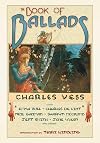
I have had this graphic novel on my shelf to read forever. I finally got around to reading it; I originally picked this up because I love Charles Vess’s artwork and thought the concept of him illustrating a whole bunch of traditional ballads sounded really awesome. It was a very good read. Some of the ballads were retold in really wonderful ways, others were just excerpts from the original ballads.
This book consists of a series of traditional ballads. The ballads are first told via graphic show more novel format. Some are retellings and some are pretty much word for word from the original ballads. Then after the graphic retelling, the ballad is printed in its entirety.
A lot of these were just the ballads with pictures without much retelling done by the authors. There were a couple that really stood out though with excellent retellings done by the authors. The Two Corbies by Charles de Lint was a very well done retelling and delivered a fantastic story while still referencing the original ballad. The Black Fox by Emma Bull was also very well done, Bull gave an American twist to this traditional ballad.
Most of the Ballads feature supernatural being like fey or witches. All of the Ballads have fantasy or faerie tale bent to them.
Charles Vess’s artwork is as stunning as always. I was a bit disappointed that everything was in black and white, because I love what Vess does with color. Still the drawings were wonderful and did an excellent job of portraying the mood of the story. His artwork ranges from cartoonish (in the Galtee Farmer), to stunningly beautiful (in Tam-Lin and Savoy), and even to disturbingly ugly (in Alison Cross).
I also really enjoyed reading the poems in their original format. I love epic poetry and folklore and these were fun and interesting to read.
Overall an enjoyable read. I was a bit disappointed that so many of the “retellings” were just excerpts of the original ballads/poems. Still there were some excellent retellings in here as well. Charles Vess’s illustration was absolutely stunning and really set the mood for the stories. Recommended to those who enjoy fantasy graphic novels or are interested in folklore/fantasy poetry. show less
This book consists of a series of traditional ballads. The ballads are first told via graphic show more novel format. Some are retellings and some are pretty much word for word from the original ballads. Then after the graphic retelling, the ballad is printed in its entirety.
A lot of these were just the ballads with pictures without much retelling done by the authors. There were a couple that really stood out though with excellent retellings done by the authors. The Two Corbies by Charles de Lint was a very well done retelling and delivered a fantastic story while still referencing the original ballad. The Black Fox by Emma Bull was also very well done, Bull gave an American twist to this traditional ballad.
Most of the Ballads feature supernatural being like fey or witches. All of the Ballads have fantasy or faerie tale bent to them.
Charles Vess’s artwork is as stunning as always. I was a bit disappointed that everything was in black and white, because I love what Vess does with color. Still the drawings were wonderful and did an excellent job of portraying the mood of the story. His artwork ranges from cartoonish (in the Galtee Farmer), to stunningly beautiful (in Tam-Lin and Savoy), and even to disturbingly ugly (in Alison Cross).
I also really enjoyed reading the poems in their original format. I love epic poetry and folklore and these were fun and interesting to read.
Overall an enjoyable read. I was a bit disappointed that so many of the “retellings” were just excerpts of the original ballads/poems. Still there were some excellent retellings in here as well. Charles Vess’s illustration was absolutely stunning and really set the mood for the stories. Recommended to those who enjoy fantasy graphic novels or are interested in folklore/fantasy poetry. show less
A collection of thirteen traditional ballads, retold in graphic form.
I've tried very, very hard to love this book, and I just can't.
The artwork is breathtaking. And when I say breathtaking, I mean breathtaking. Vess does beautiful work. Each panel is so detailed you feel like you could step straight into it, and his use of line is so ethereal you almost expect the characters to start moving. Vess brings each image to life.
But when you get right down to it, the book isn't about the images. show more It's about the story. The images play an important role, yes, but they can't carry the story by themselves. The writing needs to do its part... and most of the writing here doesn't quite measure up.
It's a bit surprising, really. Vess has brought together a group of stellar writers - Emma Bull, Charles de Lint, Neil Gaiman, Elaine Lee, Sharyn McCrumb, Delia Sherman, Jeff Smith, Lee Smith, Midori Snyder and Jane Yolen - and I expected only the best from them. Unfortunately, few of them fully deliver. The writing isn't bad, but I think the authors have taken the wrong approach to the material. In most cases, they intersperse large chunks of the ballad's original text with dialogue and expository blurbs. The shifts from lyrical ballad to prose blurb are jarring; they disrupt the natural flow of the text and make it difficult for the reader to fully lose herself in the story.
It's important to remember, too, that ballad lyrics aren't full stories. They're the bones of the tale, but it's the music that adds the motivation and meaning to the story. When you take the music away, you need to add another element that can fill in the gaps and tell the reader how the story feels. Vess's art is great, but I don't think it quite manages to stand in for the music.
The best of the stories - those penned by Charles de Lint, Jeff Smith and Emma Bull - either use the ballads sparingly or embrace them fully. There's no awkward mix of original text and new material; they give us either a full-on adaptation or a cleverly panelled interpretation. And it works really, really well. The stories come to life; we've got motivation, meaning, and a durned good plot.
The book is still worth reading if you have any interest in ballads or folklore, and if you like Charles Vess's art it's an absolute gem. But it's not nearly as good as it could've been, and you're probably better off borrowing it than buying it.
(Longer, ramblier review available on my blog, Stella Matutina). show less
I've tried very, very hard to love this book, and I just can't.
The artwork is breathtaking. And when I say breathtaking, I mean breathtaking. Vess does beautiful work. Each panel is so detailed you feel like you could step straight into it, and his use of line is so ethereal you almost expect the characters to start moving. Vess brings each image to life.
But when you get right down to it, the book isn't about the images. show more It's about the story. The images play an important role, yes, but they can't carry the story by themselves. The writing needs to do its part... and most of the writing here doesn't quite measure up.
It's a bit surprising, really. Vess has brought together a group of stellar writers - Emma Bull, Charles de Lint, Neil Gaiman, Elaine Lee, Sharyn McCrumb, Delia Sherman, Jeff Smith, Lee Smith, Midori Snyder and Jane Yolen - and I expected only the best from them. Unfortunately, few of them fully deliver. The writing isn't bad, but I think the authors have taken the wrong approach to the material. In most cases, they intersperse large chunks of the ballad's original text with dialogue and expository blurbs. The shifts from lyrical ballad to prose blurb are jarring; they disrupt the natural flow of the text and make it difficult for the reader to fully lose herself in the story.
It's important to remember, too, that ballad lyrics aren't full stories. They're the bones of the tale, but it's the music that adds the motivation and meaning to the story. When you take the music away, you need to add another element that can fill in the gaps and tell the reader how the story feels. Vess's art is great, but I don't think it quite manages to stand in for the music.
The best of the stories - those penned by Charles de Lint, Jeff Smith and Emma Bull - either use the ballads sparingly or embrace them fully. There's no awkward mix of original text and new material; they give us either a full-on adaptation or a cleverly panelled interpretation. And it works really, really well. The stories come to life; we've got motivation, meaning, and a durned good plot.
The book is still worth reading if you have any interest in ballads or folklore, and if you like Charles Vess's art it's an absolute gem. But it's not nearly as good as it could've been, and you're probably better off borrowing it than buying it.
(Longer, ramblier review available on my blog, Stella Matutina). show less
Summary: The Book of Ballads is not your typical graphic novel - maybe a graphic poetry collection? In any case, there are thirteen entries, each based around a traditional British or Scottish ballad. For each, a different author wrote the text of the story, and the inimitable Charles Vess provided the artwork. The text of the original ballad is included for each, as well. There's also an introduction explaining the sources and history of ballads in general, and a discography providing show more listings of artists who have recorded versions of each of the ballads in this collection, for those who want the music to go along with the words and pictures.
Review: Some of the stories in this collection worked better than others for me; a fact that's likely to be true for every collection, but which is unique here, because what worked for me was not the writing or the story or the characters, but the degree to which the author reinterpreted the ballad into an actual story. Ballads are almost always little out-of-context chunks of story lacking most of their history and motivation; we don't know what the lady fair was doing riding alone, how the knight came to be keeping consort with a witch, or why the witch was feeling so witchy in the first place. In the better stories in this collection, the authors created a backstory for us, making it a re-telling of the ballad instead of just a telling.
The ones that didn't work so well for me were the tellings. Several of them even made extensive use of the original text of the ballad within the story, without even re-writing them... and at that point, I had to wonder what the point of having an author collaborator even was - surely Vess could have storyboarded them on his own, if that was all that was required? Vess's illustrations are wonderful, full of emotion, hope and fear and love and hate and life and death and horrible dark things and wonderful bright things... all of the things contained in the ballads themselves, basically. They're not quite enough to carry the weaker stories on their own, but they're lovely, and definitely make this book worth seeking out. 4 out of 5 stars.
Recommendation: Recommended to fans of fantasy, fairy tales, folklore, poetry, and graphic novels.
Also, I highly recommend reading it (or re-reading it) along with some of the music listed in the discography - this is an interesting idea for a book, but it's hard to take the music away from an art form that's inherently musical and still make the same impact. show less
Review: Some of the stories in this collection worked better than others for me; a fact that's likely to be true for every collection, but which is unique here, because what worked for me was not the writing or the story or the characters, but the degree to which the author reinterpreted the ballad into an actual story. Ballads are almost always little out-of-context chunks of story lacking most of their history and motivation; we don't know what the lady fair was doing riding alone, how the knight came to be keeping consort with a witch, or why the witch was feeling so witchy in the first place. In the better stories in this collection, the authors created a backstory for us, making it a re-telling of the ballad instead of just a telling.
The ones that didn't work so well for me were the tellings. Several of them even made extensive use of the original text of the ballad within the story, without even re-writing them... and at that point, I had to wonder what the point of having an author collaborator even was - surely Vess could have storyboarded them on his own, if that was all that was required? Vess's illustrations are wonderful, full of emotion, hope and fear and love and hate and life and death and horrible dark things and wonderful bright things... all of the things contained in the ballads themselves, basically. They're not quite enough to carry the weaker stories on their own, but they're lovely, and definitely make this book worth seeking out. 4 out of 5 stars.
Recommendation: Recommended to fans of fantasy, fairy tales, folklore, poetry, and graphic novels.
Also, I highly recommend reading it (or re-reading it) along with some of the music listed in the discography - this is an interesting idea for a book, but it's hard to take the music away from an art form that's inherently musical and still make the same impact. show less
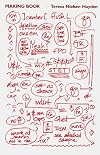
This is a collection of essays written by TNH over a period of years. Nefsa brought together her most frequently reprinted, discussed and passed around writings into this volume*. One of the other reviews makes the observation that it reads like Making Light, her blog. This is true, and explains both the appeal of the book and its weakness. TNH's personality, enthusiasm, humor, warmth and intelligence shine through this book. At the same time, these are occasional pieces, and when the show more occasion has passed, it isn't always clear that they have lasting value.
Case in point - Iguanacon. I wasn't there, may not have been born, certainly wasn't in fandom. For those who were part of it, by all accounts it was a life-changing, traumatic event. I saw an on-line blow-up a few months ago that can only be described as Iguanacon PTSD. But it truly is a You Had To Be There event, and the selections in the book that talk about it fall flat.
On the other hand, her account of being excommunicated from the Mormon church may be even more relevant today, given our public politics. I read a statement by her once (I don't think in this book...) that this piece is the one that people who don't know her personally remember and talk to her about. I'm not surprised; it's flat-out powerful.
I gave it three stars for being a mixed bag, and I'm not sure it is something that bears repeated reading, but it is well worth reading once.
*And hats off to Nefsa for their wonderful work in publishing all kinds of science fiction, fantasy, fan writings, out-of-print, quirky and other categories of written works that would otherwise have been lost. show less
Case in point - Iguanacon. I wasn't there, may not have been born, certainly wasn't in fandom. For those who were part of it, by all accounts it was a life-changing, traumatic event. I saw an on-line blow-up a few months ago that can only be described as Iguanacon PTSD. But it truly is a You Had To Be There event, and the selections in the book that talk about it fall flat.
On the other hand, her account of being excommunicated from the Mormon church may be even more relevant today, given our public politics. I read a statement by her once (I don't think in this book...) that this piece is the one that people who don't know her personally remember and talk to her about. I'm not surprised; it's flat-out powerful.
I gave it three stars for being a mixed bag, and I'm not sure it is something that bears repeated reading, but it is well worth reading once.
*And hats off to Nefsa for their wonderful work in publishing all kinds of science fiction, fantasy, fan writings, out-of-print, quirky and other categories of written works that would otherwise have been lost. show less
Lists
Awards

You May Also Like


Associated Authors
Statistics
- Works
- 3
- Also by
- 13
- Members
- 770
- Popularity
- #33,050
- Rating
- 3.9
- Reviews
- 13
- ISBNs
- 6
- Languages
- 1
- Favorited
- 1