On This Page
Description
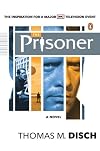
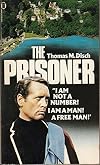
Coming in November 2009, AMC's highly anticipated remake of the cult '60's television series The Prisoner, starring Ian McKellen and Jim Caviezel.Based on the highly acclaimed 1960s television show, Thomas M. Disch's novelization of The Prisoner has become a cult classic in its own right. A story that combines elements of a spy thriller with the Orwellian tropes of science fiction, The Prisoner follows a former British secret agent who has quit the force, only to find himself trapped in an show more anonymous place called the Village. Known only as "Number 6," he struggles to maintain his individual identity in the face of the nameless powers-that-be, who use increasingly sophisticated and terrifying methods in order to extract his secrets.First published in 1967, by an author widely regarded to be a master of the science fiction genre, The Prisoner will appeal to longtime fans of the show as well as those who are discovering it for the first time.. show lessTags
Recommendations



















Member Reviews
This wasn't as good as I'd remembered it from previously reading it in 1990 - it was better! As a fan of the show, bringing my own associations to the text, my 5 ⭐ rating is undoubtedly objectively suspect, but that itself is in keeping with the book's themes of what we can and cannot trust, and the conditionality of reality.
Disch captured the smart, jousting dialogue just right, and created the layers of suspicion, second-guessing, cautious trust and resigned betrayals of the TV series.
His story is littered with the Shakespearean and classical references of the original, and the Bard's "Measure for Measure" forms both a plot element and a subversive meta-narrative on the role of the characters with the book, and of the writer and show more reader of the book. Whether the follow-up novels by two different authors will measure up to Disch's high standards remains for me to see.
Oh, and did Disch conceptualise motion-capture CGI in this 1969 novel? I think he did! show less
Disch captured the smart, jousting dialogue just right, and created the layers of suspicion, second-guessing, cautious trust and resigned betrayals of the TV series.
His story is littered with the Shakespearean and classical references of the original, and the Bard's "Measure for Measure" forms both a plot element and a subversive meta-narrative on the role of the characters with the book, and of the writer and show more reader of the book. Whether the follow-up novels by two different authors will measure up to Disch's high standards remains for me to see.
Oh, and did Disch conceptualise motion-capture CGI in this 1969 novel? I think he did! show less
A novel based on the classic 1960s British TV series. Although someone once said that the key to understanding The Prisoner is that it's "a surrealist work of art, not a television series," and for a narrow enough definition of the words "television series," I have to agree.
This isn't a novelization, as such. Some of the details are different from those presented on the screen (though I think not irreconcilably different), and it doesn't follow the storyline of the TV series, although it does incorporate parts of it in an odd way. I had the impression, before I started it, that it was an liberal adaptation of the televised story, not a faithful retelling. Not very far into it, though, I realized that it's actually something that, in show more this context, is both stranger and cleverer: it's a sequel. Although it's possible that may just be me projecting an interpretation, as it's all very ambiguous... which is spot-on appropriate for anything based on The Prisoner.
In fact, I'm really very impressed by how much this novel captures the feel of the show, because that is not an easy task. All the important elements seem to be here, though: surrealism, paranoia, brainwashing, confusion over what is or isn't real, a dry and intelligent sense of humor, symbolism both obvious and obscure, themes of individuality vs. conformity, and the whole brain-breaking, thought-provoking lot. I will say that I'm not at all sure what to make of the ending, but to say that the same is true of the TV series is to perpetrate an unbelievably massive understatement. If anything, my problem with the ending here may be that it's almost disappointingly coherent by contrast.
I honestly thought that this would be worthwhile mainly as a curiosity, or at most as an interesting alternate take on same basic premise. The fact that it actually turned out to be a decent complement to and reflection on the original was both unexpected and rather delightful. show less
This isn't a novelization, as such. Some of the details are different from those presented on the screen (though I think not irreconcilably different), and it doesn't follow the storyline of the TV series, although it does incorporate parts of it in an odd way. I had the impression, before I started it, that it was an liberal adaptation of the televised story, not a faithful retelling. Not very far into it, though, I realized that it's actually something that, in show more this context, is both stranger and cleverer: it's a sequel. Although it's possible that may just be me projecting an interpretation, as it's all very ambiguous... which is spot-on appropriate for anything based on The Prisoner.
In fact, I'm really very impressed by how much this novel captures the feel of the show, because that is not an easy task. All the important elements seem to be here, though: surrealism, paranoia, brainwashing, confusion over what is or isn't real, a dry and intelligent sense of humor, symbolism both obvious and obscure, themes of individuality vs. conformity, and the whole brain-breaking, thought-provoking lot. I will say that I'm not at all sure what to make of the ending, but to say that the same is true of the TV series is to perpetrate an unbelievably massive understatement. If anything, my problem with the ending here may be that it's almost disappointingly coherent by contrast.
I honestly thought that this would be worthwhile mainly as a curiosity, or at most as an interesting alternate take on same basic premise. The fact that it actually turned out to be a decent complement to and reflection on the original was both unexpected and rather delightful. show less
I have not seen the 60s television show. I did see the abomination that was the AMC “television event”. Accordingly, I cannot say if this book is true to the 60s version, but I can say that it (thankfully) has next to nothing to do with the AMC show. Accordingly, the following review is about nothing but the book.
The “mysteriousness” that one would expect from this novel is quickly evident. We are immersed in a conversation that, while introducing us to what is to come, is maddeningly cryptic. (Foreshadowing of the confusion that drives the point of this book.) And soon, Number 6 is in The Village, realizing that he is a prisoner and working on his escape. Yes, Number 2 and his verbal battles with Number 6 are here. Yes, the show more large globes are here. And, yes, the broad question about reality is here. (Okay, even though I’ve never seen the series, I know enough to know what is expected in this novel.) .
The novel’s strength is Thomas Disch’s writing. That first chapter is a grabber, and the reader happily explores The Village right along with Number 2. In spite of the absurdity of the situation, it is a believable situation about which the reader wants to learn more. The weakness is that there seems to be a lot of ground that is covered in a very few chapters (as if the seventeen episodes were smashed into one novel.) And the finale does not really bring any grand, “AHA” moment. No, I’m not looking for answers, but I’m looking for satisfaction in the story – and it isn’t quite there.
For those who have experienced the original television series, I cannot tell you if this will be a good or bad experience for you. For the rest of us, I can say it is a decent enough novel; just not one you have to rush out and read. show less
The “mysteriousness” that one would expect from this novel is quickly evident. We are immersed in a conversation that, while introducing us to what is to come, is maddeningly cryptic. (Foreshadowing of the confusion that drives the point of this book.) And soon, Number 6 is in The Village, realizing that he is a prisoner and working on his escape. Yes, Number 2 and his verbal battles with Number 6 are here. Yes, the show more large globes are here. And, yes, the broad question about reality is here. (Okay, even though I’ve never seen the series, I know enough to know what is expected in this novel.) .
The novel’s strength is Thomas Disch’s writing. That first chapter is a grabber, and the reader happily explores The Village right along with Number 2. In spite of the absurdity of the situation, it is a believable situation about which the reader wants to learn more. The weakness is that there seems to be a lot of ground that is covered in a very few chapters (as if the seventeen episodes were smashed into one novel.) And the finale does not really bring any grand, “AHA” moment. No, I’m not looking for answers, but I’m looking for satisfaction in the story – and it isn’t quite there.
For those who have experienced the original television series, I cannot tell you if this will be a good or bad experience for you. For the rest of us, I can say it is a decent enough novel; just not one you have to rush out and read. show less
I have not seen either the original series or the remake. I saw this book at the library and thought at first it was the book that the series was based on. I rmemeber a friend telling me abou the series and about "Number Six".
After I checked out the book, I realized it was written after the series came out. I liked the book - up until the ending. The ending made no sense to me and was a disappointment because I was interested in the story up until that point.
Perhaps if I saw the series I would change my mind on that point but after reading the book, I have no desire to see the series.
After I checked out the book, I realized it was written after the series came out. I liked the book - up until the ending. The ending made no sense to me and was a disappointment because I was interested in the story up until that point.
Perhaps if I saw the series I would change my mind on that point but after reading the book, I have no desire to see the series.
Admittedly I haven't watched the original series in a few years but from this read I could almost picture some of the episodes. This is like the series yet it takes a few aspects in different routes. The ending on this was different from both the original series and the newer remade mini-series. While they changed that aspect it was done well and just as believable as if Patrick McGoohan had written it himself. Some episodes were omitted and some chapters didn't refer to the series at all.
I enjoyed this short read and will probably re-watch the series and then read again. I think it is a nice supplement for any fan of the original show but shouldn't be held as an exact replica. This one borrows just enough to be enjoyable without being show more tedious and yes it does include Rover. show less
I enjoyed this short read and will probably re-watch the series and then read again. I think it is a nice supplement for any fan of the original show but shouldn't be held as an exact replica. This one borrows just enough to be enjoyable without being show more tedious and yes it does include Rover. show less
I wanted to like this. Interesting premise, but with an ultimately disappointing lack of revelation. Also, this guy's writing style made me batty. Lack of dialog markers left me frequently wondering who the heck was talking, and while I suppose that probably cooperated with the theme of the story (which, as far as I could tell was "you can never trust anything"), it was awfully annoying. Meh.
Recommended by: Joe K.
Recommended by: Joe K.
Well-written, and the plot is resolved at the end (no spoilers given here, in case you haven't seen the tv show or the new movie!).
Depends too much on the "mystery" and is more abstract than I personally prefer.
Depends too much on the "mystery" and is more abstract than I personally prefer.
Members
- Recently Added By
Lists

Fiction Set Primarily in a Prison
52 works; 24 members

Books Read in 2024
4,623 works; 126 members
Author Information

165+ Works 8,117 Members
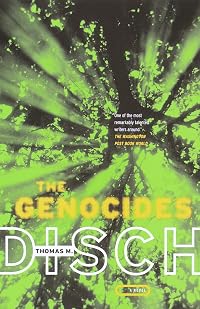
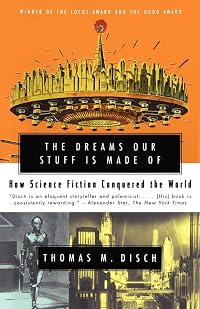
Thomas Disch was a popular & prolific poet, playwright, essayist, & novelist. He is the author of many works of science fiction & the poetry collections "Dark verses & Light" & "Yes, Let's: New & Selected Poems". (Publisher Provided) Thomas M. Disch was born in Des Moines, Iowa on February 2, 1940. He dropped out of the architecture program at show more Cooper Union, and then left New York University after he sold a short story entitled The Double Timer. His first novel, The Genocides, was published in 1965. His other novels include The House That Fear Built, 334, The M.D., The Priest, The Word of God: Or, Holy Writ Rewritten, and Clara Reeve written under the pseudonym Leonie Hargreave. He won several awards including the 1969 Ditmar Award for Camp Concentration, the O. Henry Award in 1975 for Getting into Death and in 1977 for Xmas, the 1980 John W. Campbell, Jr. Memorial Award for On Wings of Song, and the 1981 British Science Fiction Award for The Brave Little Toaster: A Bedtime Story for Small Appliances. He was also wrote poetry, opera librettos, plays, and criticism of theater, films and art. His collections of poetry include Here I Am, There You Are, Where Are We; The Dark Old House; Yes, Let's: New and Selected Poetry; and Dark Verses and Light. He won the 1999 biennial Michael Braude Award for Light Poetry for A Child's Garden of Grammar, the Locus and Hugo Awards for 1999 for The Dreams Our Stuff is Made Of: How Science Fiction Conquered the World, and the Puschcart Prize for The First Annual Performance Art Festival at Slaughter Rock Battlefield. His criticism appeared in several publications including The Nation, The New York Daily News, and The New York Sun. In 1987, he wrote a script for the television series Miami Vice. He shot himself on July 4, 2008 at the age of 68. (Bowker Author Biography) show less
Series


Belongs to Publisher Series
Pocket (5052)
Work Relationships
Is contained in
Is a (non-series) sequel to
Common Knowledge
- Canonical title
- The Prisoner
- Original title
- The Prisoner
- Original publication date
- 1969
- People/Characters
- Number Six; Number Two; Liora; Angelo (the butler); Number 83 (Suave thug); Number 189 (Suet Pudding) (show all 26); Rover; Number Fourteen (Doctor); Number 48 (Tweedy woman); Number Twelve (Schizoid Man); Number 127 (waitress); Number Nineteen (helicopter pilot); Thorpe; Mr. Plath; Jeremy; Colonel Schjeldahl; Number 28 (Doctor's assistant); Number Seven (the Kid); Number 33 (Budgie); Number 34 (Pigeon); Number 98 (Stationer); Grandmother Bug; Number 41 (Lorna); Number 29 (Goitres); Number 263 (guard); Number One
- Important places
- The Village; The Connaught Hotel, Carlos Place, Mayfair, London, England, UK
- Related movies
- The Prisoner (1967 | IMDb)
- Dedication
- To Jane
and
to Pamela:
in equal shares - First words
- "Have you been here before?" he asked.
- Last words
- (Click to show. Warning: May contain spoilers.)"Young man," she said, in her loftiest voice, "you make a wretched cup of tea!"
- Original language
- English
- Canonical DDC/MDS
- 823.08762
- Disambiguation notice
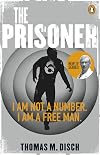
- Thomas M. Disch's tie-in to The Prisoner was called simply The Prisoner, however, it is often called I Am Not a Number! after a cover blurb that appears on some early editions. Alan Stevens & Fiona M... (show all)oore suggest using the title for the sake of clarity and easy reference in their guidebook Fall Out, but this would, clearly, be an incorrect title.
Classifications
- Genres
- Fiction and Literature, Science Fiction
- DDC/MDS
- 823.08762 — Literature & rhetoric English & Old English literatures English fiction By type Genre fiction Adventure fiction Speculative fiction Science fiction
- LCC
- PS3554 .I8 .P75 — Language and Literature American literature American literature Individual authors 1961-
- BISAC
Statistics
- Members
- 379
- Popularity
- 81,653
- Reviews
- 12
- Rating
- (3.27)
- Languages
- English, French
- Media
- Paper, Ebook
- ISBNs
- 15
- ASINs
- 11